In 1986, Nicolas Cage would turn 22 years old and release two movies. The first movie, The Boy in Blue, details the story of Ned Hanlan, a late nineteenth century Canadien sculler (= rower) and world champion. Unfortunately for the WATC(H) experiment, this movie is currently out-of-print, not streaming online, and except for a few rare places, mostly unrentable (without some serious safety deposit cash). You can buy the movie for $80-100 on the interwebs, but meh, I don’t think I will. Instead, I will skip it and come back to it later in the journey.
So the World According to Cage #7: The Boy In Blue is hereby “skipped”.
The second movie Nicolas Cage appears in, in the year of our lord, nineteen-hundred and eighty six, is his third (and perhaps final) team up with his director-uncle, Francis Ford Coppola in the comedy, Peggy Sue Got Married. Nic plays “Crazy” Charlie Bodell, the man who in fact married Peggy Sue (played by Kathleen Turner) and who drives a lot of the dramatic / comedic action of the “plot”.
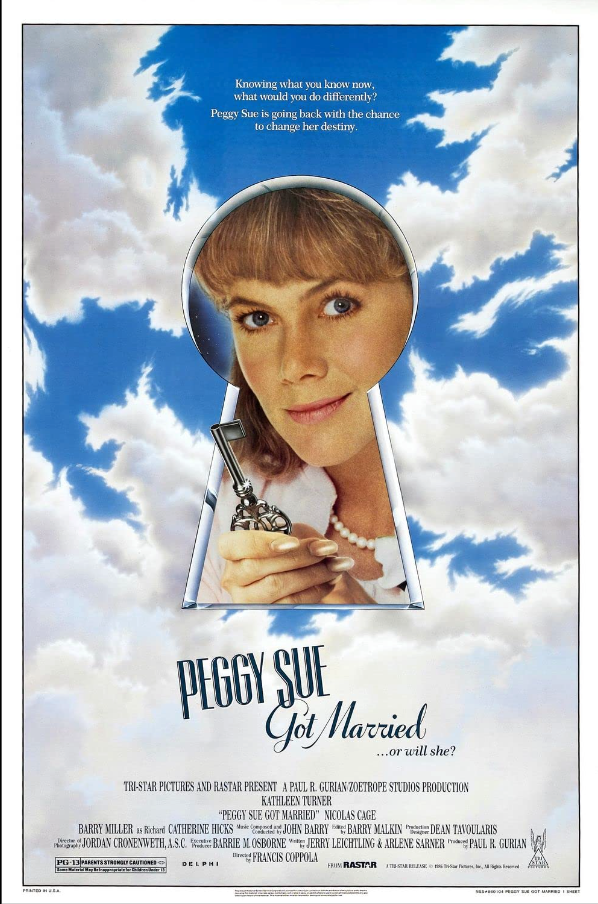
But before we get into all the beatific Cage-isms, let me point out something discussed in a previous post. In WATC(H) #4 I detailed some of the characteristics of FF Coppola’s epic films, i.e. sweeping time-piece epics, big name casts by the dozens, literature-driven plots full of violence and passion, etc. All those Coppola traits get thrown out the window in this movie. None of those characteristics apply to PSGM. This was a Hollywood “popcorn” feature, a no-brainer summertime movie, and while entertaining in its own right, not an especially Coppola-like Coppola film.
But let’s get into some key observations…
Poor (wo)man’s back to the future. Watching this movie (perhaps for the first time, I really can’t recall seeing it before) I was struck by the fact that PSGM has many of the same themes and ideas present in Back to the Future, an arguably superior movie that was released ~15 months BEFORE PSGM. Was the impetus for PSGM a studio exec saying, “We need a movie like Back to the Future, but we’ll focus it on a woman who wants to rewrite her past.” Or was it just a coincidence that these two movies came out so close together. It feels a bit derivative to me, but in a kind of lazy way that imitating good art / a good idea always does.
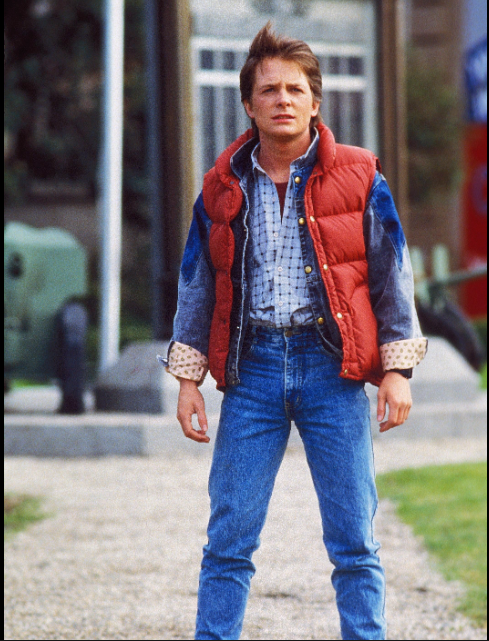
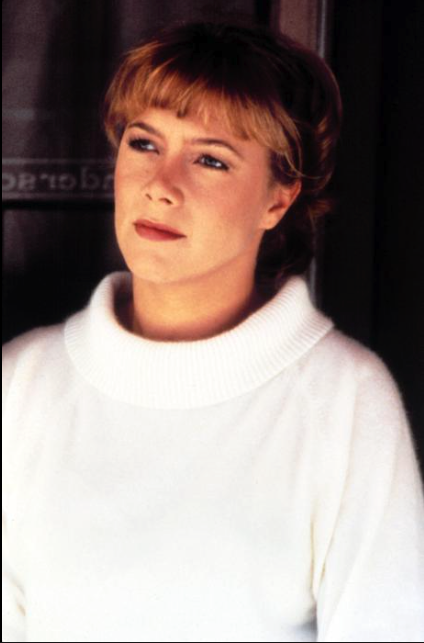
Instead of young Marty McFly trying to ensure that he doesn’t disrupt the past and alter his own “present” timeline, we have Peggy Sue wishing she could change the past, so she wouldn’t marry (her now unfaithful) goofball husband Charlie Bodell, and miss out on all the “what could have been” experiences she has become nostalgic for. Unlike in BTTF, Peggy Sue has no fancy Delorian time machine that transports her from her present 1985 back to her senior year in 1960 (maybe no budget?) Instead she simply passes out at her 25th high school reunion, and wakes up in her past.
While the plot of PSGM was nowhere near as tight and comedically charged as Back to the Future, the film does have it’s own unique charm since Peggy (unlike Marty) is not a stranger to this time period, and can therefore interact with others as normal (although she still looks 32 to me), and therefore gets to take full advantage of her own life, as her own self, but with all the knowledge and experience that time brings with it.
I remember Kathleen Turner most from her role in the adventure / comedy Romancing the Stone. To me, the sexually tense chemistry between her and Michael Douglas worked quite well in that film, but Charlie and Peggy get off to a rocky start in this one and they never really find much chemistry (in my opinion), and I think I know why…which brings us to…
Art irritating life. Originally, this movie was supposed to be starring Debra Winger and the director was Jonathan Demme (followed then by Penny Marshall), but due to “creative differences” all three of these folks left, which put Francis Ford Coppola in the driver seat as director and Kathleen Turner as Peggy Sue. (Steve Gutenberg was also an early consideration for the role of Charlie, but he didn’t get it because he spent most of his time in auditions asking Coppola questions about The Godfather.) Nicolas didn’t even want the role of Charlie at first, but was persuaded to take it only after the director agreed to let Cage play Charlie in an “over the top” way.
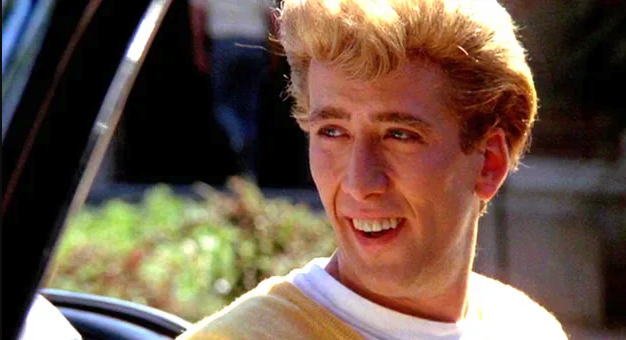
Over the top, for Cage meant wearing false teeth to hide his crazy overbite and gap (this was one of my earliest revelations watching PSGM since this has been an ongoing theme in WATC(H) “Hey, he finally fixed his teeth,” I said to myself.) He also vocalized all of his lines in a nasal fry that was, he said, inspired by the character of Pokey from The Gumby Show. To me it was more reminiscent of Urkel from the TV show Family Matters. Nasally, like he’d inhaled a bit of helium before every speaking part. Strange!
This evidently irritated Turner on the set and just added to the overall tension between the two actors. In what would later become a litigious matter between the two, Turner accused Cage of acting unprofessionally throughout the shooting, saying he was constantly drunk (including being arrested twice for drunk driving), that he had stolen a chihuahua, and that “yeah, he was an asshole”. (For the record, Cage won the defamation suit he later raised for some of these published accusations, and received an apology from Turner who said they had been fabricated. Hmmm.)
So, yeah, the onscreen chemistry was a bit shaky and hard for me to buy, in part because of the oddball way that Cage was approaching the role, AND likely because Turner saw Cage as an irritant in real life and wasn’t able to act her way out of it.
Cameos and age problems. Before an actor is widely known, is it still considered a cameo when they appear in a movie? In this movie, we get an early-career appearance from Jim Carrey as “one of the gang” who is friends with Charlie and Peggy, and we get Helen Hunt as Peggy / Charlie’s daughter (and we get a young actor/director Sofia Coppola FFC’s daughter and Cage’s cousin playing Peggy’s sister). The casting in this movie was also a bit strange for me. Helen Hunt was only 9 years younger than Turner who was playing her mother. At 32, Turner was ten years older then Cage (who was 22 at the time) and they were supposed to be near the same age. With the time travel elements added into this, it was at times a bit jarring to see these actors as age-appropriate to their characters and their timeline within their history.

Themes. We briefly discussed the time travel theme of nostalgia / regret earlier. The only other notable bright spots for me in this film (and it was not a bad viewing experience really) were the ways in which Peggy goes back and does many of the things she wishes she would have done back in high school, like spending time with the mysterious and handsome Michael Fitzsimmons, a brooding Beat poet type who lived his literary passions and principles, or showing compassion to the brainy nerd character Richard Norvik (played by Barry Miller) whose role was much like the Doc Brown character from BTTF. She also peppered in bits of prophetic info only a traveler-from-the-future would know about, for example warning her sister not to eat the “red M&M’s” and encouraging Norvik to invest time and energy into the world of “tech”.
Although Peggy Sue seems to come to some resolution regarding her relationship by the end, and ultimately chooses to go down the same marriage path with him again, it’s still not entirely clear to me what transports her back to her own time period in 1985. Whatever the cause, Peggy wakes in the hospital and finds Charlie, a changed man, waiting for her. In true 80s fashion, he has renewed his devotion to Peggy and their children 100%, and vows to remain faithful. Real shocker of an ending, but what did I expect. They did the same thing in The Wizard of Oz (was it all just a dream?)
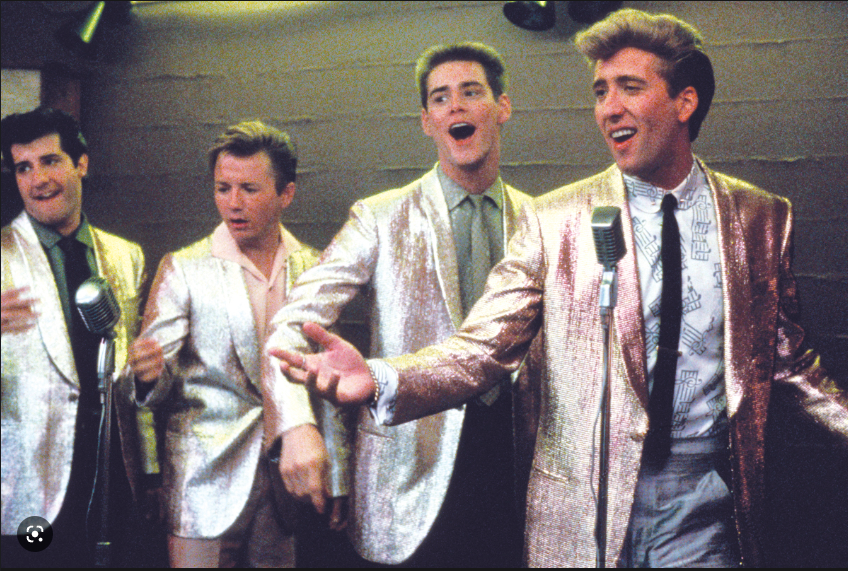
Favorite Nicolas Cage lines from the movie:
“I love it when you twirl your baton.”
“What’s the good of being a teenager if you can’t dress weird.”
“I’ve got the hair. I’ve got the teeth. I’ve got the eyes. Oh Peggy look outside that window. I’ve got the car. I’m the lead singer. I’m the man. Why are YOU arguing with me?” Why, indeed, Peggy.
Firsts for Nicolas Cage as Charlie Bodell in this film:
- Big blonde bouffant hair.
- First time seen in a Hawaiian shirt.
- Straight, big teeth.
- First time eating a Rice Krispie treat.
- Singing in a quartet (with Jim Carrey!)
- First time turning a girl down (who wanted to have sex with him)
- First time proposing to a girl
Summary: Peggy Sue got married, and then she got married again after time travel. Let’s hope the second time around was better than the first. From the Nicolas Cage standpoint, we got to see his ability to take a role and turn it kind of absurd / weird in a way that only Nic Cage can. It’s also a nice precursor (and warm up) to one of the most beloved Nic Cage characters (for me) of all time, H.I. Mcdunnough, all my friends call me “Hi” (who will show up in the greatest Nicolas Cage movie, Raising Arizona) Can’t wait! Heeahawww.

 yeti speak...
Leave a comment