In the later half of the 90s, two renowned Hong Kong filmmakers (an actor and a director) started getting some notice internationally. They both had been making over-the-top but highly stylistic action movies in their home country for a number of years, but it wasn’t until Hollywood paid attention that these two men got my attention as well.
The first. The night before I graduated from college, I stayed up for a midnight movie featuring one of these two men. His name was Jackie Chan and the film was Rumble in the Bronx. I remember being astounded at the high speed stunt-heavy martial arts action sequences mixed with Chan’s characteristic and expressive good-guy humor and (almost) Three Stooges style physical comedy. I also remember watching the end credits of the film, and realizing (with some amazement) that Chan was doing most all of the stunts himself; yeah, I was hooked. I would go on to watch many, many more Jackie Chan movies in the years ahead (at least until the formula became predictable).
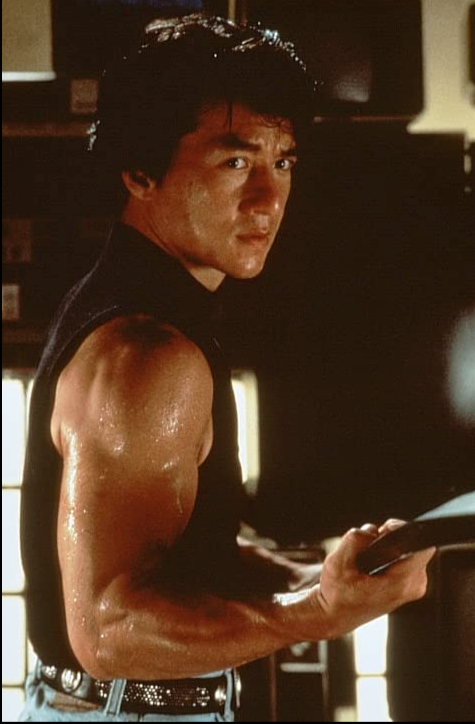
The second. The other Hong Kong filmmaker I got into, whose style was different, but no less signature from Chan’s, was the director, John Woo. Woo took on more serious topics, the battle of good and evil, and he played out his tumultuous visions in high-speed, balletic crime-action-dramas that were rife with blazing gun duels; car chases and explosions; gruesome, gory deaths–with often very spiritual overtones. (The first film I saw of Woo’s was playing at an arthouse cinema in Lexington, Kentucky aptly named The Kentucky Theater, that many of us college students would frequent.) The film was called The Killer and starred another famous Hong Kong actor, Chow Yun-Fat (who would later cross-over to an American audience most notably in Crouching Tiger, Hidden Dragon).


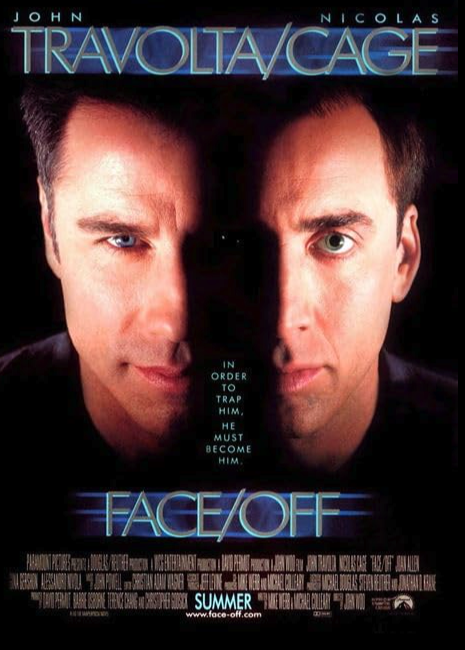
So you can imagine my excitement when I discovered that John Woo was making his second big American action movie, Face/Off with a favorite actor of mine, Nicolas Cage, who would perform alongside the recently-resurrected (thanks to Tarantino / Pulp Fiction) John Travolta.
This is significant to the WATC(H) because the three films that come to mind immediately for me as most formative in my Nicolas Cage interest are the three that I believe I owned at one time on VHS / DVD: Raising Arizona, Wild at Heart, and Face/Off.
So knowing that #28 is the third of the “Holy Trinity of Cage Goodness” for me, I am please to introduce you all to my observations from…
The World According to Face/Off (1997)
The John “Woo Tang Clan Ain’t Nothing to Fuck With”.
Before we summarize what happens plot- and acting-wise in this movie, I have to give credit to John Woo for his contribution and influence on American action movies. While I am no movie historian, and don’t know if he was the first or most famous to use this technique, it was John Woo who employed and mastered “the guy jumping horizontally while shooting two handguns at the same time” action sequences. (There’s also gotta be a more elegant shorthand name for that.) In Face/Off we’re given many opportunities to see this with Cage and Travolta and others.
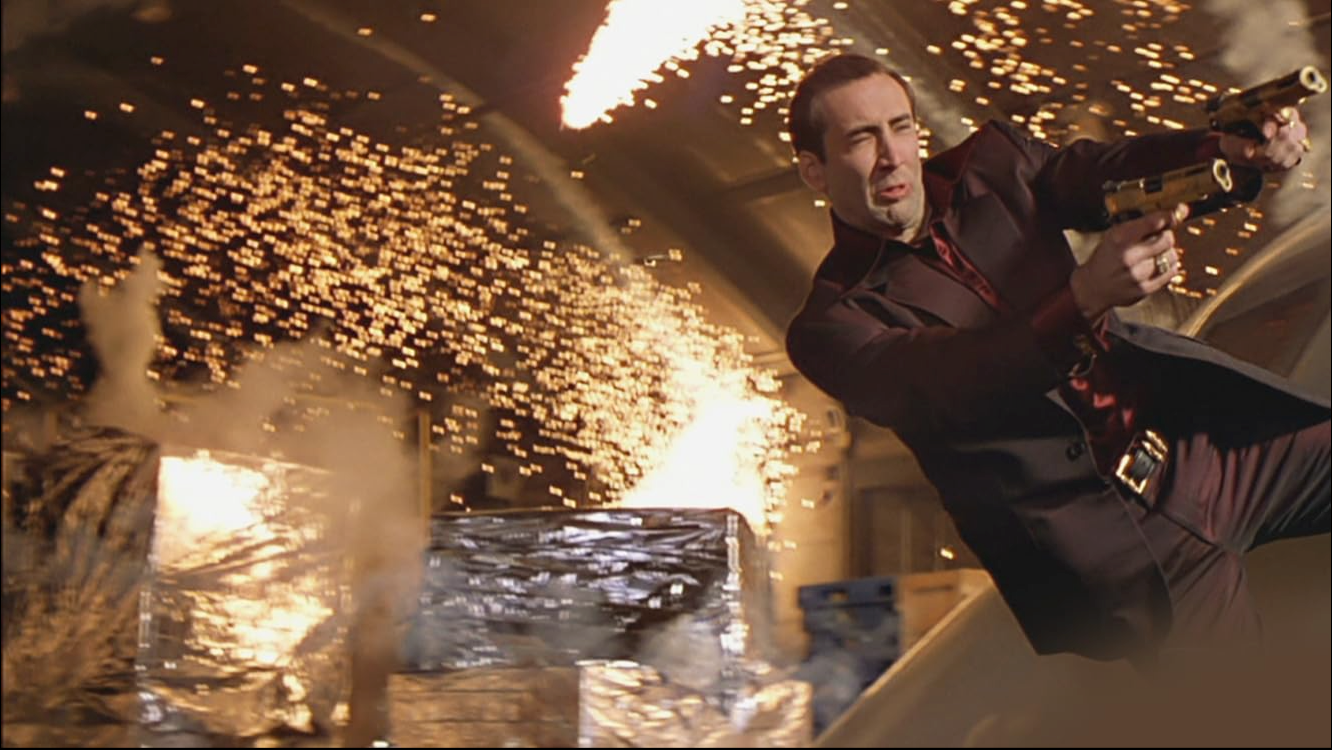
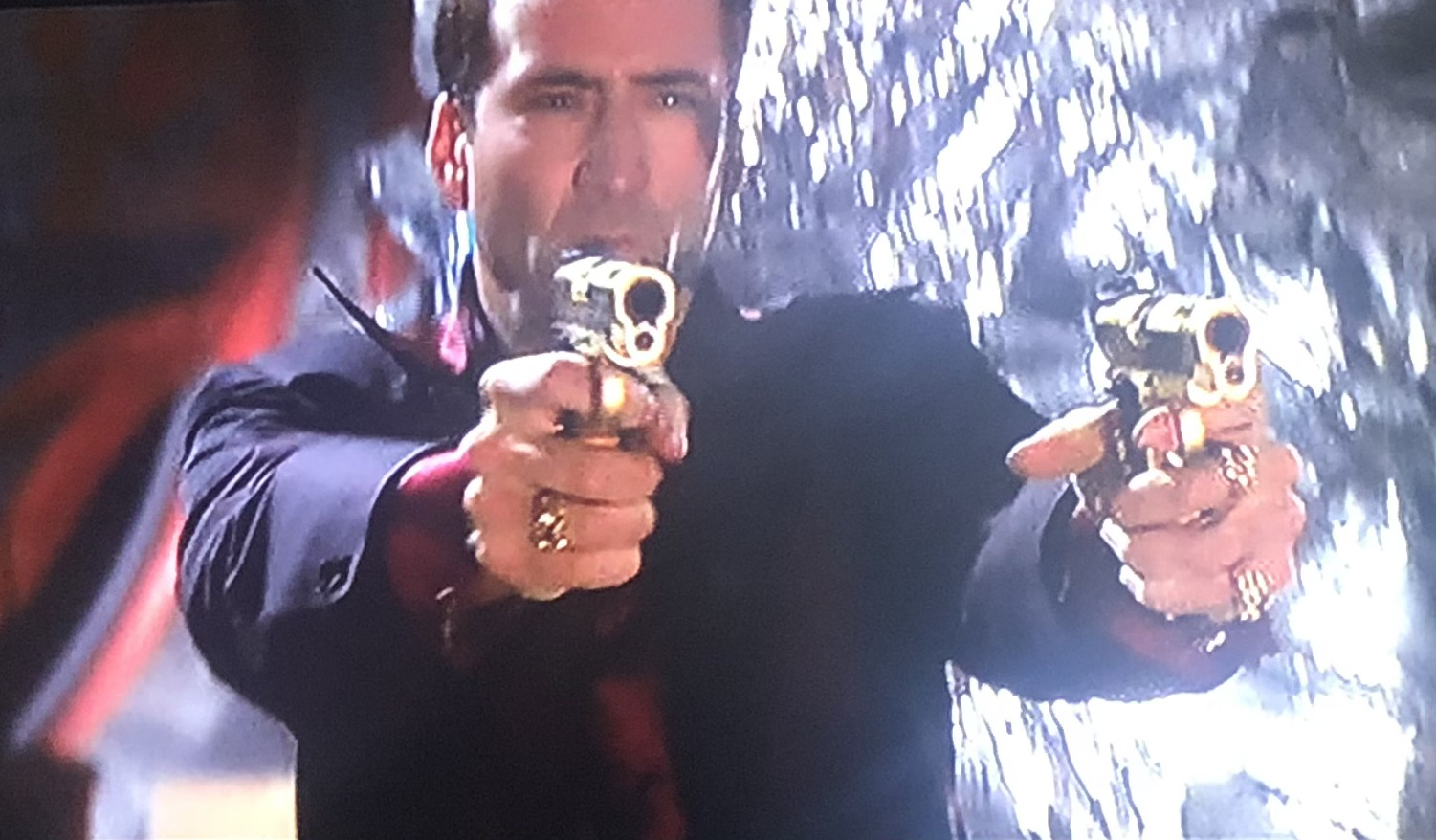
Woo also utilized a lot of gunfights from moving vehicles like motorboats, motorcycles, race cars, etc. Shooting guns from vehicles has been around for as long as action movies have existed (e.g. cowboys shooting from horseback, train robberies, airplane dogfights, etc) but Woo found ways to up the ante that would shortly pave the way for movies like The Matrix and then a whole industry of films (Mission Impossible), video games, and now virtual reality that would employ this absurd shoot-everything-from-anywhere style action that Woo helped cement in modern movie making.
Woo was also well-known for the “stand off” sequences where multiple people (a room full) are holding 1 to 2 guns and aiming those pieces at each other’s faces in a seeming triangulating stalemate that usually ends in a bloodbath.

In addition to these common Woo movie traits, you’ll notice other signature touches in most Hong Kong movies directed by him, such as:
- Religious Christian settings and iconography like churches, crosses, rosaries, etc. John Woo is a Christian and is concerned with the interplay and often complex blending of characters good and evil.
- The good vs. evil and ying/yang motif played out in contrasting colors. Woo often uses black and white to juxtapose the two sides of the coin, or the two opponents in conflict.
- Doves. In addition to setting his shootouts in churches, Woo likes to throw doves into the mix (which makes me think of 1) Prince’s music video When Doves Cry, and 2.) Gob Bluth from Arrested Development trying to get a refund from the pet store for the dead dove that he killed accidentally.) Woo said in an interview, “I love doves. I am a Christian. Doves represent the purity of love, beauty. They’re spiritual. Also the dove is a messenger between people and God.”

- Slow motion action sequences with operatic / symphonic music scores. Woo’s gun fights often occur with big explosions, balls of fire, a hail of bullets, and lots of blood, but are often juxtaposed against an ethereal or more heavenly musical sequence, a bright glow-filter on the camera, and the ballet-like attention to choreography and movement.
Facing Off
Imagine with me if you will, the classic tale of two characters who end up in a role reversal–the Prince and the Pauper, many characters from Shakespeare’s comedies, and from a film perspective, think Trading Places or Freaky Friday. But instead of two willing or (at least) tangentially related participants, trading roles for a time to achieve a purpose or gain “the other” perspective, let’s imagine you have two mortal enemies who end up trading lives–and faces–quite literally in attempt to destroy / subdue one another.
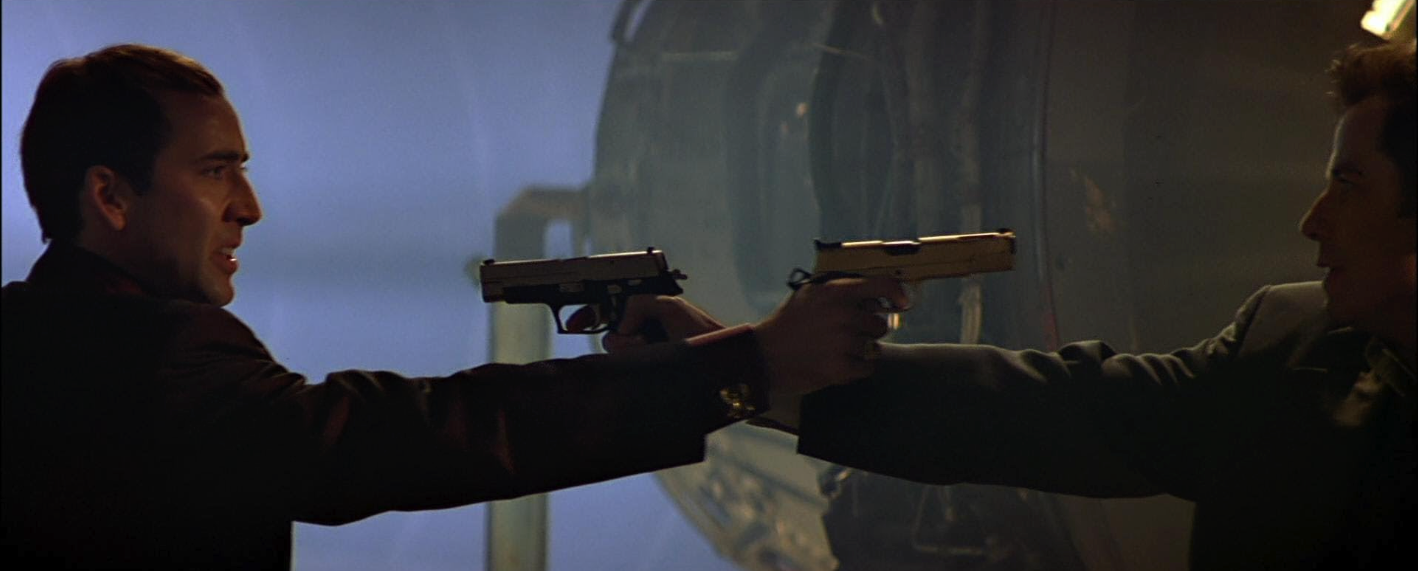
This is the outlandish, if highly compelling, plot of Face/Off.
In it, Nicolas Cage plays Castor Troy, a cold-blooded terrorist who, while attempting to assassinate his nemesis, the FBI agent Sean Archer (played by John Travolta,) accidentally kills his young son. (Oops.)
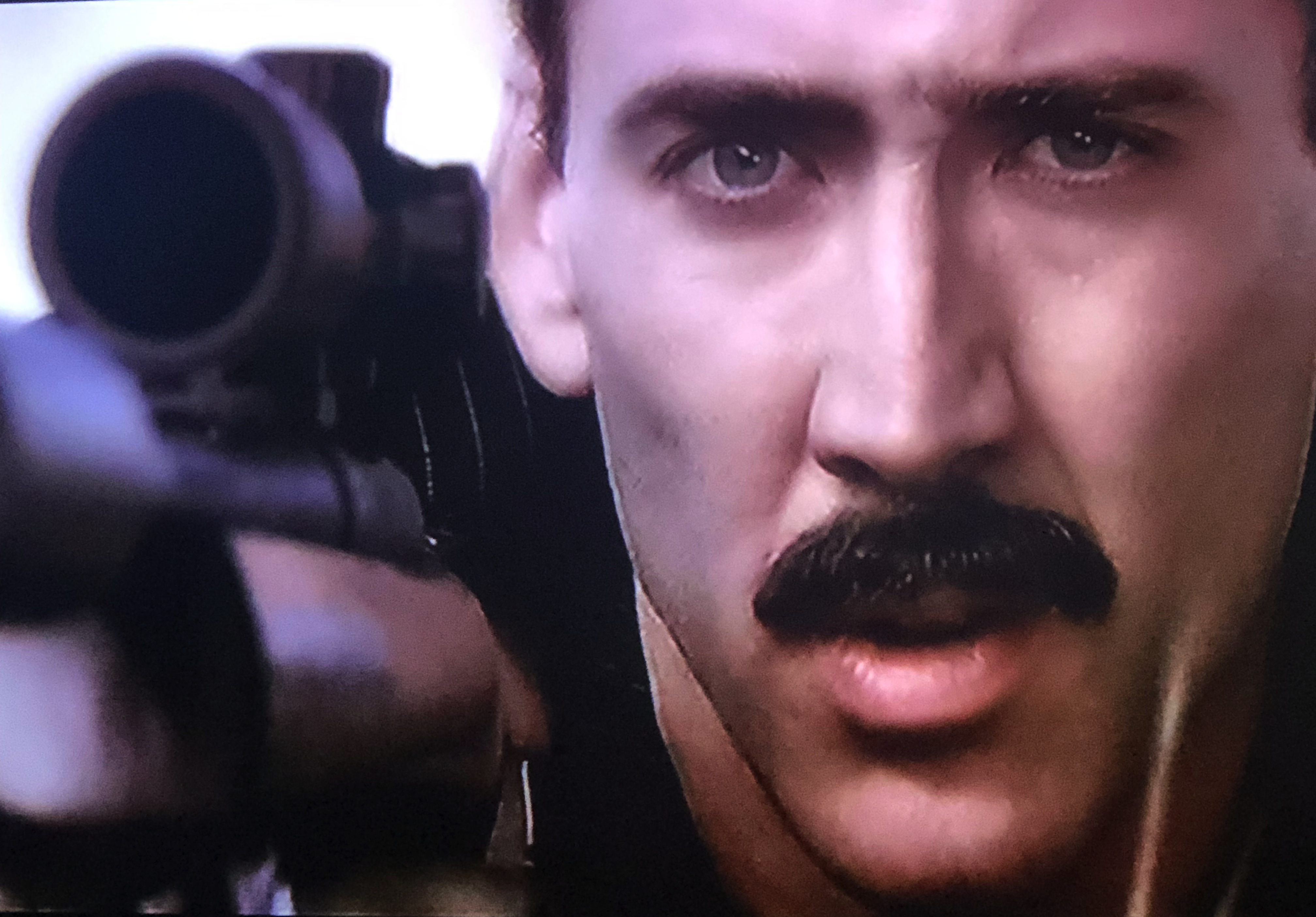
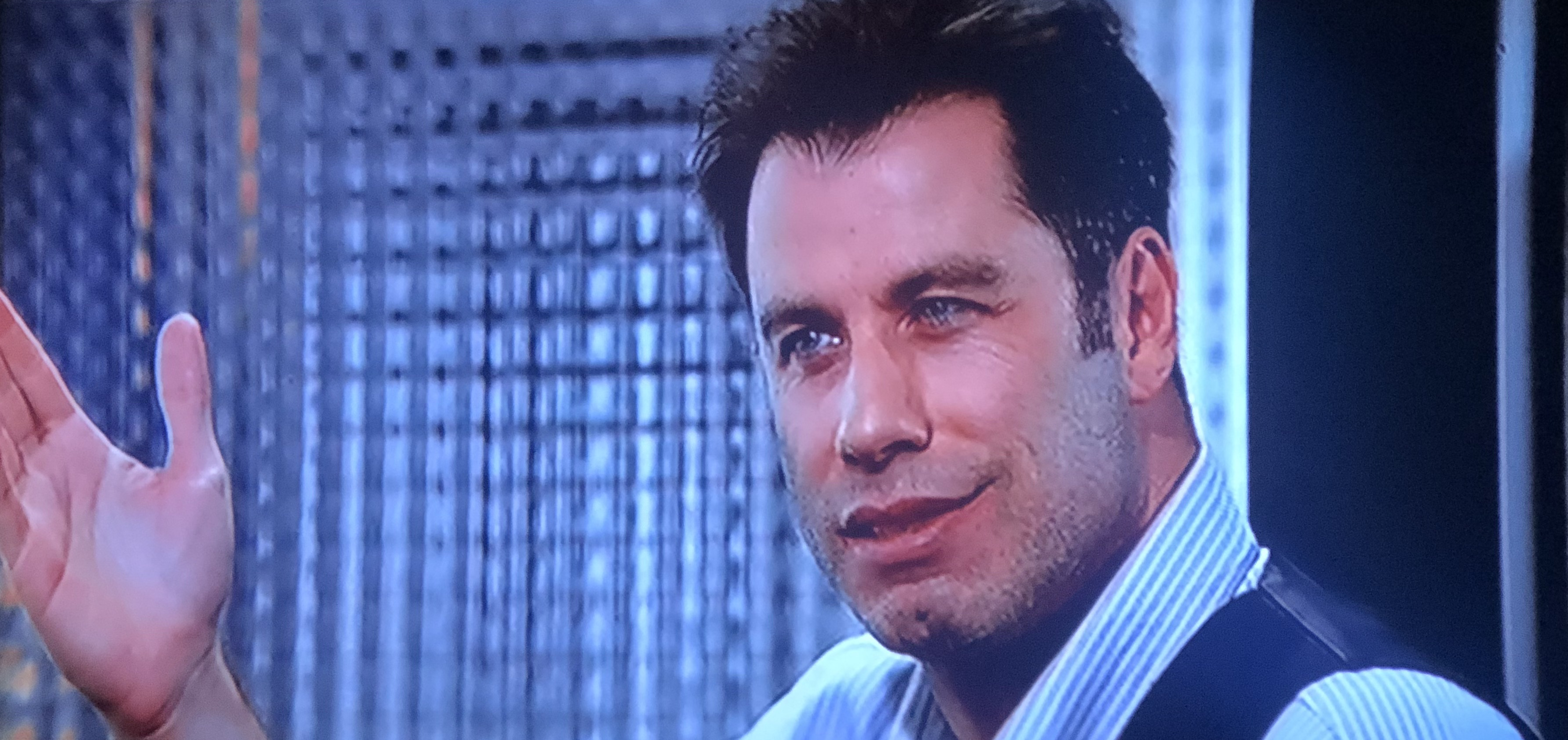
Surviving the bullet Castor intended for him, the one that took his son’s life, Archer makes it his mission to find and apprehend Troy and his brother Pollux Troy (played by Alessandro Nivola) to both avenge his son, and put the tragedy behind him. Fast forward six years and Archer is still hot on Troy’s terrorism trail, and chases him and his brother down to a local L.A. airfield. Unbeknownst to Archer, the Troy brother’s have already planted a time bomb at the LA Convention Hall meant to kill some Supreme Court justices and a few thousand people (in exchange for a large sum of money.)

After a pretty epic helicopter vs. airplane crash and a bloody gun fight in an air hangar, Archer and the FBI apprehend Pollux and knock Castor unconscious, putting him into a coma. Thinking he’s finally closed the case on his son’s murderer, Archer consoles his wife, Eve, played by Joan Archer and troubled teenage daughter, promising that he will ease up on his workaholism and FBI field service, and finally focus more time on his family that he loves deeply.
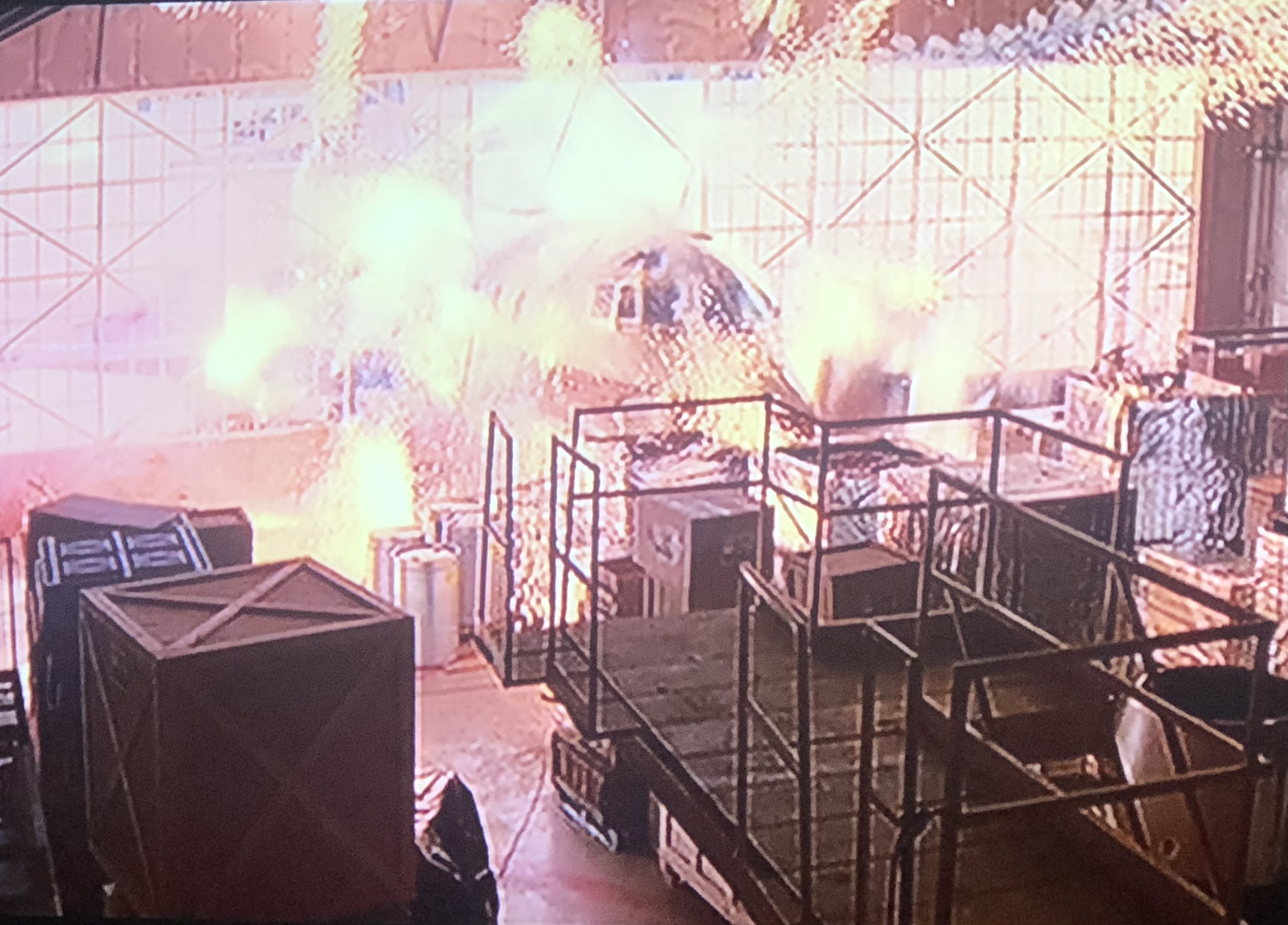

But, alas, Archer and the FBI discover a floppy disk (yep, one of those) that reveals the plans for Castor’s time bomb set to go off in ~72 hours, but not the location. After shaking down the usual suspects (Castor’s croneys) and Pollux (who’s mum on the topic), Archer is left with little options for discovering the whereabouts of the bomb set to kill thousands. Since Castor is in a coma and Pollux will talk only to his brother, the only recourse is: science.
Enter the lab coats and the miracle of bio-tech surgery. With the help of fancy lasers, physical alteration / augmentation software, adbominoplasty, Great Clips, and a clear skull-shaped skin mask, the Scientist guy offers to carefully remove Sean’s face and replace it with Castor’s–lickety split.
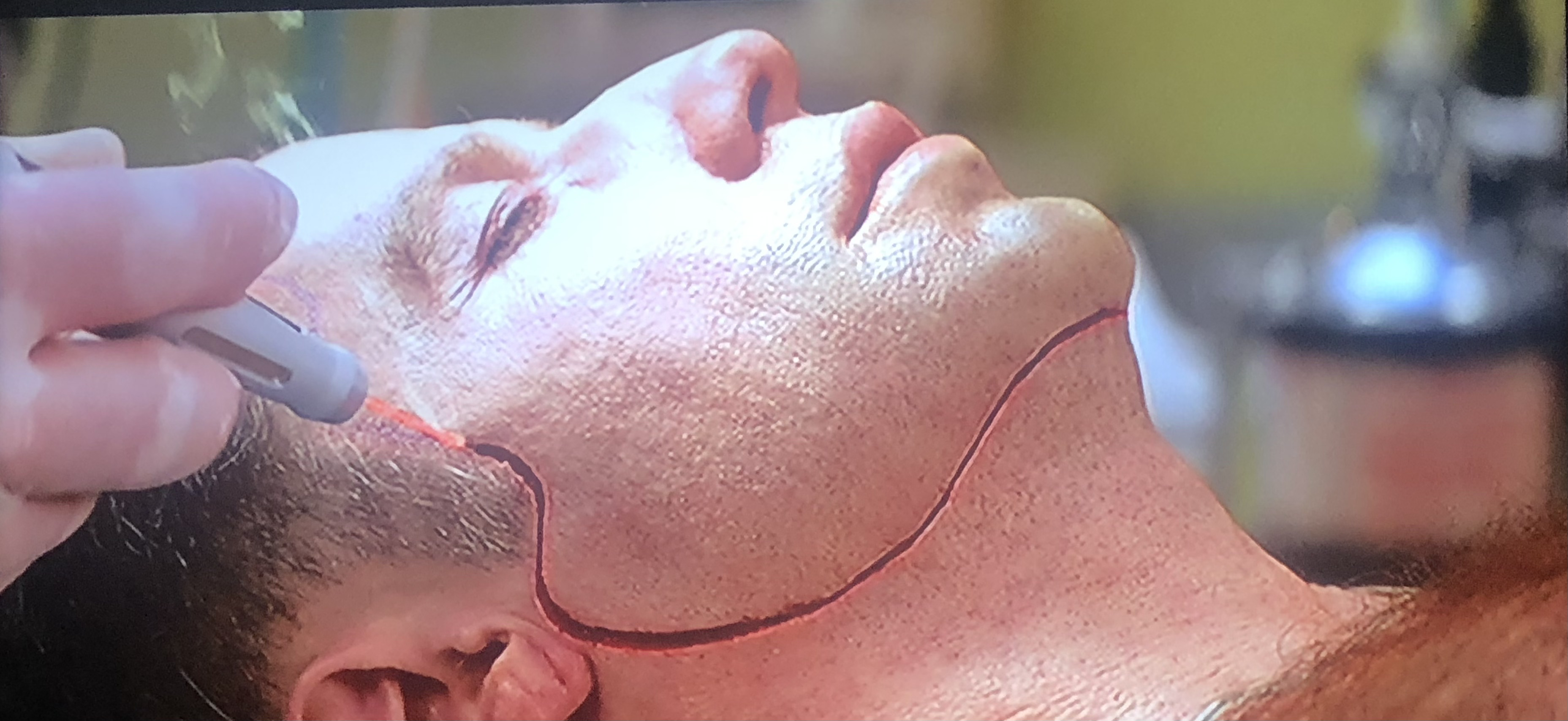
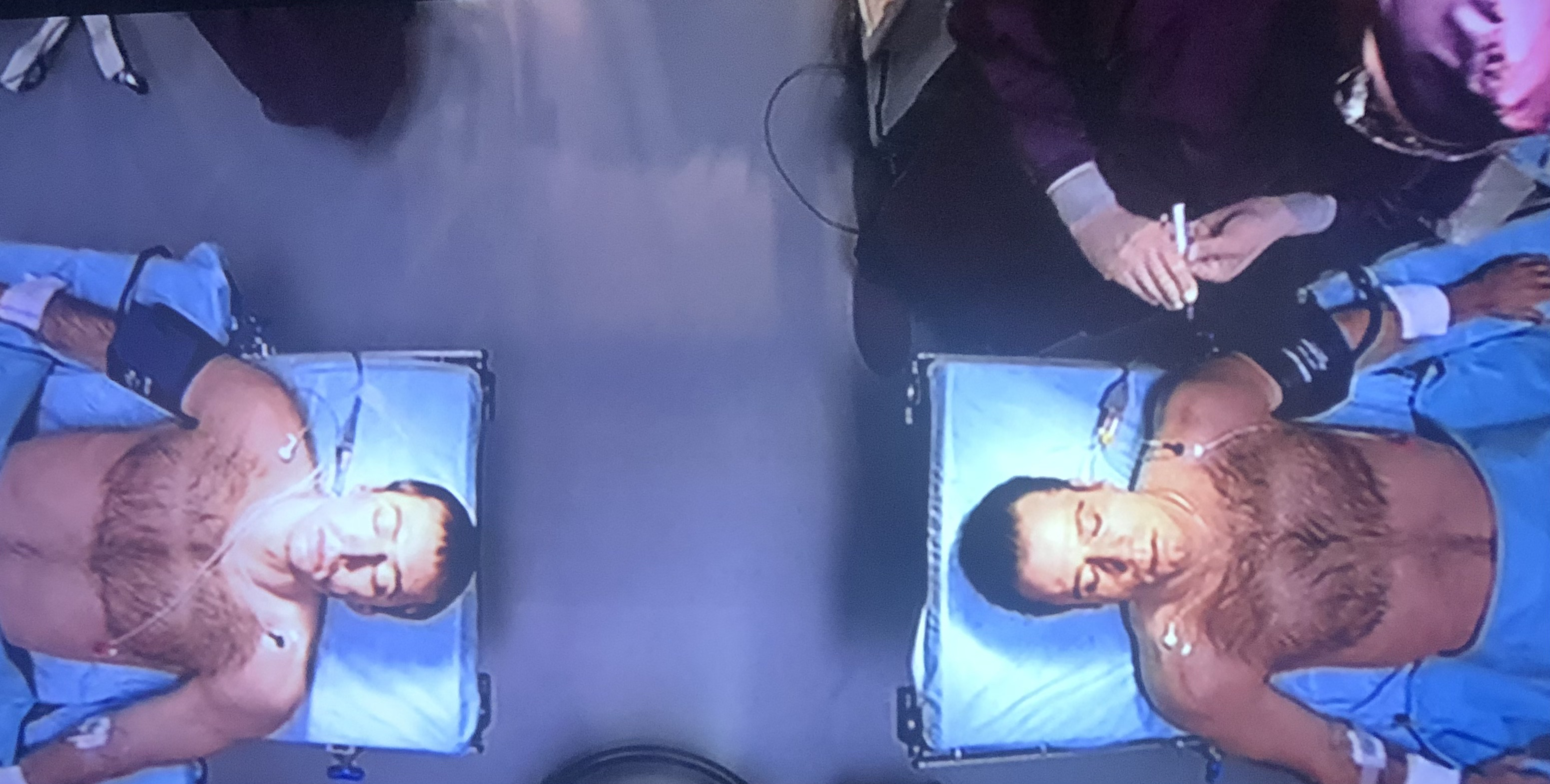

In addition to the seamless physique and facial swap, those that brought you “Science!”, also offered to plant a chip that would allow Sean to speak with Castor’s exact voice. In spite of his very reasonable reservations, Archer agrees to this devil’s bargain (taking on a deep cover mission he could reveal to no one, not even his wife) of posing as Castor to convince Pollux to reveal the location of the bomb and hopefully a way to defuse it.
What could possibly go wrong?
Everything it seems. After swapping faces and bodies (essentially) with Castor (still in a coma) Archer takes his puppet body INTO a high security prison where Pollux is now being held (why not a quiet interrogation room?) After some gnarly prison fighting, he gets Pollux to trust him and tell him the location of the bomb.
Movie over, you say?

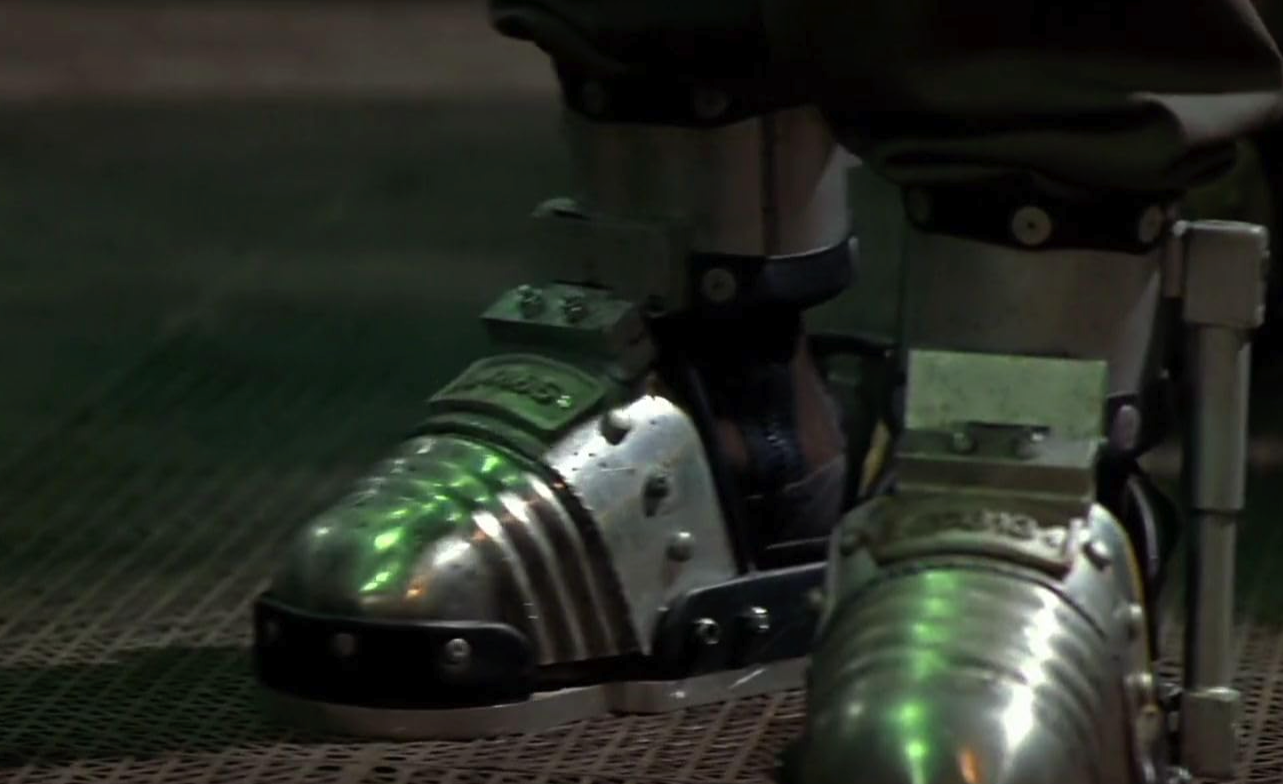

Nope. While Archer (as Castor) was learning the perils of the prison system (magnetic boots and electric cattle prods) Castor miraculously awoke from his coma (luckily unguarded) called in his croneys, kidnapped the Scientist, forced him to do the same procedure on him (i.e. got masked up with Sean’s body, face, and voice) and then killed the Scientist and anyone else who knew about the existence of this covert mission (other than the real Sean, himself, who’s stuck in jail and none the wiser).
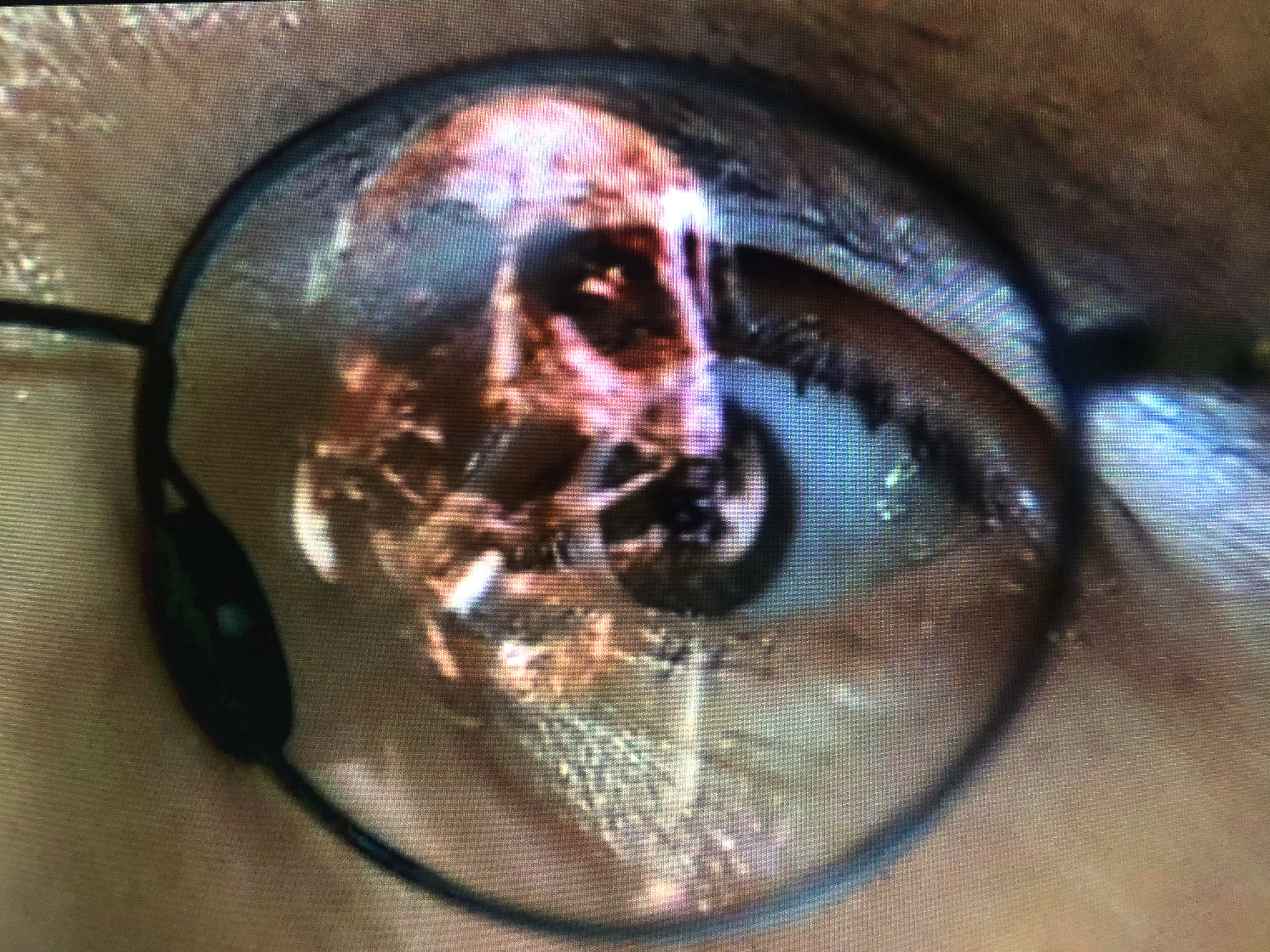
When Pollux is released from prison, Archer realizes something has gone awry which is quickly confirmed when Castor shows up at the jail (with Archer’s face and body on) and tells him he’s basically going to live a good life (fucking Sean’s wife and fucking up Sean’s life) on the outside, while Archer (in Castor’s face and body) will be stuck in jail forever.
A lot of relational dynamics happen from there, mostly letting Archer and Castor walk in each other’s shoes for a while. (It’s an action movie about empathy I suppose.) Archer has to figure out how to sneak his way out of jail, how to enlist the help of Castor’s terrorist pals in taking down fake Archer, how to navigate Castor’s rocky love interests (and unexpected child) and how to convince his real wife and daughter that he’s actually real Archer (and not Castor).
Castor meanwhile has to take on the familial role of faithful and romantic husband and understanding (and hip to the teen struggles) father; he has to learn how to be a good guy (which he does by defusing his own bomb); and he has to somehow thwart the plans of his escaped nemesis, the fake Castor before he can upend his situation.
Eventually, after some intense gun fighting between Archer and Troy at an FBI invasion of Troy’s safe house, Pollux gets killed by being dropped a few hundred feet from a skylight (oops), and fake Sean starts to lose his grip a bit.


Archer (as fake Castor) eventually convinces his wife of who he really is behind that Nic Cage face, through a few unique tells (different blood type, the love touch* which we’ll get to later, and some well timed commonly shared memories) and plans a final face off with fake Sean at the funeral of his mentor, Victor Lazzaro (whom fake Sean killed after Pollux’s death).
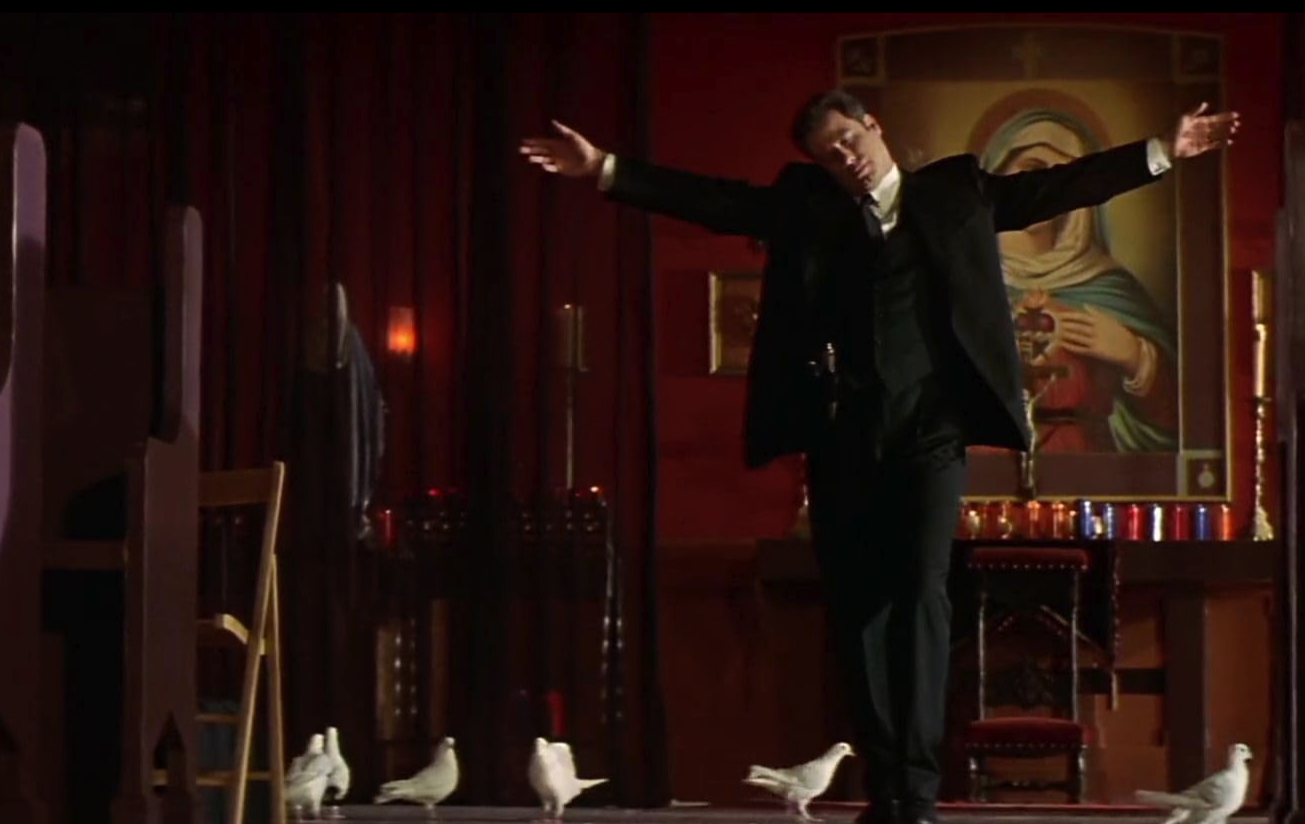


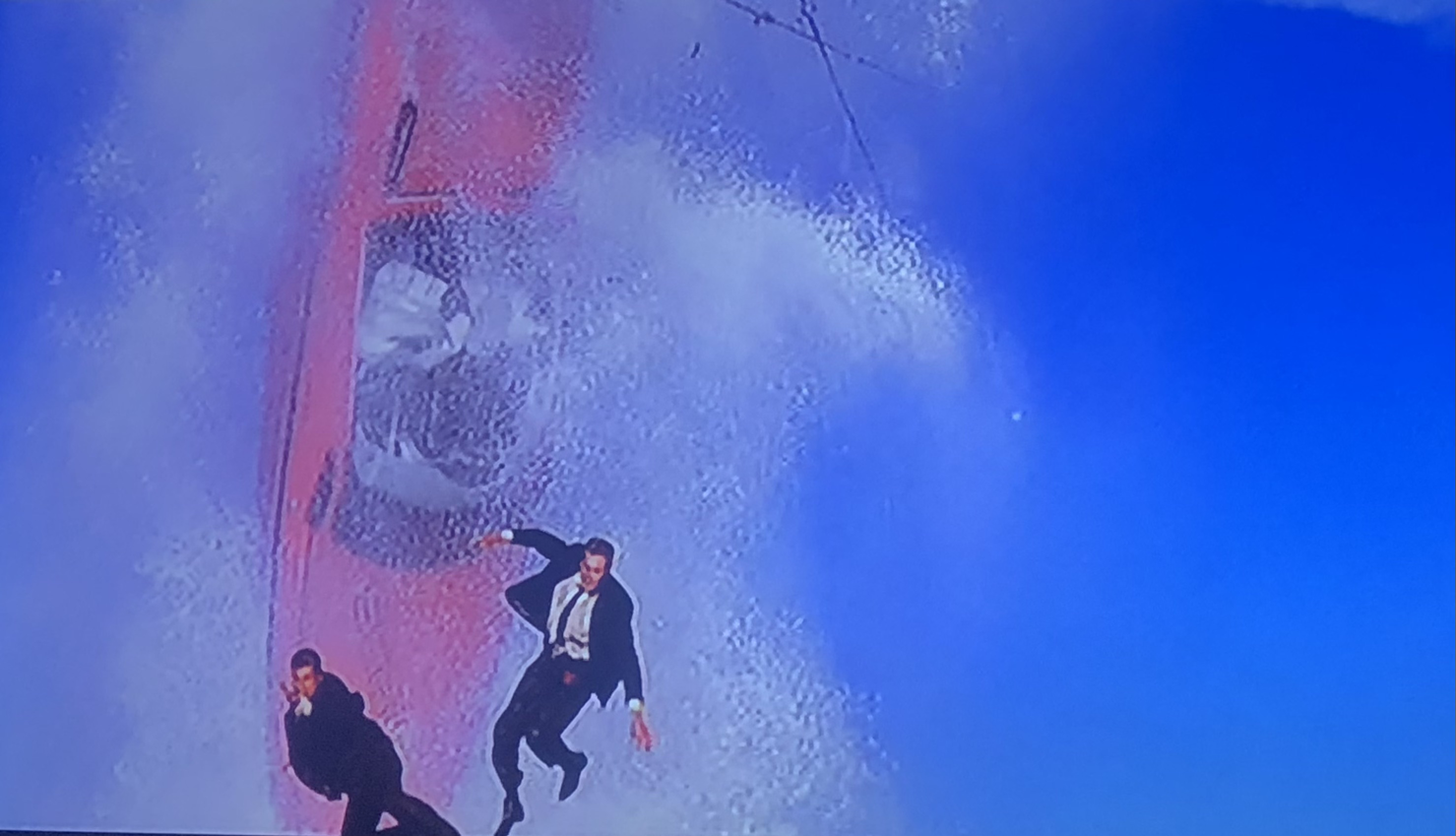

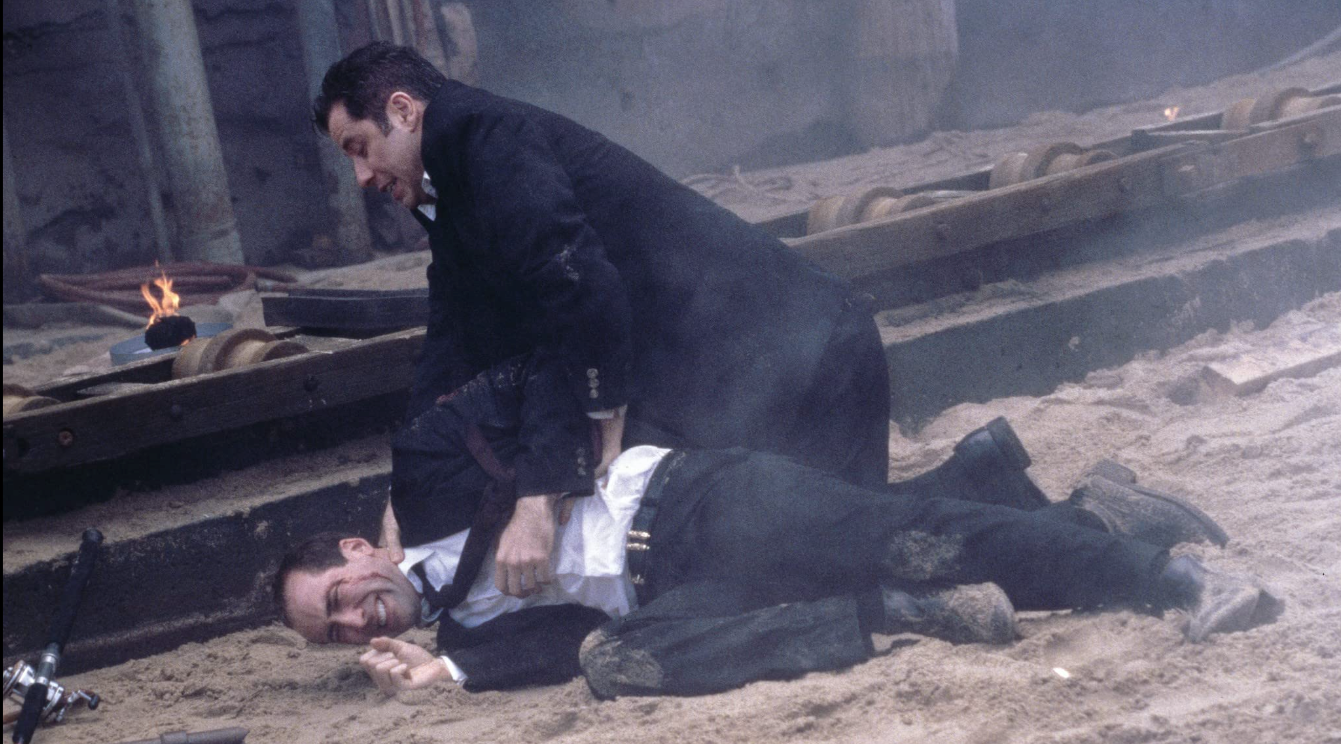
After an intense shootout at a beachside cathedral, Archer chases Troy (in coordinated red and white speedboats) on a bonkers aquatic path that leaves fiery destruction, dead Coast guard officers, and a peaceful boating day entirely obliterated in its sloppy wake. Both men end up stranded and gunless on the beach, fighting with metal pipes, sand, and a harpoon gun, until one harpoon ends up in the guts of fake Sean (who has just tried to cut his own face off with a sharp piece of glass).
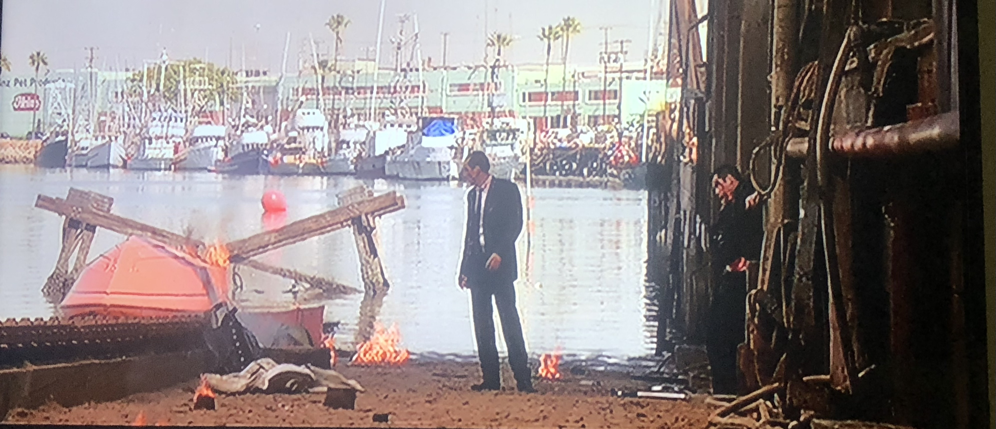
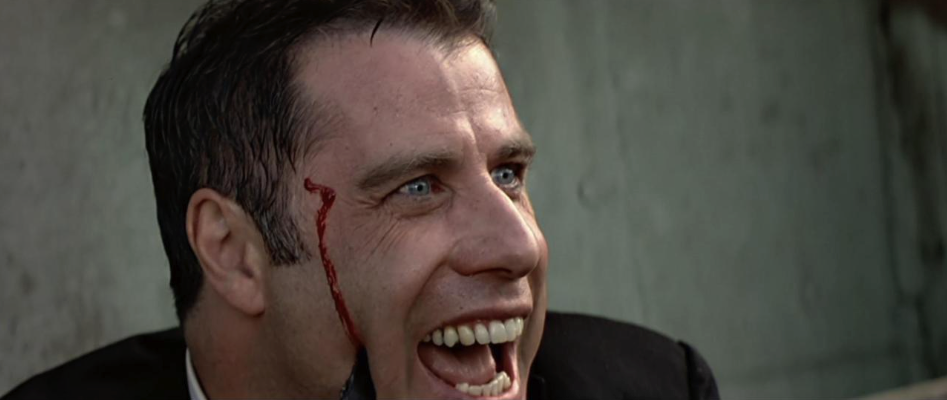
Thankfully, all is not lost: Science! (again)
Yes lab coats comes to the rescue. Reasoning out everything that has happened, the FBI is quite understanding of the situation that has unfolded (faces get mixed up all the time) and performs the surgery needed to give Sean his true face back. Castor is really dead this time, and so the Archer family is happy to finally have some resolution to all the years of mischief and mayhem. And bonus, Castor Troy’s small son (the one he didn’t even know he had) is now in need of a home since he has been completely orphaned. The Archers are here for it. Dead child replaced.
And John Woo just inadvertently made his first Disney movie as well.
The coolest things at Face value
- Nicolas Cage getting to play John Travolta and John Travolta getting to play Nicolas Cage. Even with the characters (Castor and Sean) getting in the way, it was cool to see the mannerisms each of them took to “act” out the other. Nic did a really good job of making the pained / wincing expressions of Travolta.
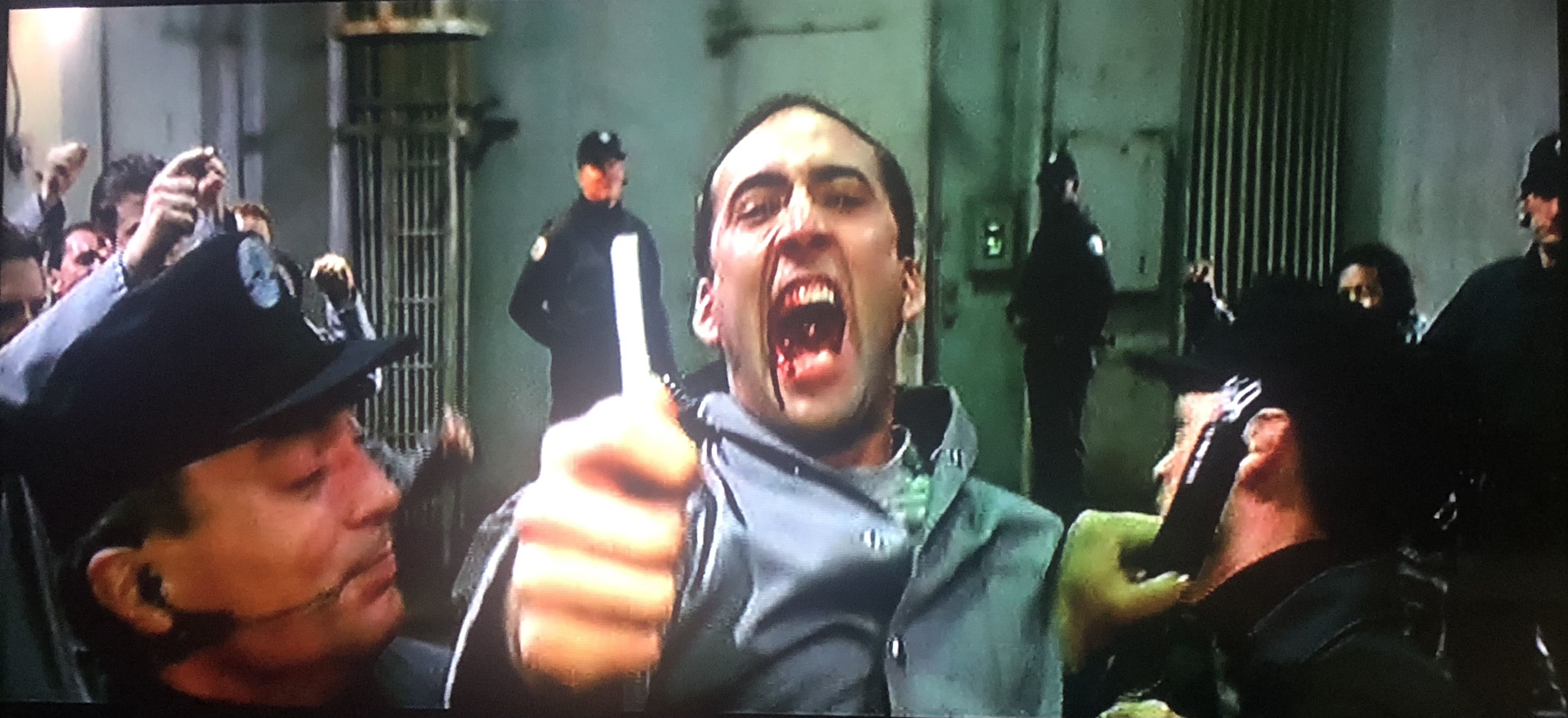
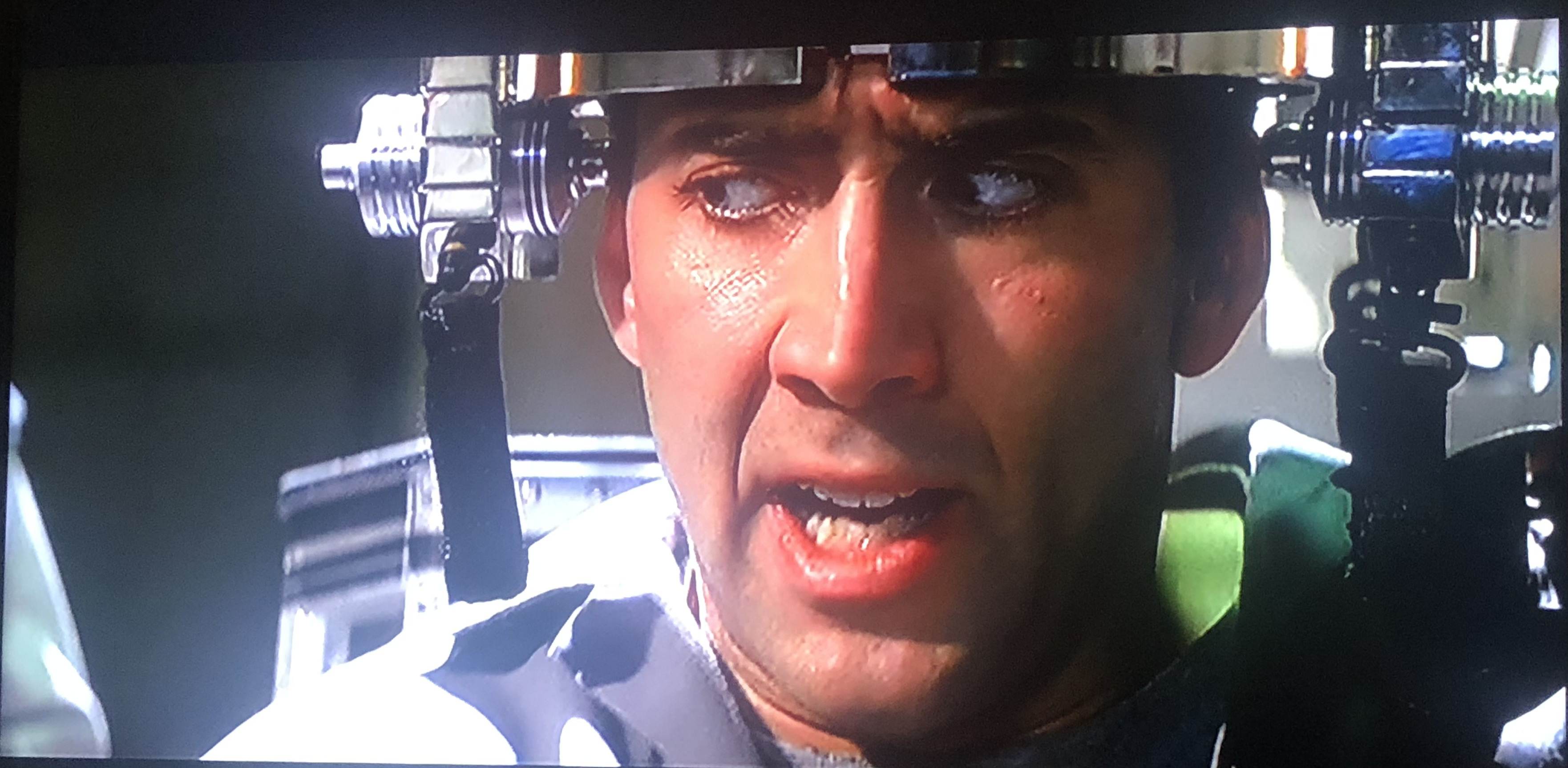
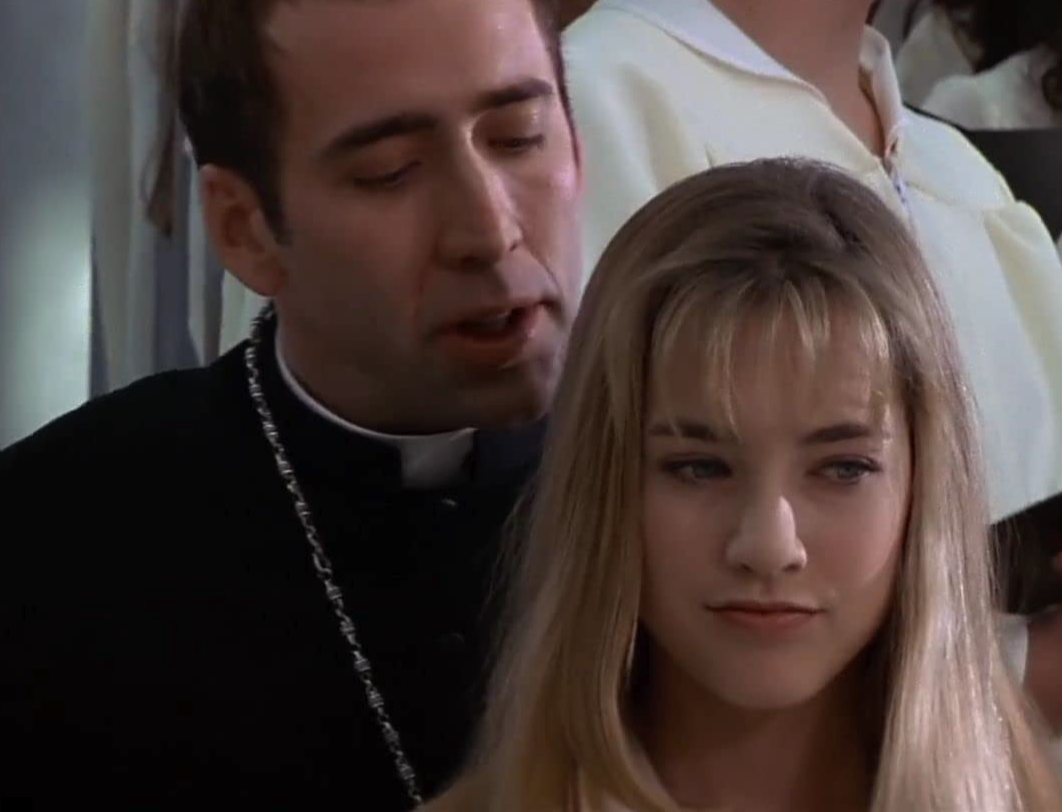
- The Cage insanity-bugged-out-eyes in Face/Off are unparalleled. These images have to be the most memed of any Nicolas Cage movies. The priest scene, the jail fight scene, and the post-drug bathroom scene are the ‘pictures that say a thousand words’ on behalf of Sir Nicolas Cage. The internet got built with these images.
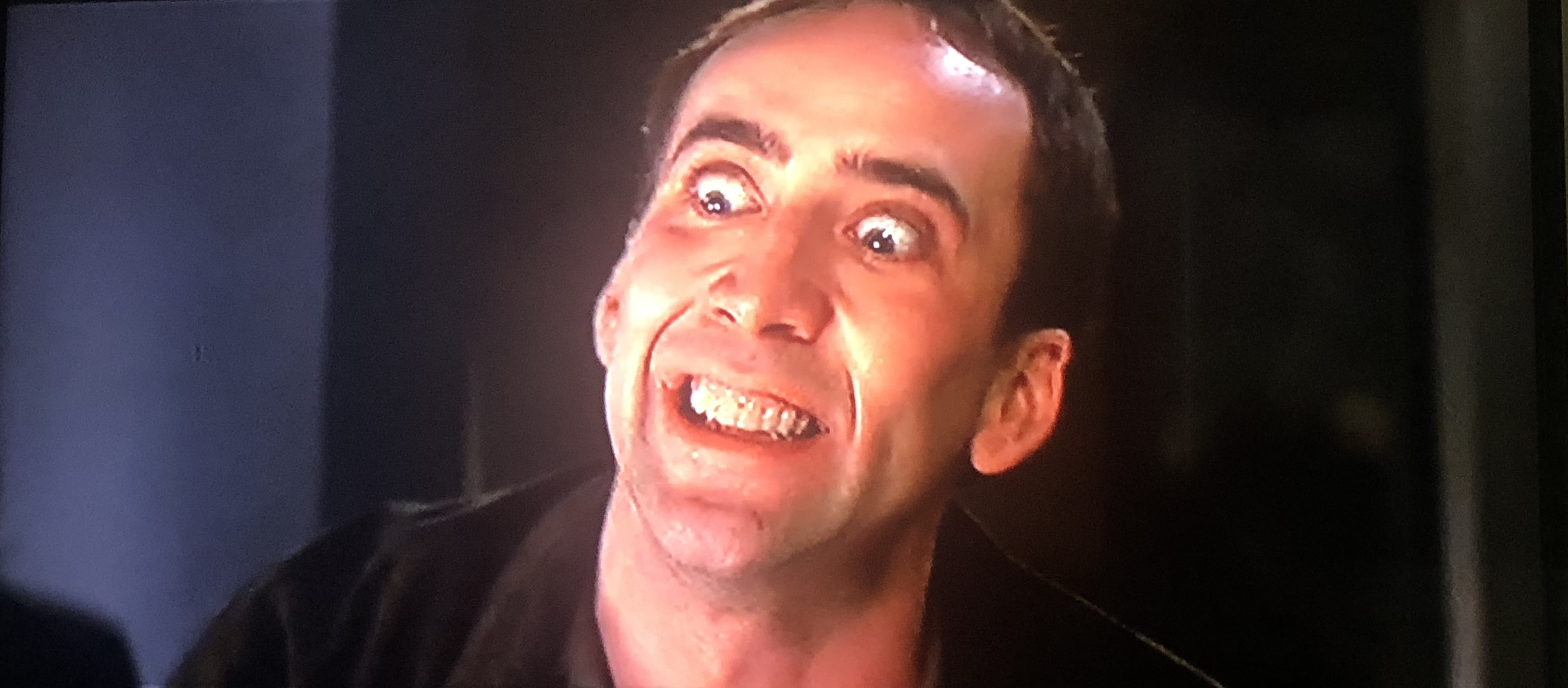
- Some cool factoids I picked up from this article about Face/Off:
- Castor and Pollux were names taken from Greek mythology. The two were half-brothers (same mom) but Pollux was the stronger since his father was Zeus (God of thunder). This is perhaps a “swap” of personalities (irony!)
- The futuristic prison that Castor was sent to was run by Ingen, the same company name behind the technology seen in Jurassic Park signifying that these two stories exist in the same universe! 🤯
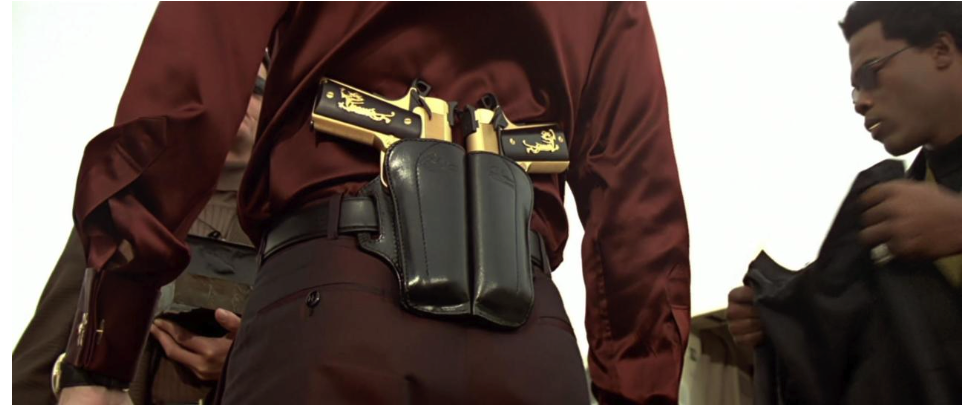
- The dragons carved into Castor’s golden guns was Cage’s idea, as he was born in the year of the dragon (1964).
- During the surgery scene, the weird looking bodies of Castor and Sean were latex dummies with animatronic features.
- The crack that fake Sean makes about having this “ridiculous chin” was a bit of self-deprecatory humor that Travolta ad-libbed into the script.
- The alternate ending of Face/Off (on the special release DVD) has real Sean looking in the mirror when his wife enters the room and they both see Castor looking back. This darker, almost Twin Peaks-ish vision, intimates that Castor is still inside him at some level.
- The song that Castor sings when cornered at gunpoint by Archer, “I’m ready for the big ride, baby…” is one that Cage made up, evidently. (Hilarious how long I searched to find out who wrote those lyrics.)
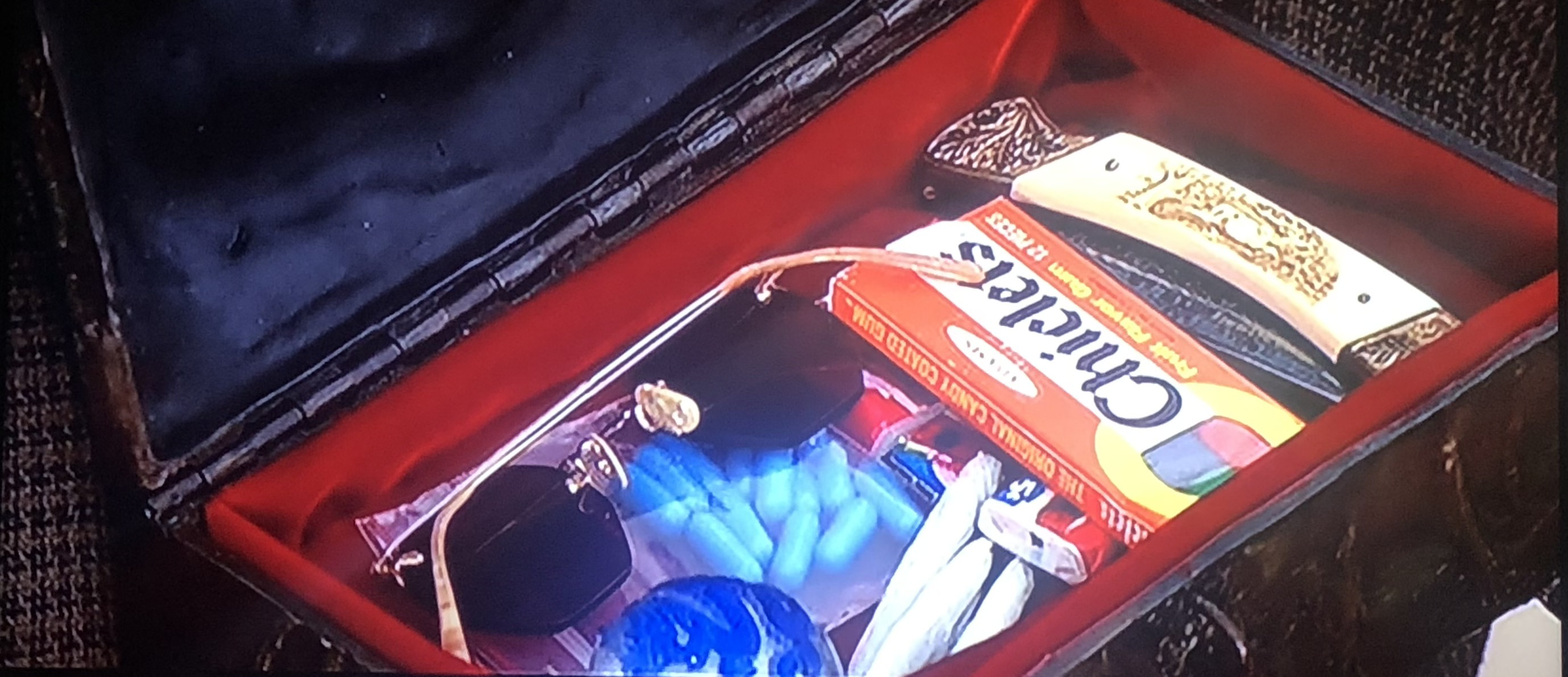
- Castor’s box of goodies. Guns, sunglasses, pocketknife, Chiclets, joints, pills, other personal effects.
The dumbest things at Face value
As much as I loved the experience of watching Face/Off, there are a few details about this movie that just feel especially dumb (hard to buy) to me, even given the obvious logical leap that one must make to accept the fact that these two men can literally trade faces / bodies with a quick surgery.
- Sending Pollux to a high security prison. We all know that the justice system is painfully slow. Why expedite this criminal in a such a way that Archer (as Castor) had to join him in jail to try eke the truth out of him about the bomb. He was in prison within 24-48 hours, I’m assuming. Why not find a quiet jail cell in FBI headquarters to try their face copying scheme out. Why not stage a controlled escape with Castor leading the charge? Why not…I could go on.
- Why the secrecy? Why did Archer have to keep the face swap mission under wraps even from his own wife? Seems like trading identities with a terrorist would be one example of a time where you’d want ALL OF THE FBI to know what was going on–just in case.
- No guards for Castor while he was in a coma? Really? None. Maybe a hand cuffed to the bed would be a good move? Maybe keep him under sedation as well?
- The breakout scene started great, “Anybody got a light?!?” but the plan progressed in a way that made it rely on a whole lot of dumb luck. Before getting electro-shocked are we supposed to think fake Castor knew he was going to have an ally in the room that he could use and manipulate? A man who would have any sense or cognition after being electroshocked to the point of throwing up all over himself. Nah. Not really buying it. Movie could have easily ended with fake Castor getting electroshocked into the next week.
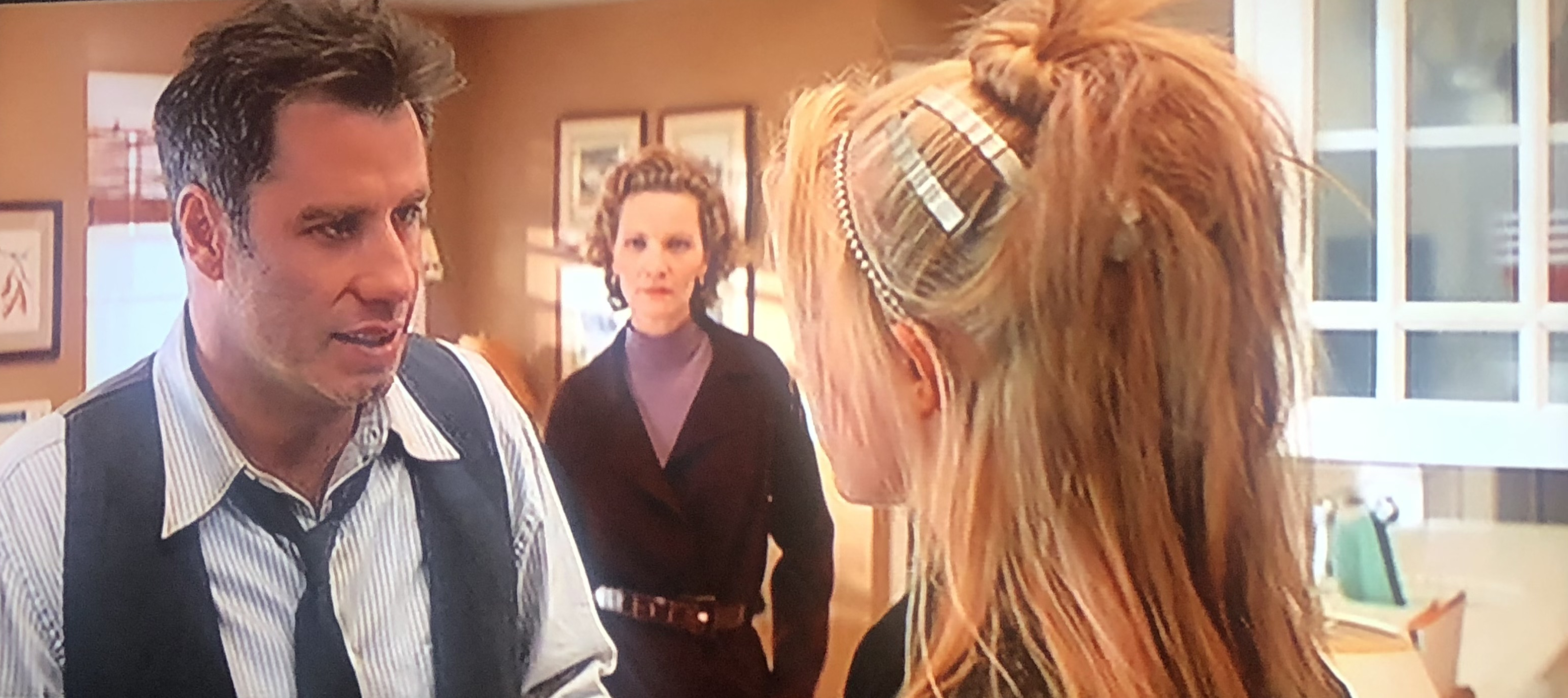
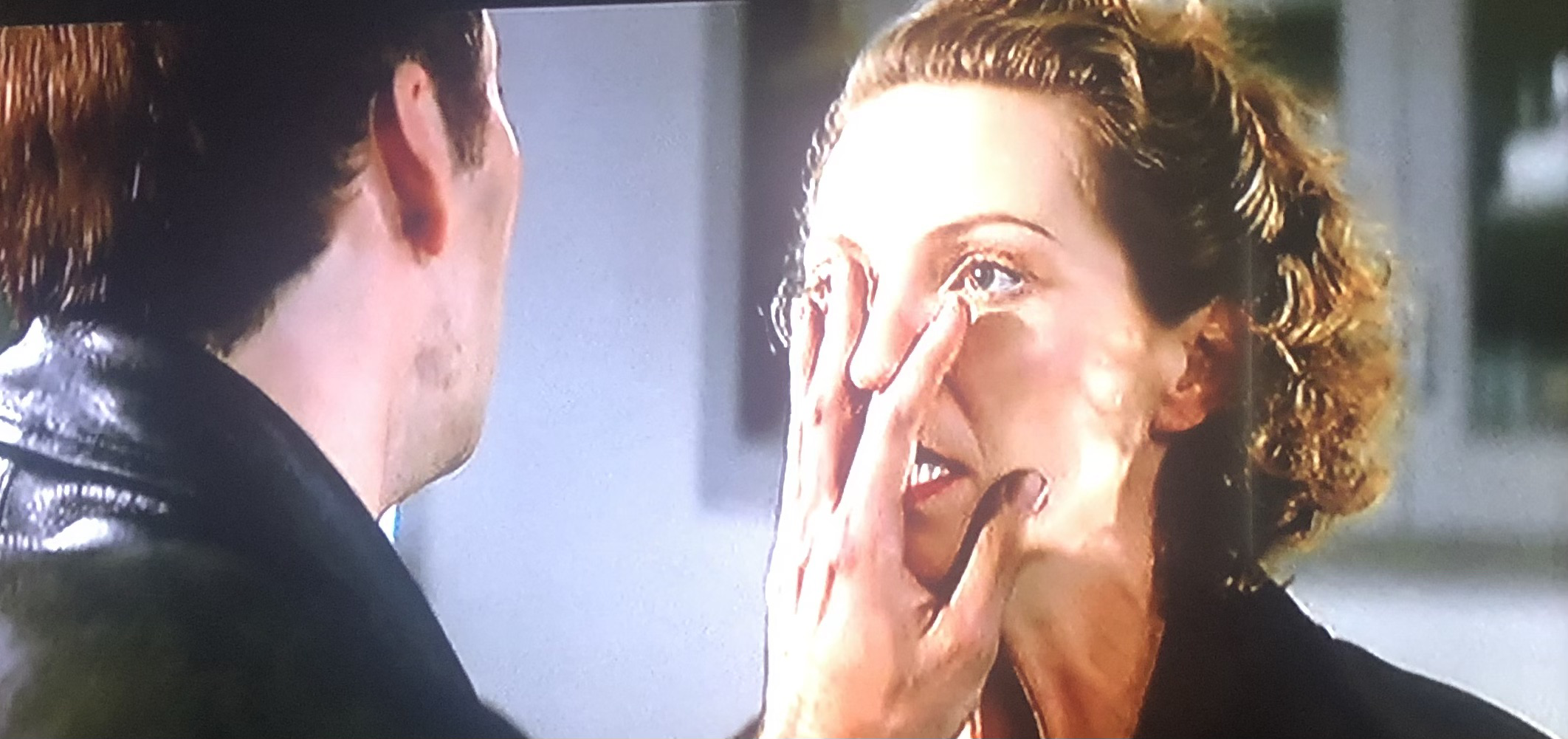
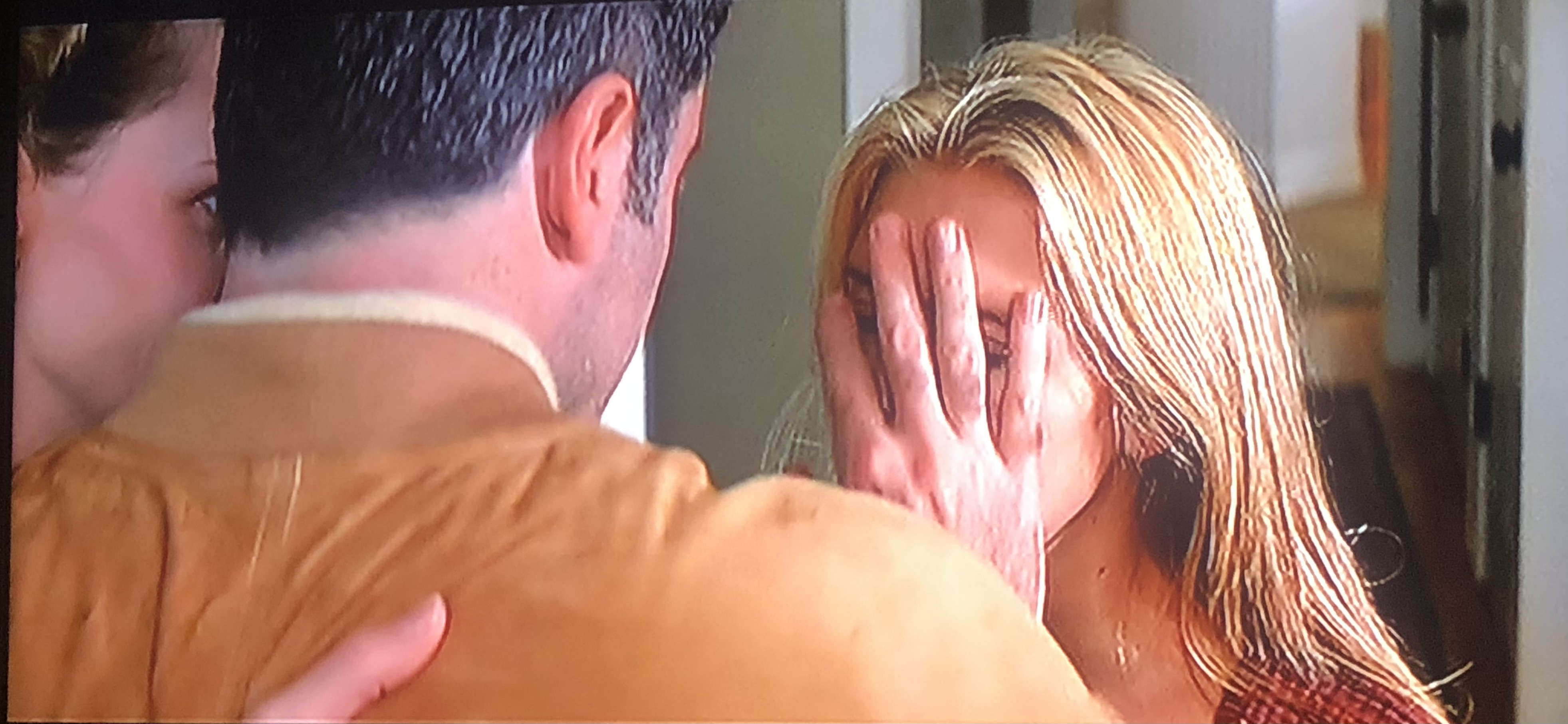
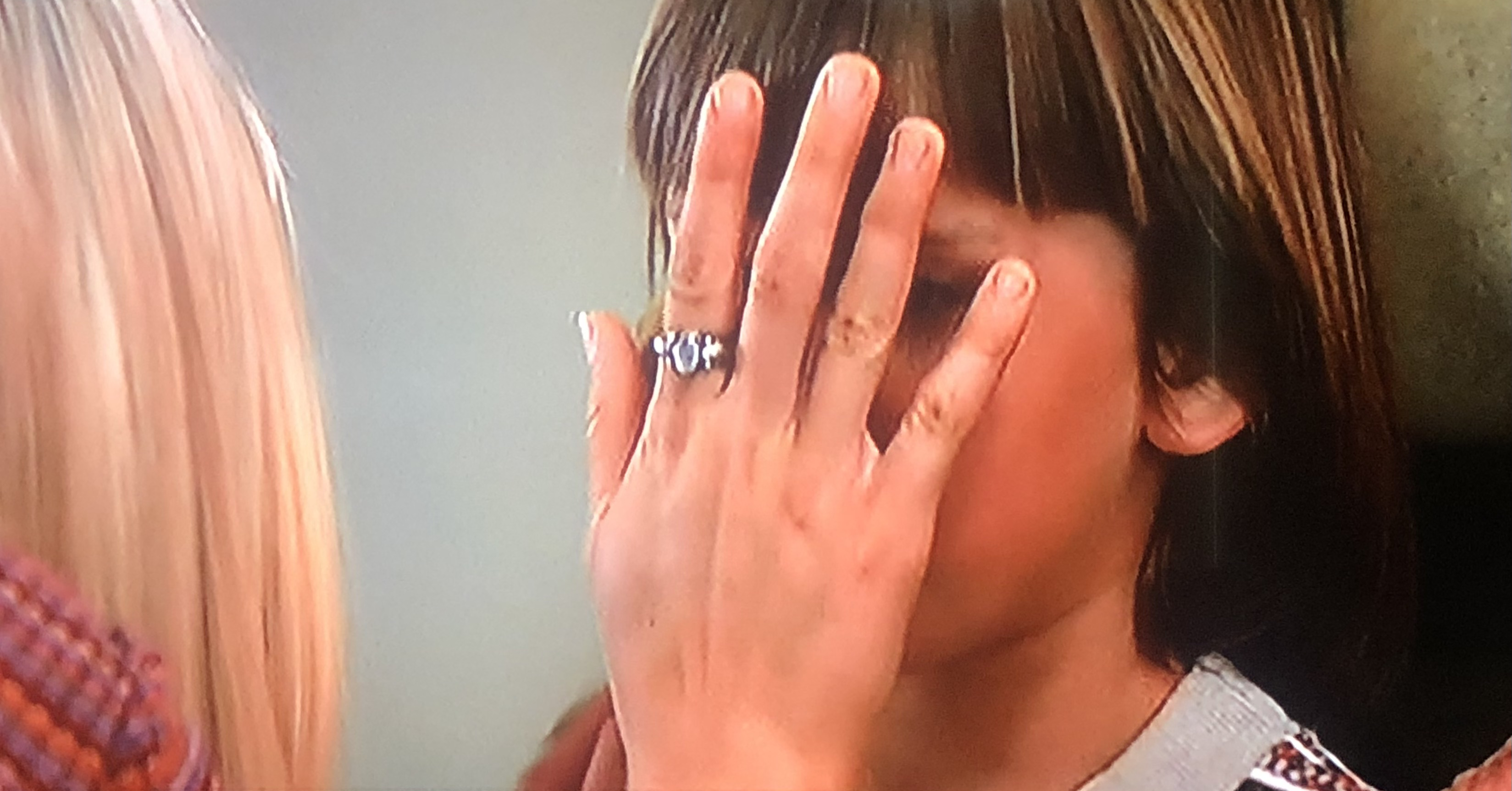
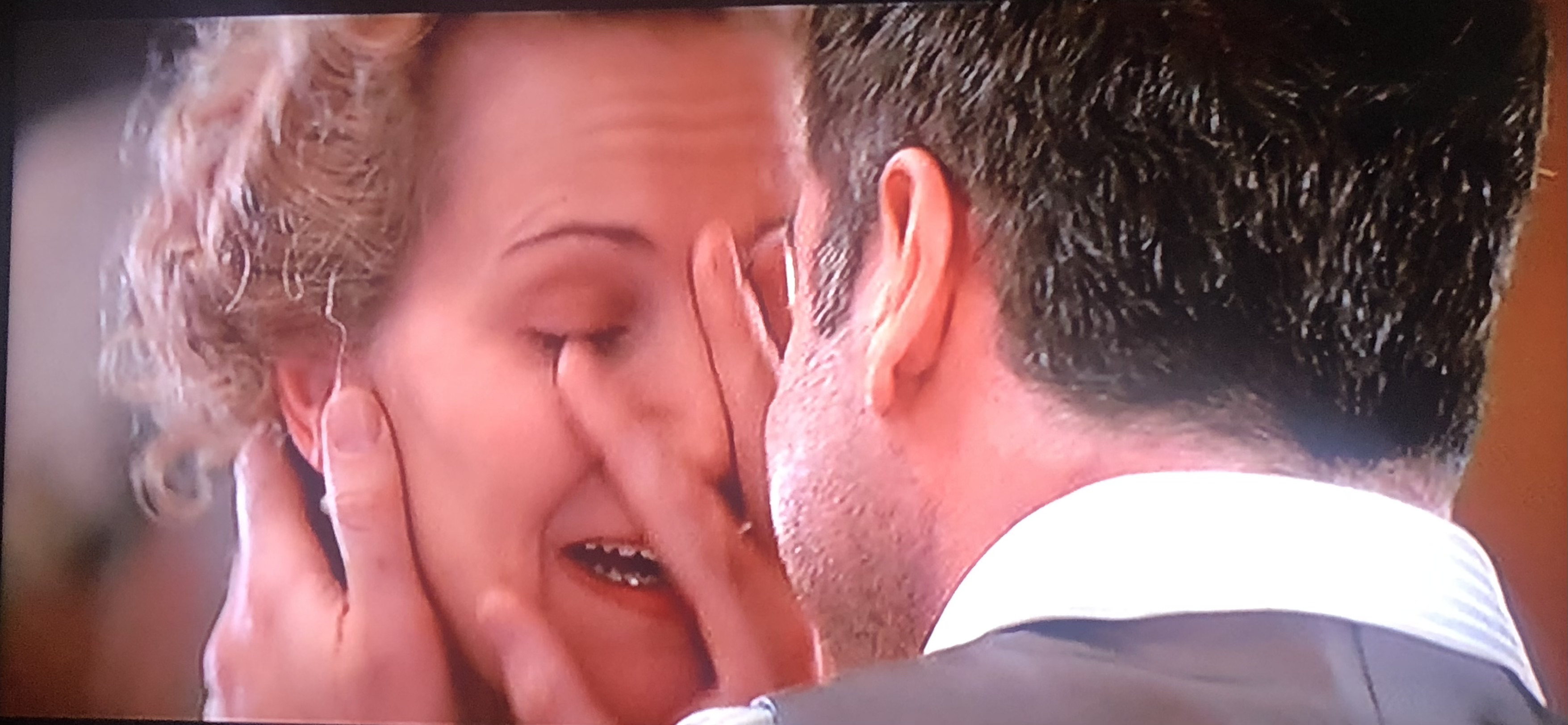
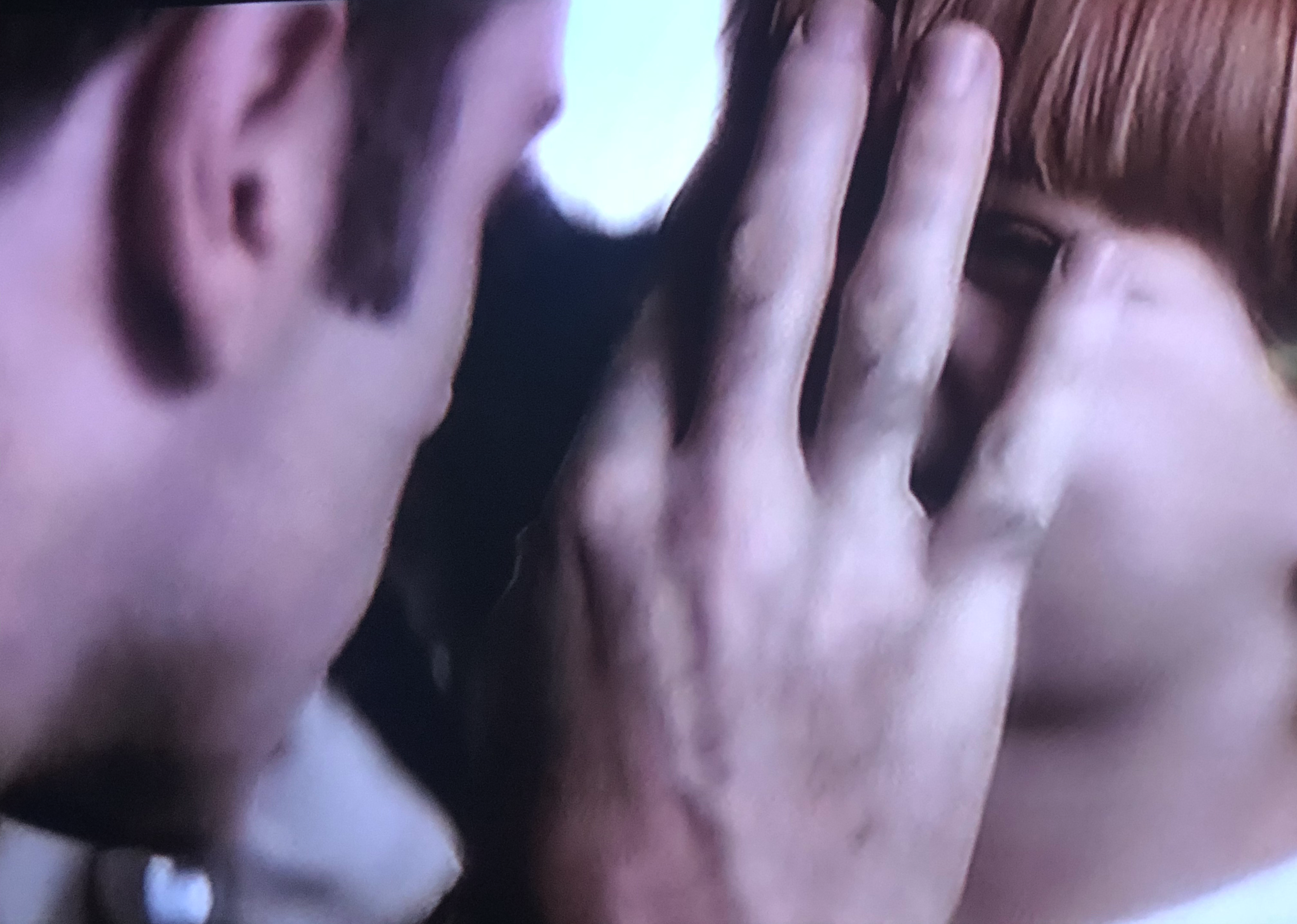
- The love touch*. Rewatching this movie, the weirdest and most outlandish part is the unique way that Sean Archer shows physical affection to his family. Woo called it the love touch. I don’t know how things work in Hong Kong or if this is some kind of cross-cultural behavior that just doesn’t make sense in the U.S. but the love touch is not something I’ve seen much in my life. Basically, the photos below will tell you all you need to know. From the first scene to the last, Sean and his family do this thing where they drag their hand lightly down the face of their loved ones. It could easily be interpreted differently (in the pictures) as one person shoving another person’s face or covering it so you don’t have to see it. But that wasn’t the intent. It’s supposed to be some very bizarre show of affection. What made this even worse was the knowledge that this gesture was going to be an undeniable clue that Sean was the one behind Castor’s face (e.g. “Only Sean shows me he cares with the love touch!”) I guess honking the nose, touching the brow, caressing the forehead, or calling his loved ones “pumpkin” was way too subtle. So we end up with so, so many people experiencing Woo’s love touch. And it’s quite (unintentionally) hilarious.

- Face on again. Since fake Sean killed the Scientist and FBI agents who knew about the face swap program, it seems unlikely to me that some other random FBI doctor could quickly understand the technology and procedure, and then correct it with quick and easy reversal surgery.
Best lines by Nicolas Cage as the real Castor Troy
“Never really liked the Messiah. In fact I think it’s fucking boring!” [Castor dressed as priest, sexually harassing a choir girl and speaking about Handel’s song.]
“You know I can eat a peach for hours.”
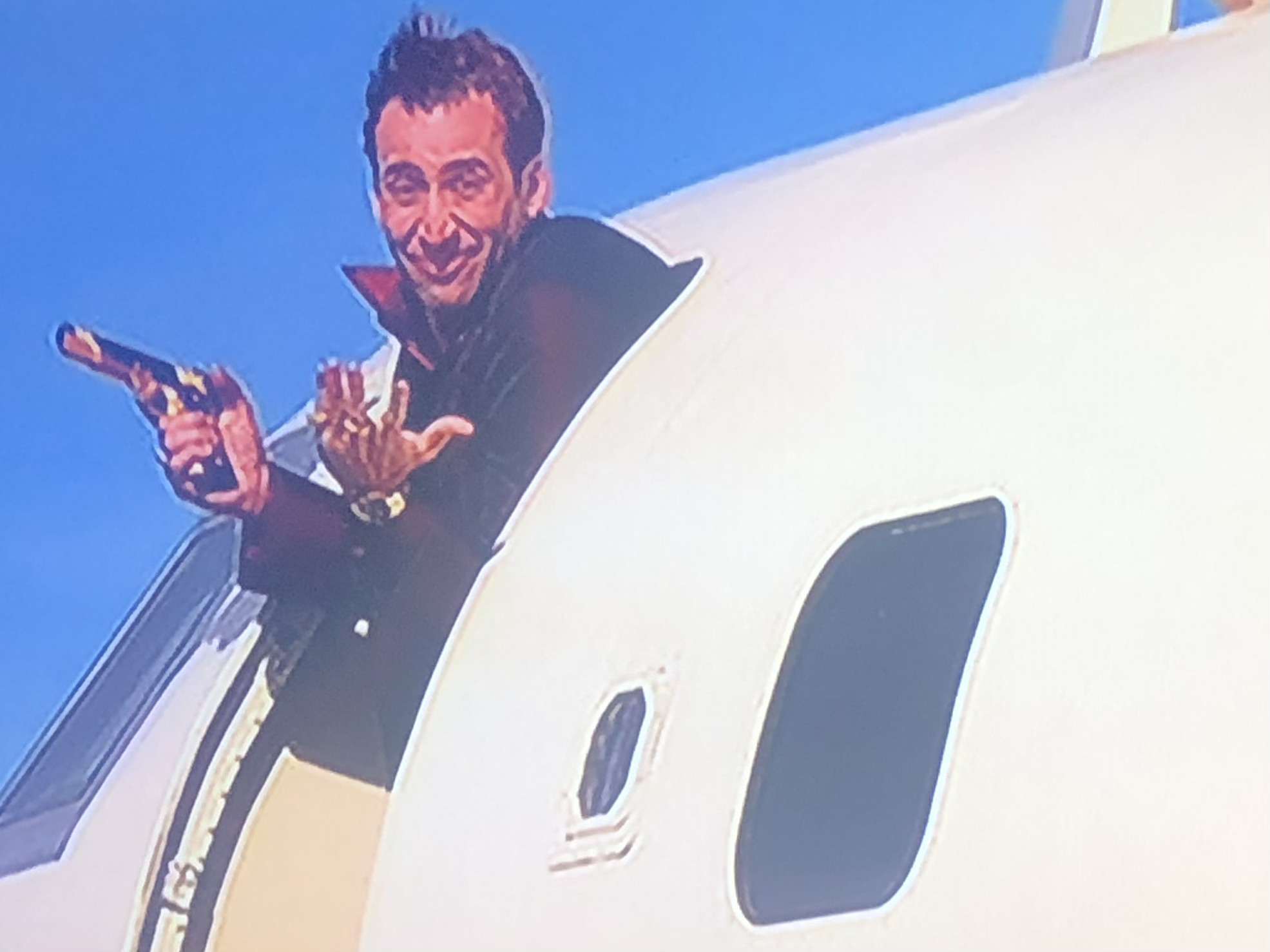
“If I were to let you suck [pause] my tongue [pause] would you be grateful?” [Spoken to a flight attendant / FBI plant who 1) does suck his tongue and 2) whom Castor shoots and throws out of a moving plane.]
“Try terrorism for hire. We’ll blow some shit up. It’s more fun!” [Castor recruiting Sean. He accuses Sean of not having any fun a couple times as they are trying to kill one another with guns.]
Best lines by Nicolas Cage playing Sean as the fake Castor Troy
“I’m not dead. I’m me.”
“Well if you’re Sean Archer. I guess I’m Castor Troy.”
“You want to see what wasted looks like, little man.”
Firsts for a Nicolas Cage character as Castor Troy (real / fake)
- Assassinating a child (accidentally)
- Trading faces / identities with another man
- Breaking out of a maximum security prison
- Playing both a debauched priest and a devout Catholic in the same movie
- In a coma for part of the movie
- Driving a speed boat
- Killing a pilot and a flight attendant
- Stealing a car from a valet
- Harpooning a man to death
Recurrences
- Being incarcerated (Multiple)
- Being in a plane crash (Con Air)
- Bandaged face (Birdy, Racing with the Moon)
- Jumps into water from prison “island” to escape death (The Rock)
- Motorboat incident that quickly lead to death of opponent (Zandalee)
- Appearing in movie with Joan Allen (Peggy Sue Got Married)
This is the first, but not the last movie that Nicolas Cage and John Woo would pair up for. Woo would direct a few more Hollywood hits, Windtalkers (with Cage) in 2002 and Mission: Impossible 2 (with Tom Cruise) in 2000, but neither film, IMHO, holds a candle to outlandishly bizarre and beautiful action work of Woo, Cage, and Travolta in Face/Off. This cult classic will forever be a marker in time when action movies and sci fi movies merged into this elegantly laughable montage of mixed identities, gun operas, and high speed catastrophes.
Post-script: I am not sure if Jackie Chan and Cage ever shared a screen together, we shall see, but I’d kind of like to see the two of them trade faces and identities in a comedic reprise version of Face/Off. While both live and continue to make movies, there’s still a chance…
There’s still one more love touch just waiting to be given…


 yeti speak...
Leave a comment