And you may ask yourself, “How do I work this?”
The Talking Heads / Once in a Lifetime
And you may ask yourself, “Where is that large automobile?”
And you may tell yourself, “This is not my beautiful house”
And you may tell yourself, “This is not my beautiful wife”
Have you ever wondered what your life would be like if you’d made different decisions? Ever had a midlife crisis? Ever watched a Christmas movie depicting a life’s different possibilities (e,g A Christmas Carol, It’s a Wonderful Life)?
If the answer to any of these questions is yes, then I’d like to suggest you’ll resonate with Nicolas Cage’s performance in the heartwarming comedy, The Family Man (2000).
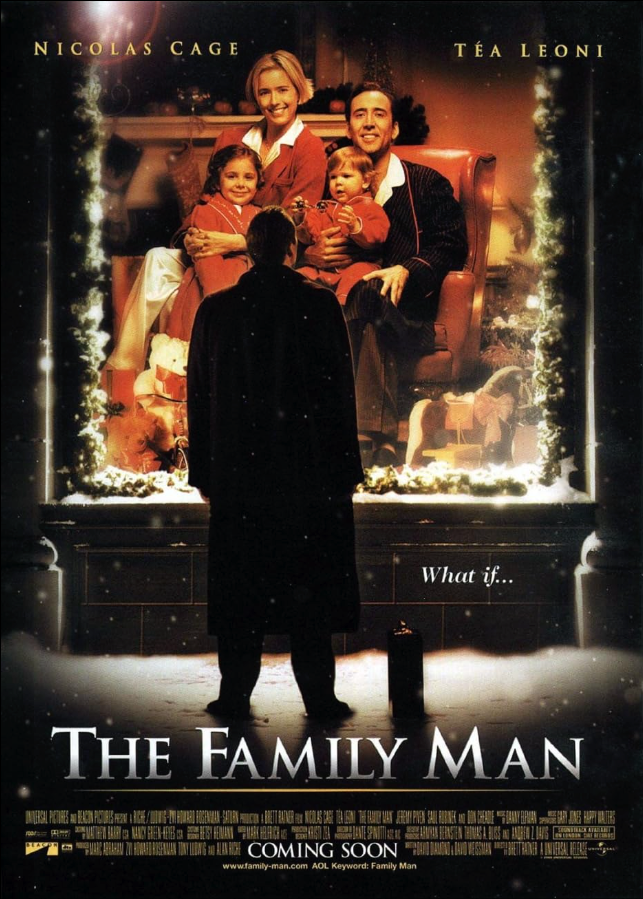
This movie, in my opinion, is second only to Raising Arizona, as Cage’s best comedic / romantic performance and ranks pretty high as an enjoyable romp for just about any audience.
Since I own a copy of The Family Man, I’ve seen the movie 5-6 times; and it just keeps getting better and more relatable to me as I age. I even named one of my children after a main character. So, yes, you could say I like it a LOT. And yes, it’s going to be fun (for me) to do some analysis of it here.
The World According to The Family Man: A Summary
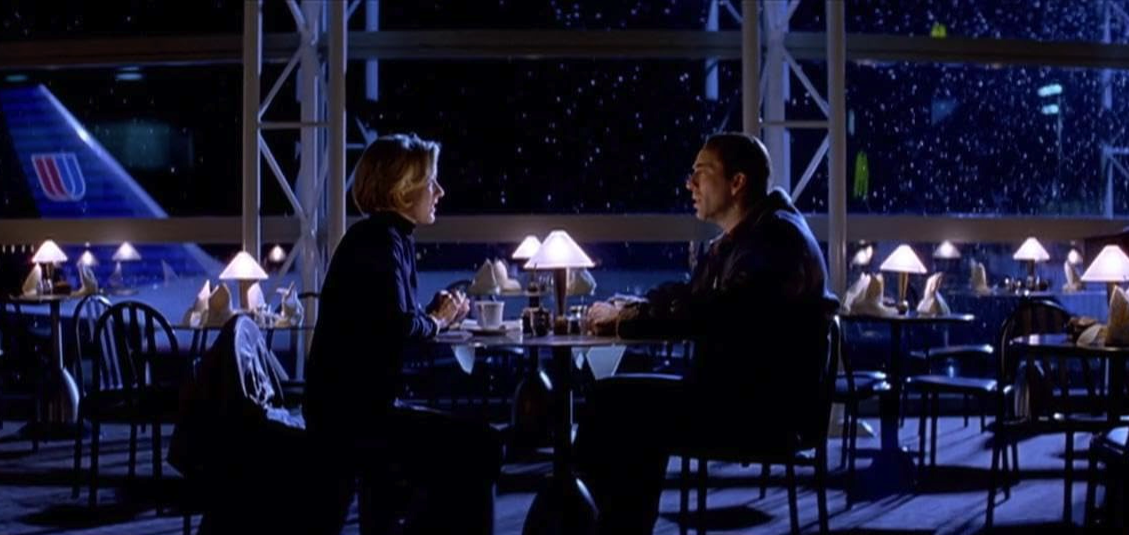
The Family Man begins in 1987 at an airport, with two young lovers, college students Jack Campbell (Nicolas Cage) and Kate Reynolds (Téa Leoni) preparing to separate for a year so Jack can pursue a promising internship at London’s Barclays Bank. As the plane boards and the couple exchange kiss-filled goodbyes, Kate has a premonition. She tells Jack they should just “screw the plan”, that he should stay in New York, that the two should figure out what to do together. Kate says they should “choose us” rather than careers as she fears the departure will lead them away from each other forever.
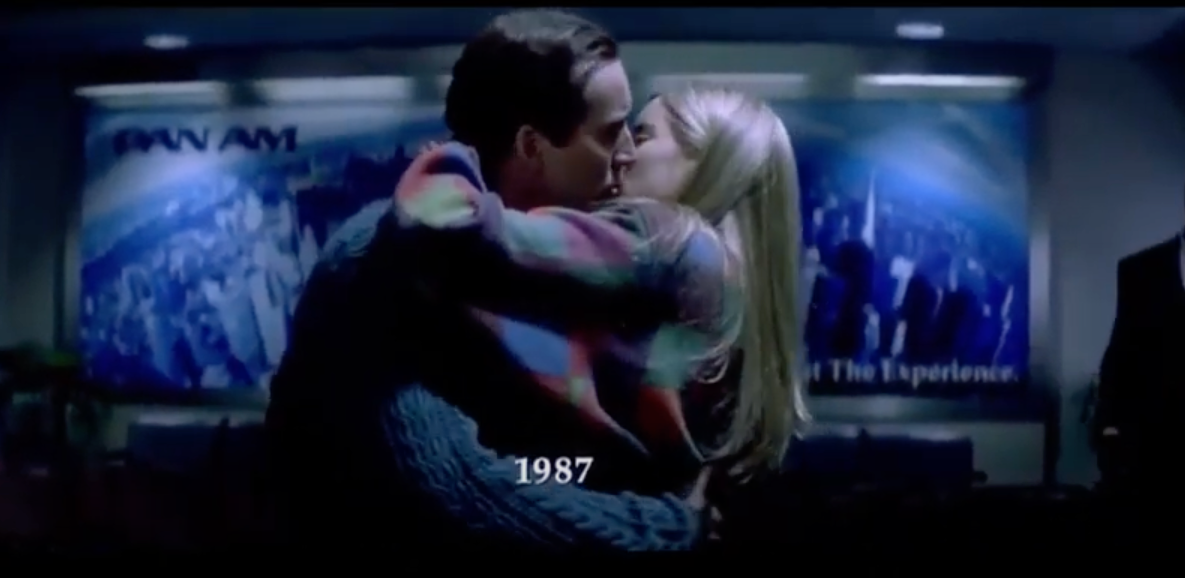
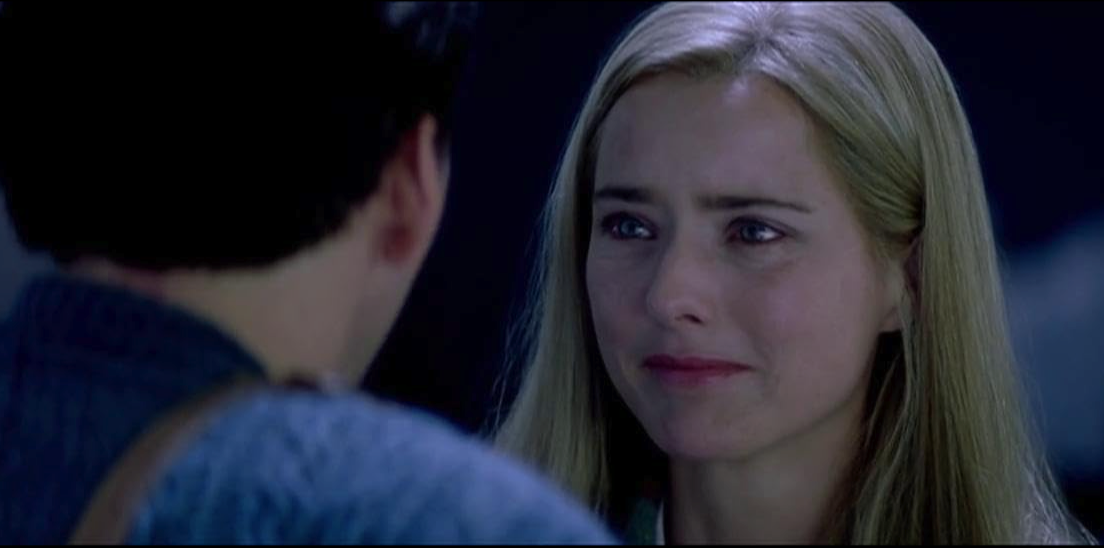
Even-headed Jack, reminds Kate, “Look, we’re at an airport. Nobody thinks clearly at the airport,” and that they shouldn’t make a rash decision to change the plan as the career potential is too good for “them” to pass up. Jack departs and Kate is left alone and tearful at the airport.
Flash forward thirteen years, Jack wakes in a luxury condo with another woman (a blonde bombshell one-night stand), and he has all the visible trapping that it’s been a successful decade. Fine clothes, fine views, a fine car Jack has ascended to the apex of financial success as a president of a Wall Street investment firm called, PK Lassiter Investments. Jack appears highly confident (cocky), driven, and unattached to anyone–having presumably left Kate behind after his year abroad.
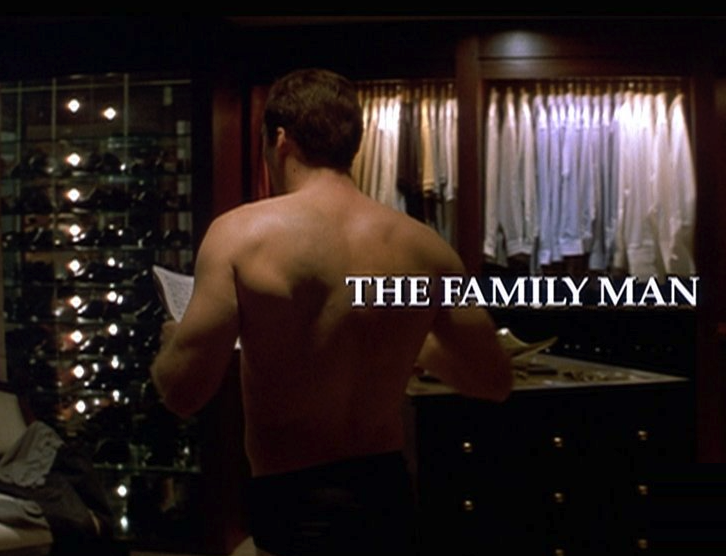


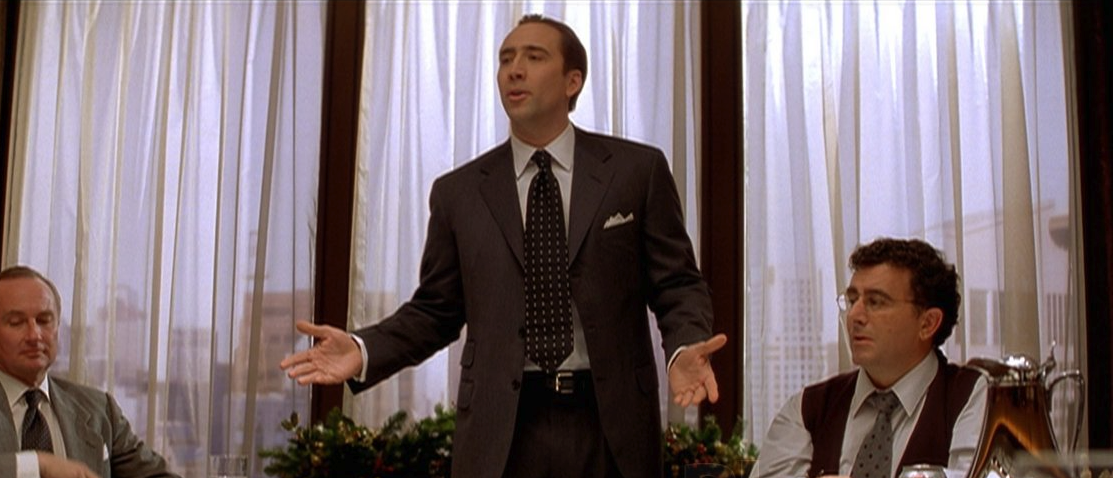
It’s Christmas Eve, and Jack’s holiday plans do not include family or friends, but instead focus on his work and capitalistic pursuits as his team attempts to close a major deal, “My gift comes with ten zeroes,” he tells his overworked colleagues. As Jack leaves his office late that evening, there is anticipation falling with the snow in the air. Jack decides to walk home (leaving his beloved Ferrari behind at the office).
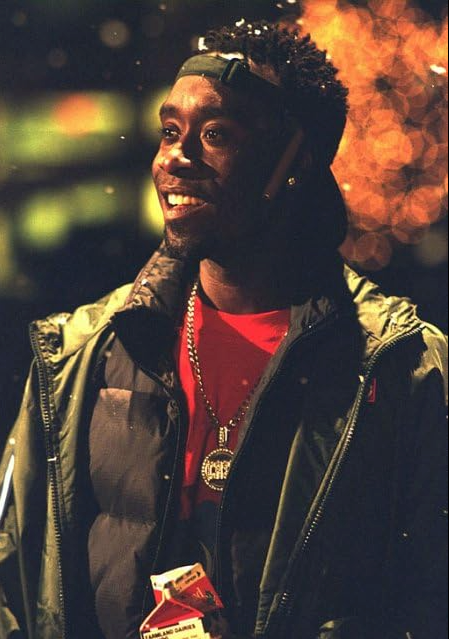
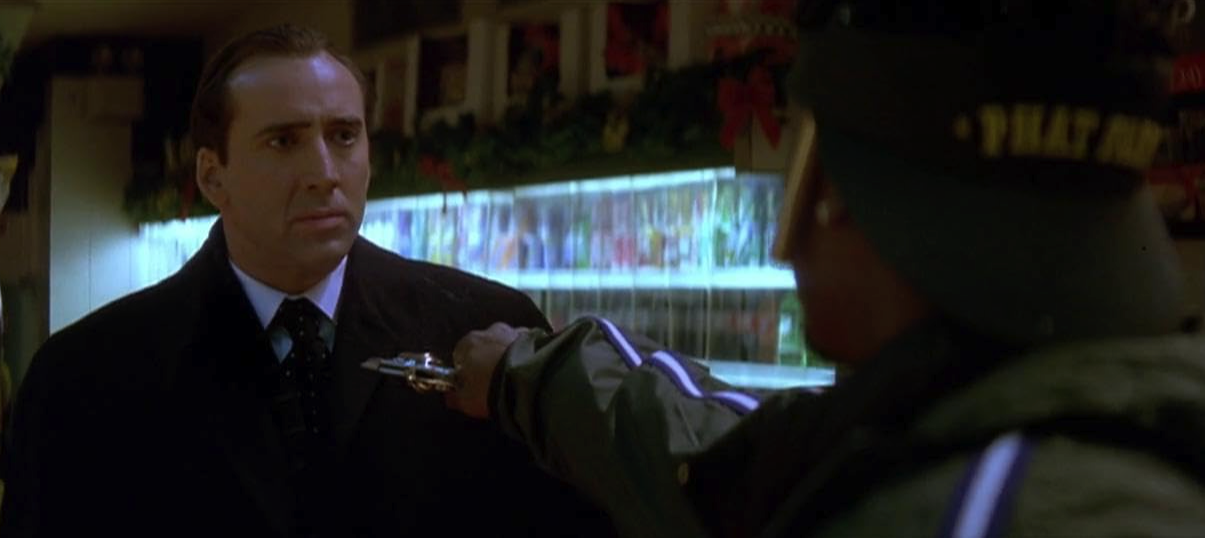
Stopping off at a convenience store, Jack’s fate is changed when he intervenes in a volatile situation with an armed man named Cash (Don Cheadle), who tries to forcibly claim money lotto winnings from a (presumably) “fixed” ticket. Jack, looking to defuse the situation with Cash angrily yelling and flashing his gun, offers to buy the lottery ticket (for $200) and take it to another store that will honor Cash’s expected $238 winning. Just a business deal.
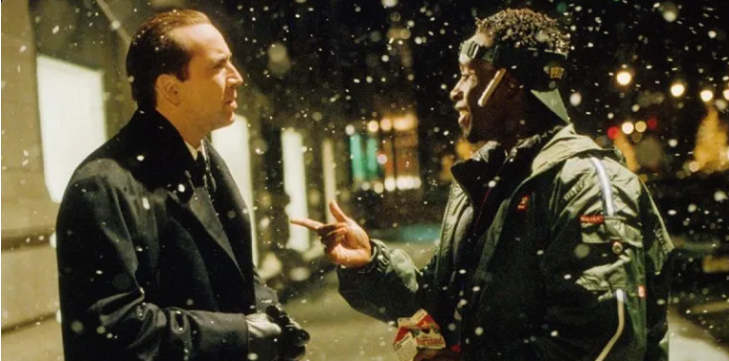
Agreeing to the bargain, Cash and Jack leave the store together and Jack suggests Cash reconsider some of his life choices. Cash is surprised and amused:
“Are you trying to save me, Jack?”
Jack tells him everyone needs something, so Cash asks, “What do you need, Jack?”
When Jack replies, “I’ve got everything I need,” Cash laughs and tells him, “Oh, this is going to be fun. You just remember that you did this, Jack. You brought this on yourself,” Foreshadows that there’s more to this Cash / Jack interaction than meets the eye.
Parting ways, Jack returns to his apartment, strips down to his underwear, plops into bed and falls sleep.
Flash sideways. In the morning, Jack awakes to find himself in bed in an unfamiliar place, with another person. Startled, he opens his eyes to see a young girl come pouncing into the room very excited, he hears a baby crying in the next room, and feels the presence of a large dog that comes bounding up onto the bed. It’s Christmas morning, and the investment banker Jack is now the family man Jack, the one that stayed behind from London (or returned) to a life lived with his one time love, Kate. He has awoken to another “Jack’s” life, without the knowledge or experience of the last thirteen years to inform his decisions.

In a panic, Jack flees this Christmas morning chaos scene in suburban New Jersey, driving the family’s minivan into the city. He returns to New York City, thinking he will be able to wipe out the mirage and reclaim his original life, and hopefully bring some sense to what has happened to him.
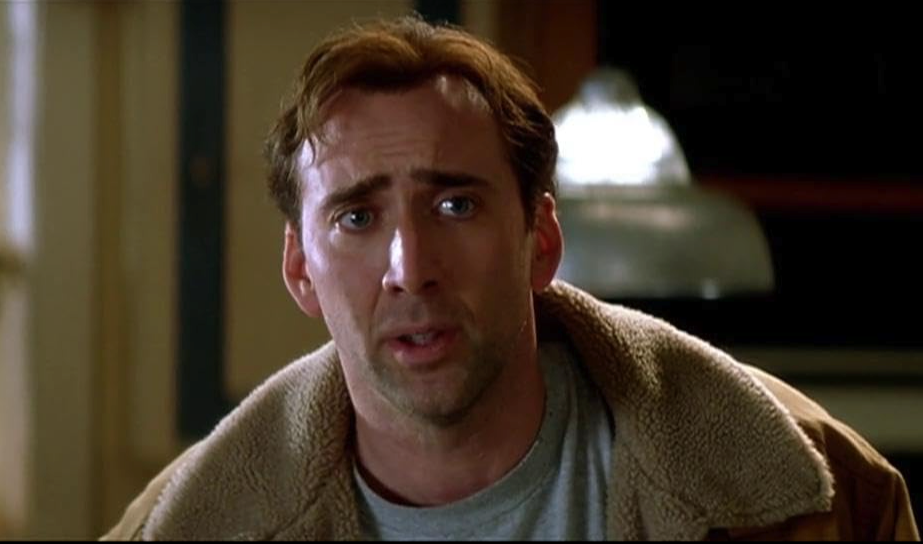
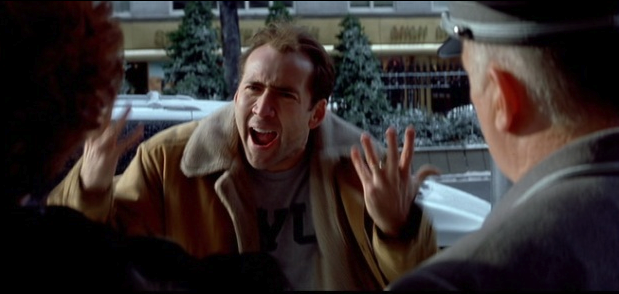
As is common in these parallel dimension realities, no one from his investment banker life knows/remembers Jack and he is thwarted from every attempt to return home or to his office. All the facts about this new reality put Jack in New Jersey with Kate, proving that his life in New York city no longer exists.
The only person who recognizes and knows Jack from his previous life of course is Cash, whom we now suspect is a presumed angel or otherworldly being. Cash pulls up in Jack’s Ferrari, invites him for a ride, and tells him that he’s being given a “glimpse” by the “organization”.
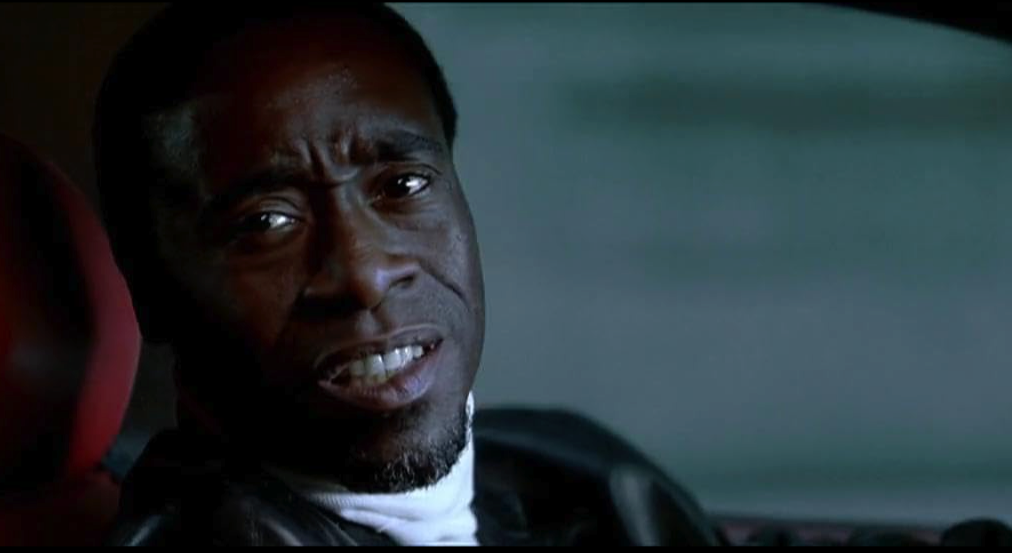
The only stipulation (or explanation) of this glimpse is that Jack must “figure it out” all on his own. It may take a while, but whatever lesson or logic that can be applied to Jack’s situation is up to him to suss out. Though Jack is in a panic and desperately wants his real life back, Cash leaves him on the curb with a bicycle bell and nothing more.

The rest of the movie is the hilarious, poignant, and touching attempts of investment banker Jack to try and literally fill the shoes of another version of himself, the family man Jack. It’s not as easy as it sounds, since Jack is basically commandeering the life of a completely different person with different tastes, values, and life history. Without being able to stalk himself on Facebook or Google, like we all would now, (i.e. it’s the year 2000) Jack must use context and conversations alone to figure out basic but inscrutable things such as:
- Who are my friends?
- Where do I work?
- What are my hobbies?
- How do I bowl?
- What is my marriage like?
- How do I show love to my wife?
- When is my anniversary?
- How do I take care of these children?
- Why do I dress this way?
- What can I afford?
- What all has happened in the last 13 years of my life?
Jack discovers that this type of “glimpse” in which he must be an active participant in an alternate life, is a difficult challenge and one that leads to a lot of understandable mistakes, social faux pas, unknown hurt, hilarity, and head scratching from every character who knows him and himself most of all. Like an amnesiac, Jack is in the dark about who he actually is–on a factual more than philosophical level.
It’s brilliantly complicated and so much like real life in its questioning and in its attempt to rationalize the meaning of marriage, child-rearing, and committed love in light of the competing interest of living one’s passion, dedicating oneself to a vocation, and finding one’s thrills in riskier or more self-absorbed pursuits (e.g. money, success, infidelity, prestige).
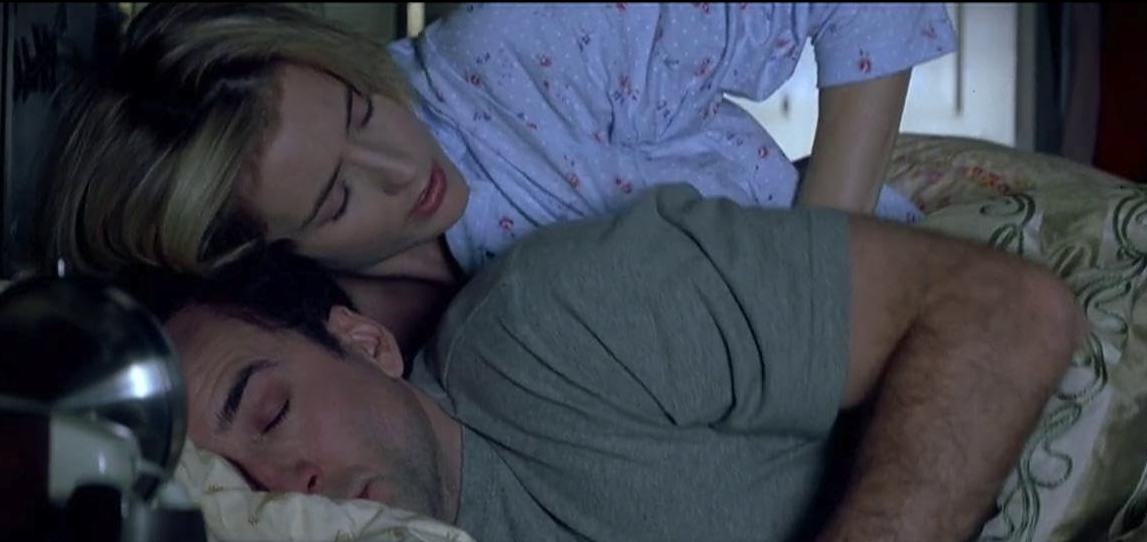
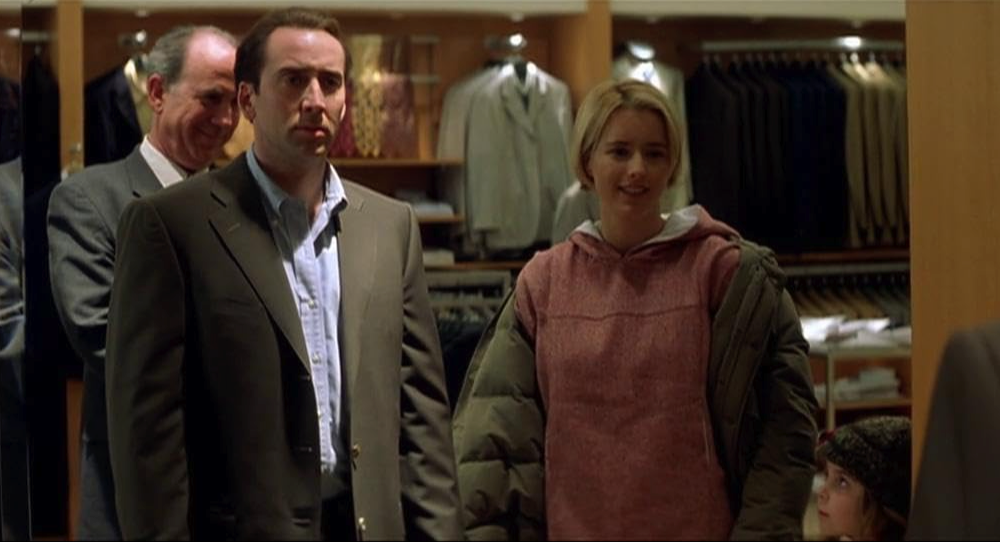
As Jack gets better at knowing and being the family man, and understanding all that such a life holds, he gets that “glimpse” of all that he missed out on when he left Kate behind. The experience itself changes him and his value system. And about the time Jack is ready to fully stay in that parallel life, Cash returns to remind Jack that this time with Kate is only a “glimpse” and by definition a temporary state.
I’d love to spoil this movie for you, and tell you how it all ends. Does he return to his previous life post-glimpse? Is Kate still there? Do they share a family life together? Is their story fully written, unwritten or re-written?
I won’t say. This movie is too good to not see for yourself. So you should just watch it if you haven’t. I will, however, allude to how the ending resonates with me a little later in this post–and I’ll try not to spoil anything.
Suffice it to say, this is definitely still a Christmas movie, and therefore has that hopeful promise that the future will look a little brighter, or a little different, than the past. We are left believing that investment banker Jack has learned some important lessons from family man Jack and that, in the end, love can and will transcend everything (even oneself), making all things new. Sorta.
Same As It Ever Was
I am fully immersed in mid-life. I haven’t bought the sports car yet. I haven’t attempted to upgrade my spouse (not possible; and thank God she hasn’t signed up for an upgrade either…that I’m aware of.) I haven’t even had plastic surgery to lift or flatten this unseemly “dad bod” some version of myself handed me.
But I have had my regular moments of crisis, the times when I ask myself questions like: what’s it all for? Why am I doing this? How did I get here? My waist size is what?!? What comes next? Is it worth it?
But like most people, I think these are normal questions to ask. Life has a way of surprising us.
As I was watching The Family Man this time around, I kept hearing the silent soundtrack of the Talking Heads song Once in a Lifetime playing as backdrop. See the lyrics or watch video here. I excerpted a few at the top of this post.
That song, more than any other, should be paired with this particular movie and with the experience of being a 40-something year old middle-class man (or woman) at this time and place in history.
Jack is almost singing the words to Kate early in his glimpse:
“I woke up this morning here. And this is very strange. This isn’t my house. Those aren’t my kids. I’m not dad. I’m not A dad. You’re not my wife.”
Although Jack means it literally, it’s also subtext. The questioning, the acknowledgement of the passing of time, the realization that it’s “the same as it ever was”, the understanding that life just keeps flowing forward carrying you along quietly (or flailing) in its wake; the stark realization that regardless of where you have set your sights or planned to go from the start, you could (and often do) end up somewhere else entirely; these are all things that a person in mid life may find themselves questioning.
Life happens. Love happens. Kids happen. And all of those things can change at any time, or be the hinge upon which a life’s course is charted or comes undone.
(Ironically, and unknown to me, this Talking Heads song was used in the original theatrical trailer! So I’m not the only one who noticed these similarities.)
It’s A Wonderful Christmas Carol, Charlie Brown
What’s interesting about The Family Man, for me, is that it navigates this narrow passage of uncharted territory somewhere between It’s a Wonderful Life and A Christmas Carol.
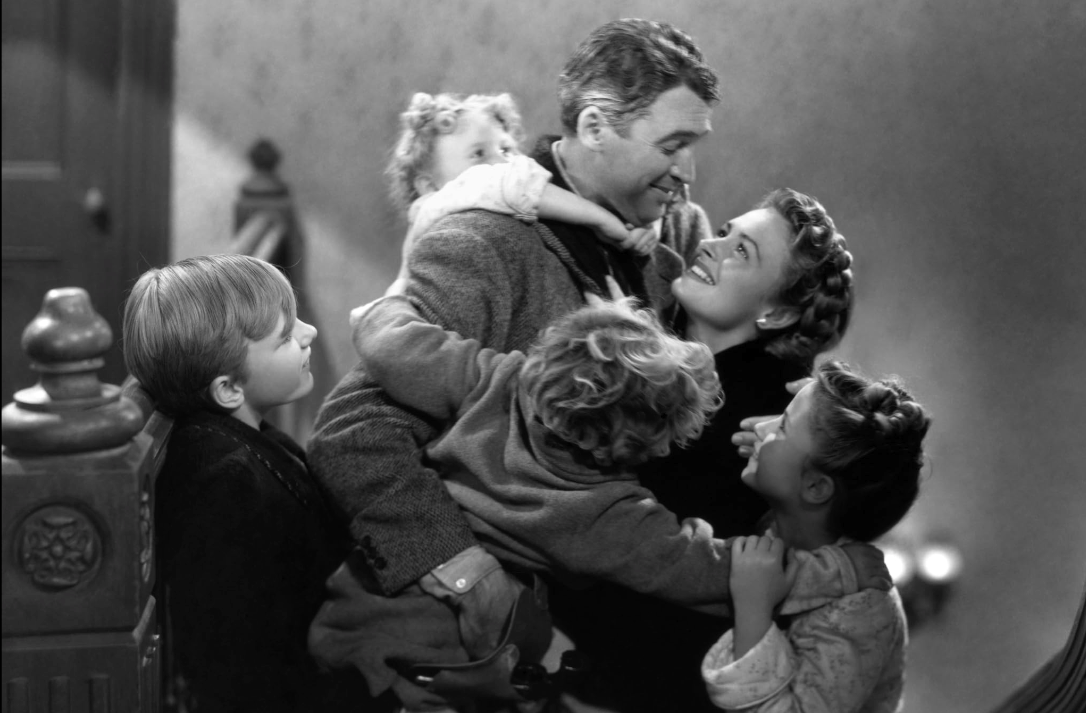
In It’s a Wonderful Life, George Bailey wanted to leave Bedford Falls and pursue his dreams of traveling the world, but his circumstances, character, and care for family / community locked him into staying right where he was his whole life. His decisions cause this unseen ripple effect of goodness all around him, but he needs the help of an angel to really see what he’s done.
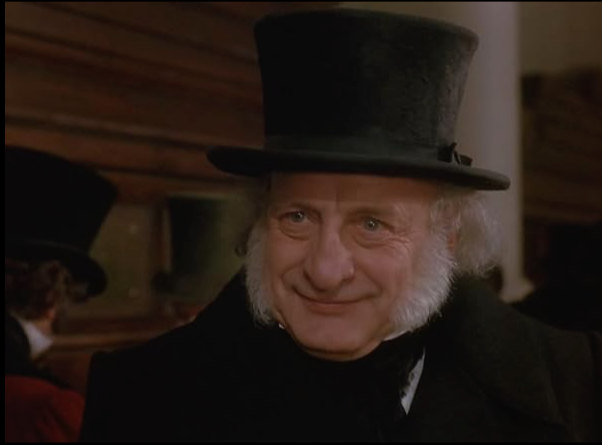
In A Christmas Carol, Scrooge takes the opposite path from George. He sacrifices his family, community, and human decency, to pursue–not a real passion of his (career, financial security, business)–but more of an obsession with miserable accumulation (i.e. he gathers up riches for riches sake and he can’t even find enjoyment there).
Jack, on the other hand, is entering that George Bailey middle-aged period; he has a career he loves that allows him to buy all the fine things that he wants and appreciates, but this ultimately leaves him alone (or lonely) although he lacks this awareness and must be shown what he’s missed via an angel. In some ways, Jack’s story is like staring through the two-way mirror of George Bailey’s experience. What if George Bailey had traveled the world like he wanted with his wife? What if they’d chosen that life over children? What would he look and see if he were given a glimpse into Bedford Falls George.
Scrooge only got “glimpses” into the past to remember what he sacrificed for personal gain. He got a glimpse of the present to see what Christmas looked like outside of his own experience. And he got a glimpse at a possible future where his current path plays into a sad ungrieved death. Scrooge never got a snapshot into his present life if he had chosen differently.
But Jack does get this opportunity. His “ghost of Christmas present” (Cash) pulls him right out of his reality and throws him into a reality that might have been–same day, same year even.
Ah, the possibilities of the multiverse.
(Aside: I do wonder what happened to family man Jack when investment banker Jack got his glimpse; do you think he got a glimpse into a different reality for some other life choice he didn’t make? It gets pretty meta.)
Some things I absolutely love about this move (in no particular order)
- I mentioned naming my daughter after this movie. In mid to late 2001, my wife and I were trying to think of a good middle name for our soon-to-be-firstborn child. We’d settled on Anna for her first name. After watching The Family Man, one of us said, “What about the name, Kate?” Yes! We both agreed. So, fun fact, a Nicolas Cage movie helped me name my daughter.
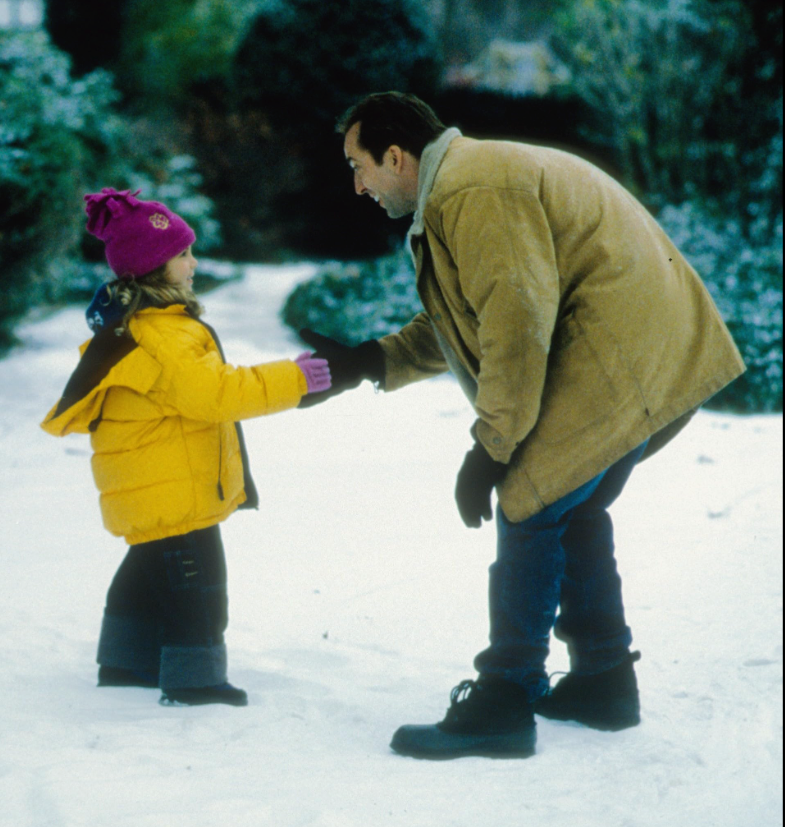
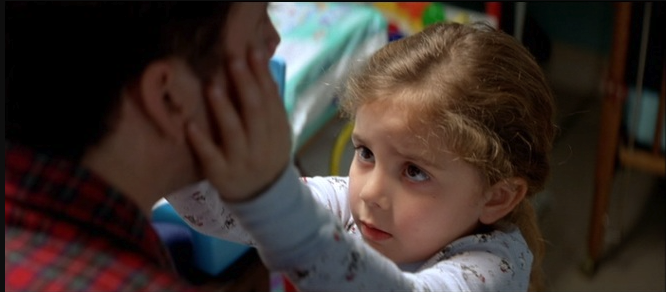
- Speaking of children, Jack Campbell’s daughter is named Annie (hmmm) and she is absolutely a show-stealer in this film. Cute, precocious, a violinist, and highly verbose for her age, Annie (Mackenzie Vega) Annie suspects right away that something is amiss with her father. “You’re not my real dad,” she tells investment banker Jack. When he agrees, she climbs up near his face and pinches his nose, “They did a pretty good job…the aliens from the mothership. You look just like him.” When Annie asks Jack if he even likes kids, he tells her, “On a case by case basis.” Satisfied, she asks him if he can make chocolate milk and he tells her he can probably figure it out. She smiles at this, obviously relieved, and says, “Welcome to earth.”
- In two deleted scenes Annie makes an appearance as well. In the first Jack is raising Annie’s bike while frantically ringing the bell on it, thinking he can summon Cash back to him like a djinni. In a spastic Cage fashion he yells, “C’mon! C’mon. How was I supposed to know the date of their anniversary. I never married her!” Annie appears on the porch and tells him matter of fact, “Put the bicycle down.” Which he does.
- In the second deleted scene, Kate is explaining to Annie why mommy’s and daddy’s fight sometimes. Annie replies with her characteristic aplomb, “I’m not worried mom, he’s still getting to know our ways.”
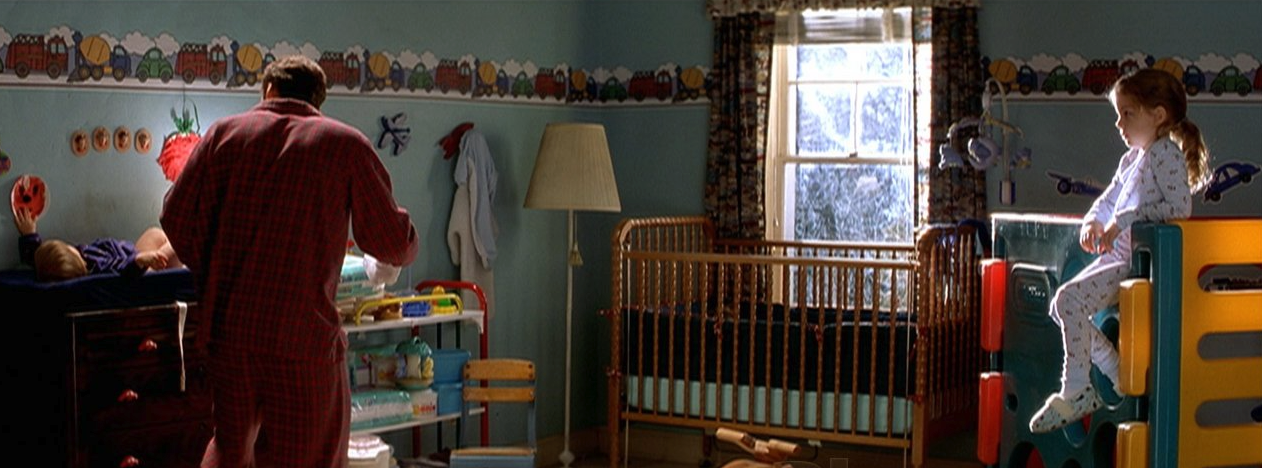
- When Jack has to change Josh’s diaper for the first time (and the boy has filled it up and is peeing freely all over the changing table) OMG hilarious. Seeing his very first soiled diaper as a father, Jack’s facial and verbal response is the quintessential paternal archetype: “Holy mother of god!” he says, screwing up his face and dry-heave-gagging into his hand. It’s only with Annie’s pointing instructions and guidance that he’s able to remove the diaper and swat push it into the disposal bin.

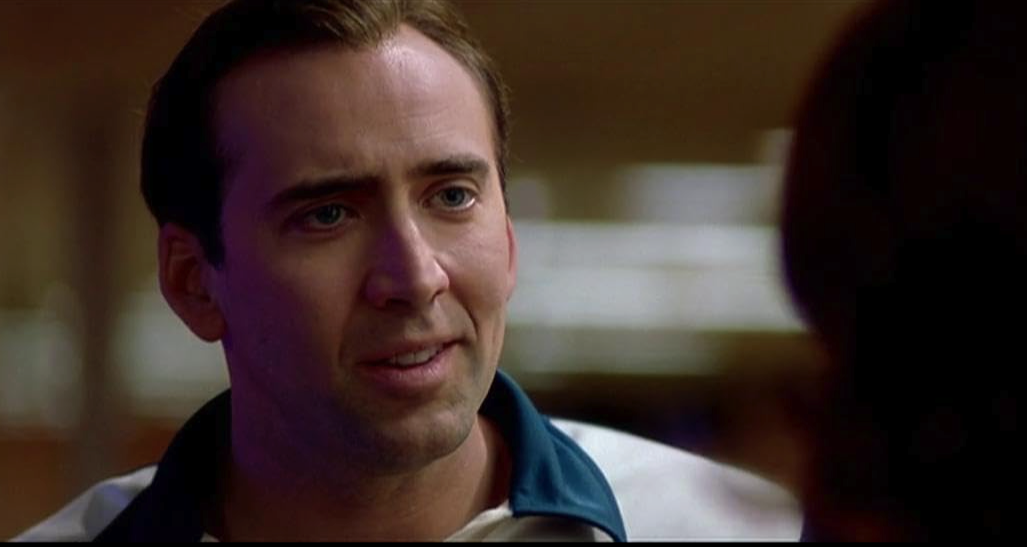
- Investment banker Jack, unsurprisingly, is actually a terrible bowler since he hasn’t developed that skill while working on Wall Street. When asked how the game went he tells Kate, “Long, boring, and generally pretty sad.” (Aside: I do often wonder if I am ever The Tiger Woods of…”X” when x equals some obscure talent or thing that I’ve just never tried yet, but that I could be really, really good at. Oh, yeah, Todd’s the Tiger Woods of Petanque.)

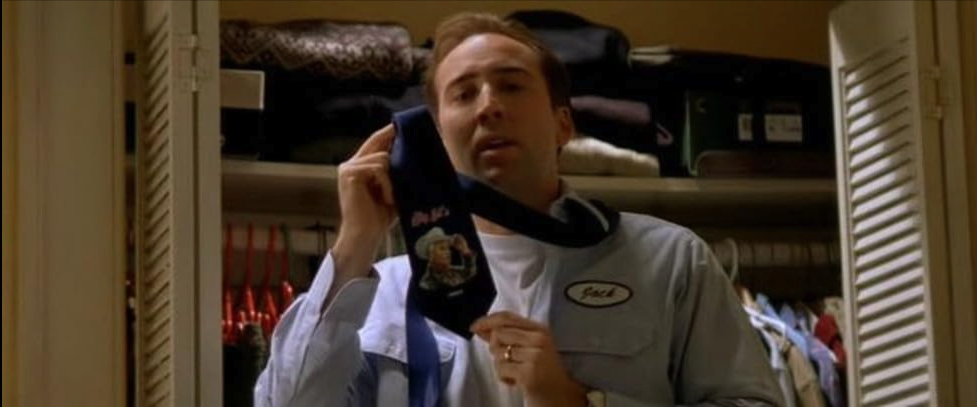
- Jack has obvious disdain and disgust for all the suburban trappings of family man Jack, especially his wardrobe. He looks at his outfits like they are smelly turds he must turn over with a stick, “This is just subpar.”
- The way Jack has to Columbo his way through the mystery of his own life. He asks and repeats back details as if he knows them, and is reminiscing on them, but in an obviously leading way. When Kate mentions some of the curveballs that life has dealt them as a couple, she speaks about “the heart attack” and Jack, shocked asks her, “You had a heart attack?” When she brushs off his response and says it’s not funny, he realizes she was speaking of her father, Big Ed.
I Choose Us
The thing I liked most about the movie is probably the cheesiest, but I stand by it. It was the phrase used by Kate two times in the movie and by Jack once (by the end) that sums up their love and commitment to one another: I choose us.
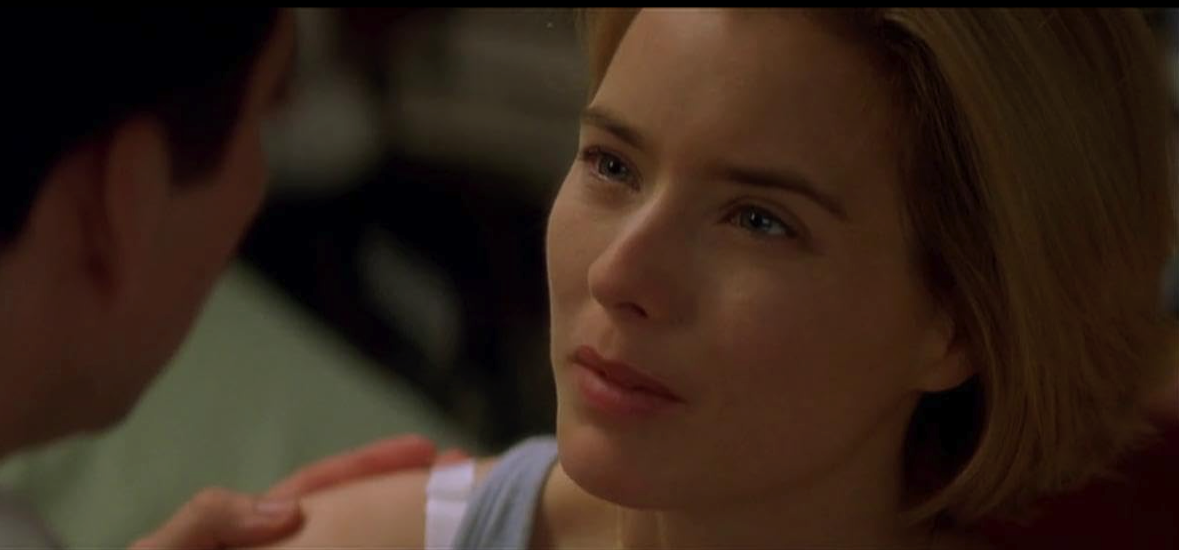
As my wife pointed out watching the film this time, Kate loves the grand gesture. She loves when Jack sings to her, when he tells her that he’s always loved her, when he names stars after her, and gets excited about their anniversary. Jack is swayed by ambition, by a desire to have nice things, by the sense of identity and clout that he gets from being a “power player” in a competitive work environment.
Conversely, Kate is swayed by family, by her love for her husband and children, by the sense of purpose that she gets from serving the needy as a pro bono lawyer. She sees what the Campbells have already what those around them envy (rather than what they could have) as a true sign of their success. She knows gratitude.
At the most climactic and moving moment of the film, when Jack is campaigning hard to move his family back to the city in order to “get their life back on track” and give them nice things again, Kate at first balks at this, but later tells Jack that she would sacrifice everything she knows and is comfortable with (their home, their school, their current address and community) for Jack, because she loves him that much. She is offering him the sacrifice that he couldn’t offer her when he left for London. When she says, “I choose us,” she means she chooses it even over all the “things” (money, dreams, security) that their life currently consists of. She chooses the relationship above all else.
Sure it’s a catchphrase; it’s a little too on-the-nose, maybe Hallmark movie fare, but as a concept it’s also very powerful. Watching it this time, at this midpoint of my life, I’ve had enough experience in life to know disappointment. I’ve had to navigate life’s bumps and detours, and I’ve had to share some of that pain within a committed marriage relationship.
So, when Kate gave her speech ending in those words, I may or may not have shed a few tears (I got something in my eye…dust or something). I think I recognized my wife in Kate’s character and compassion. I remembered specific things she said to me, when the road ahead meant going backwards for us or going against what she may have wanted for her life and her family–her goals. She chose us over her own preferences and dreams at certain times. And that’s a humbling and amazing thing. When someone says something like that and means it, you have a real understanding of what unconditional love looks like. I have come to know gratitude because of it.
The Ending
I’m not going to spoil the ending, but just in case, you can keep scrolling down if you are worried and want to watch this movie first. (It came out 23 years ago, so what’s the hold up?) The thing that’s different about The Family Man (compared to It’s a Wonderful Life or A Christmas Carol) is that the glimpse Jack’s given has a different outcome.
In all three movies, the main character reaches an enlightened or altered state of consciousness where they come to an awareness of what they have been valuing or looking at as “the good life”, and what they probably should be valuing and perceiving as the good life. They are given a new understanding of the goodness they already have around them, and now see possibilities for more (e.g. more richness, opportunity to give, perspective on their value, appreciation for relationships, etc).
But in The Family Man, Jack’s glimpse provides him with the awareness that he doesn’t have everything that he needs (debunking what he told Cash originally) but there’s no clear (or easy) path to achieving that result. THis reality is not going to be a reset.
In fact, I find it funny because in one of the last scenes of the film Jack is searching through a box of his old college knick-knacks, (returned to him by Kate), and he finds a yo-yo which he springs back and forth in his hand. The yo-yo, to me, is a symbol that represents the challenge of possibility against the hard reality of decisions made that bring you back to reality (starting point). You can come back and reset your life, and throw it out into the world again, but that’s a new action (however similar it looks to the old one.) Restarting or rebooting that story arc, doesn’t preclude you from having to actually live it out into the present, see where it goes, and then cast hope forward into the new future. Same as it ever was.
And that is kind of how the film ends. Not with the yo-yo scene I described, but with the potential possibilities of Jack and Kate “choosing” each other all over again. There’s so much that you hope can and will happen, and the glimpse Jack had (of what might have happened) gives you pause and assurances that propels your imagination forward. But even with that potential, the future vision is (and likely will be) very different as will the “souls” who populate this unrealized future. Annie, Josh…who else will (or won’t) arise in an unwritten future?
First for Nicolas Cage character as Jack Campbell
- First time in a Christmas movie
- Driving a minivan
- Changing a diaper
- Working as an investment banker on Wall Street
- Working as a tire salesman
- Suit shopping at the mall
- First time in a chocolate cake makeout session
- Playing with a yoyo
- Sniffing a bottle of perfume for nostalgic reasons.
- Giving an impassioned airport speech to woo a woman
Recurrences
- At an airport (Honeymoon in Vegas)
- Living “another man’s” life (Face/Off)
- Singing opera (Moonstruck)
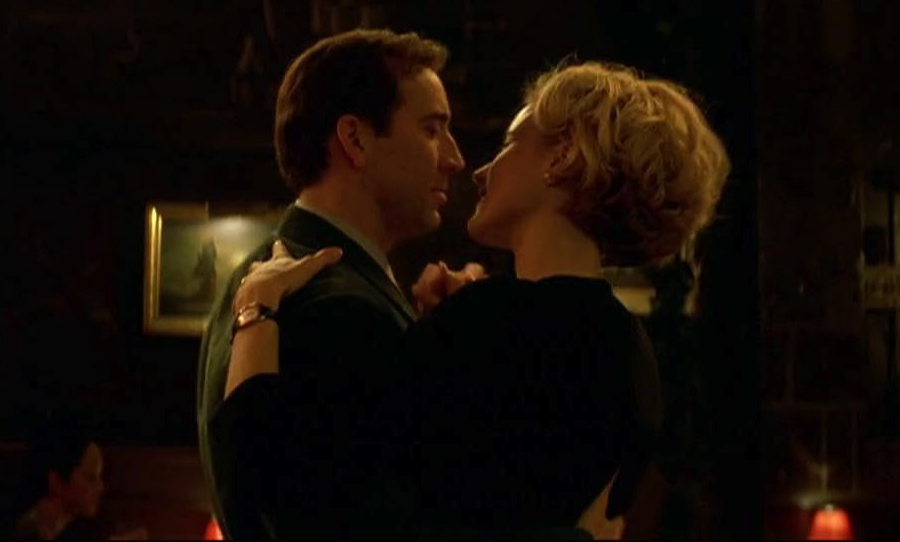
- Dances with a woman he loves at a nice restaurant when no one else is dancing (It Could Happen to You)
- Winning back a lost love in a grand gesture (Honeymoon in Vegas)
- At a bowling alley (Racing With The Moon)
- Second time named Jack (Honeymoon in Vegas)
Best Nicolas Cage quotes as Jack Campbell
“Just because you thought I was cocky now I’m on a PERMANENT ACID trip!?!” [Jack to Cash, mid-glimpse]
“If you can take a dump sometime in this century, then we can go home where it’s warm. If I can even remember how to get home.” [Jack to their dog.]
“THAT baby is crying.” [Speaking to his wife in the shower about their son who needs a diaper change.]
“You must have needed this EVERY day.” [Speaking to himself when he discovers a bottle of whiskey in the top drawer of his office desk.]
“It’s an unbelievable thing. Wearing this suit actually makes me feel like a better person.”
“I could have been a thousand times the man I became.”
“Fine. I’ll get a funnel cake. It’ll be the highlight of my week.”
In Conclusion
The chorus of Once in Lifetime goes like this:
Letting the days go by, let the water hold me down
Letting the days go by, water flowing underground
Into the blue again, after the money’s gone
Once in a lifetime, water flowing underground
I’m not really exactly sure what these lyrics mean. The pessimist in me says, as mortals, we just eventually get washed away in the banal details of our own life, until we are swept into the inevitable ocean of death–our days are numbered and there’s nothing we can do about it.
However, the optimist in me (as small and soft-spoken as that little wise acre is) likes to think that this means instead, when life happens and the tides pull you to and fro, it’s best to just let go of your fear, and go with the flow. You’ll be happier and more content appreciating “the blue again” as its gravity holds us down, that can be freeing and tranquil.
As a mid-life adult I’ve come to appreciate this “lazy river” at the water park analogy, where you just sit on your inner tube and let the stream take you wherever it will.
Since it was really Kate, and not Jack, who had it figured out all along, I’ll leave you with her words of wisdom.
“The plan doesn’t make us great, Jack. What we have together makes us great.”
Yeah, I choose us. I really do.



 yeti speak...
Leave a comment