War?!? What is it good for? Absolutely, nu–
Well, war is good for maybe one thing. It’s “good” for providing Nicolas Cage the backdrop he deserves for UNLOADING a whole can of whoop-ass and explosive violence on an entire battalion of enemy soldiers.

Whether he’s raining down machine gun fire, chucking hand grenades, dodging mortar shells, or sticking bayonet blades into the unsuspecting innards of the Enemy forces, an unfettered Cage is a fearful, awe-inspiring sight to behold. And this no-holds-barred version of G.I. Cage is exactly what we are served in WATC(H) #37 Windtalkers (2002).
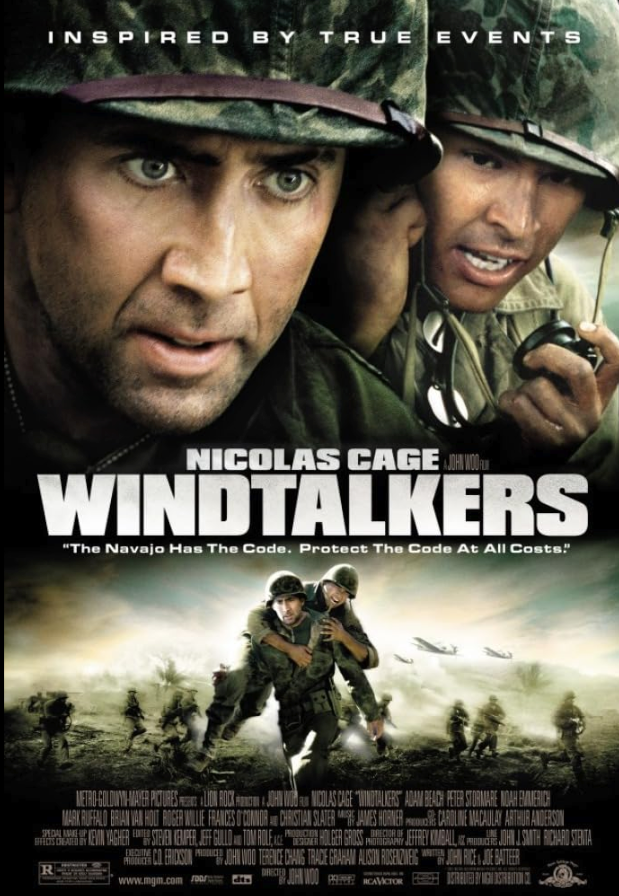
This WWII era combat film is the second film in his short run of early 2000s war films, as well as the second film he’s starred in that was directed by John Woo (1st was Face/Off).
Nic Cage Defender of Earth
Nicolas Cage is no stranger to epic battles. In Jim Carrey’s semi-autobiographical work of complete science fiction Memoirs and Misinformation Carrey and Cage take part in a hypnosis regression therapy session for Hollywood elites. While attempting to face the brutality of his existence head-on, Nicolas Cage shares a vision from one of his many past (or likely future) lives.
In his recount, eyes-closed, Nicolas Cage talks about fighting aliens in Los Angeles with:
“…exoskeletons, like iron spiders, shooting death beams everywhere…we fight these aliens. Come to kill us. Giant snaky guys. Skin all slick and glistening black. I lead the Last Survivors against these extraterrestrials who have come to annihilate humanity. Armageddon. They shoot us with these death beams, they don’t affect me. Because my DNA? It’s not like other DNA. Coppola genes are different. That’s why I’ve felt so out of place my whole life. It’s the burden I bear to save everyone…”
Whether he’s battling aliens in his fictitious (or perhaps very real) final apocalypse or he’s fighting Axis forces in the South Pacific, Nicolas Cage always bears the burden of both his Coppola genes and his greater destiny when it comes to saving those under his watch. Which brings us to…
The World According to Windtalkers
Windtalkers is a film set during World War II and tells the story of the Navajo Code Talkers, a small regiment of native American soldiers who were specifically enlisted into the armed services to help deliver encoded messages and help with classified communication on the battle front, often behind enemy lines.
Prior to starting the Code Talkers program, the U.S. and Allied forces were struggling to pass encrypted messages and secret communication about the war effort and logistics because the Japanese kept intercepting the messages and quickly breaking each code that was developed.
To try to solve this problem, Philip Johnston, a civil engineer who’d grown up in a missionary family serving on an Indian reservation in the American southwest, posed the idea of using the Navajo language to create an unbreakable cipher. Because Navajo was an unwritten language and not widely known throughout the world, it seemed like a viable solution to the code-breaking dilemma.
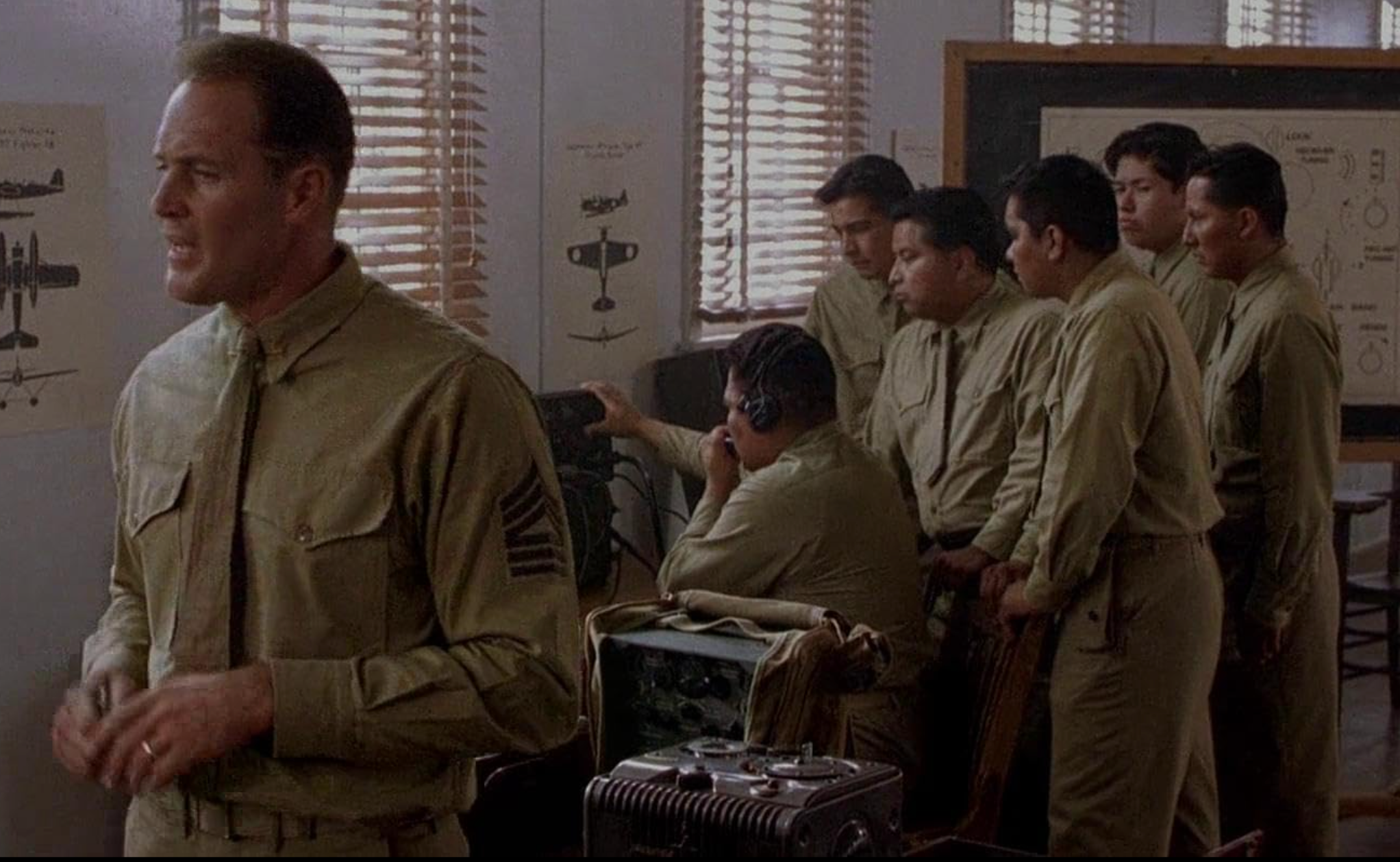
So the U.S. government recruited and enlisted a few hundred willing Navajo to test into this crucial program. The applicants would use Navajo words coupled with coded symbols (e.g. tank = turtle, or spy plane = owl) and practice translating and correctly responding to these coded messages while under great duress. The code functioned by stationing one CodeTalker in the field of battle with a portable radio and keeping his counterpart Code Talker at command central so that the messages could be translated from Navajo back into English and vice versa. Those recruits that could quickly transcribe the instructions from Navajo to English and back again without breaking under the time pressure or task stress graduated on from the study program and were assigned to tours of duty in the south Pacific.
Pausing for a second, before getting to the plot summary, it’s important to point out that this film didn’t feel like a typical John Woo directed film. In WATC(H) # 28 Face/Off, I described some of the signature John Woo action film sequences: the two-handgun double fisted standoffs and gun blazin’ sequences; the acrobatically choreographed bullet ballets; the good and evil black and white themes and religious imagery; and the, slow-motion doves fluttering before the world erupts into gunfire and blood.
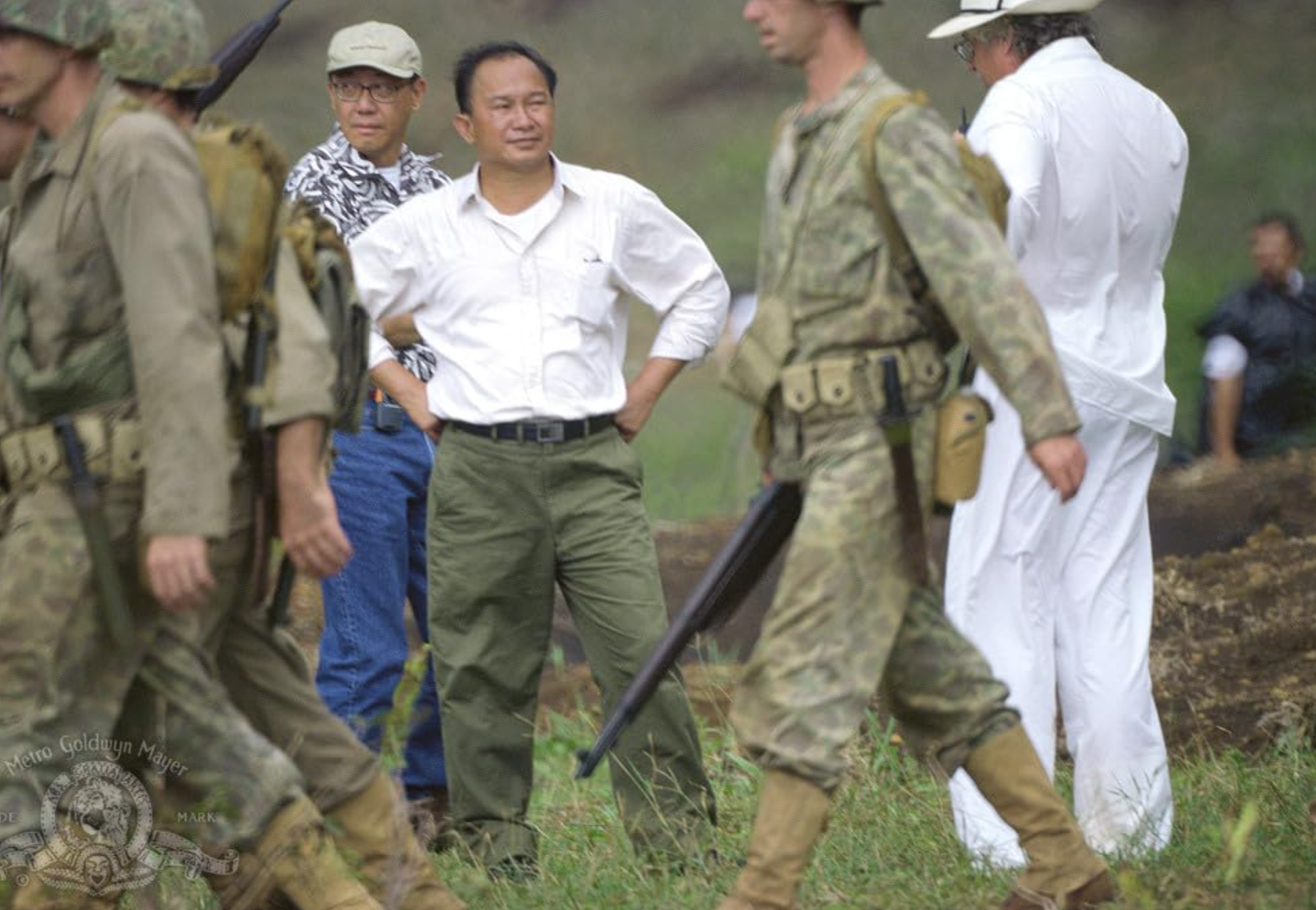
None of these Woo tropes really show up in Windtalkers in the same way that they do in his cops/robbers action movies. Well, the guns definitely show up and the violence, but it hits different. I suppose this was because this truly was a historical period piece, a war movie based on many real life events.
That’s not to say there weren’t a million explosions, thousands of bodies riddled with bullets, lots of blood and guts and fire and smoke.
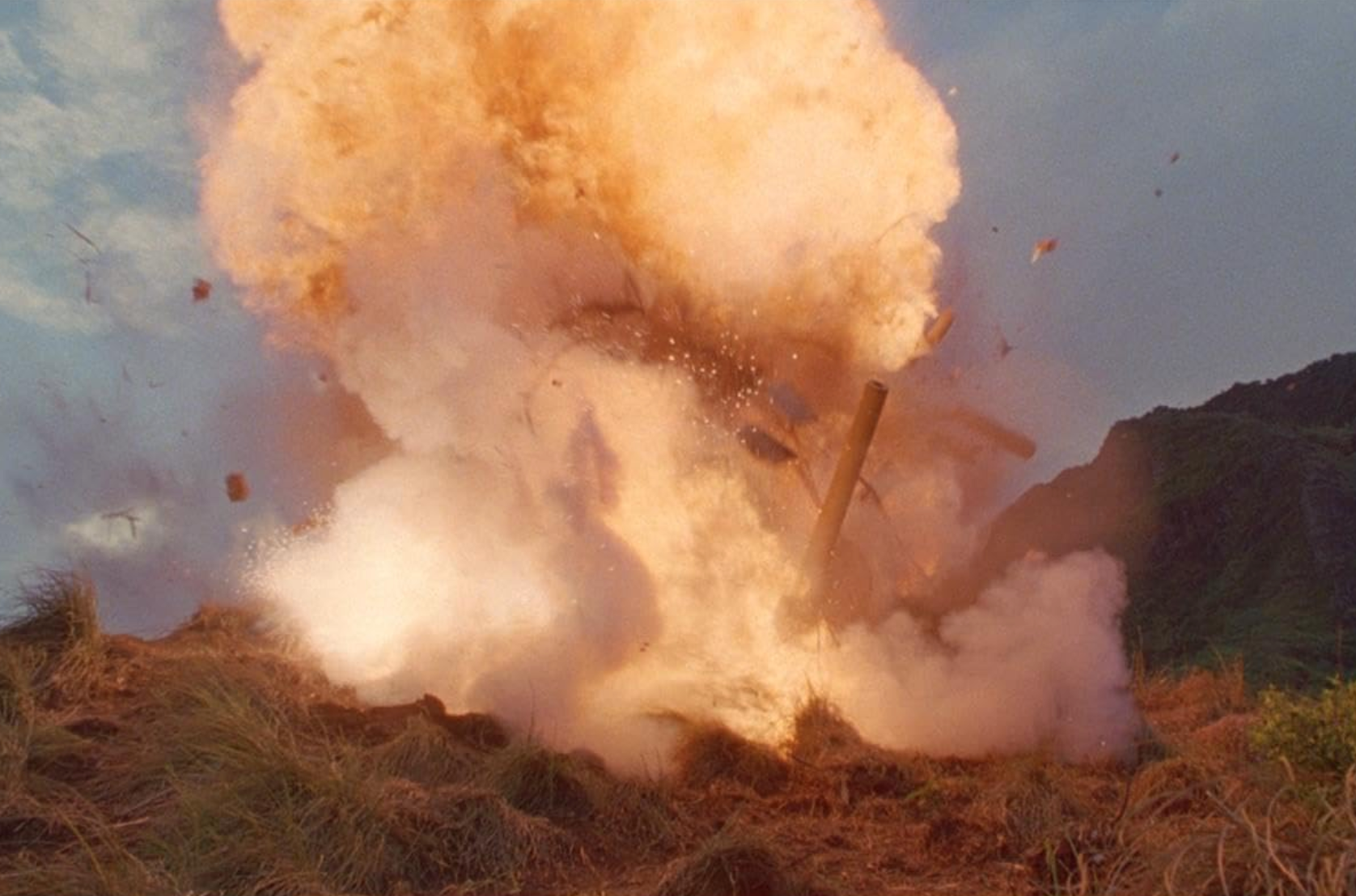
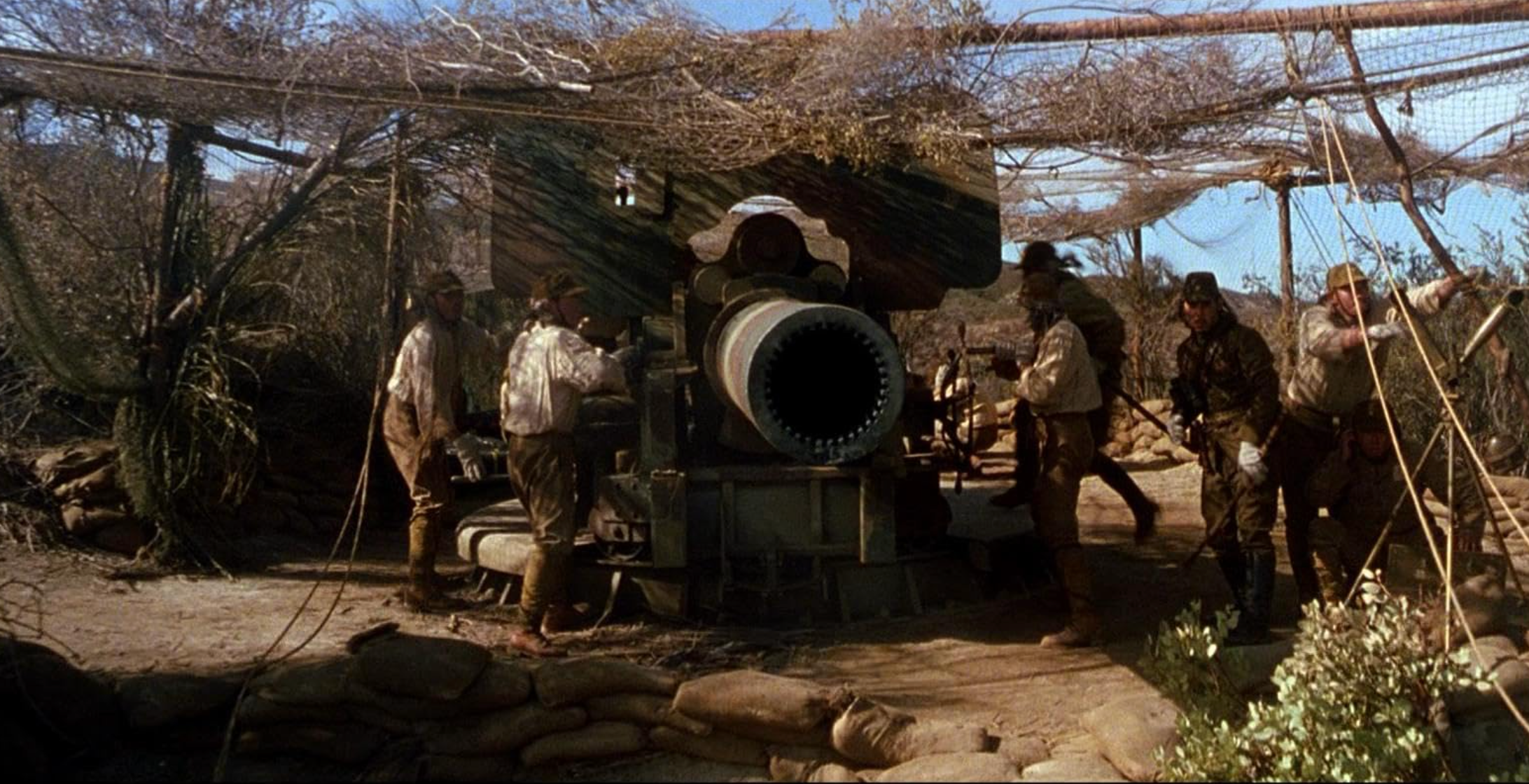
Loyalty and grief were two important themes as well–and the inner turmoil between good and evil. All of that was present, and Woo definitely pulled NO punches in showing that war really is “hell on earth”, but I am not sure I would have recognized this as a John Woo film if I hadn’t known so before viewing it.
Watching some of the extra features and the documentary about the making of Windtalkers, it seemed as if John Woo was really fascinated with the story. He was intrigued by these Navajo Code Talkers who were willingly risking their lives and fighting for a country that had colonizedthem and subjected their tribes to different forms of genocide for a few hundred years.
Even though their service to their country helped the U.S. win the war, these Navajo Code Talkers were sworn to secrecy and could not share what they had contributed to the war effort with their family or friends for nearly two decades afterwards. With the advent of computers, the Navajo Code Talker program was finally de-classified since the code could now be more easily broken, and the military heroes could share their experiences more freely with the world. But these men still didn’t receive government honors until well into the 1980s. So you could literally say that the Navajo Code Talkers were unsung heroes for nearly 40 years after they helped defeat the Japanese in the south Pacific.
But Who Is Joe Enders Anyway
The story itself is a fascinating bit of history and provides the momentum for the film, but what about Nicolas Cage? Was he one of these Navajo Code Talkers? No. He was not. Nicolas Cage plays U.S. Marine Colonel Joe Enders, a man who at the start of the film is already deeply enmeshed in a bloody battle in the Solomon Islands. Within the first few minutes of the film, he has lead his Marine troops into a firestorm of jungle warfare. The Marines are trying their best to “hold the line” but are outmatched and outgunned by “the Japs”. One by one, Ender’s men fall to gunfire, hand grenades, and bayonets until he is the last one standing. Then he too goes down in an explosion (I think?) but somehow survives and is evacuated to the closest military base.
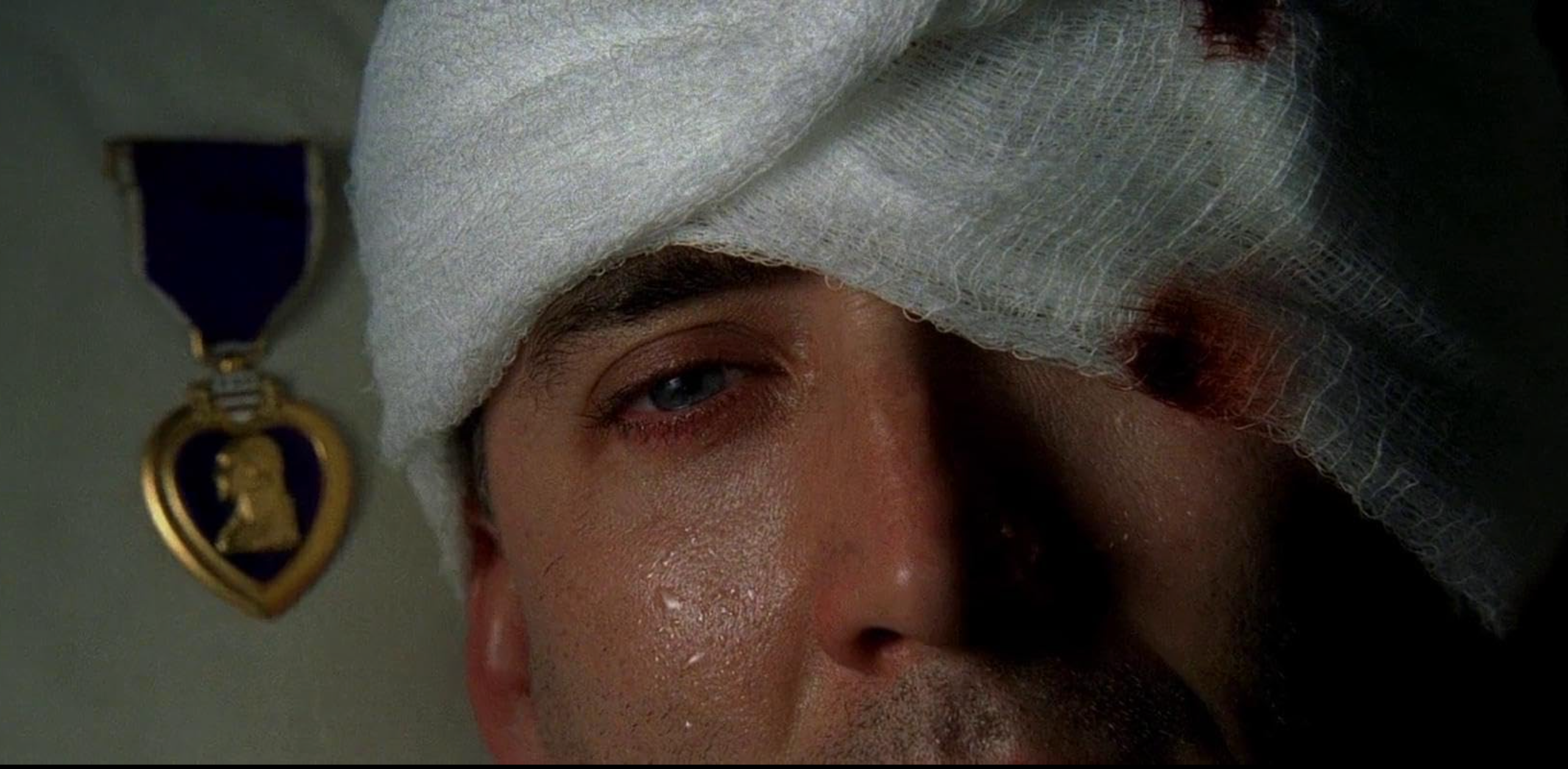
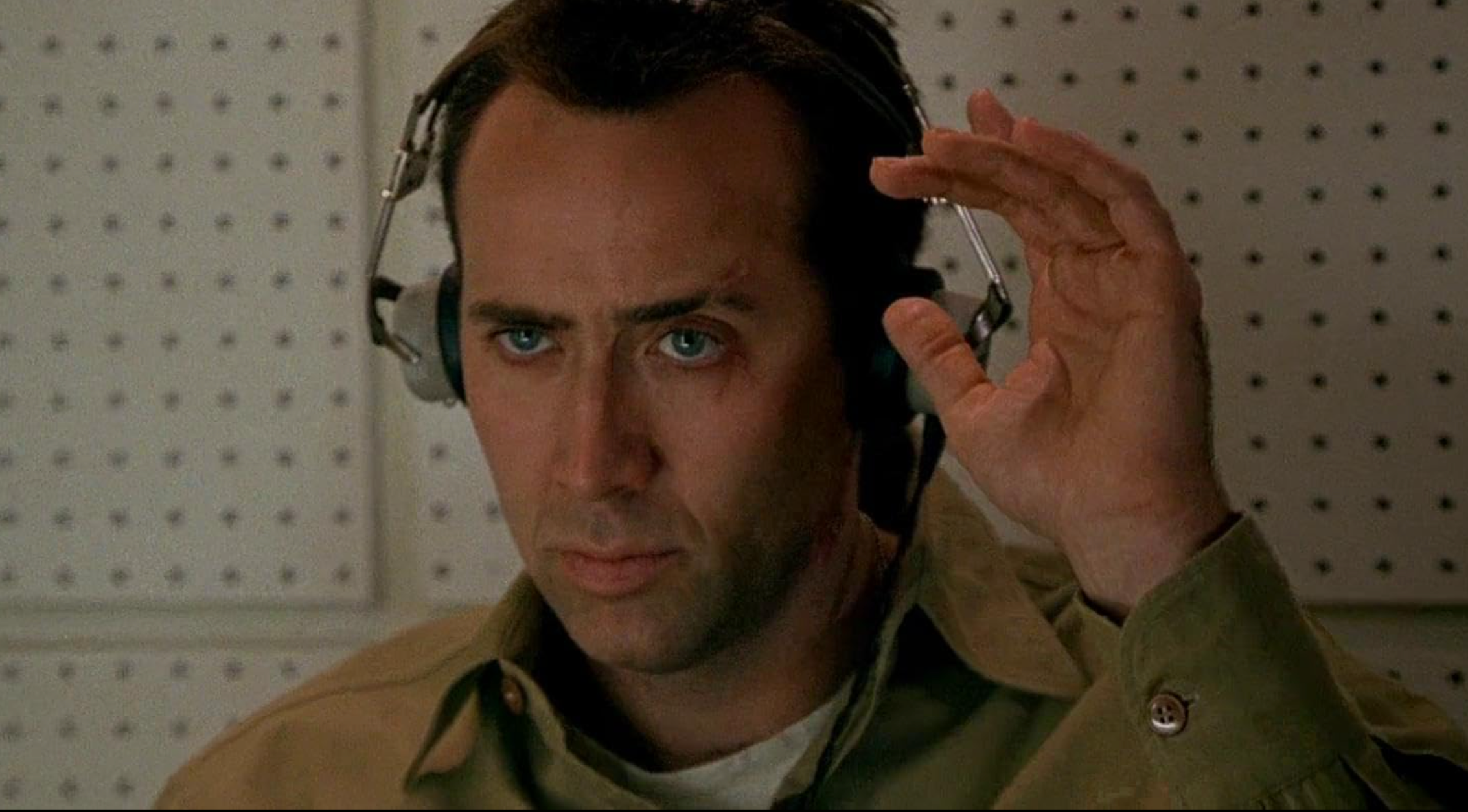
While recovering from his injuries, we discover that Enders has suffered a perforated eardrum and scarring across his neck and face. The wound to his ear causes him to have destabilizing vertigo and nausea which he must hide from the medical doctors in order to return to the front (which is what he desires more than anything). But worse than his physical injuries, Enders obviously is suffering from PTSD (which didn’t have a name or diagnosis at the time of WWII) feeling remorse over the loss of the soldiers under his charge. But to even be considered for re-assignment, Enders has to agree to a new and more morally questionable assignment. He must be a “protector” of one of the new Navajo Code Talkers entering the war effort for the first time. This means protecting him from harm and (in a sense) chaperoning him wherever the battles take them both, but really it means swearing to “protect the code” at all costs which means not allowing the Code Talker to fall into the enemy’s hands. If there is a risk that the Code Talker were to be captured, Enders job is to make sure the Code Talker doesn’t get captured alive. This doesn’t sit well with him, but it’s his only ticket back to the front lines, so he takes it.

The Code Talkers
The Windtalkers focuses mostly on two Navajo soldiers in the program, a young and more optimistic Ben Yahzee (played by Adam Beach) and an older, wiser Charlie Whitehorse (played by Roger Willie). Enders is assigned to “protect” Yahzee and Ox Henderson (Christian Slater) is assigned to Whitehorse. The film raises some interesting questions about loyalty to oneself, one’s tribe and one’s country in light of persistent prejudice and the intersectionality that exists in a pluralistic society.

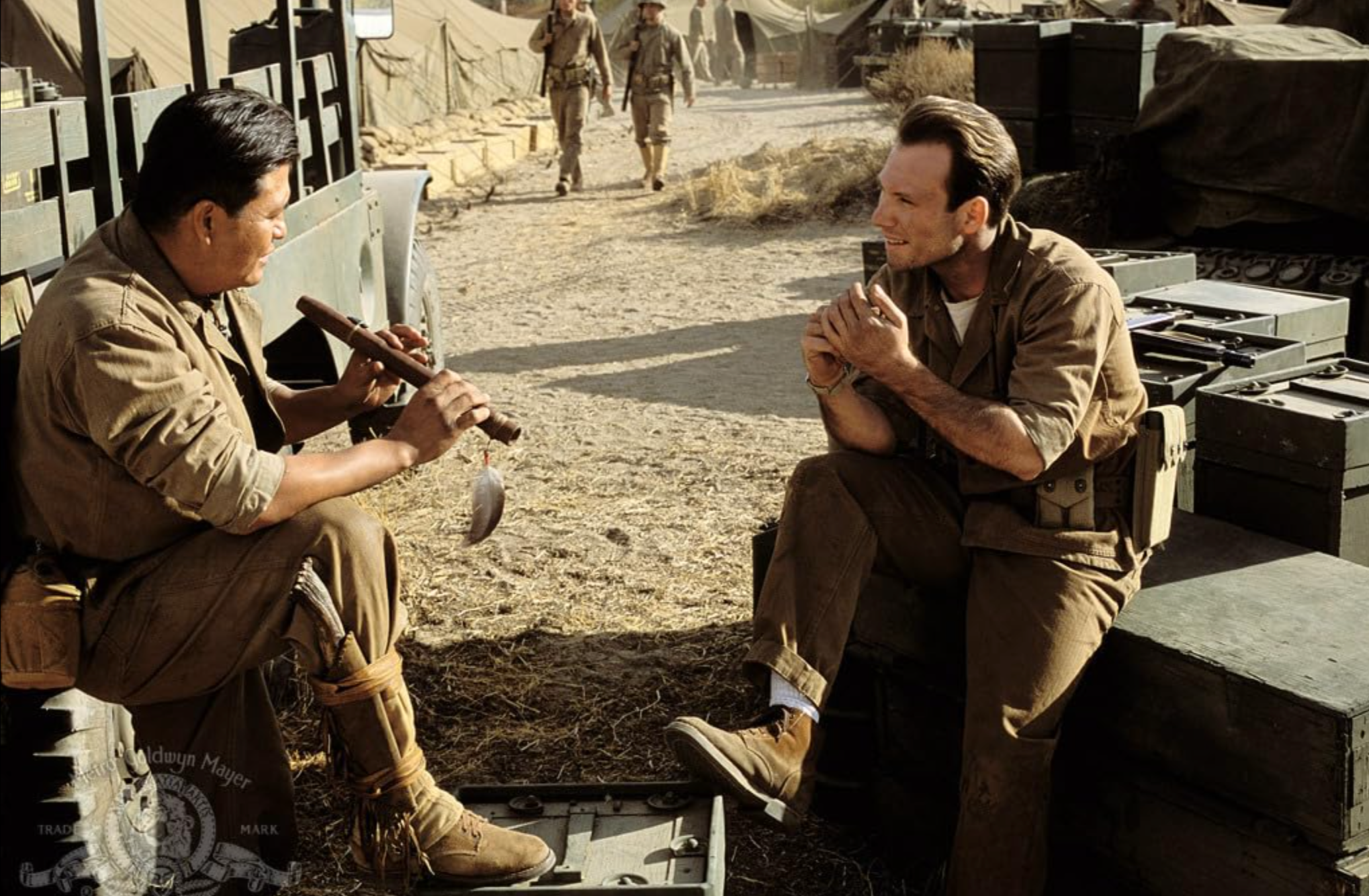
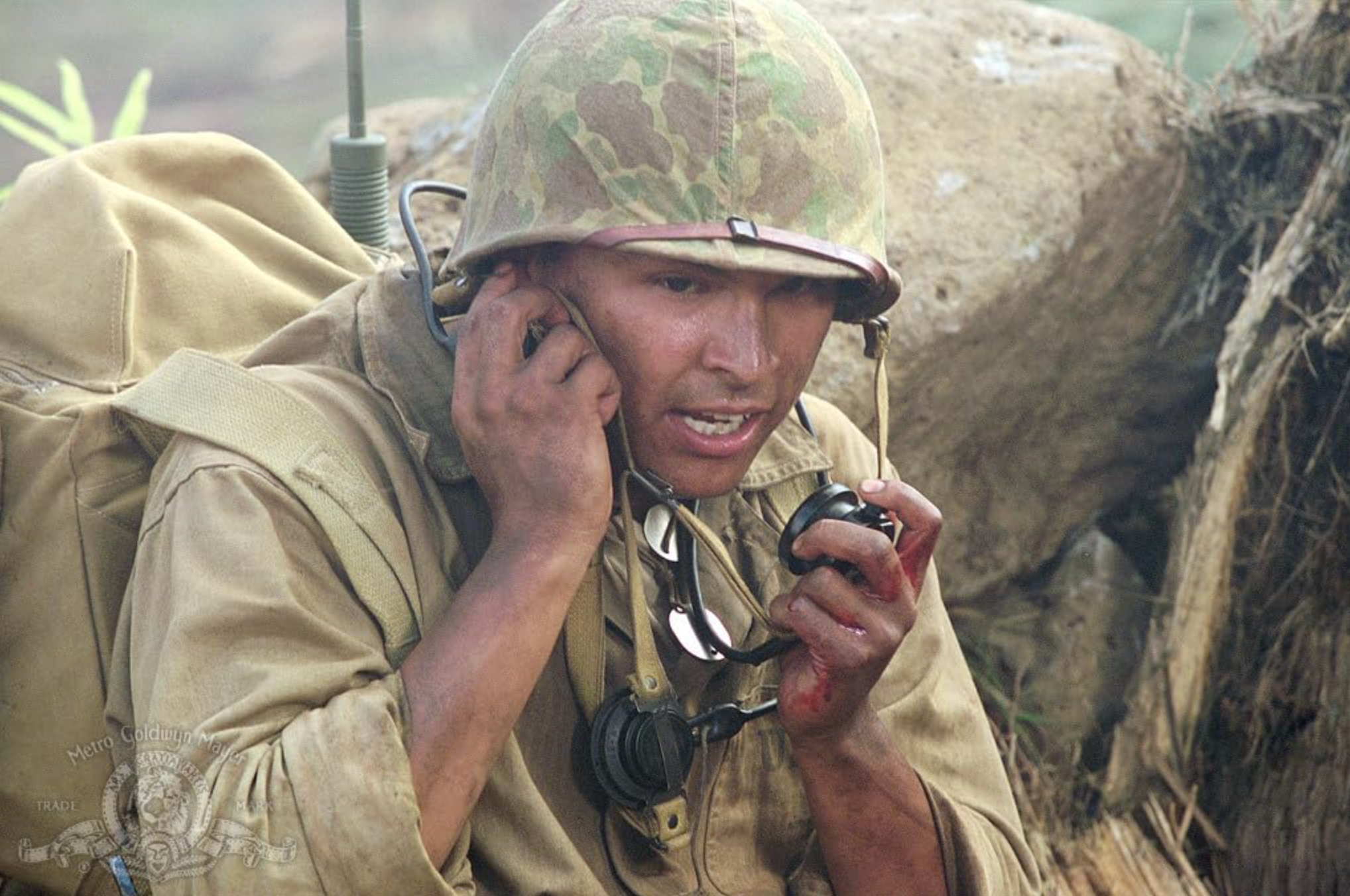
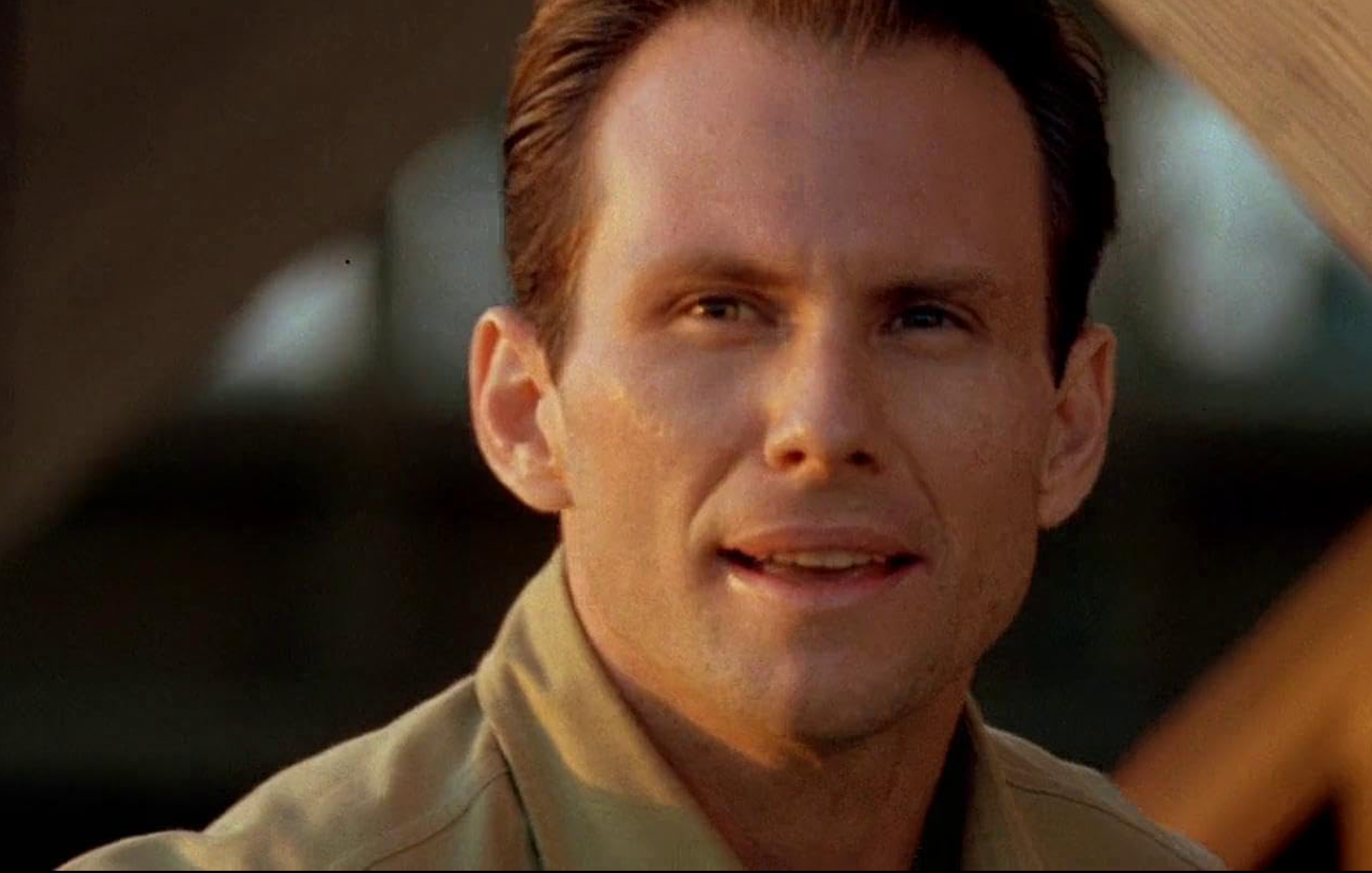
The Code Talkers are crucial to the success of the Marine’s mission, but are largely unaware that they are also expendable–that each one has been given their own “kill switch” that follows them around day and night to make sure they do not fall into the hands of the enemy. In this way, the men who have pledged loyalty to their country and are willing to die for it, are but pawns easily sacrificed at any time without remorse.
Knowing this reality to be true, and knowing what he may be called to do, Enders, at first, spurns the camaraderie and closeness that Yahzee seeks from him. The jaded and cynical soldier, Enders knows that in battle any moment could be your last, and he is still reeling from the loss of his friends from the last battle. He is not quick to make relationships or let Yahzee into his troubled psyche.
The Battle on Saipan
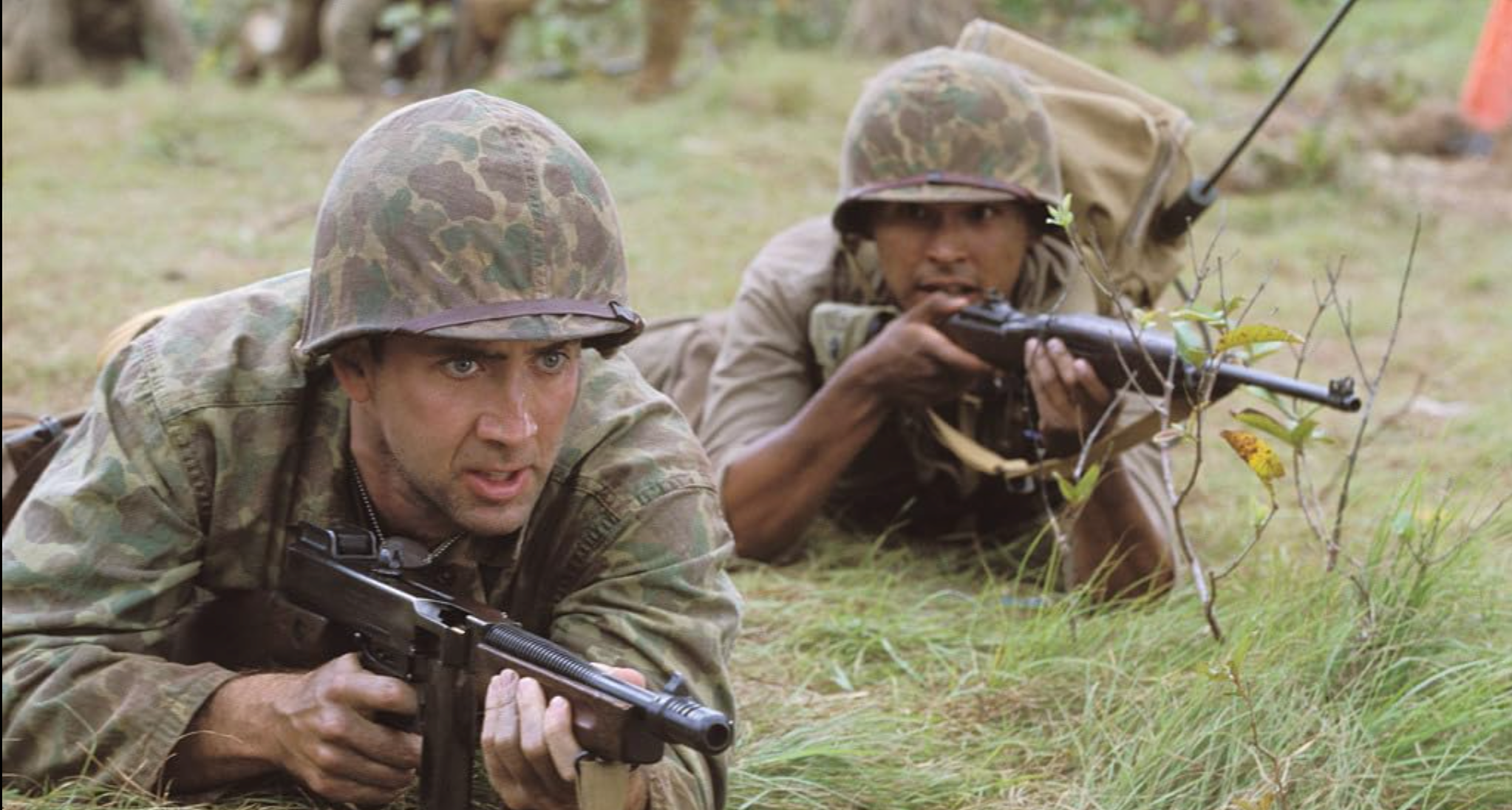
I could describe what these battles were like, but I wouldn’t do them much justice. You really have to watch it for yourself, but I will say, the battle sequences hold up to any I’ve seen in any of the best war films. So much carnage, violence, and human decimation. It’s hard to fathom what it must have been like to have experienced that kind of war. I don’t have any concept for it. With John Woo, the action is always amplified times ten, but when it comes to these war scenes, it doesn’t feel or seem hyperbolic. I think what we see is a lot like what it looked life visually if you were there. From close hand-to-hand trench combat, to fast-and-furious machine gun mow-downs, to mortar shells obliterating tanks and human limbs, it’s all there in its devastation and futility.
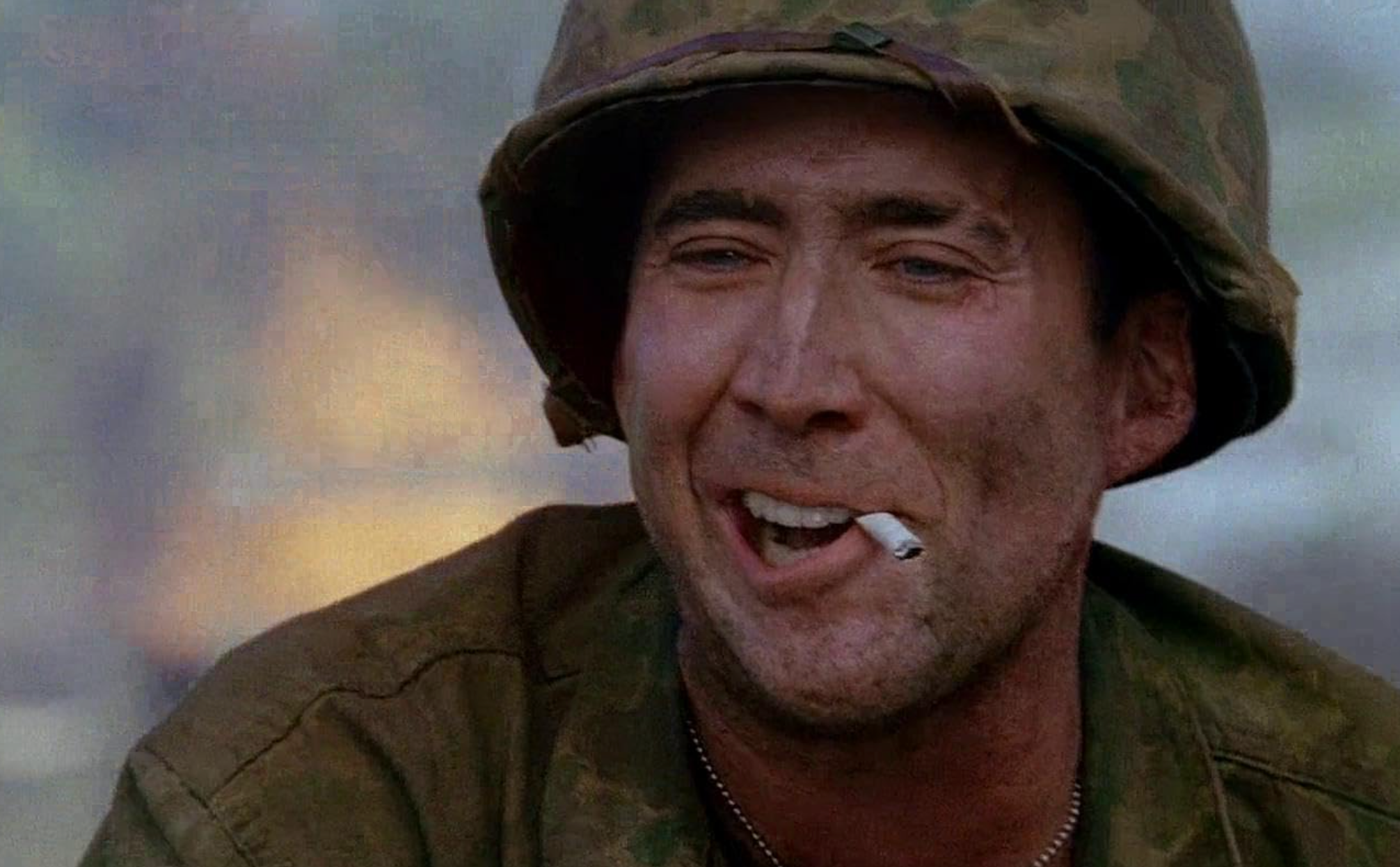
To be honest, I felt exhausted by the end of it. I guess the take-away from a Cage perspective for me, was that he has mastered the role of “berserker” on film. All of the nouveau shamanism and German expressionism of his facial features came into play in this one. His capability for violence, visually, becomes primal and unstoppable in this film and he is completely “off the hook” at times.
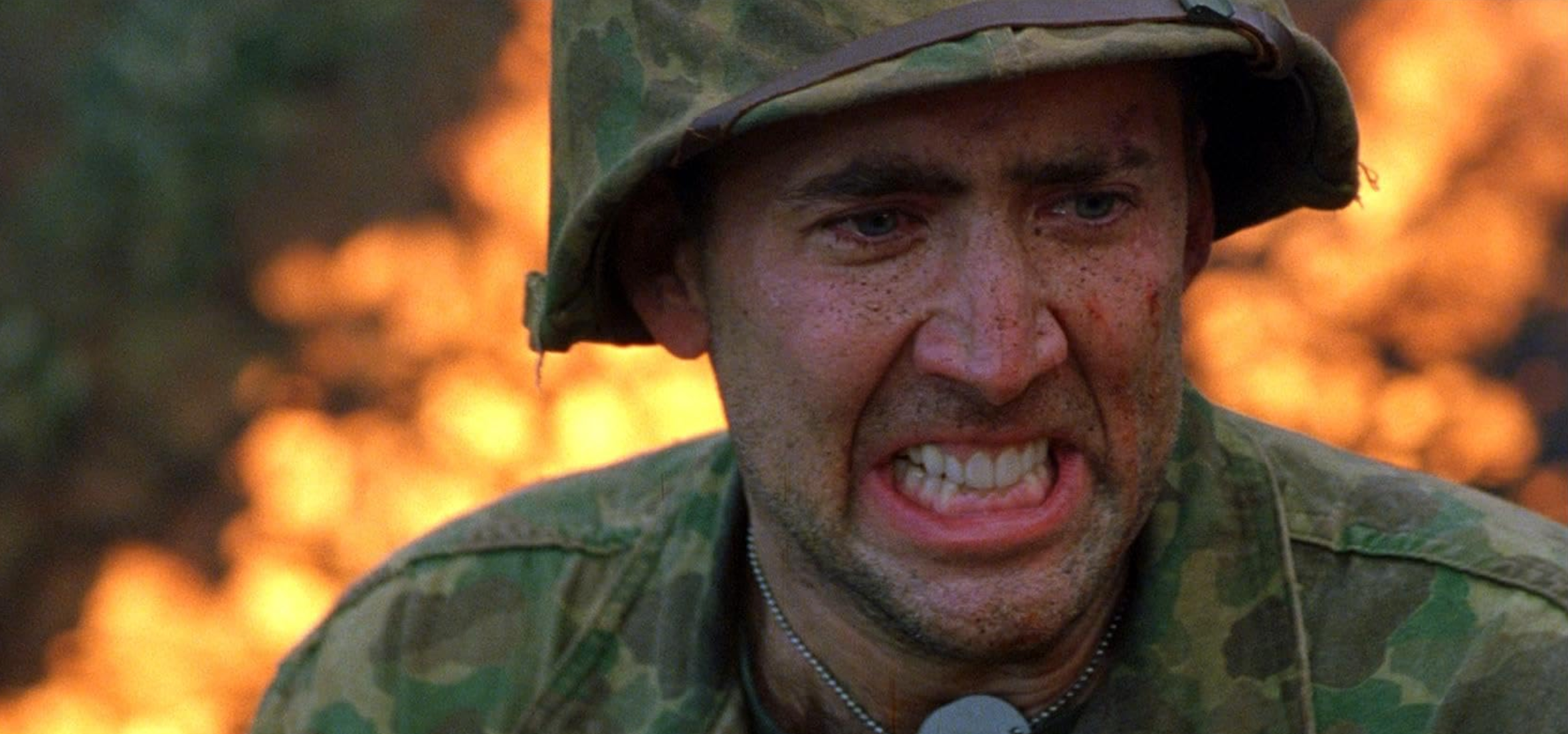
In the end, Enders is called upon to take out one of the Windtalkers so that the code can be protected. Though it pains him to do so, he must shoot Whitehorse before the Japanese can cart him away. This temporarily breaks Ender’s relationship with Yahzee who has come to see his position to and relationship with Enders in its true light. Without Whitehorse to tether him, Yahzee goes on his own beserker rampage as he tries to fight the entire Japanese army all at once.
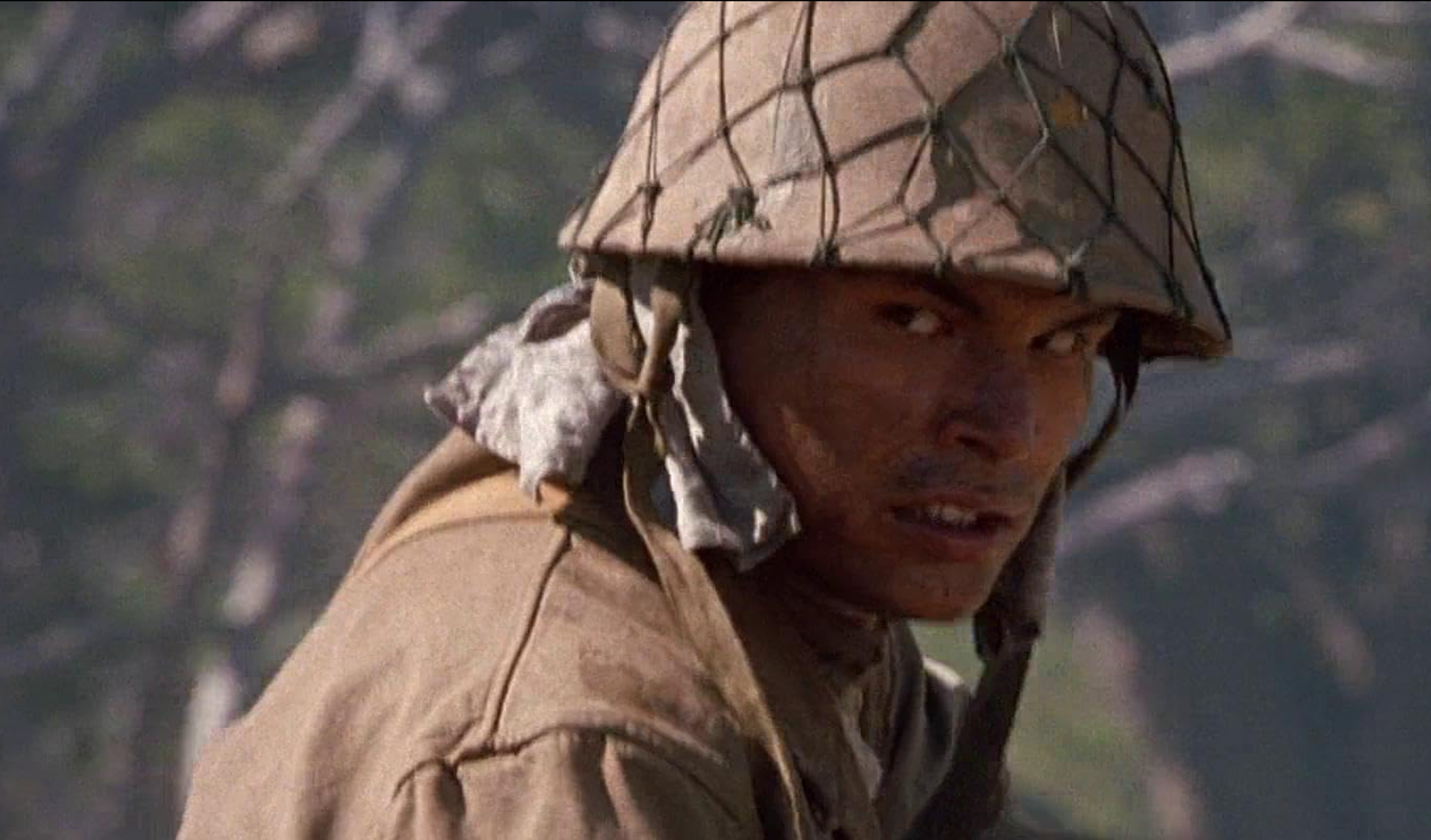
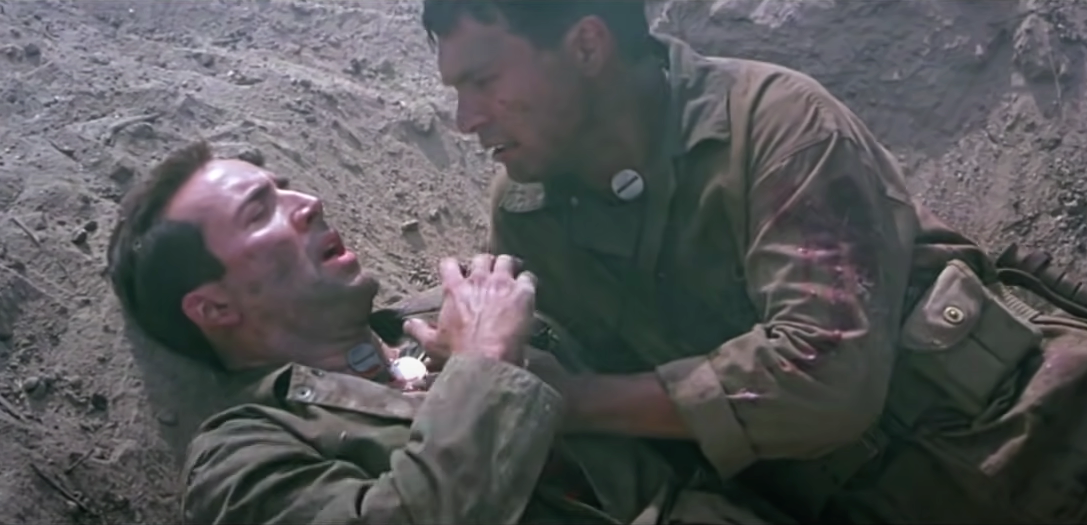
Yahzee is nearly killed, but ultimately saved by Enders who has decided to fight for Yahzee as he did his fallen brothers rather than stay loyal to “protecting the code”. Enders meets his “end”…er, on the battlefield, which only seems fitting, and has found lost faith. Praying a hail Mary, he holds Yahzee’s hand in his and is released from his duty as he heads off to Valhalla or the final Apocalypse where he will fight aliens with spider-like exoskeletons.
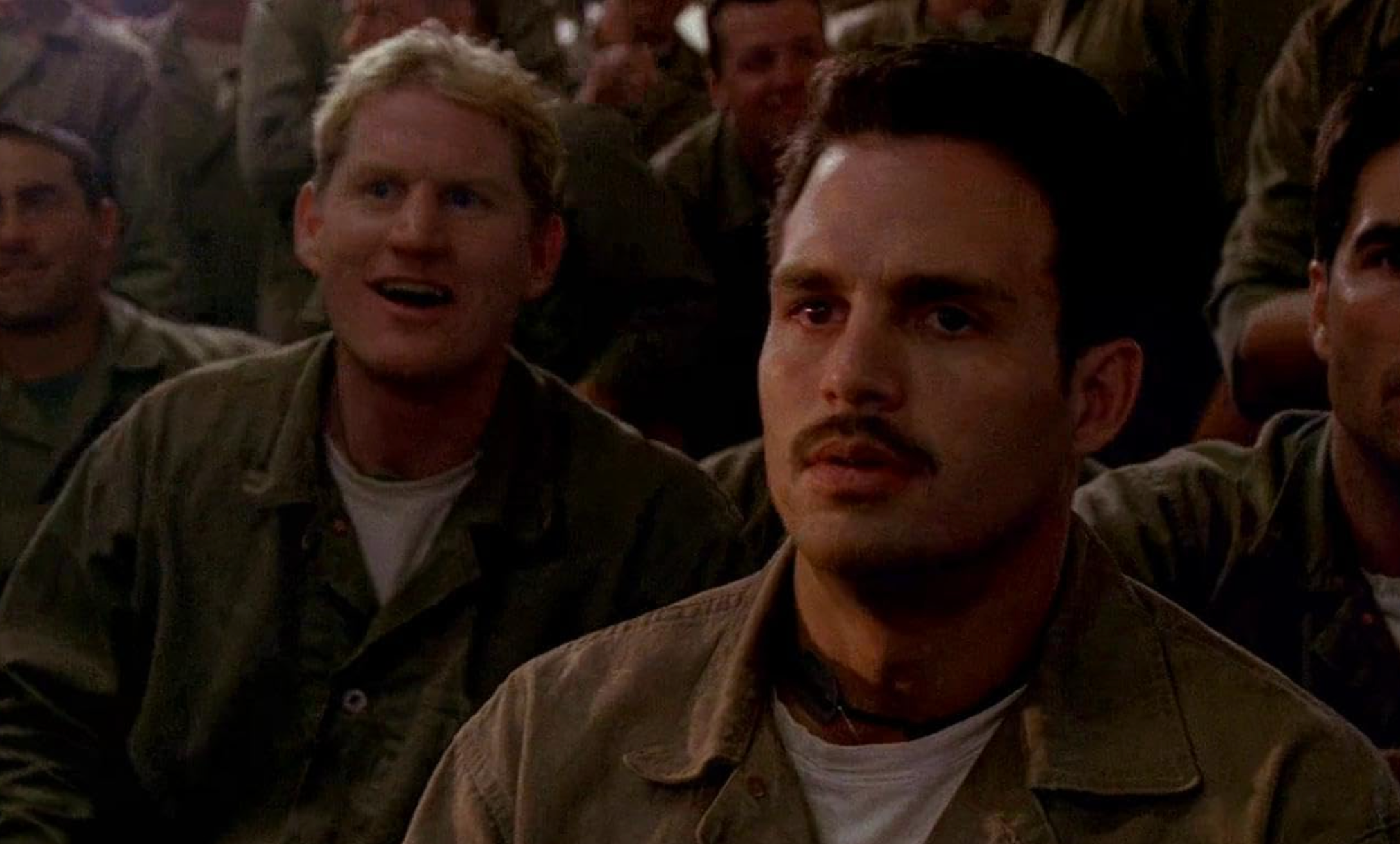
Yahzee returns home to wife and family and honors his friend Enders with Navajo prayer and ceremonies.
Firsts for Nicolas Cage as Colonel Joe Enders
- First time in Solomon Islands
- Purple Heart and Silver Star recipient
- Modified flat top!
- Fakes a hearing test to get back to the war
- First running montage (on the beach)
- Some gnarly facial scarring
- First time apperaing with Christian Slater, Mark Ruffalo, Noah Emmerich
- Speaking in Japanese
- Gets a bayonet in the chest
Recurrence
- Combat and losing his fellow soldiers (Captain Corelli’s Mandolin)
- As a U.S. Marine (Red Rock West)
- Bandaged head / face (Birdy, Racing With the Moon)
- PTSD from battle – Birdy
- Playing cards for money (Honeymoon in Vegas)
- Smoking (Multiple)
- Second time referencing desire to “kill some Japs” (Racing With the Moon)
- Dies on screen ( The Cotton Club, Vampire’s Kiss, Deadfall, Leaving Las Vegas, Face/Off as Castor Troy)
Best lines as Colonel Joe Enders
- “C’mon, Marine! Hold the goddamn position.”
- “Begging the Major’s pardon, but I believe I best serve the core by killing Japs. Not by babysitting some Indian.”
- “You’re blocking my view.”
- “Beggin’ the Colonel’s pardon, he’s a Navajo of the Bitter Water people. Born to the Towering House Clan.”
- “I’m a little out of balance.”
- “I don’t give a shit about medals. The first one they gave me. I threw it into the ocean.”
- “What a magical pile of Navajo horseshit. What the hell for?”
- “Yeah. I’m a good fuckin’ Marine.”
- “They told me I was a soldier of Christ. Guess somewhere along the way I switched units.”
- “GODDAMN IT. I CAN’T DO IT. I CAN’T PERFORM MY DUTY!”
Conclusion
In the end of Memoirs & Misinformation Cage’s visions come to pass as the reptilian alien conquerors have invaded earth and threaten to overwhelm human defenses. As Carrey describes it,
“They took Cage as their next target, jockeying to smite him as a carrier of immunity, their death rays finding him as he bounded across the street. How many get to choreograph their final seconds? He died just as he said he would, turning to face their swarm, laughing at them, even, because if the worst threat they had was oblivion, that was fine with him, an endless vacation from the torments of being. He fell in slow motion, arms stretched toward heaven, face a vision of Christly surrender.
You did things that hadn’t been done, that others were afraid to do, thought Carrey, watching Cage’s body hit the ground with an excruciating wheeze. You gave me courage. He thought of the Pieta, Jesus laid out in the Virgin Mary’s arms. Voices from some catacomb inside of him prayed to her, asking for safety, for velocity, and, failing these, for a death as exquisite as Cage’s.”
Oh, that we all might have a death and the DNA as exquisite as Cage’s.


 yeti speak...
Leave a comment