What do you get when you cross an OCD private detective like Adrian Monk with a prolific con artist like Frank Abagnale, from Catch Me If You Can? The answer: the obsessive compulsive grifter, Roy Waller, played enthusiastically and brilliantly (once again) by Nicolas Cage in the superbly paced and highly entertaining Ridley Scott-directed film, Matchstick Men (2003). Also known as the 40th film in the WATC(H) journey. (Hooray!) Are we even one third of the way there yet?
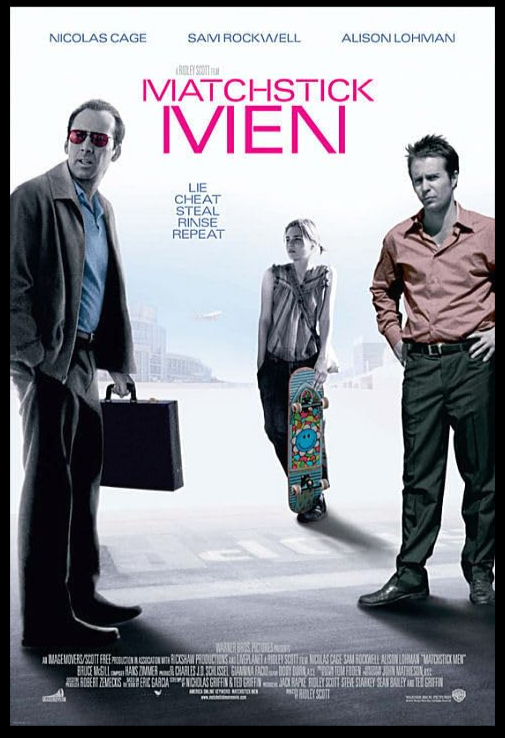
Before I say / type another word, just be warned this WHOLE POST WILL BE A SPOILER if you have not viewed this film. If you haven’t seen Matchstick Men yet, please, pause your reading now. Go find a copy at your local library or overpriced streaming service. Set aside a couple hours and just watch it.
Watch this film in its entirety, and then return here.
Did you watch it?
Not yet?
All right. How about now?
OK, well if not now, then when? You’ve been duly warned.
There will be many spoilers and this movie is 150% better if you view it without any pre-knowledge.
I think it’s safe to say that Nicolas Cage, as an actor, has moved into full adulthood with Matchstick Men. In 2003, he was approaching the end of his 30s. It’s often hard to know when an actor has entered a new stage or phase of their career, especially an enigmatic actor like Mr. Cage, but starting with Adaptation. and then fomenting in this film, we begin to see a metamorphosis. Not only does Cage seem capable, expressive, and invested (which he always has) in the role and the craft, but with Roy Waller, Cage has reached that place of great acting, where the artist actually seems to embody and become the character they are portraying.
We’ll get into the why’s and the how’s of this transformation, but I wanted to open with this as I think it shows growth and (dare I say) a new found maturity in Cage’s journey as an artist.
But What’s It About {Extra Long Summary to Follow}
Matchstick Men as the name implies, is about the life of two con men (a.k.a. confidence men, grifters, hustlers, sharks) looking for their next score from the poolside vistas of sunny California. To the backdrop of Sinatra songs, martini shakers, and Hollywood smog filled horizons, the elder statesmen, Roy Waller (Cage) and his younger protege, Frank Mercer (Sam Rockwell) hatch their share of “get rich quick” schemes upon “the fat, the old” and the gullible, whom they attempt to swindle out of their private treasure hoards. The two know their trade well, take on various roles as telemarketers, FBI agents, and businessmen, and somehow stay ahead of their victim’s suspicions and the long arm of the law.
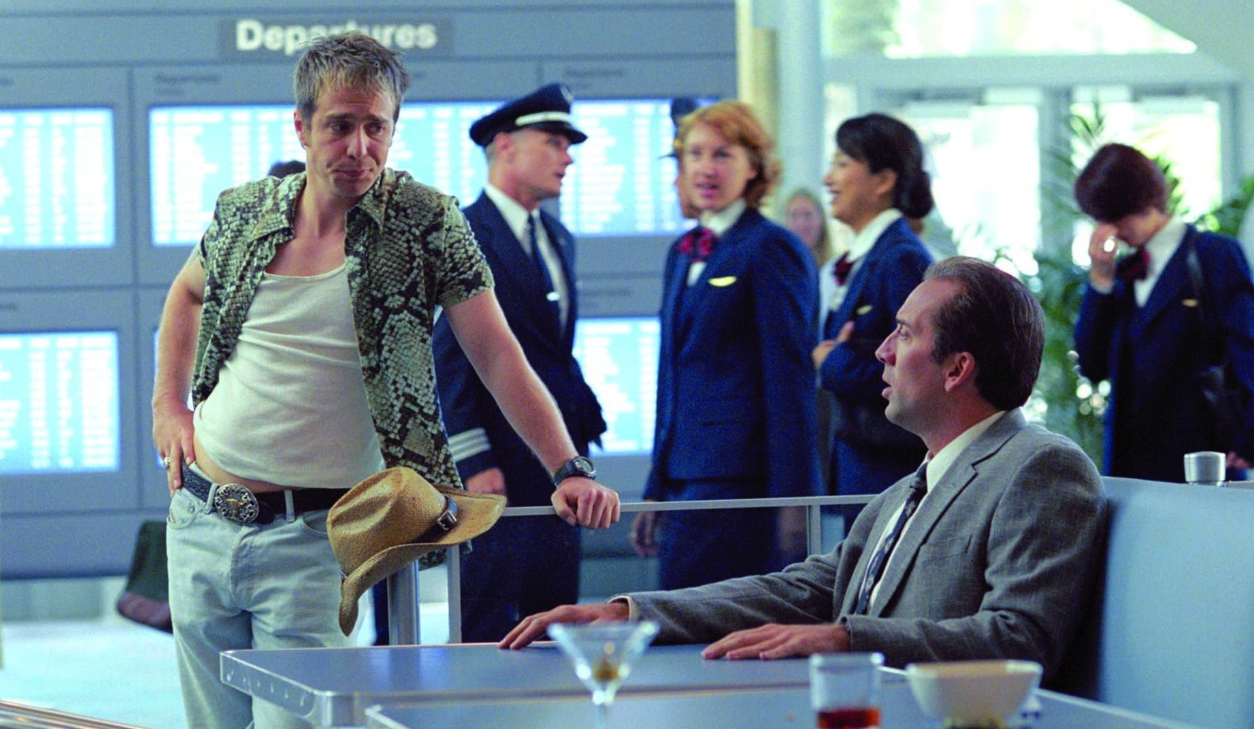
Roy, who has made a “good” living on the false hopes and lies he has persuaded his marks to believe, has turned his years of scams into a nice home for himself with meticulously pristine carpets, a luxurious pool, and a ceramic dog that acts as his piggy bank, gun safe, and his only live-in friend. Although Roy may have accrued the kind of wealth his partner, Frank, can only dream of, it has come at a terrible price to his emotional and mental state.
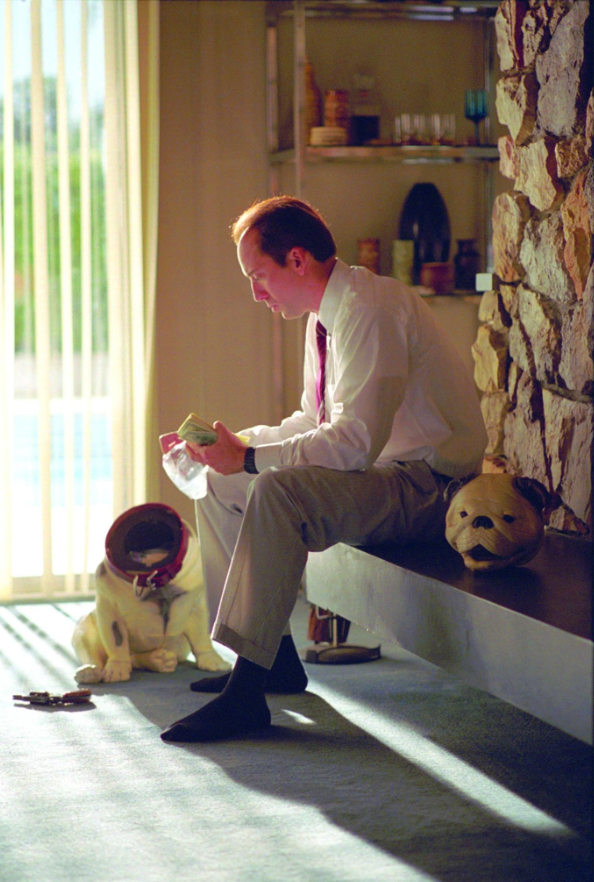
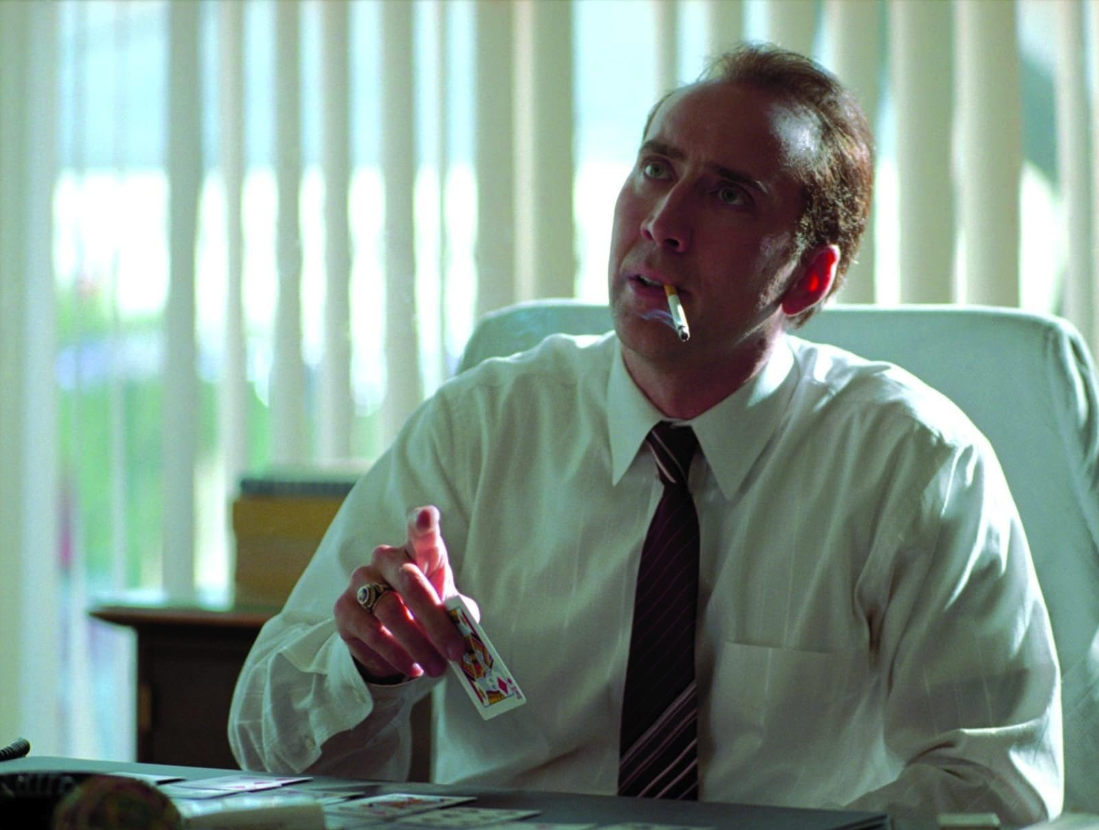
Roy has lost his wife (via abuse and estrangement), has missed the birth and upbringing of his child; has failed to maintain friendships; has a chain smoking habit, a paralyzing agoraphobia, and an ever-growing litany of behavioral and cleaning rituals, that manifest as nervous tics, hoots, and stammers, all due to his at-times crippling case of obsessive compulsive disorder.
Simply put: Roy is a complete and total mess, but at the same time very, very cleanly. And oddly capable. It’s weird like that.

The plot centers around Frank attempting to persuade Roy to go against his principle of not taking on a “long con” that would likely up the risk of the two getting caught, but would also up the ante, of making them both rich (or at least richer faster) in the process.
Reluctantly, Roy agrees to Frank’s long con (i.e a currency exchange scam) but first must deal with a series of personal crises that increasingly get in the way of executing on the scam.
It starts when Roy accidentally loses his OCD meds down the garbage disposal and comes to the realization that his regular doctor who “illegally” prescribed these meds has unfortunately left the state.
In a panic, Roy scrambles to try to find a new psychiatrist, but only after things have spun way out of control with Roy’s cleaning regimen (OCD), and a self-imposed lockdown inside his home where he scrubs down every surface, dust and cleans every piece of plumbing, vacuums under every piece of furniture, and windexes and wipes down every counter (on a loop) until he is literally hyperventilating into a paper bag.
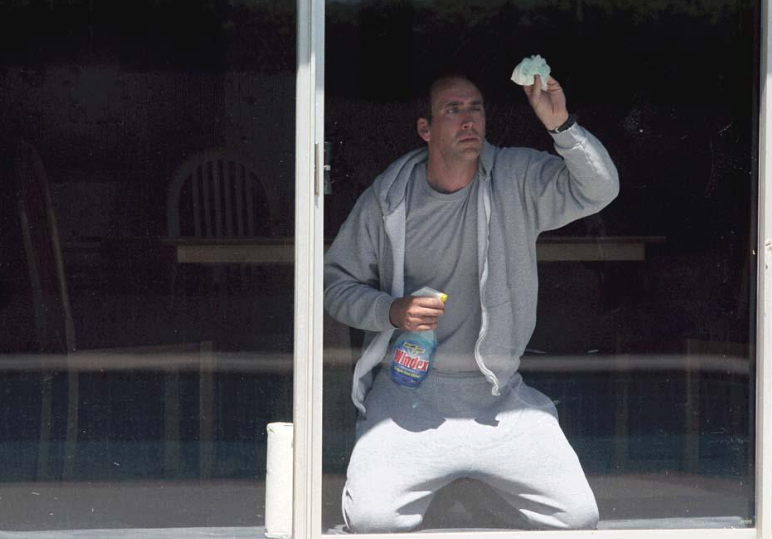
Roy eventually gets saved from himself by his buddy Frank. Then gets a referral from Frank where he must meet up with his new shrink, Dr. Klein (played by Bruce Altman) to secure his prescription. Roy there discovers, to his chagrin, that he will actually have to interact and “play ball” with the doctor if he expects to continue to get refills, which he needs forsurvival.

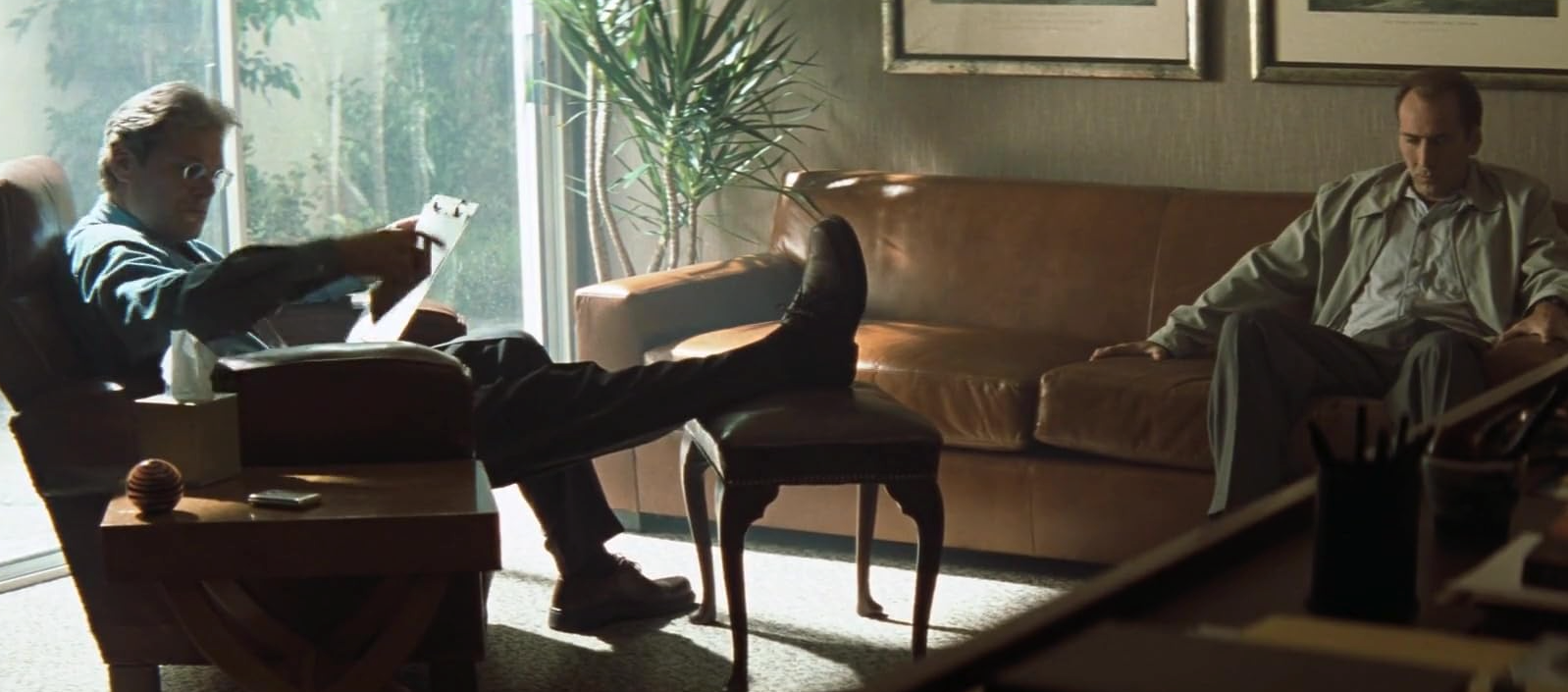
Through his “therapy” session Roy admits his life is a mess (that he would commit suicide if not for the thought of how his brains would make the carpet dirty with no way for him to clean it afterward). Roy confesses how he lost his wife, leaving her behind many years ago with a black eye and a pregnancy, he has no friends, his eye twitches incessantly, and he doesn’t even know if his offsprings is a son or a daughter (that would now be about 14 years old).
Encouraged by the Doc, to make this important connection with his past, as a way to take back some control over his future, Roy tracks down his ex and (with the help of a Dr. Klein phone call) arranges to meet up with his now rediscovered 14-year old daughter, Angela (played by the actually 24-year-old but sprite-ish, Alison Lohman).

As Frank attempts to bring Roy back into his con, Roy (now medicated and more stable) is prioritizing his interest in developing a relationship with Angela, as it gives him a sense of purpose and fatherly responsibility. Angela’s teenagery ways, messy eating habits, and come-and-go nature cause some bedlam for Roy, but he is now invested and wants to be part of her life (as she is really his only human interaction and moral grounding in an otherwise immoral existence).

Pressed repeatedly to admit what he really does for a living, Roy finally admits to Amanda (on the questionably sage advice of Dr. Klein to be “honest and transparent” as possible with teenagers) that he is a con man. He even shows her a trick of the trade, using a scratched up lottery ticket and Amanda’s charm to mislead a woman into giving them a few hundred dollars for the ticket. But even as Roy teaches Amanda how to work the grifter angle, feeling a strange sense of fatherly pride in showing off his skills, he tries to anchor Amanda in more ethical behavior by demanding that she return the money she just grifted. He even promises Amanda that he will give up the lifestyle so he can be a better father to her.
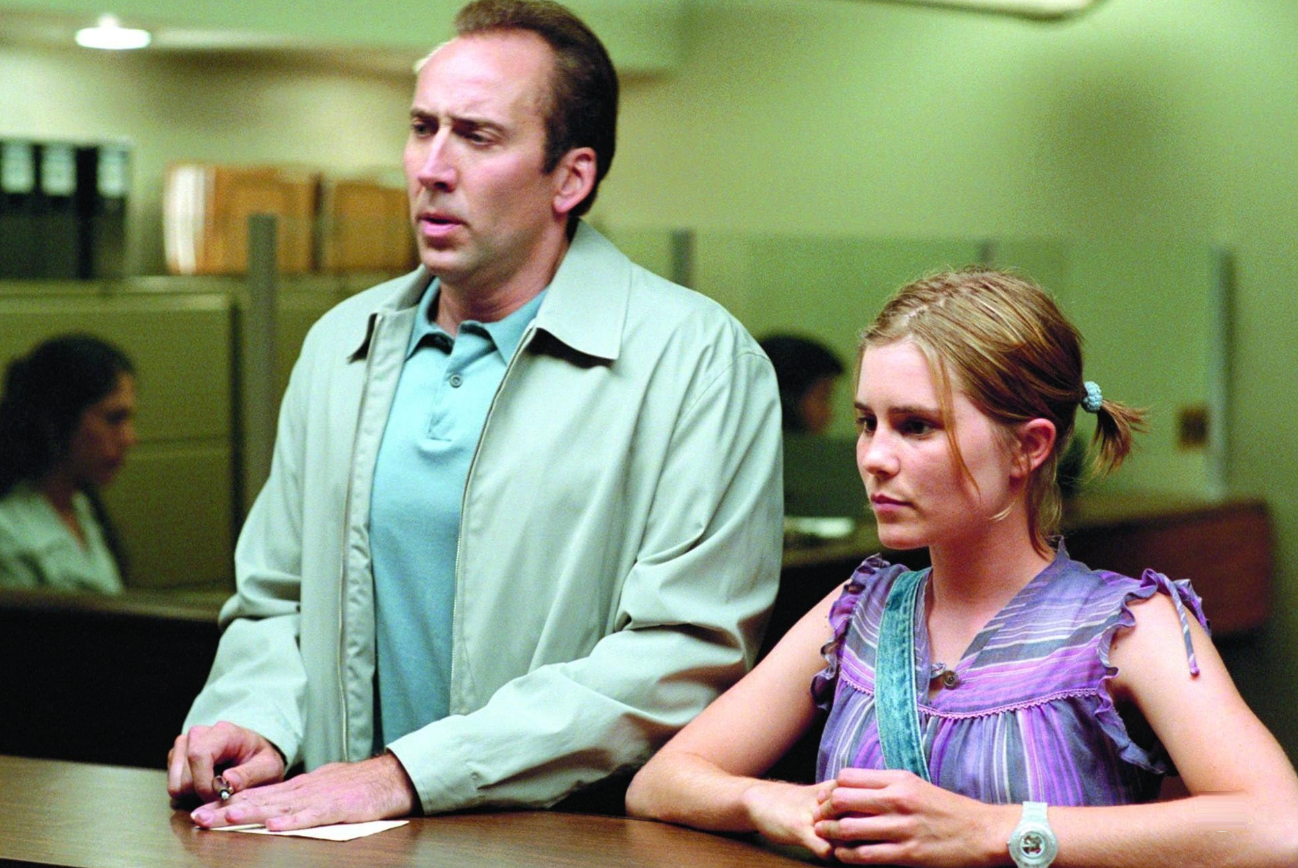
Roys efforts to teach Amanda a better way quickly evaporate though when Frank and Roy must leverage her help with their long con as the plan’s timeline is moved up unexpectedly.
Fast forward a few scenes.
Things go awry quickly (as they often do in con man films) and Amanda is put in danger when the Mark discovers he’s being conned and goes after the three. Tempers flare, shit happens, and Amanda somehow ends up shooting the Mark with Roy’s gun in Roy’s home. Uh oh.
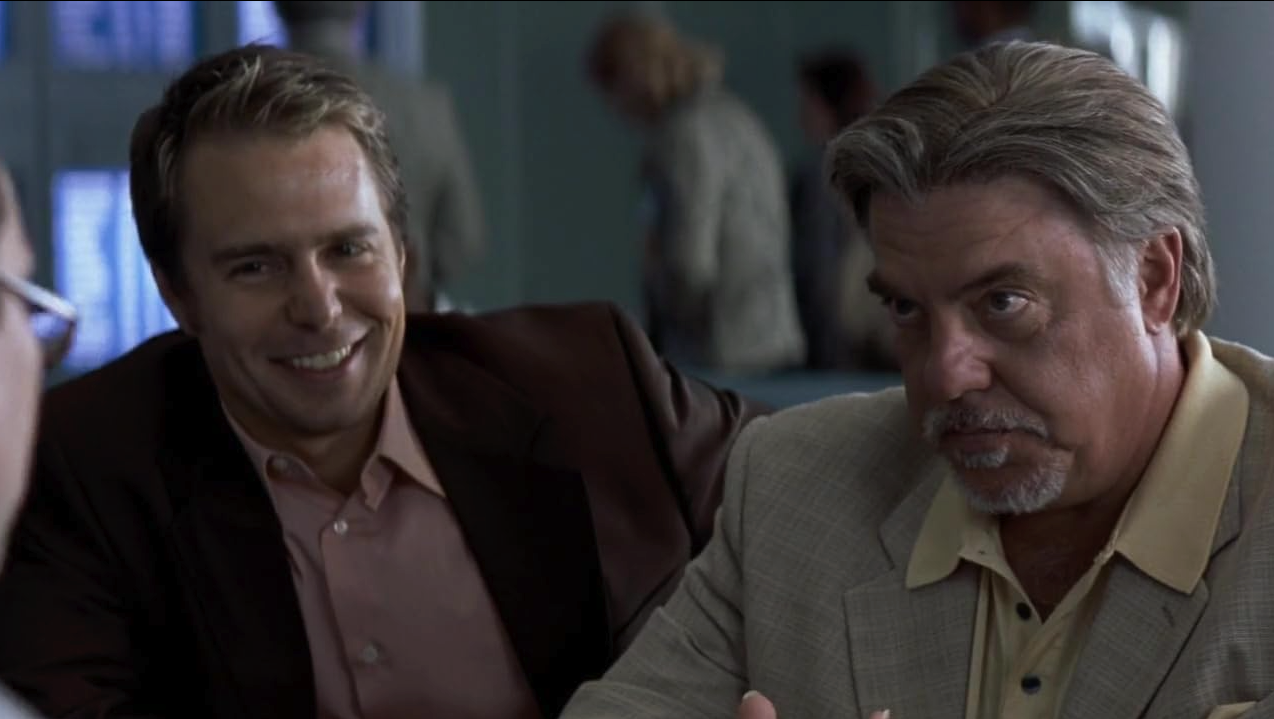
Realizing that his daughter will be punished for this “accidental” murder, Roy puts Amanda and Frank in a car and sends them away “to the desert” motel and re-assures her that “he is the one who took the shot” not her, and that he is going to call the police and take the blame.
As the two drive away together (that’s curious right) the Mark re-appears out of nowhere (not dead after all) surprising Roy, and whacks him in the head with a blunt object–Roy fades to black, unconscious.
This is NOT the end of the movie. We’ll get to the events at the end which make the movie great. But this is a good place to stop and say…
You Down With OCD, Yeah You Know Me…
Like I have mentioned much more than just a few times, Nicolas Cage is amazing. In this movie, he is amazing because he is able to harness his spastic tendencies in a way that actually reflects the character he is playing to a tee. We get to live the precarious life of someone who is both obsessive and compulsive and Nicolas Cagive to the point of real dysfunction. And that’s highly entertaining!
Why do I say this? Well here are a few of his mannerisms in full glory:
- Roy must open and close every door he is about to enter (or exit) not once, not twice, but at least three times before he moves or allows movement through it.
- When doing so, Roy must ritually say out loud, “Uno, Due, Tres” in Italian.
- When he throws out his favorite food, “I like tuna fish,” he must wrap the cans in a ziplock bag before throwing them in the trash. (Tuna stinks, so I get it, but I imagine it’s more of a cleanliness thing.)
- When anyone (i.e. Frank) even attempts to put a shoe across his pristine gray carpets, he violently snaps his finger in the air not once, not twice, but three times as a way of warning / caution. Do not proceed, please.
- Same thing when they (i.e. mostly Frank) put a dirty shoe on his car’s dashboard or desk.
- His eye twitches and blinks in speed and frequency in direct relation to his level of anxiety.
- When he is especially agitated, he spurts out a few stammering Rain Man style autistic uh….uh….uh…and mmmm….mmmm….muhs…and ever so often an owl like “hoot”or “hoop”.
- He doesn’t swear (and seems offended when others do). Instead he says, “Pygmies!” as a proxy cussword.
And despite all these infirmities, he’s capable enough to pull these elaborate schemes, talk smoothly to his marks, wear costumes, and think quickly on his feet. It’s pretty impressive, but I guess Adrian Monk was also able to quickly solve crimes like Sherlock Holmes even though he suffered from the same paralyzing disorder.

Rule of the Con (When Things Get Sus)
According to Roy, there are certain rules and guidelines to follow as a con artist.
Rule #1 – Never work where you live.
Rule #2 – Never write anything down.
Guideline #1: 90% of the work is variable; you’ve gotta be flexible, prepared to roll with anything.
Guideline #2: The one thing you can control is your mark.
Guideline #3: Never play anyone who isn’t buying what you are selling. And what you are selling is you.
Guideline #4: The older the mark the better, never con couples or someone listening to someone other than you.
And the last, but most important rule:
“For god sake, make sure the person you are conning, isn’t conning you.”
I was watching Matchstick Men with my good friend, Tim, and pretty early on in the movie, he caught on that Roy was being conned by the girl. I was slower on the uptake, but immediately agreed with him after his revelation. Roy didn’t take his own advice and looked right past the person who he was becoming closest to: Angela.
But who suspects a 14 year old girl to be conning her “father” the con man and using his paternal longing to separate him from his millions (by learning the security code for security deposit box?) Well, turns out, in retrospect, there were a few other clues that Angela was perhaps “not what she seemed”.

Sus List
- Angela was not 14. You can tell that by looking at her. She doesn’t look 24 (the actor’s actual age at the time) but she also doesn’t seem 14. A reclusive man might just make this mistake especially given his lack of human interaction, but others would question it.
- Roy never speaks to Angela’s mother prior to meeting Angela. And only later in the movie does he approach and talk to her.
- When he tries to drop Angela off at her mother’s home she balks and hides in the car. Teenagers do such things, but it did feel weird to me.
- Angela tells Roy she has a “private line” (phone number) because she was alway tying up her mother’s phone line late at night (if you don’t understand how landline’s work, just ask your parents, Zoomer)
- She drinks beer like a sailor. (This behavior is not beyond the 14 year old, per se, but still, it seemed so natural to her for a child of 14.)
- She already knows a thing or two about boys (which she uses as verbal blackmail against Roy.)
What’s That Spell: Scam Time, Baby
So we have a reclusive, relationship-starved rich-ish man suffering from OCD, medical withdrawal symptoms, and a desire to be a father; a young and hungry con man partner who’d like to be much richer than he currently is, and a too-eager surprise daughter who wants to get in good with her father and learn everything about him and his craft. What does that all add up to?
It adds up to Nicolas Cage (Roy) getting scammed like crazy. If you live by the sword, well you don’t die by the scabbard my friend. Et tu Brute.
Returning to the SPOILER end of the movie: When Roy wakes up in the hospital thinking his daughter and his partner have fled the scene of a crime and he is now the prime suspect for the murder, you start to wonder what’s really going on. Handcuffed to his hospital bed, Roy evades the police questions and asks to see his trusted psychiatrist. When the police grant this request, Roy secretly reveals to Dr. Klein a message that he wants his daughter to know. Namely the security code for the deposit box and how she can access his accounts. The doctor leaves, promising to relay the message (police none the wiser) and Roy fades back into his concussed state for a while. When he awakes the hospital seems deserted.
Because…mic drop…he’s not in a real hospital at all.
He’s in a warehouse on top of a parking garage, made to look like a hospital room. Roy has been had, like so many marks before him. Roy didn’t do long cons, but a long con had been DONE to him right under his very nose.
Frank wrote him a letter explaining it all (which he found in his ceramic dog) about how it had been so hard to make a decision to steal his money since they’d been friends, but he was just following Roy’s advice: he saw an opportunity and took it. Translation: it was business, nothing personal.
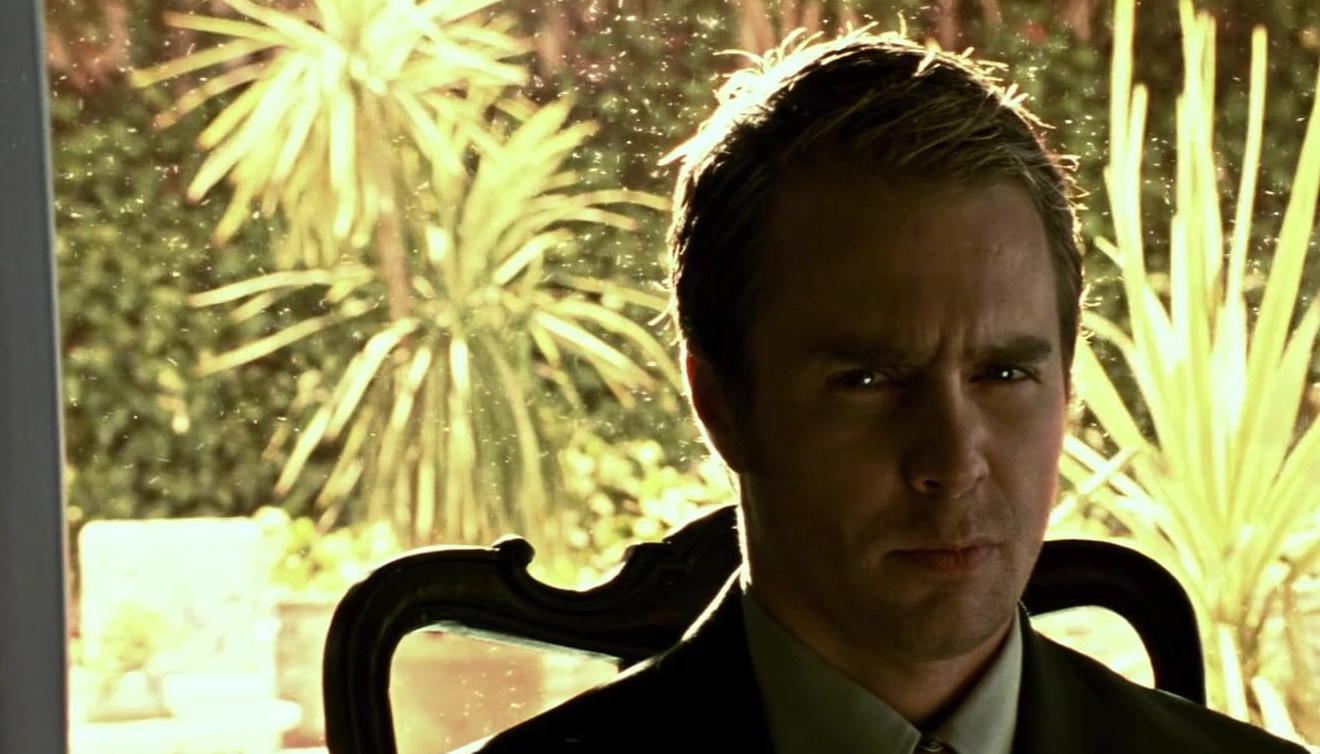
Not only was Angela part of the con, but obviously the Mark was, too, and even his trusted psychiatrist. If you can’t trust your shrink who can you trust? All were moving Roy like a chess piece to trust Angela more and more, with his most personal information and his stash of cash! In retrospect it’s obvious, in the moment, it really wasn’t.
For me anyway.
Trailing back the clues, Roy discovers they have taken his money and the valuables from his safety deposit box, but even worse, they’ve taken his fatherhood to a young girl he had come to love deeply. In a poignant scene at the end of the film Roy speaks to and confronts his ex-wife (for the first time) to find out about their daughter Angela, only to discover that she never had a daughter or a son, and that she’d lost the baby early on.
At first this causes Roy to cry in grief, but then this quickly turns to a maniacal (if pleased) sort of laughter. Even in his pain Roy can appreciate a really good con (even when he was the unfortunate victim.)
A Film About What It Takes to Become A Good Person
Upset with her “father” Roy (and perhaps at some level authentically so) Angela says, “You’re not a bad guy, you’re just not a very good one.”
His “doctor” also hints that perhaps Roy’s condition (the tics, the stammers, the OCD cleaning and behaviors) have less to do with a real medical problem and more to do with his own bottled conscience over his career choices.
Even Roy seems aware that what he is doing to people is wrong regardless of the ways that it can be justified.
Throughout the film, Roy seems interested in a woman who works at the local super market. She’s a woman who makes an honest wage doing a job most would not call glamorous. It’s also a job that involves a lot of tactile touching of unclean objects; cans, belts, bags, fruits, vegetables money. She’s kind of living a life that’s the polar opposite of the sterile one that makes Roy feel safe. But when Roy looks at her longingly, it makes you wonder if he desires her for her girl-next-door good looks or just her middle class ethical values (doing no harm to make a living wage). Either way, the message is that Roy would prefer a wife, a family, a simple job to what he is currently doing to people.
Which is exactly what he gets. At the end of the film Roy is selling carpet. See what they did there! Carpet again. He is helping a customer who comes in with a pretty girl, who happens to be Angela. The two former father/daughter partners talk alone for a few minutes and Roy discovers that Angela was also stiffed out of her share of his money by Frank, and that she learned that the con artist life was not for her. She’s grown out of it like he has.
The two have a moment and seem to have learned lessons from one another about life and love, father and daughter stuff, being actually good people as opposed to being “just not bad” people. She’s found a good man, she says, and we later discover that Roy has found love too in his super market girl (who also appears to also be pregnant). Alls well that ends well. But before the two part, Angela asks Roy a question.
“Don’t you want to know my name?”
“I know your name.” Roy replies with a smile.
And Angela smiles back, surprised but not so much, “I’ll see you, dad.”
And that’s how we know that these two con artists (in the end) taught each other what it means in life to be good people and to find family (even when neither was searching for it.)


Firsts for Nicolas Cage Character As Roy Waller
- Severe OCD
- Nervous Tick (eye twitch)
- Con artist
- Snaps his fingers three times to get attention
- Hyperventilating into a paper bag
- Playing solitaire
- Single Daddin’ it
- Wearing a panama hat
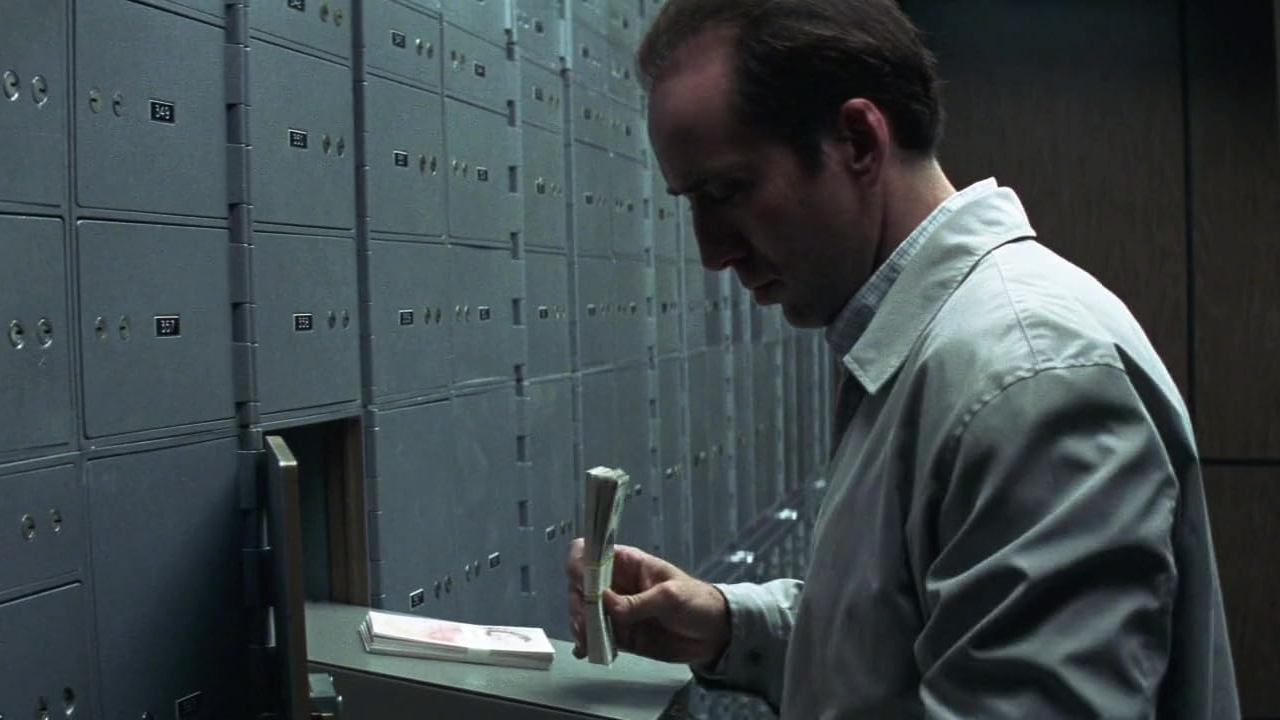
- Stashing cash in his safety deposit box
- Taking Supplefem (a soy supplement for menopause) as a placebo for his real medication
- Gifted a ashtray with an angelic deer ceramic inside
Recurrences for Nicolas Cage as Roy Waller
- Chain smoking (Multiple)
- Doesn’t believe in swearing and therefore doesn’t use the f-word (The Rock)
- In a strip club (this time called the Spearmint Rhino)(Multiple)
- Bowling (Racing With the Moon, Family Man)
- Dancing in a restaurant with a young woman (It Could Happen to You, Leaving Las Vegas)
- Hanging out in a grocery store (Guarding Tess, Raising Arizona, Leaving Las Vegas)
Best lines from Roy Waller
- “A lot of these WACK jobs! They work in syndicates.”
- “You looking for something, sucker” (To Frank)
- “Obviously, I have a lot of ticks. I find it very frustrating to say the least.”
- “Personal relationships. What personal relationships?”
- “I just want you to give me some pills. And let me get on with my life.”
- “I’m not dead. I’m in antiques.”
- “That’s wrong what you did! And you’re a nosey Parker! And that’s no way for a young lady to behave. And shame on you.” Even rubbing a finger in the universal shaming gesture. Typical dad talk.
- “Let me show you a little something I learned in Taiwan.” Roy throws a gutter ball.
Last thoughts:
This was the only Nicolas Cage release in 2003. It’s not very often that Nicolas Cage only appears in ONE single movie in any given year since he started making films in 1982.
Also this scene at the pharmacy was not mentioned at all above and it’s probably the best scene of the film for humor and Nic Caginess. Hoop! Signing off from The World According to Cage (Hoop!) You’re welcome.

 yeti speak...
Leave a comment