My senior year of high school, I drove a big yellow beast of a car called the Ear Xtasy. It was named that because of a bumper sticker I put on the back of the car to make it look a little less like a grandma car (1980 white-topped Buick Century) and a little more like a Gen-X slackermobile. Not sure if worked, but the name stuck.
Driving to school each morning in the Ear Xtasy, I’d listen to R.E.M.’s frenetic song It’s the End of the World As We Know It (And I Feel Fine) over and over on cassette tape (driving my younger sister to madness) while using a portable “jambox” since the radio in the car didn’t work.
The start of the school day always felt like this for me, the literal end of the world, a fated apocalypse thrust upon all of us innocent humans. But I got through it, even graduated with honors and received a small scholarship at the local community college. Still, the calamity of the song was a vibe.
I thought about those decades-gone school days, and the-end-of-all-things while watching Nicolas Cage’s entertaining apocalyptic thriller Knowing (2009). Coming in at #52, Knowing inches us ever closer to the summit of our WATC(H) mountain of movies, in the sense that it’s nearly halfway to the finish line–there and back again as Tolkien liked to describe the journey.
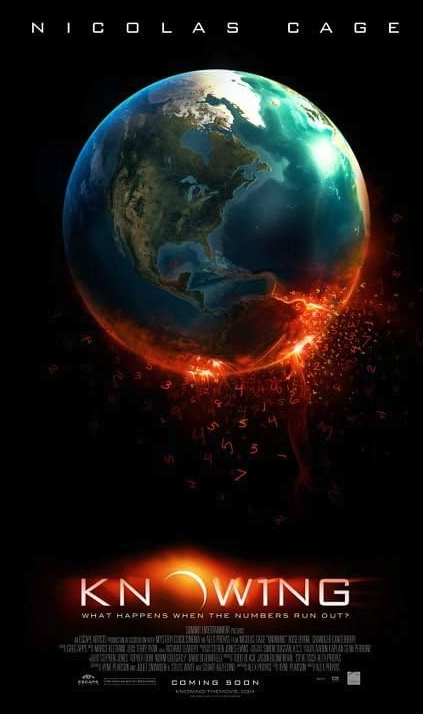
What did I think of it? Knowing was a pleasant surprise. I somehow missed this film in the tumultuous year that my family and I returned from a three-year stint in China. I think, as a society, we were less concerned about zombie apocalypse or pandemics back then, and a lot more concerned about environmental and celestial apocalypse. Aliens and earthquakes, prophecies and asteroids, X-files and the end of all things. This was nearly a decade after the Y2K hype, but I remember the Mayan calendar being a topic, some buzz about 2012, and of course the whole rapture phenomenon that surfaced via the Left Behind series of Christian books.
(Incidentally, Nicolas Cage starred in the movie adaptation Left Behind which we haven’t gotten to yet. Dear God, just kill me now. No need to rapture.)
Knowing, however, had some interesting twists and turns. Read on if you fear no spoilers.
The World According to Knowing
Knowing starts in 1959 in a Massachusetts elementary school classroom. The students are predicting what the future will be like and drawing pictures to put into a time capsule (to be opened by a school classroom after 50 years). Instead of drawing a picture, the smartest girl in the class, Lucinda Embry, feverishly writes a series of numbers over the entire sheet of paper as if by dictation. After the interment of the capsule, Alison disappears, alarming all the adults, but is later discovered in a closet writing more numbers on a wall (in her own blood) and begging the teacher to make the voices stop.
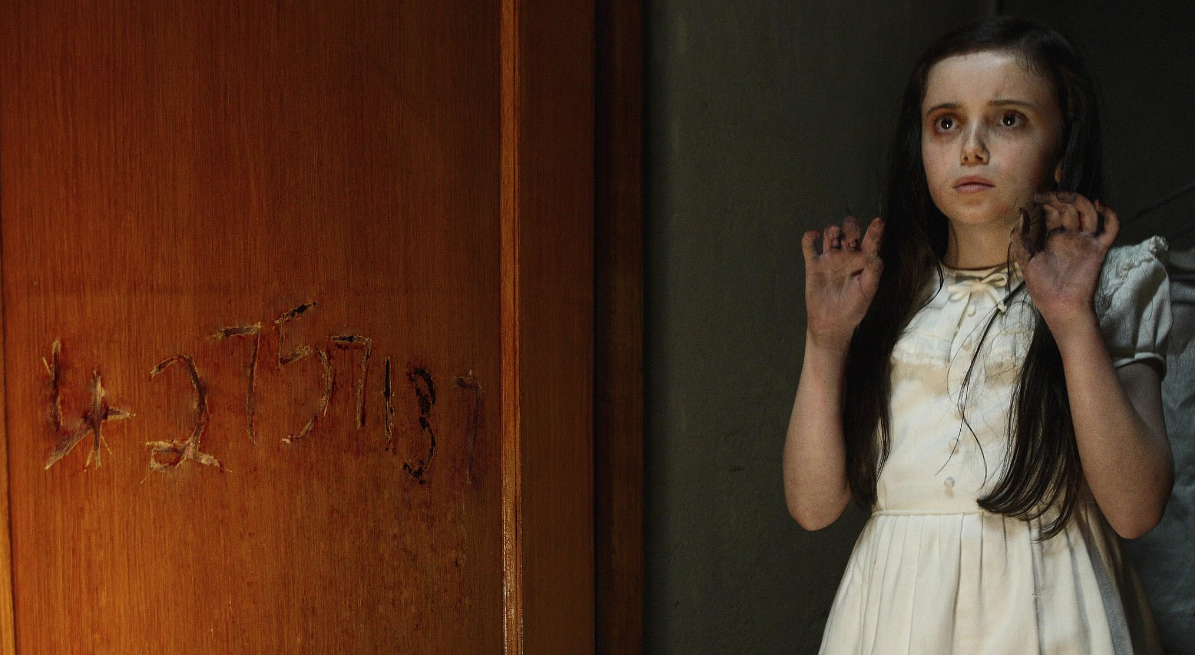
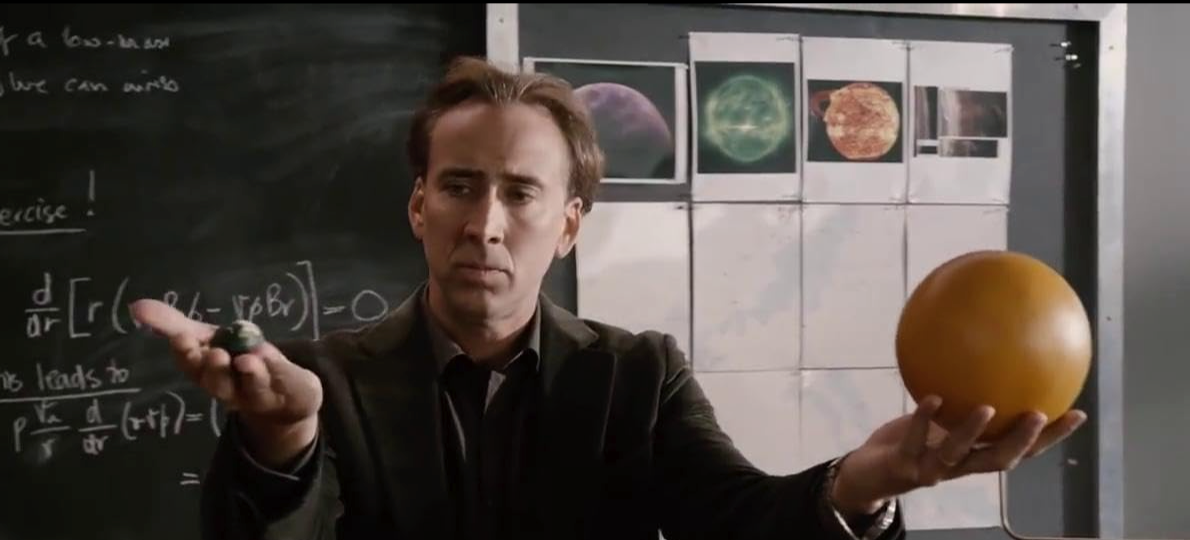
Flash forward fifty years, to the opening of the time capsule. Astro-physicist (widower) John Koestler’s (Nicolas Cage) son Caleb attends the same school as Lucinda and ends up with her letter, and is a bit bummed that he didn’t get a cool picture like the other kids but a series of “random” numbers. Caleb brings the letter home for further study, and John discovers it. After consuming his nightly grief-filled bottle of whisky, John starts to take a closer look at the numbers and discovers an unsettling pattern.
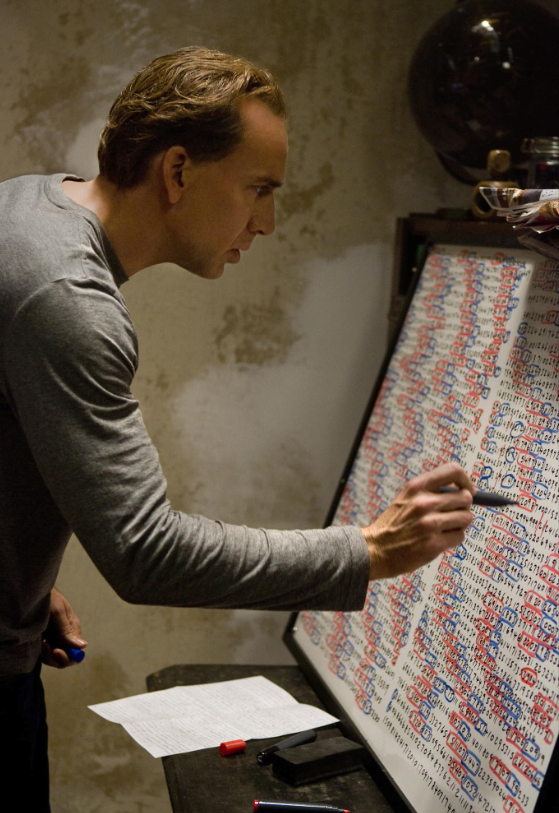
Each number on the sheet predicted and corresponded with the actual date of a terrible catastrophe in global history (terrorist attacks, plane crashes, building fires etc) and the exact number of human casualties. A bit freaked out, John notices that the night his wife died in a hotel is listed on the sheet (written fifty years ago) as well as three dates and fatalities coming in the not-so-distant future.
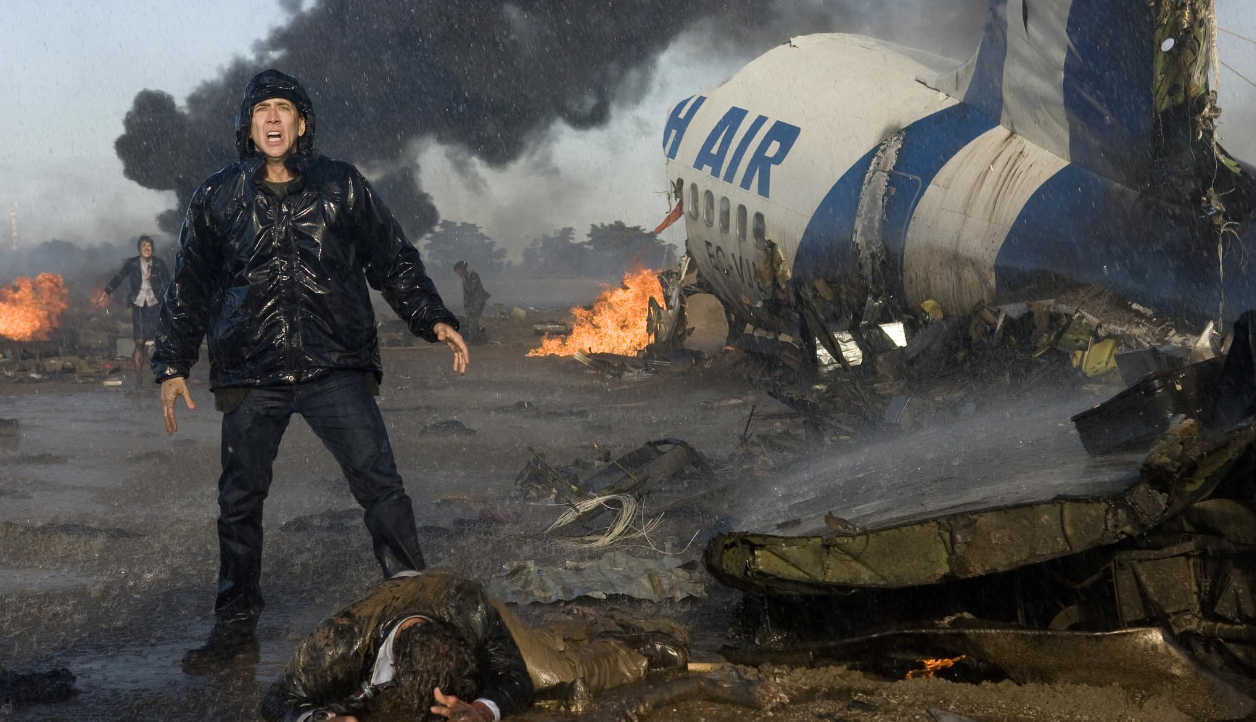
John later realizes that the numbers that didn’t match with dates/casualties were actually GPS coordinates (long/lat) and so he can predict when and where the next tragedies will occur. He unsuccessfully tries to stop one from happening and then realizes that the last date is actually the end of everything (or applies to “everyone else”). Of course, there’s also a mystery element to the movie in that Caleb and other children are hearing distorted whisper voices and seeing strange men in the woods as the impending apocalypse looms.
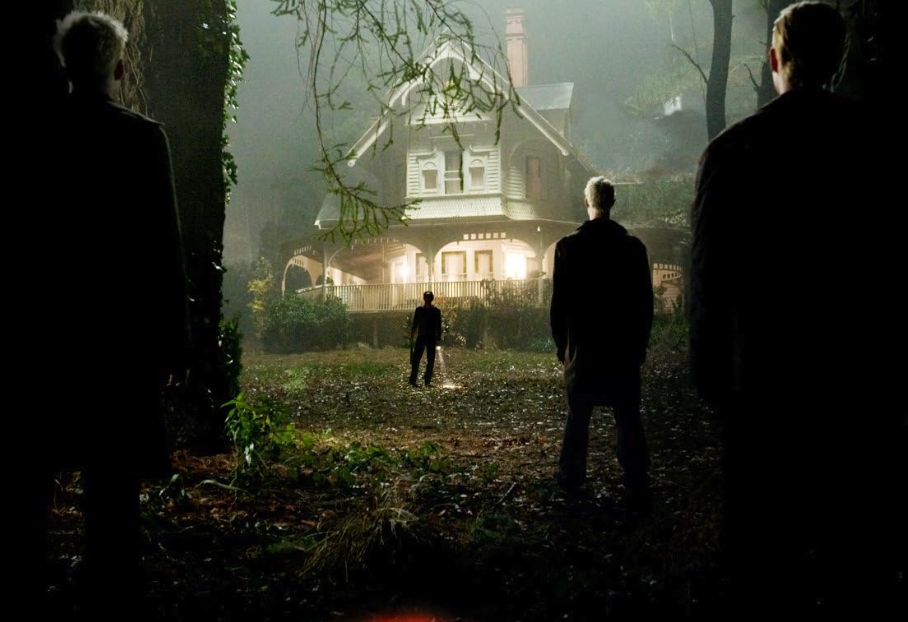
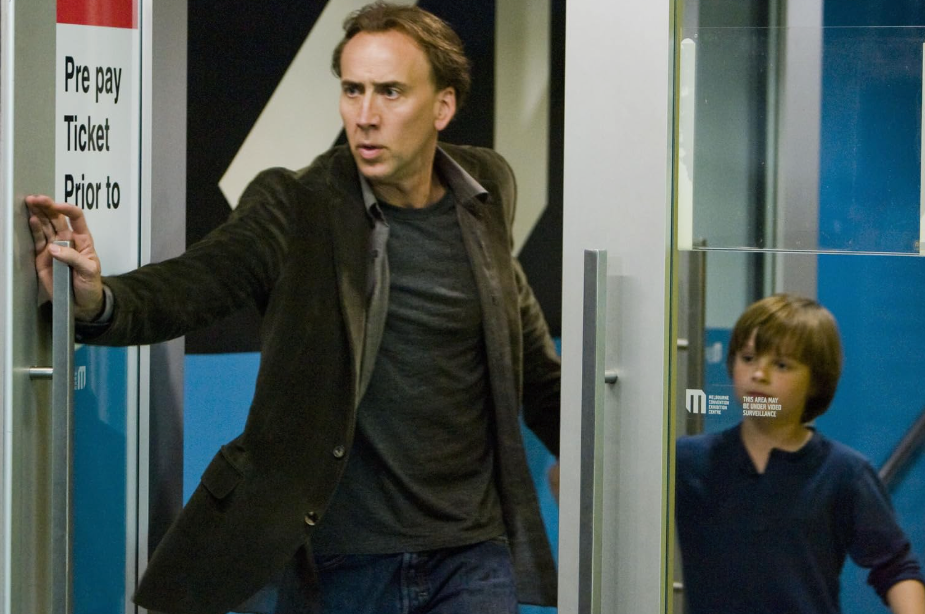
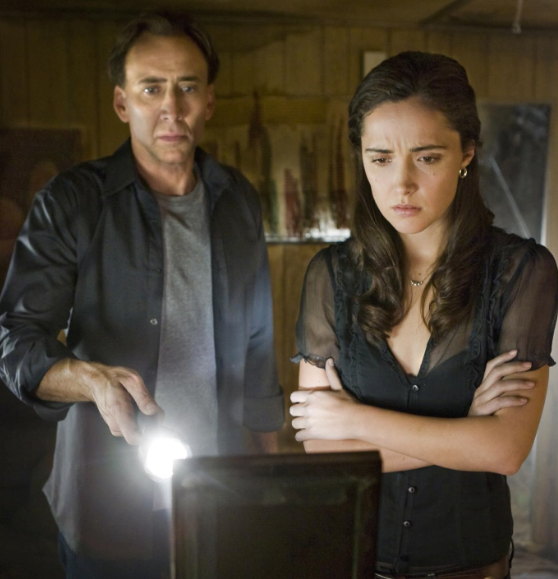
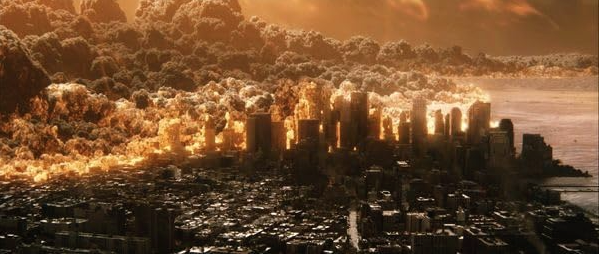
Spoiler conclusion: In the end a solar “super” flare is predicted on the sheet which the earth has no hope of surviving, but the whispery voices were actually aliens who were trying to warn the children and take them all off planet before the doomsday clock hits zero. John figures this all out and convinces his son to leave the planet with the aliens (since they won’t take John or, sus, any adults along with them). John instead reconciles with his preacher dad and mom before the entire planet goes up in a giant ball of flame. Sad.
Happy: The children find a new wavy-fields-of-grain planet where they and their pet bunnies can frolic while the aliens say “peace out” fly away and return to whatever probing and testing of Mulder they were occupied with before the 50-year apocalypse plan.
It’s the End of the World As We Know It…
There was a little mini-doc in the special features about our human obsession with the apocalypse. Psychologists, theologians, literary experts, and scientists all chimed in on why we, as humans, have this fascination with annihilation and the end times. I found it kind of interesting. I grew up in a religious tradition that basically believed that in the end, the “good ones” get taken to heaven first before the real bad shit goes down; while the “bad ones” (the unbelievers) remain here for the punishment, a divine apocalyptic come-uppance. Usually, lots of revelation type imagery with forked-tongue dragons, rivers of blood, unquenchable fire, brimstone, and plagues. But outside of that religious fascination with the End, our human tendency is to not want to acknowledge our own passing. The psychologists think this leads to a displaced fascination with everyone’s death–the death of everything.
And how will it all end?
One aspect I enjoyed about Knowing was how John struggled with meaning and significance prior to discovering the numbers. His wife’s passing obviously has him questioning the point of his own existence and everyone else’s. Nothing is meant to be. There is no fixed purpose or fate. That’s how John feels. But the numbers changed this. John sees a grand design in the discovery of the numbers, and being able to predict the future. He feels as if they were given to him to protect his son somehow. Everything suddenly held significance for him. So he chases down all the leads and tries to figure out why the numbers were written and how they can avoid the coming catastrophes.
(And I Feel Fine)
John doesn’t feel fine, and “all’s well that ends well” need not apply to this film. It’s a tragic story of the end of the world, but if there is a silver lining, it’s that the whispering Beings that were so creepy throughout the film, were not, in fact, demons, or maleficent forces coming to terrorize, possess, or punish. They were friendly aliens (I’m guessing) who wanted to ensure the persistence of the human gene pool (on our planet anyway). I’m going to believe (in good faith) the angelic-looking aliens were not aliens of the Michael Jackson or Bill Cosby variety. Perish that thought. But were in fact friendly E.T.s / A.L.F.s who just wanted to save the children.
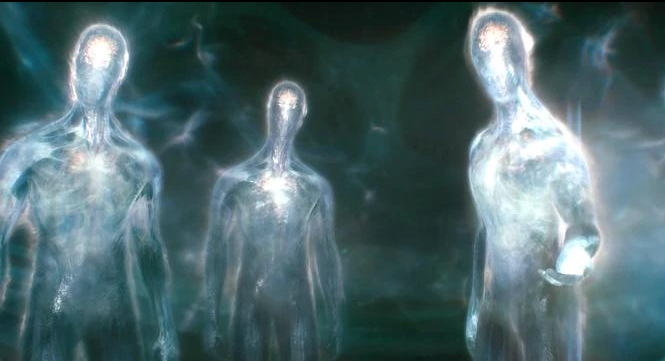
Why leave the adults behind then? I guess they felt they just couldn’t “teach an old dog new tricks” so they left John and all the gun-toting / nuclear button-pushing adults behind for the coming fireball. To me, this felt fine because it reminded me of so many episodes of my beloved X-files where often the aliens were out for the good of the people (but sometimes the people got what they deserved) and the extra-terrestrials were either a harmless sham or much better ethical foil to the dark governmental forces with all their lies and conspiracies.
I also liked how John reconciled with his family at the end and was able to give ‘em a big hug (despite all the historic hurt and differences) as the world exploded around them.
And it may sound weirdly morbid, but there is something oddly cathartic about watching all our man-made buildings of steel and glass go up in a spark. As if the world is being made anew, as if all our mistakes could just be erased in a moment. You’re glad to turn off the TV and know it didn’t happen, but the finality of it does feel a bit like a relief in some unexplainable way. I don’t know.
Maybe it only makes sense for an old R.E.M. fan like me.
Firsts for a Nicolas Cage character
- Attending a school presentation
- First time as an astro-physicist
- Doing searches on “iGoogle”
- Using CarStar GPS system
- Showing his academic credentials like an FBI agent would
- Saving a pregnant woman on a subway train
- In a movie with actual aliens in it
- Breaking into an elementary school to steal a door
Recurrences
- Giving an academic lecture (National Treasure: Book of Secrets)
- Drinking too much to numb the pain (Leaving Las Vegas)
- In a New York City disaster (World Trade Center)
Quotes from Nicolas Cage as John Koestler
“If you wanna believe you go ahead and believe.”
“There is no grand meaning. There is no purpose. I think shit just happens. But that’s just me.”
“I am the son of a pastor.”
“Don’t let him watch the news.”
“How am I supposed to stop the end of the world?”
Amor Fati (or in conclusion)
The hair is still pretty bad for Nicolas in this time period, but the movies are still pretty good. Getting ever better. Next we’ll take on another suspect film that actually surprised me with its ending, too: Bad Lieutenant: Port of Call New Orleans.


 yeti speak...
Leave a comment