Every now and then I have strong expectations or assumptions with a Nicolas Cage movie.
There have been moments along the WATC(H) for example, where I expected to enjoy a movie much more than I actually did (Trapped in Paradise, Guarding Tess, Peggy Sue Got Married) and other films where nostalgia may have mislead me into having higher expectations (National Treasure, Wild at Heart, The Rock).
There were films that looked bad at face value that really were just bad films (Time to Kill, Birdy, Zandalee). And there were the good ones that held up to multiple watches (Face/Off, Leaving Las Vegas, Raising Arizona, Con Air, The Family Man). There were the surprise films with soul, provocative thought, and Cage’s nouveau shamanism (Vampire’s Kiss, Bringing Out the Dead, Weather Man, Adaptation., Matchstick Men).
And then there were the (groan) animated movies with only Cage’s voice to guide us through the glitzy slog of it all.
So I’ve seen a lot and I know what Cage is all about at this point. And even knowing all this, I make mistakes.
I really thought Bad Lieutenant Port of Call: New Orleans was going to be a depressing stinker of a film. I anticipated something like 8mm, Snake Eyes, Lord of War, except where Nicolas Cage takes the persona of a good-guy villain to new depths.
I wasn’t really wrong, but I was wrong. The premise of the film was what I expected, HOWEVER, the plot itself provided unexpected turns and Cage, of course, played his role so well, I was caught up in it.
tldr: The Bad Lieutenant Port of Call: New Orleans is a good, gritty crime drama about corruption, addiction, trauma, family, loyalty, and reconciliation. While I liked Bringing Out the Dead better, the two films resonated with each other thematically and stylistically, and this one definitely held me at the edge of my seat, like watching a terrible car crash in slow-mo, as I wondered how anyone would survive it?
Mysteriously, there were some survivors and (spoilers to follow) an “all’s well that ends well” kind of ending.
The World According to a Very Bad Lieutenant
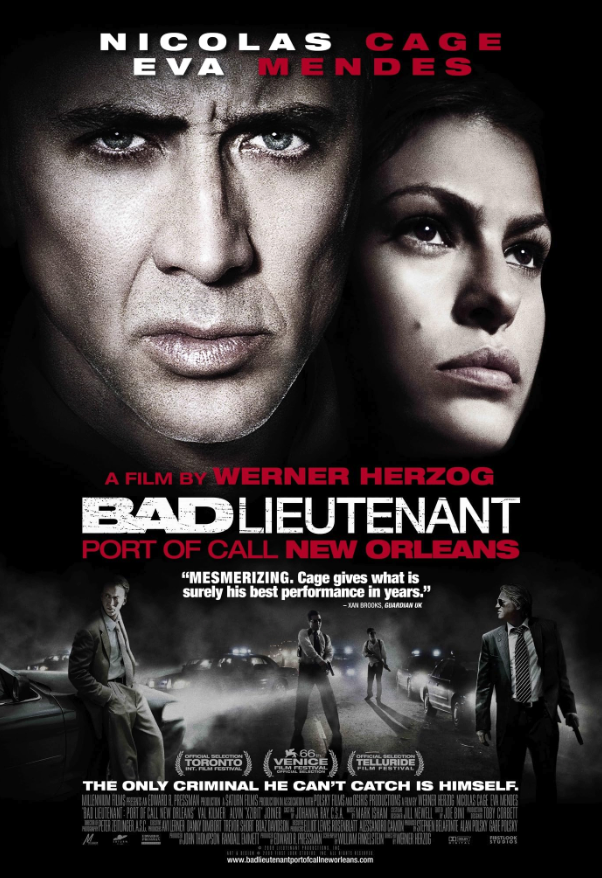
Typically the longer the movie name, the more suspect its quality. This one, Bad Lieutenant Port of Call: New Orleans sounds like the tired fourth sequel to a popular video game that just won’t die. Directed by Werner Herzog, the basic premise of the film is right there in the name.
Nicolas Cage plays the “bad” Lieutenant Terrence McDougal in the Big Easy, post-Hurricane Katrina. He is a second generation policeman, partnered up with Steve Pruitt (Val Kilmer) in the gritty heart of New Orleans. The morally questionable compass of some policemen, those meant to “serve and protect”, is on full display in the first scene when McDougal and Pruitt debate whether or not they want to save a convict who is trapped in a flooded cell in the basement as the tides continue to rise and he pleads for his life. As snakes float by, and against his self-serving nature, McDougal eventually takes the leap into the dirty flood waters, ruining his $55 underwear, to save the life of the convict Evaristo Chavez.

Fast forward, we discover that McDougal injured his back in the rescue and now is suffering from chronic pain which has him addicted to Vicodin and a slough of other narcotics that he steals from criminal shake-downs and directly from the police evidence room. McDougal has been promoted to lieutenant by the time he is an addict and is lead detective on a drug-related homicide that ended the life of a family of Nigerian immigrants.
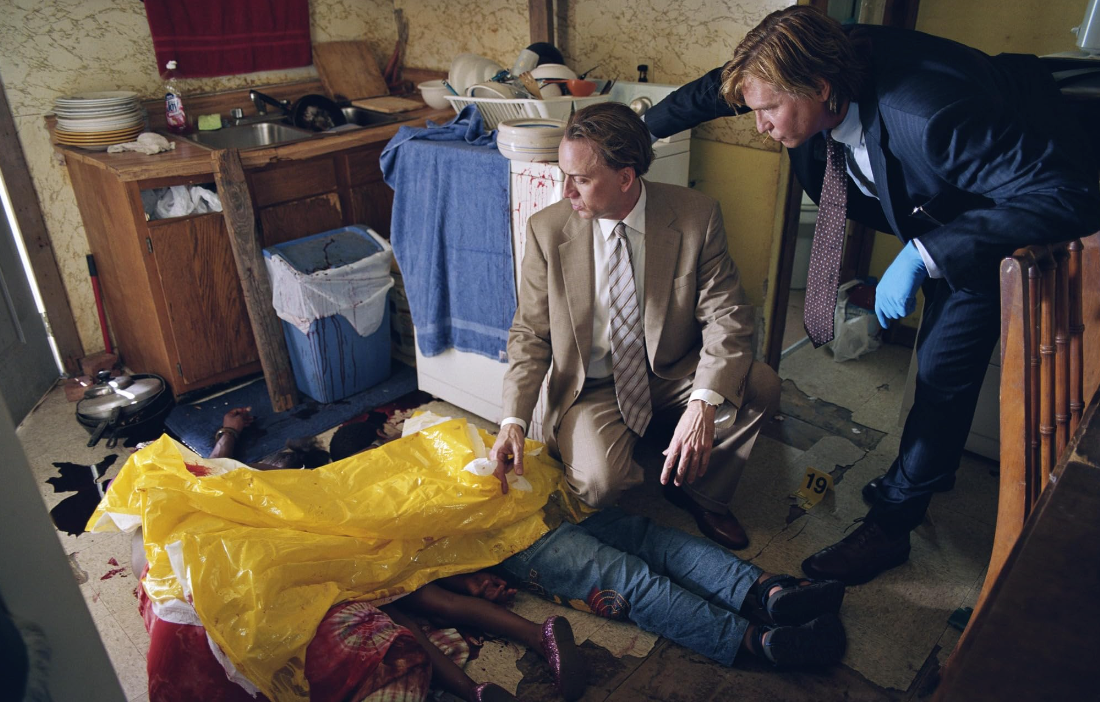
While shaking down leads to the murders in interrogation rooms, McDougal tries to meet the voracious needs of his addiction to narcotics, tends to his co-dependent relationship with a local prostitute Frankie (Eva Mendez), bets large amounts of money on college football games, and generally keeps digging his hole deeper and deeper by “cutting corners” and “fighting fire with fire” to get confessions from the various “persons of interest” in his homicide case.
In his personal background, we learn a bit about McDougal’s father, Pat (Tom Bower) a retired policeman and recovering alcoholic; his father’s girlfriend Genivieve (Jennifer Coolidge), a basket case functional alcoholic who can’t take care of a dog; and his sometimes-empathetic bookie, Ned (Brad Dourif), who all seem concerned for Terrence’s spinning-out-of-control life, but who are also struggling with all their own respective life problems.

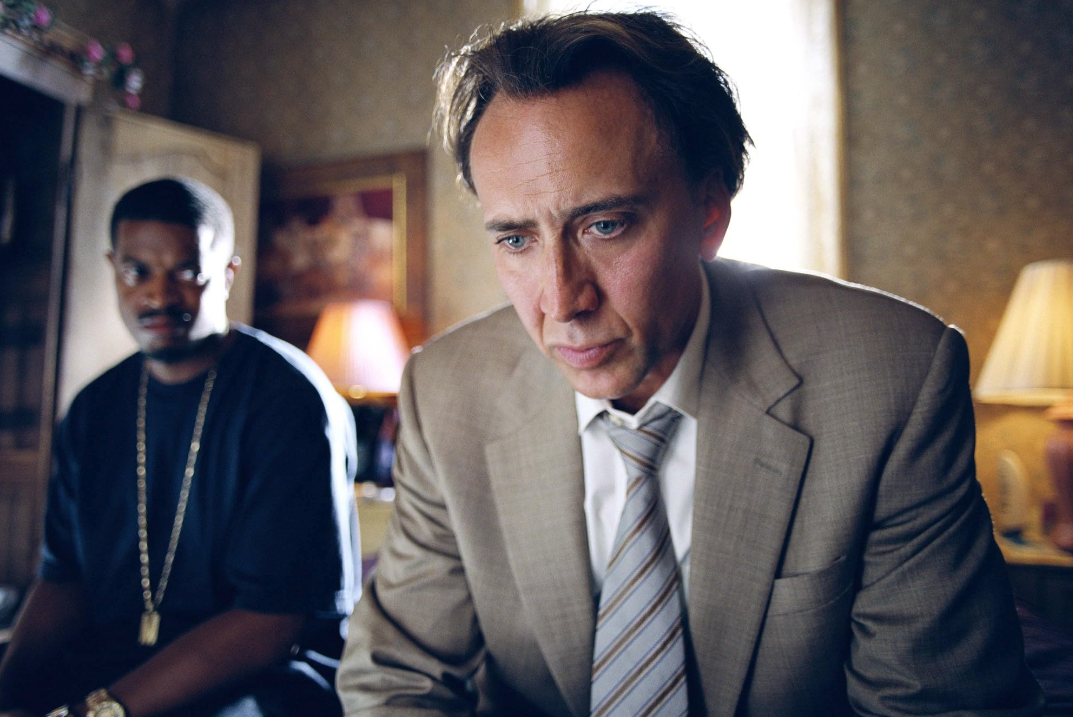
As McDougal gets closer and closer to the perpetrators of the drug hit, he finds himself in worse and worse circumstances personally and professionally. As the pressure builds from his addiction to painkillers, cocaine, and heroin, his decision-making tends to decline. He doubles down on committing violent acts to criminals (and old ladies), he takes money and offends the wrong people, bets too much on losing games, and gets himself in the cross-hairs of the local mafia, the police internal affairs and the D.A.’s office, and the drug gang he’s chasing down for the murders. The more difficult his circumstances, the riskier (and objectively poorer) his decision making becomes as he plays the game from both sides of the moral table–tipping off the drug dealers of police activity, promising large payments to the mob, and endangering the life of Frankie and his dad’s dog while the noose of the Law tightens around his own neck.
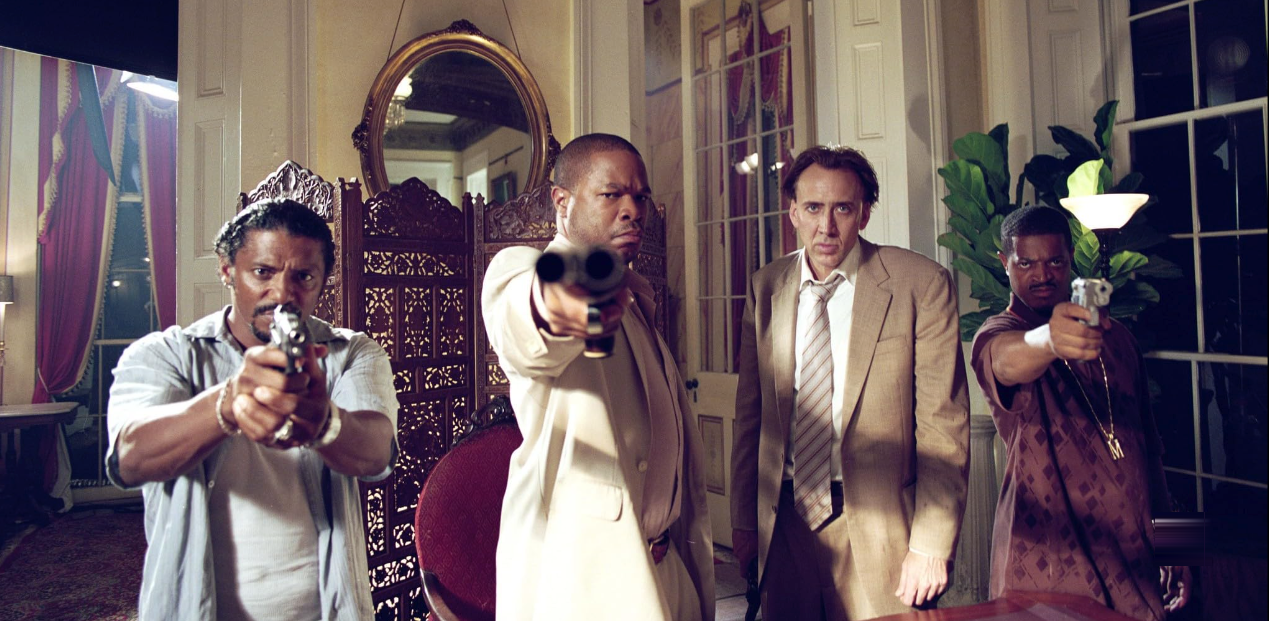
But somehow, Terrence plays the game the right way, gets really lucky, and wins, wins, wins (nomatterwhat). He plants needed evidence to convict the perpetrators of the drug hit, gets the mob boss and his muscled killed using the drug gang he aligned himself to, and he somehow gets Frankie into rehab, which creates this surreal nuclear family by the end of the movie. In fact, he gets a commendation, even though his drug addictions have not yet been dealt with.
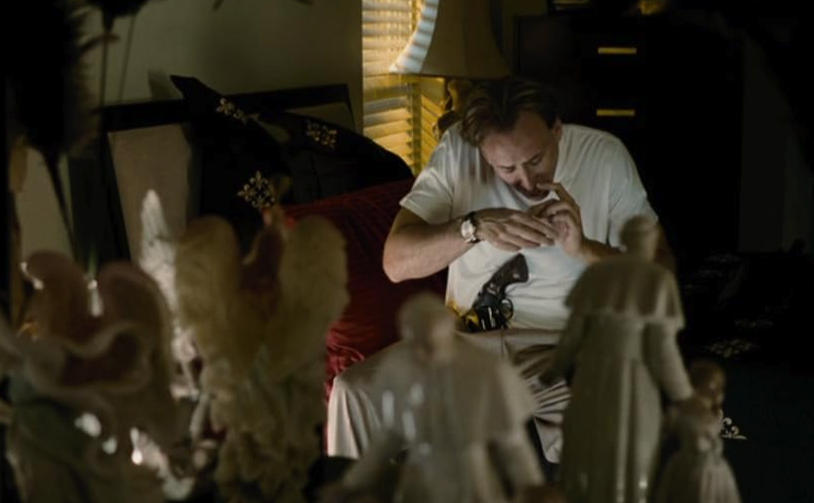
In the closing scene, not only has Terrence proved to be the good guy, but the guy that he saved Chavez, finds Terrence doing cocaine in hotel room and promises to help Terrence because Terrence literally and figuratively saved his life. The two end up chatting at an aquarium at the end of the movie. I kid you not. The movie ends in an aquarium—and nothing is more Nicolas Cage than a gritty crime drama where nothing went right suddenly ends “happily ever after” in an aquarium.
This movie is not a spaghetti western, but morally questionable heroes do come up in those types of films, and this fits this film so well. So let’s talk about the Good, the Bad, and the Ugly things that Terrence gets into here.
The Good
- Terrence ruins his $55 underwear to save a guy. It may not sound like a big deal. Who wouldn’t do that? But there was a too-long debate between McDougal and Pruitt about whether or not to save the criminal from drowning while they watched. This tells me that no matter what, Terrence at heart has a high degree of humanity within him.
- Terrence loves a prostitute. Sure, he uses her and she uses him, but unlike in other films I’ve seen there’s no judgment from Terrence about her occupation or what she does to support herself and him.
- Terrence respects and looks after his father. We don’t know the full extent of their relationship, but we do know that Terrence looks in on and respects his father. He offers to take care of his dog (even though it’s really going to be Frankie’s responsibility) and he genuinely does seem to want his father to be OK.
- Terrence wants to / does bring the killers to justice. Even though he had to smoke a crack pipe with the drug lord to get the DNA evidence that he would then plant at the scene of the crime, Terrence knew where the justice system gaps were and was willing to do whatever it took to bring the family of the deceased some comfort. Sure, sure, it’s shaky ground ethically, but in a twisted way it works.
- Terrence has a moral code (however warped). When Pruitt just wanted to shoot “Big Fate” the drug dealer at the end, and make it look like an accident, McDougal would not stand down. Sure, he planted evidence and betrayed the man he would send to jail (justifiably???) but he wouldn’t let Pruitt take his own form of vengeance on Big Fate. He had a line he would not cross.
The Bad
- McDougal has sex with a guy’s girlfriend at gunpoint and makes the guy watch. That’s just messed up on any front. I am curious whether or not this shakedown was planned or had happened before. Was the girl a prostitute as well? I don’t know. But the two had drugs and there was some kind of knowledge the girl had with McDougal, but I can’t prove that out; either way this was just nauseating to watch.
- McDougal tries to use his police power to wipe out Ned’s daughter’s traffic tickets. Terrence tries to “ask for a favor” from another cop and gets severely rejected. This type of “boy’s club” mentality is the reason policemen have a bad reputation in this country. The scene just felt awkward because it was awkward.
- Terrence steals evidence, covers up crimes, lies, blackmails, and endangers other officers, criminals and citizens. Example: this is the second movie Cage appears in with Michael Shannon. Shannon plays a policeman in the precinct that manages the evidence room. He’s been allowing the drugs to “disappear” and giving them to Terrence, but now he’s nervous and wants out. Terrence throws a fit and tries to blackmail him into continuing to cover for him.
The Ugly
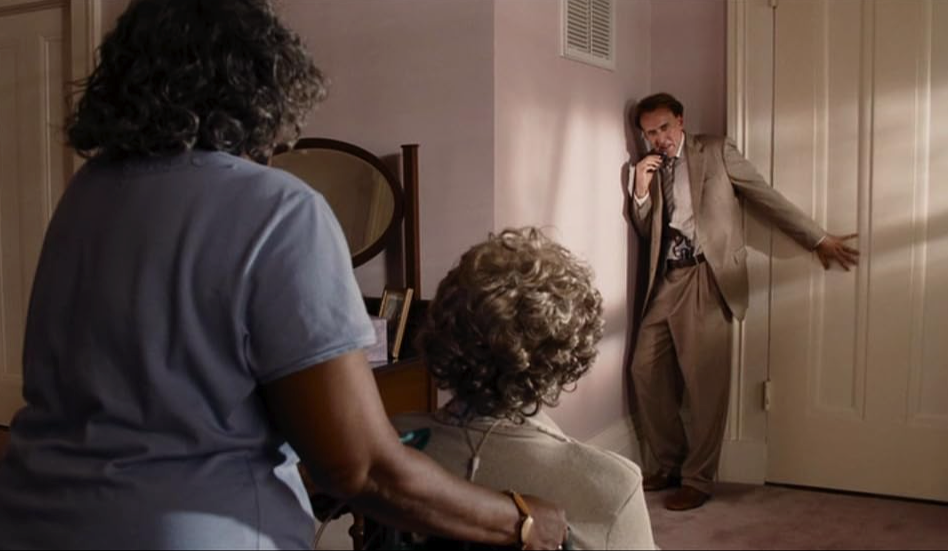
- Choking and bullying old women. In the scene that most resonates with the other Nicolas Cage freakouts, the scene where Terrence bullies to elderly women into providing him information is so cringe-worthy, it’s almost comic. Terrence pulls out a woman’s oxygen tubes and chokes her until they tell him what he wants to know. He calls them the c-word and says they threatens to kill them. It’s truly terrible to watch.
- The scene at the hotel with the Mob boss. No need to go into detail, but this scene was awkward and anxiety producing as Terrence has to negotiate his way out of potential violence and dog-murder from some angry mobsters. He offers Frankie’s services as future payment for the hassle of having to wait on full payment of his debts to them.
- Losing the eye witness. Poor kid saw a family murdered, is terrified that Big Fate is going to come kill him next, and is hanging out with a drug-fiend dirty cop in Biloxi. The one thing Terrence was supposed to do was keep the kid safe from harm. Not only did he “drop the ball” but the kid go so scared he ran away to England. Seriously.
- Family drama. The scene where Genevieve and Frankie fight it out and call each other names and pour cocaine on the floor is dysfunction as a high art form. So awkward, so ugly, and somehow so fitting for this film.

All’s Well That Ends Well
I hinted earlier that this movie surprised me. With most “dirty cop” shows, the cop usually goes down with the ship. When you have a corrupt anti-hero, their moral fiber, so eroded and frayed, eventually tears loose and renders irreparably as karma catches up with all the bad actors and acts committed. This is exactly what I was expecting for The Bad Lieutenant POCNO. Based on all evidence and the downward spiral of drugs, crime, and corruption, I expected the Fall. I did not think there was any scenario where McDougal could come out on top of it all. I pictured broken knee caps, torture, or perhaps just a bullet in the brain pan (like in Bangkok Dangerous). If not bodily harm, then at least Justice would catch up to this bad lieutenant.
But that’s not what happened.
Terrence caught the criminal (by planting the evidence needed); he gets his mob boss enemies killed (through no direct act of his own), he erases his debt by scoring big on a bet that he tried, and failed, to rig in his favor (he won through sheer luck and not his shady machinations); and he somehow helped his family / girlfriend get clean and straightened out in the process. He found the silver spoon he’d hidden as a child as his lost treasure.
Everything just worked out fine (unless you were a black drug dealer or mob boss).
It would have been a Hollywood ending completely, if not for McDougal’s addiction to narcotics. In the last scene we see Terrence snorting coke in a hotel and then he is confronted by Chavez who is now out of jail, clean, working a job while on probation. He thanks Terrence for saving him and setting him on the right path. He promises to save Terrence in return. The two end up having a conversation at an aquarium and even though Terrence has never forgiven Chavez for the ruined underwear, there is a hopeful grin on his face at the end of the film.
Weird Odds and Ends: Lizard Brain
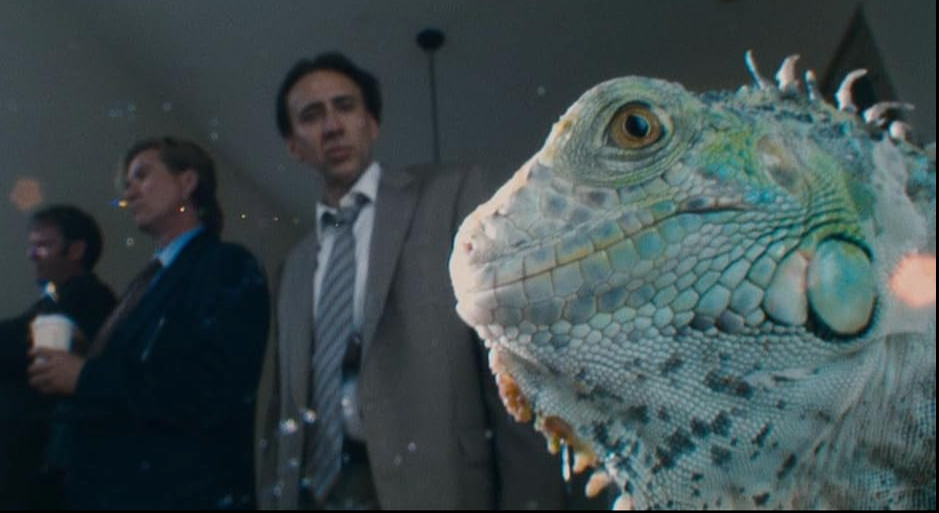
I am not familiar with Werner Herzog as a producer / director, but this film had some interesting cinematography and surreal director design aspects. Specifically, the use of reptiles and fish. In the opening scene a snake glides across the surface of the hurricane waters. Later we see a dead alligator on the highway and we get a camera shot from the perspective of a live alligator who crawls near the highway to witness the accident. When Terrence is pretty high on narcotics he sees iguanas on the table that no one else can see.
Terrence is also interested in a small fish in a cup at the home of the Nigerians who were killed. He asks Chavez at the end of the movie “Do fish have dreams?” which is a question which must send them to the aquarium because that’s where the film concludes.
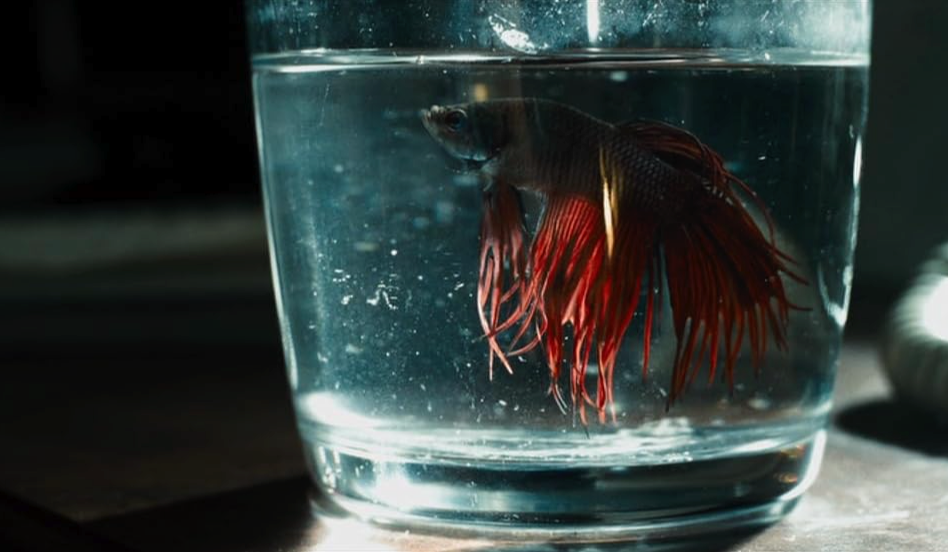
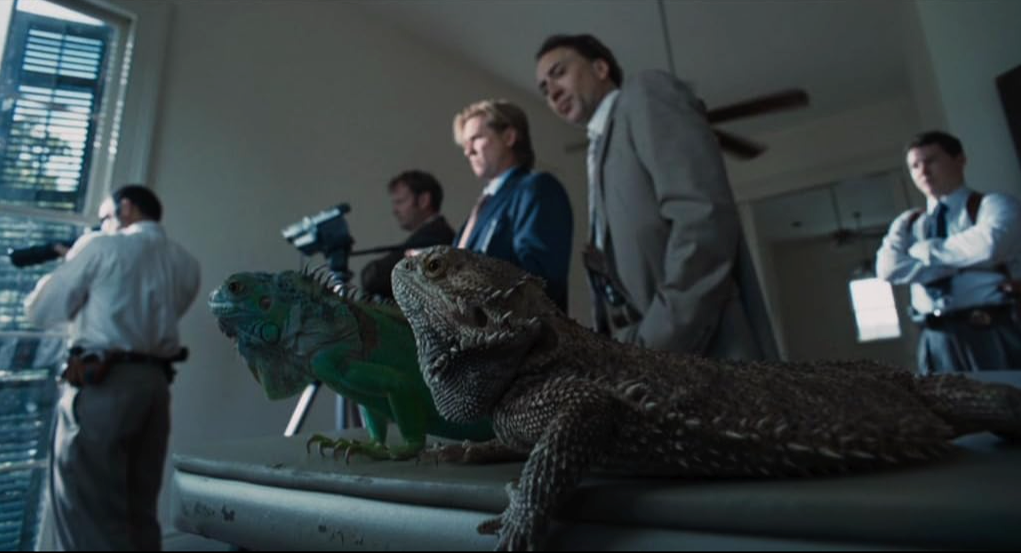
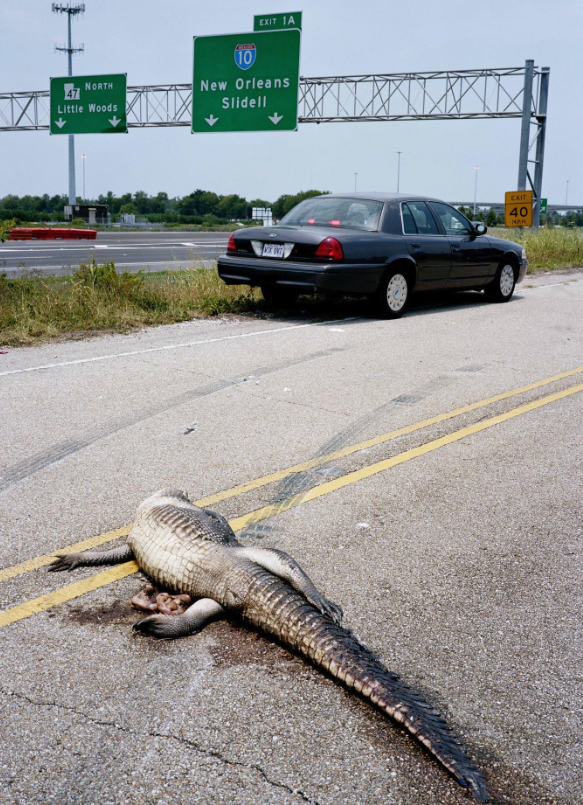
Why fish? Why dreams? Why reptiles you ask? Some have written that our most base human nature is represented in the “lizard brain” (i.e. that early evolved part of our animal selves that we still share in our brain) and have interpreted Herzog’s use of nature in that way. Overcoming the base selves to live better and differently. Using our rational minds. But Herzog himself once said much more simply, “There is nothing more wondrous than seeing Nicolas Cage and a lizard together in one shot.”
In addition to the reptiles and the fish, the other “oddity” was that when McDougal is high on crack, he tells the drug dealers to shoot the Mob boss again because his “soul is still dancing”. From Terrence’s perspective, it looks like a man dressed similarly to the dying Italian is doing head spins and breakdancing his way out of the world. When they shoot him again, the dancer falls flat to the floor next to the dead body.
Weird. Awesome. But weird.
Firsts for a Nic Cage character as Terrence McDougal
- Wearing $55 underwear
- Experiencing chronic pain (addicted to pain killers)
- Cutting off an elderly lady’s oxygen supply while slapping another woman’s hand and pointing a gun at her head
- Seeing a breakdancing soul leaving a dead man’s body
- Referencing a gangster named “Gee” sarcastically (or otherwise)
- Violently throwing a stuffed animal onto the floor so he could sit down
- Dog sitting for his dad
Recurrences
- In New Orleans (Zandalee, Sonny)
- Sharing screen time with a lizard (Time to Kill)
- Shady cop (Snake Eyes)
- Dealing with substance addiction (Leaving Las Vegas, Deadfall)
- Cop (It Could Happen to You, Wicker Man, World Trade Center)
- Pharmacy refill (Bangkok Dangerous) with extreme freak-out (Matchstick Man)
- In a movie with Michael Shannon (World Trade Center)
- In a movie with Eva Mendez (Ghost Rider)
- Shaving (Red Rock West, Raising Arizona,The Cotton Club)
15 Awesome Quotes (hard to limit to 15 in this one)
- “Fuck Duffy. Fuck him. Fuck all of them.”
- “Please what? Shit turd.”
- “This is $23 with my copay, here’s $40. Get everyone a drink. GET OUTTA MY WAY!”
- “I’m the last person in the world you want me to be.”
- “Guardian of the flame, huh? Fuckin’ ass!”
- “Whatever I take’s prescription? Except for the heroin.”
- “What are these fuckin’ iguanas doing on my coffee table?” (Ain’t no iguana.)
- “You’re the fuckin’ reason this country’s going down the drain!”
- “A man without a gun, is not a man.”
- “I’ll kill all of you. Till the break a dawn.”
- “Easy. Easy. Easy. Easy. Cause I’m not Easy-E.”
- “Shoot him again! His soul’s still dancing! Haeahhh!” [Break dancing soul. Gets shot. Iguana crawls away.]
- “Worked out anyway.”
- “Sometimes, I have bad days.”
- “You know Chavez, I still hate that I ruined my underwear for you.” [Grins, laughs]
The Verdict
Was he a bad lieutenant? Yes, he most definitely was.
Was he a good person? Partially (question mark). Maybe. Yes, he kinda was, in spite of himself.
Did things get ugly at times before they got better? Most definitely.
That’s the good, bad, and ugly of Nicolas Cage right there. He’s good, he’s bad, he’s ugly at times.
But we still love him. Cause he’s an acting genius who lives from and rise above that lizard brain of his.
And NOW we’re now halfway home on this World According to Cage (Haehhhh) trek.

 yeti speak...
Leave a comment