Even in their prime, Michael Jordan, Tom Brady, and Tiger Woods all had a bad game or two. A clunker as they call them. The GOATs of the world are still just human after all–susceptible to the occasional failure or uncharacteristic bad performance.
Season of the Witch (2011) was Nicolas Cage’s “bad performance”; it’s a movie he chose to act in that I would toss into a very small pile of his films that I would easily recommend that you should just skip seeing. Is it terrible? No, not terrible–anytime you have witches, the Black Death, and knights wielding swords, you’re going to have some entertainment value.
But it is also just not very good.
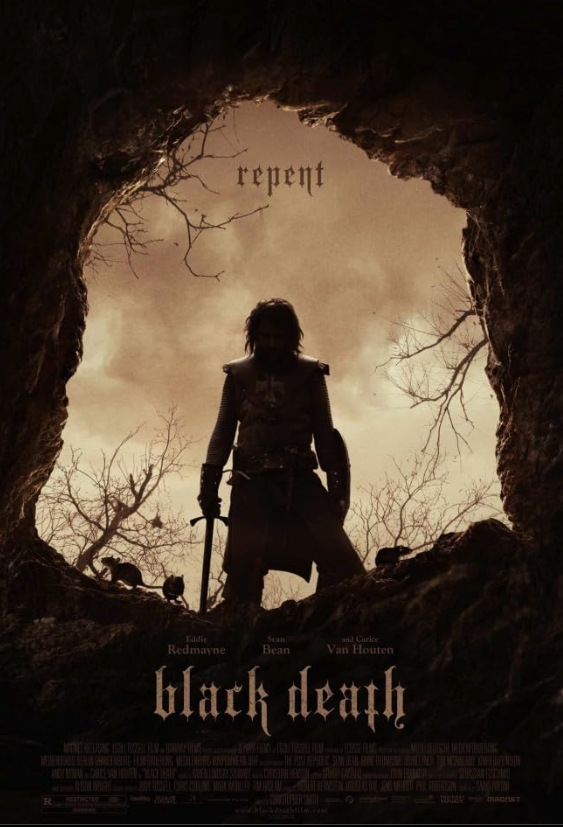
In the past six months, I’ve seen two movies with similar themes and historical context that do a much better job of portraying what I believe Season of the Witch is (guessing here) trying to do. One of these films came out just a year earlier than SotW, Black Death (2010), and the other came out in 1957, Ingmar Bergman’s classic The Seventh Seal.
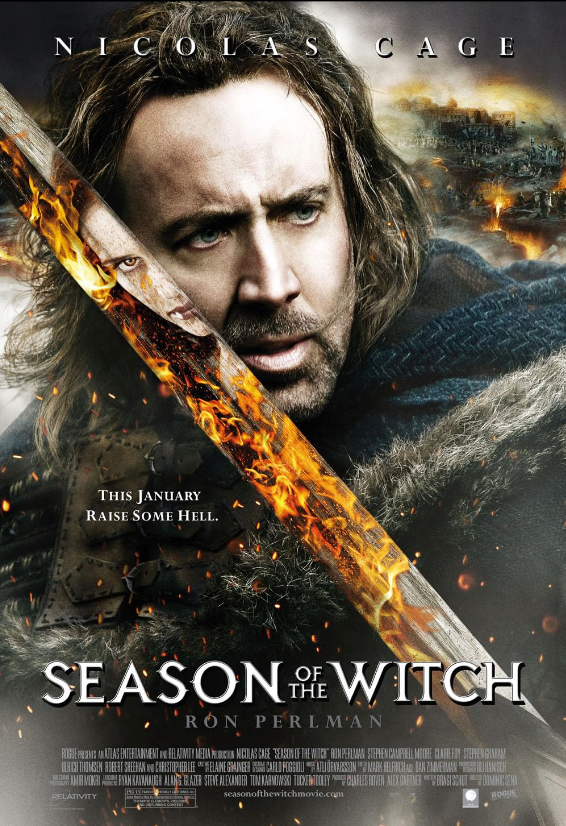
Watch either of those two films before watching SotW; even if they are lacking that one important element: Nicolas Cage. Trust me on this one.
The World According to Behman
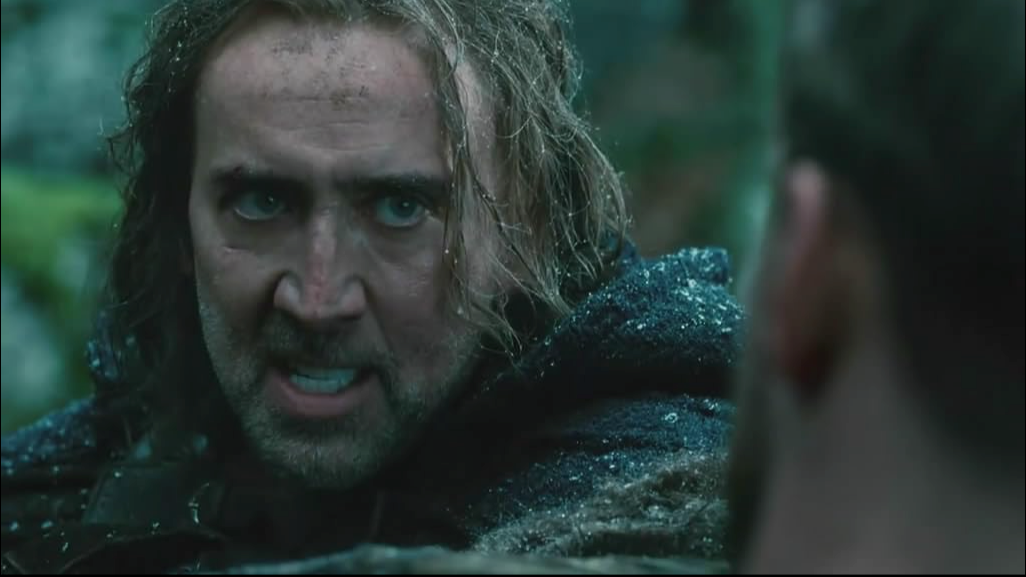
Season of the Witch is about two crusading knights fighting for God and Christianity during the mid-1300s. Behman (Nicolas Cage) is the softer spoken do-gooder, while Felson (Ron Perlman) is his slightly more cynical pal who enjoys betting on death counts prior to going into battle. (Whoever kills the least buys the beer and women) As the years of warring run into decades of murdering more and more “Infidels” whom they discover are mostly just like them, the two knights grow weary of their “holy call” of killing for Christ, especially after Behman accidentally runs a sword through a defenseless woman. The two decide to desert their calling and post, and head back to Europe.

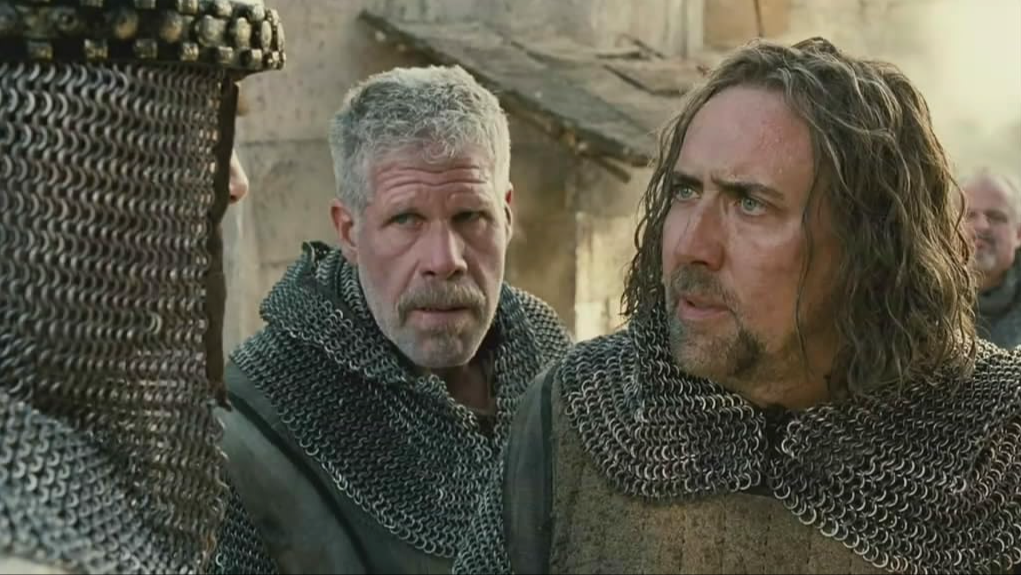
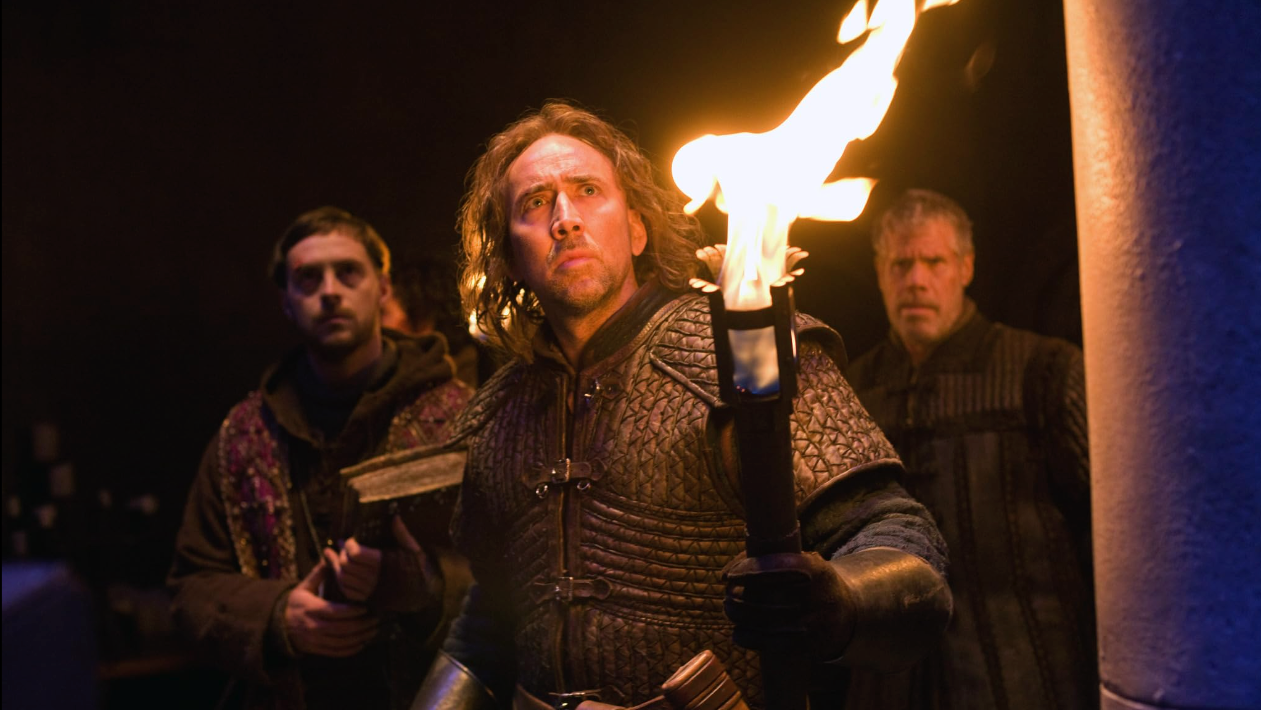
But they get caught along the way. In order to escape a long sentence in a dank dungeon, the two reluctantly agree to a pardon pact where they work for their former employer (the Holy Church) by helping transport an “alleged” witch from the town they are in to another town some “400 leagues” away by horse. Supposedly so the witch can face a fair trial. Along the way, the two knights talk theology, curses, witchcraft, and life experience. They take on a protege, side-eye their morally questionable guide, and try to figure out whether the woman the have trapped in a wagon-cage is just a misunderstood victim of the church (like them) or a powerful and insidious purveyor of black magic. The Witch messes with their minds through basic psychology and the supernatural, and successfully kills off some of the traveling party with wolves and friendly fire, before they even arrive at their destination.


Once they arrive in what’s-it-called town for the trial, Behman and crew realize they’ve been played. Most of the people in the town are gone / dead. The Witch, who is actually a woman possessed by some kind of powerful demon wanted to go there all along so they / them could use the magical texts on site to bring more demons to bear on the world of men. I lost the narrative thread here because I kind of got bored, but Behman and Felson fight off a bunch of undead monks before facing the main winged-demon Dude. Ultimately Felson head butts the demon before it incinerates him, and (I think) Behman keeps the Demon Dude busy long enough for the young knight to read an enchanted spell (or scripture?) that somehow helps them vanquish / kill the beast.
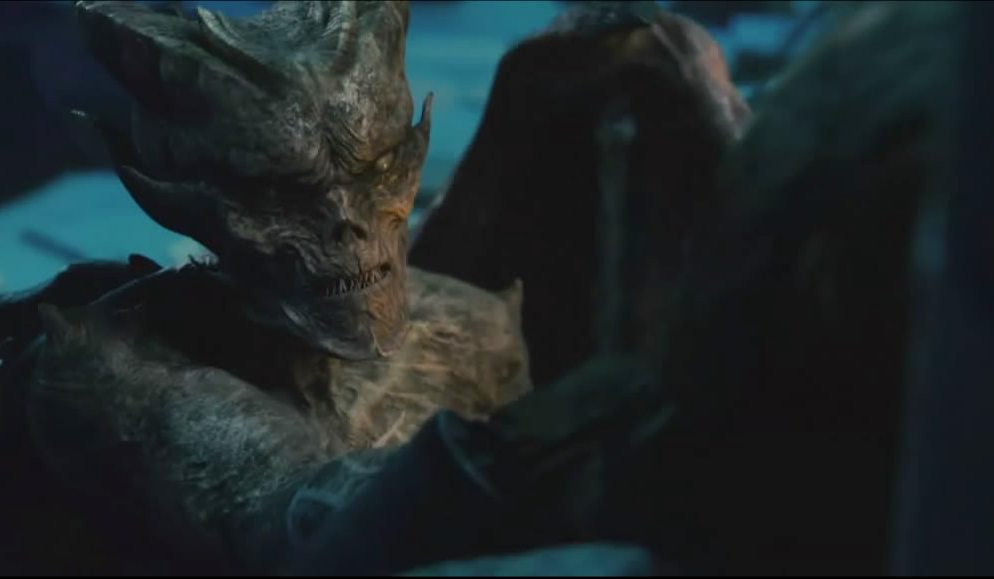
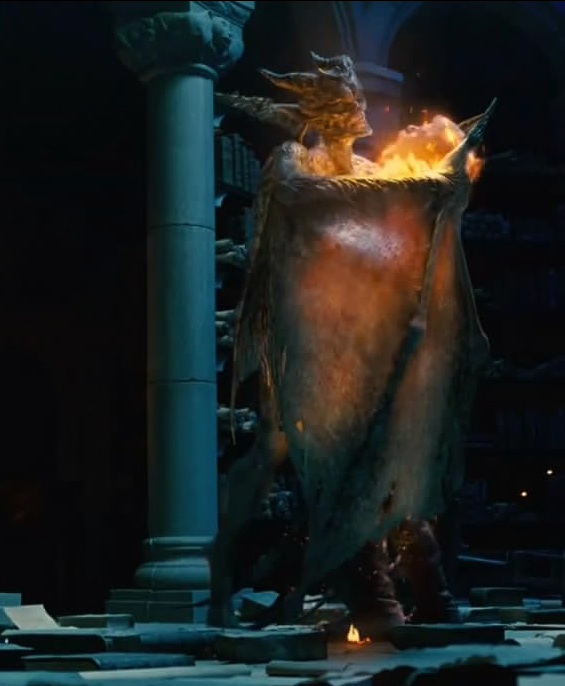
The two crusaders give their lives for the young knight-errant, and the now released-from-her-possession, young woman.
Not Quite Right
When it comes to SotW, I think There’s an interesting story buried in there somewhere but it is never realized. The Black Death is a more interesting film because it explores this theological idea of “the problem of evil” within the context of the plague and man’s paranoia. Why did the plague occur? What brutal applications were applied to trying to solve it? Was it sent by God because of man’s sinfulness–specifically, some form of witchcraft or willful disobedience to God’s laws? Or is just more evidence of how man’s ignorance breeds suffering, violence and human tragedy?
It also raises questions about the justice of life: why does suffering come for the good and evil alike? Why did some villages escape the plague while others were decimated by it? In SotW, these themes are also present, but rarely explored in any depth. It’s more of a horror / mystery movie where these theological ideas are tossed in throughout to add some intellectual weight or just for effect.
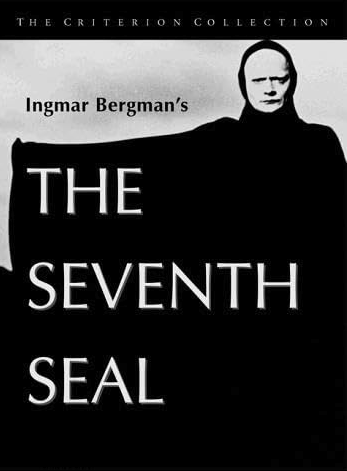
The Seventh Seal is an even headier (artsier) Swedish film where a Knight must play in a literal and figurative chess game with death in a world that has been rocked by the plague. This is kind of reminiscent of a Faustian deal in which the Knight is able to stay one step ahead of the Grim Reaper, but ultimately succumbs to him (as we all must).
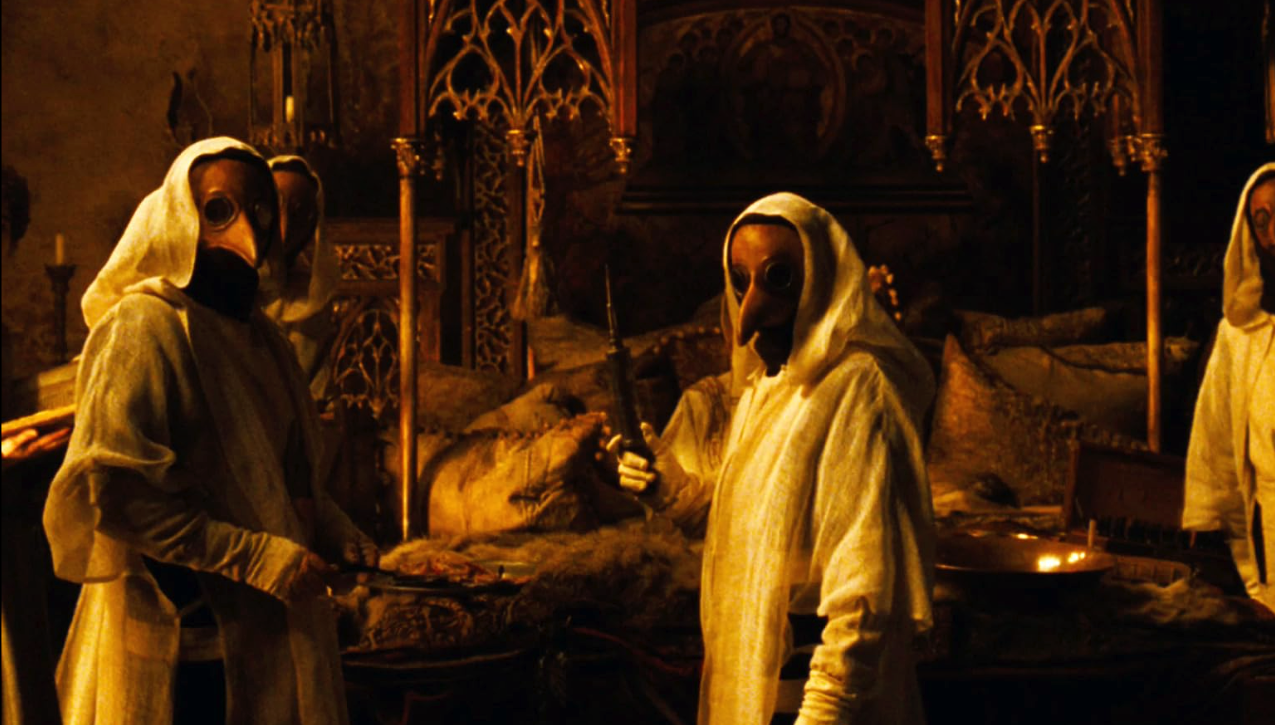
Again, SotW explores what death means in a similar fashion (timeline) to The Seventh Seal, and how it comes indiscriminately for the innocent and the guilty alike, but it ultimately doesn’t provide any conclusion or resolution. Yes, Behman and Felson sacrifice themselves in the end for “the innocent” as some form of penance for all those they killed in the Crusades, but the philosophical implications are never realized. It feels much like a horror film where the evil was destroyed and the survivors were just “the last ones standing”. There’s no real exploration of human merit or redemption and very little exposition on whether or not the Church was even justified in trying to seek out and destroy the “supernatural evils” of witchcraft. If anything, the ending actually unintentionally supports this horrible practice–i.e. The witch wasn’t a witch but she very much was possessed by evil, therefore, torturing and killing those suspected of such things is a reasonable way for humans to behave. Kind of a “see, told you so” message just feels weird in this situation.
Not Cage’s Forte
Not sure what the critics think or thought of this one, but I think certain roles don’t fit the Cage. For example, the soft spoken good guy is not the best fit for him. The “straight” guy (as in non-comedic) who displays little humor, sarcasm, anger, mood swings, and erratic / eccentric behavior is NOT what Cage should be doing as an actor. It’s like if you asked Michael Jordan to just play the shooting guard who stands out at the 3 point line waiting for a pass to come to him. That’s not utilizing his genius. Or if you had Tom Brady just hand the ball off three times to his running back before throwing a few for check-downs. It’s like only driving your Ferrari in first gear. It can be done, but why?!?
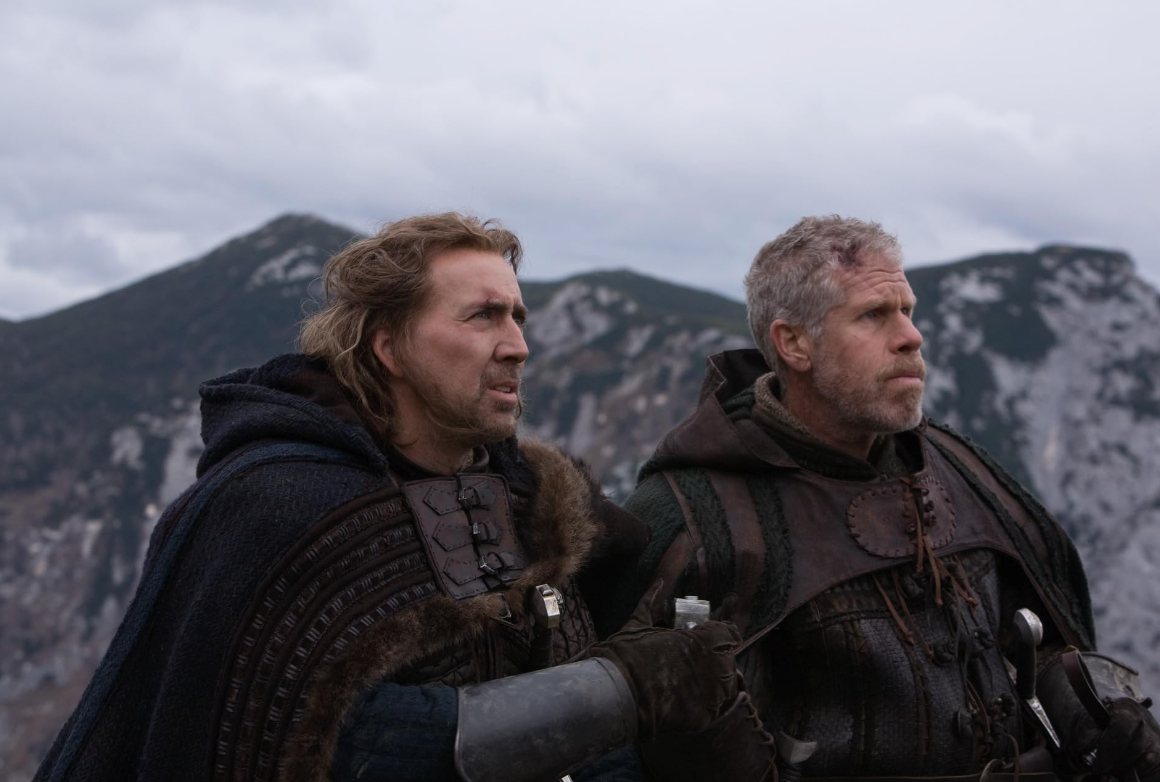
Nicolas Cage can play Behman and speak in a stilted “old” English style. Maybe he was trying on his best Laurence Olivier or something? Whatever he was doing in this movie, it just didn’t work for me. He was empathetic with the witch to a fault. His camaraderie with Felson brought a small grin to my face one or two times, but mostly that was because of Ron Perlman and not Nicolas Cage. And even when he got angry and was ready to kill the witch, his anger felt pale and flat compared to the anger I’ve seen displayed in many of his other roles. There was definitely a thoughtfulness and a disenfranchised aspect to this character–i.e. the Church wronged me, and I have wronged, and so I’m never going back there again–but it was neither tortured nor strongly felt. Just flat, flat, flat.
But having said all that, I’m not sure if this was Cage’s fault completely or just a poor script. There were some decent actors in the film (Christopher Lee, Stephen Graham, even a early cameo from The Hound from Game of Thrones) and the visual aspects weren’t the worst I’ve seen, but the story felt disjointed, murky, and undercooked. Even the elaborate set up (hanging the witches on the bridge) in the first scene never really manifested or was connected back by the end of the film. I don’t know what they were trying to do, but it was a big miss for me.
First for Nicolas Cage as Behman
- Runs woman through with a sword
- Deflects an arrow with a dagger
- First time as a Knight
- Arrested as a war deserter
- Returns home from a war, to a plague.
- Hand-to-hand combat with a demon
- In a religious war in the Middle East
- Fighting a visibly diseased dog
- Fleeing pack a wild wolves
Recurrences
- Accidentally kills an innocent woman in a foreign country (Time to Kill)
- A war monger (Lord of War, Windtalkers)
- Sacrifices himself in battle for a younger “protege” (Windtalkers)
- Battling with the occult (Ghost Rider)
- Appearing in a movie featuring attacking wolves (Sorcerer’s Apprentice)
Quotables
“Whoever slays the most men drinks for free.”
“What do you want with us, priest?”
“I serve the church no more.”
“I’ve saved your ass a hundred times. Have a little faith.”
Conclusion
R.I.P Season of the Witch. (Witches get stitches.)
The moral of the story: even the greatest of all time has an off-day now and then. With Nicky, it’s easy to forgive and forget. For me, it’s on to the next one…

 yeti speak...
Leave a comment