In the last post, I discussed the three different character / role type categories that Nicolas Cage films typically fall into. The best ones are typically the Dark Misfit Savior (DMS) where a morally-questionable or broken guy brings a unique set of skills / traits into play in order to save someone or something of importance to him.
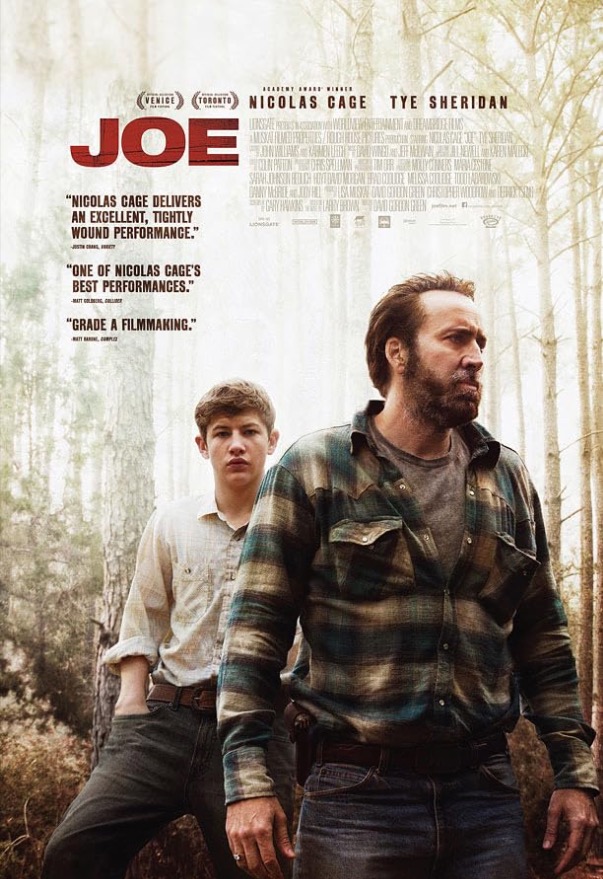
Joe (2013) is probably one of the best examples of Nicolas Cage in a DMS role. This was my first time seeing Joe and it was quite refreshing to watch Cage in a dramatic role again that leverages his acting genius to great effect. It was also a breath of fresh air to watch another “good one” after so many snoozers or “mid” films (by the high WATC(H) standard). So, let’s get to it!
The World According to Joe
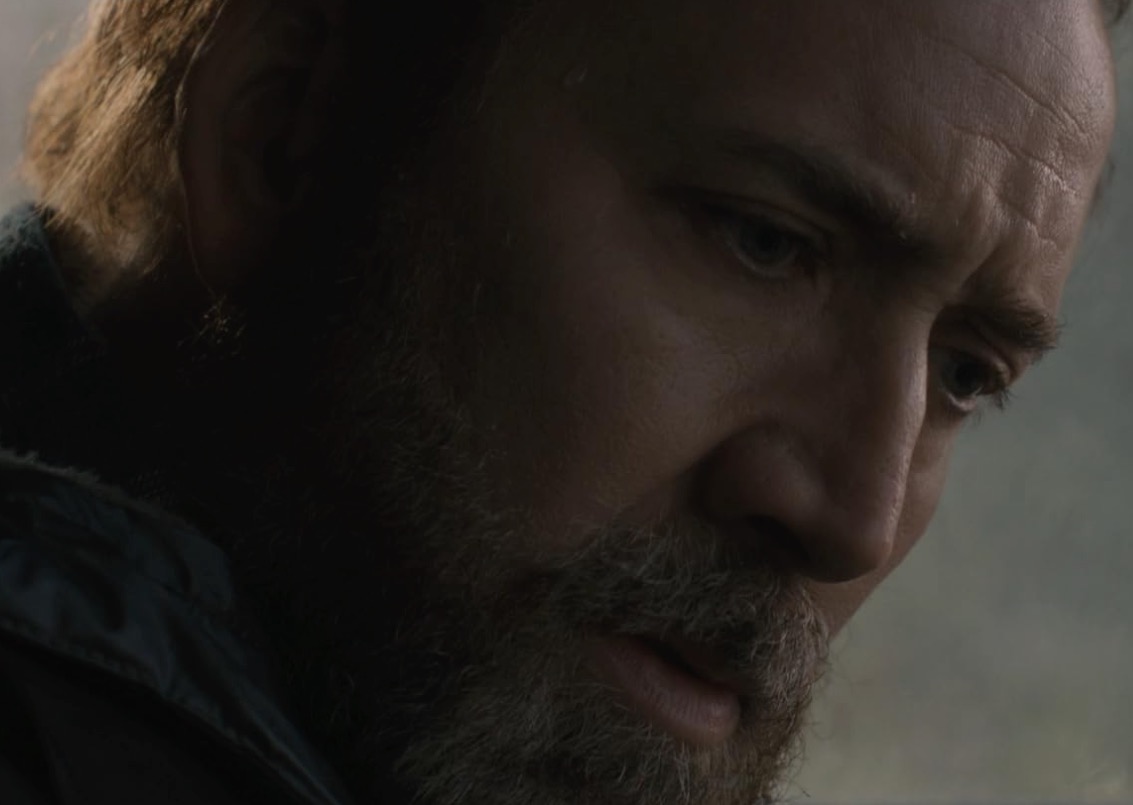
Joe is a film about Joe (Nicolas Cage) a Texas man with a dangerous side (and past) that he tries to bottle up through hard work, drinking, a bit of whoring, and contracting / managing a crew of “tree poisoners” who kill trees so that the timber companies can “legally” clear cut and replant other trees. I don’t like to throw around the word redneck, but Joe definitely fits the stereotype. He doesn’t live in a trailer, but he has a small home, an aggressive bulldog that lives under his house, an old pickup truck, a bunch of tattoos up his arm, a beard, a revolver that he keeps on hand, and a local bar and country convenience store that he frequents often for community. He wakes up and begins his day with a glass of Jack & Coke and he ends his day with the same.
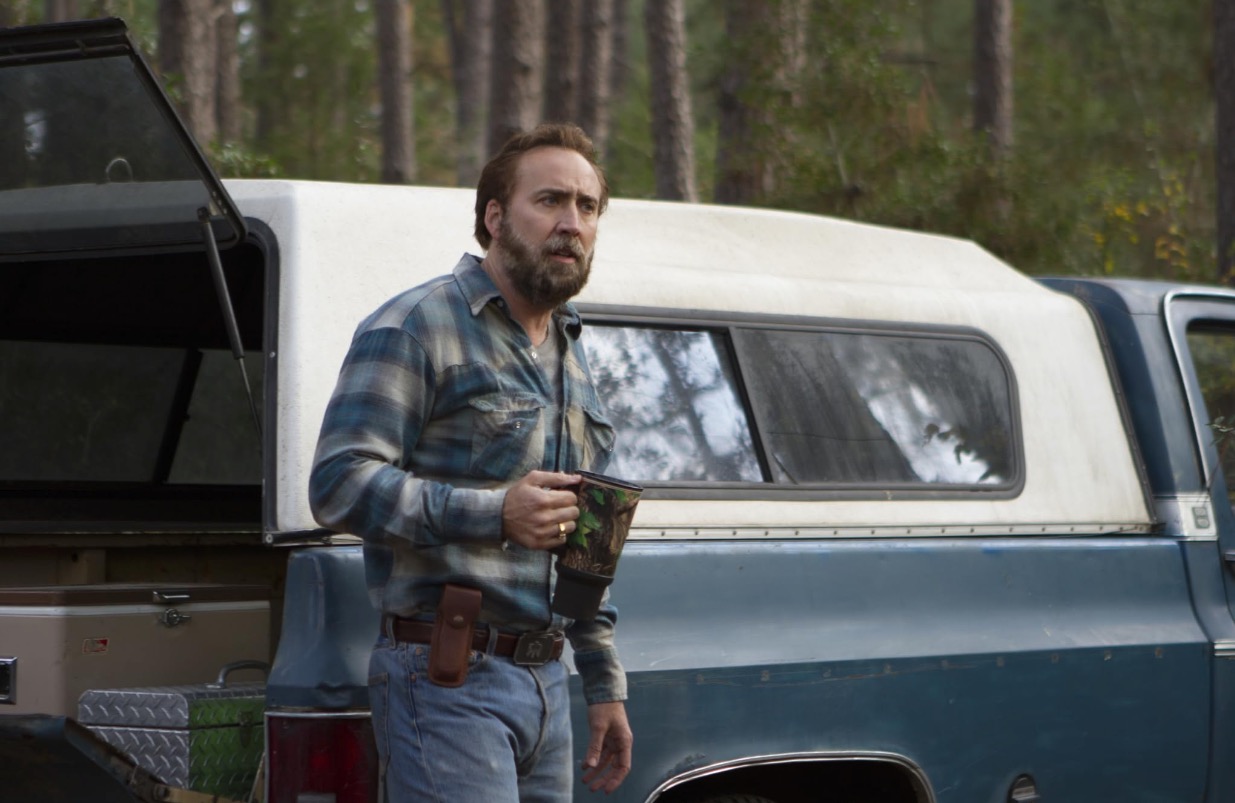
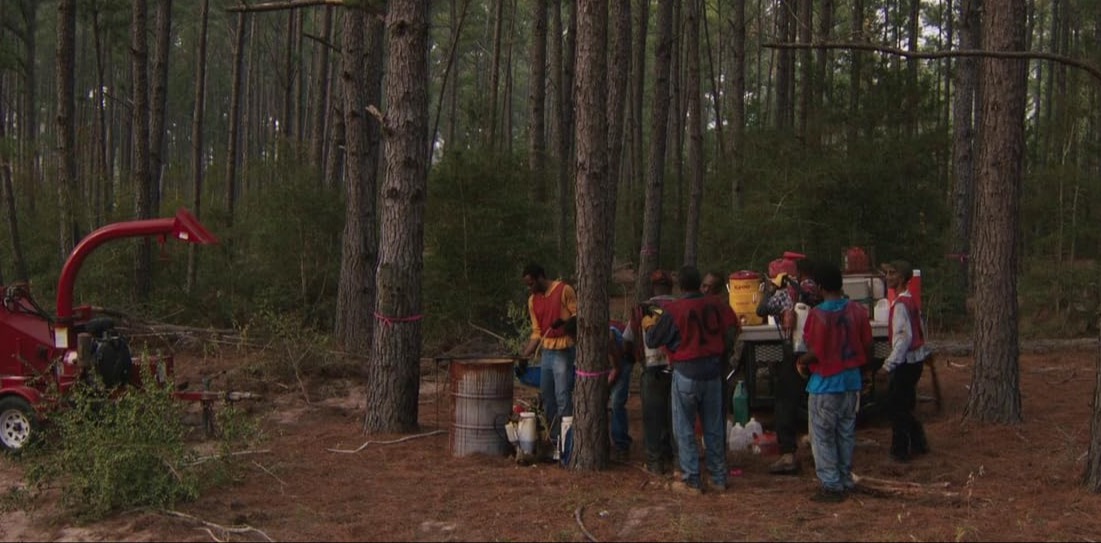
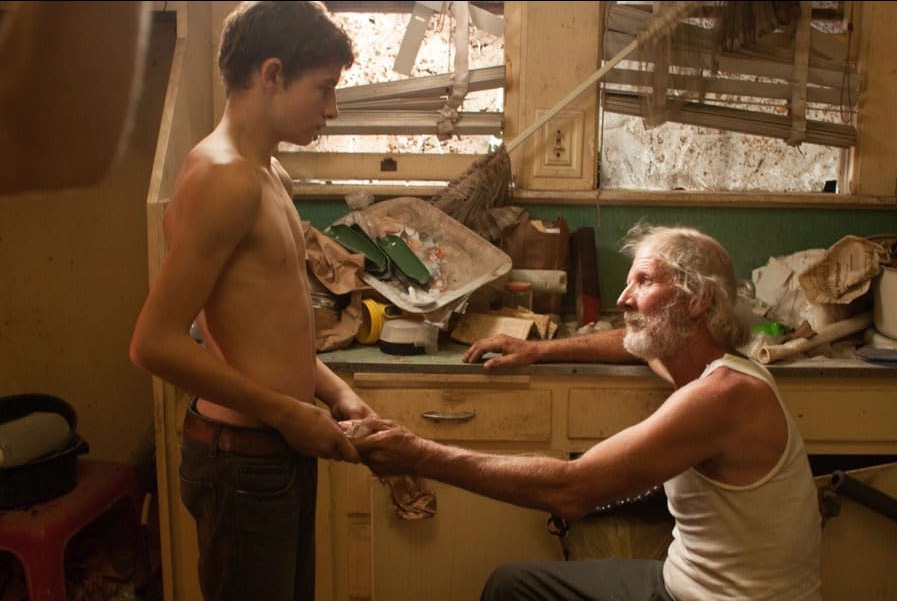
The film’s plot centers on Joe’s relationship with Gary (Tye Sheridan) a teenaged boy who’s taking care of his drifter family because his abusive and alcoholic father, Wade (Gary Poulter), cannot hold a job or treat anyone in his life with any amount of respect or kindness. Gary persuades Joe to hire him and his father on to Joe’s tree poisoning crew. Gary, a hard worker, learns the job quickly and appreciates the chance to earn money for the family, and being part of a community of men. Wade, an angry and belligerent drunk, can’t do the work for even a day, is cantankerous, and refuses to be supervised, and ends up losing the opportunity for Joe.

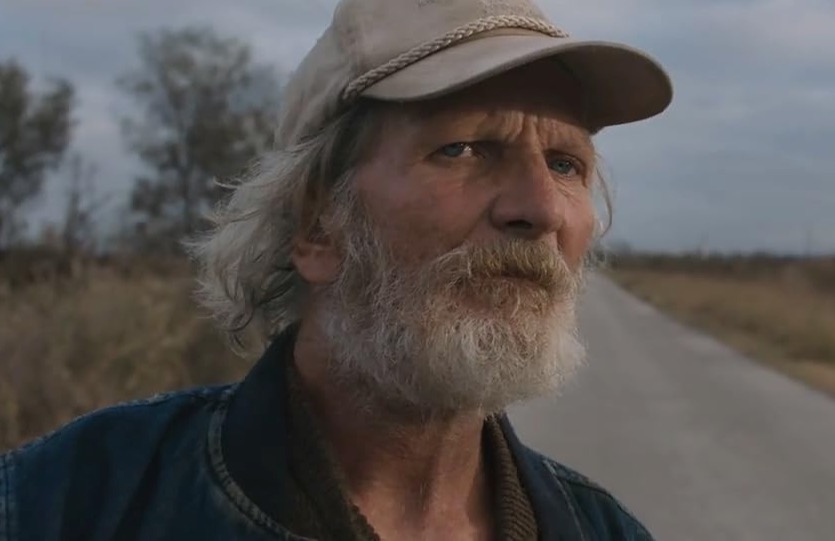
Joe, who empathizes with and wants to help Gary, witnesses Gary getting abused physically and verbally by his father, but feels powerless to get involved because of how “he gets” in situations like this that make him angry. Joe regularly gets in altercations with policemen and has spent time in prison because of his inability to modulate his anger and strong sense of justice.
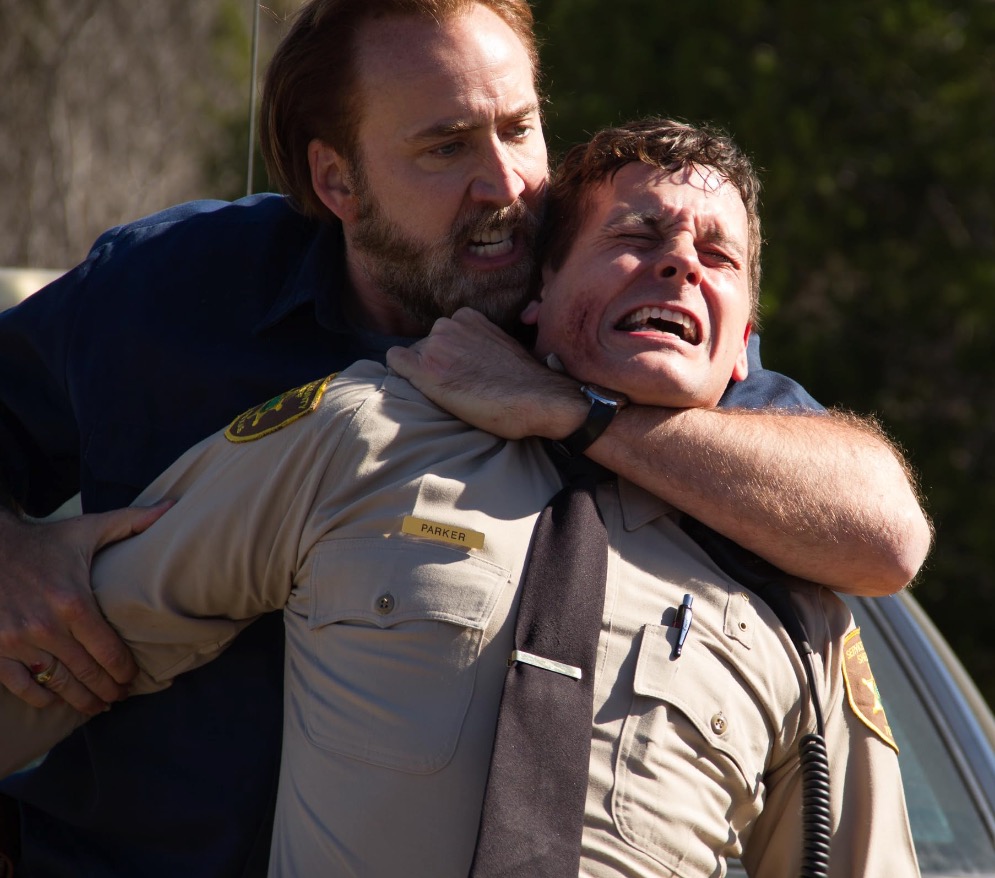
Although he is reluctant to intervene in Gary’s hard life situation with his father, Joe still takes Gary under his wing, agrees to sell him his truck, and generally befriends him and teaches him what it means to become a man (by his estimation). But the more Joe helps Gary, the more Wade gets envious and takes Joe’s gifts from his son.
The guy who plays Wade, Gary Poulter, does an amazing job of playing a very despicable man who doesn’t take care of his family, steals from his son, and eventually tries to sell his young daughter to some really creepy guys for sex. According to Wikipedia, Gary Poulter was a homeless alcoholic in real life and only appeared in one other show as an extra. He was found dead in a shallow body of water before Joe was released. His performance was stellar, but one wonders how far removed it was from his real world experience.
To save Gary and his sister from Wade and the evil dudes he is in cahoots with, Joe holds his last stand and goes out with pistols blazing. Gary and his sister escape with the truck and Joe shoots and kills the men who tried to rape Gary’s sister. Joe tries to shoot the escaping Wade (who seems to have grown an ounce of shame for what he has done) but Joe runs out of bullets and has started to bleed to death from his own gunshot wounds. Realizing he is at the end of himself morally speaking, Wade jumps from a bridge to his death. As the DMS, Joe dies waiting for the police (presumably) but he has saved both Gary, his sister, and his mom from Wade and the terrible life they have been living with him.
The end is hopeful for Gary who now drives Joe’s truck, takes care of his bulldog, and has found a new job with another empathetic boss, who was a friend of Joe’s. Now, instead of poisoning trees, Gary will get to plant them. It’s hard work, but he is up for the challenge.

Joe, Masculinity, & Fatherhood
Joe was an intriguing film about masculinity and fatherhood. Although Joe has not desired to be or been in a position to be a father, he is a father figure to the men who work for him. When Gary arrives, he finds a new focal point for his paternal tendencies. Although he is reluctant to get too invested emotionally at first, he finds himself befriending Gary and teaching him things Gary’s own “biological father” cannot. Joe provides Gary with a means to make money, he buys food for him and his family, he teaches him about what “women like” (from his perspective–evidently hookers like the metallic sound of a Zippo lighter flicking open), he defends Gary’s character by threatening Wade, he teaches him about owning a car (he gives him his truck!), and he models friendship to Gary.
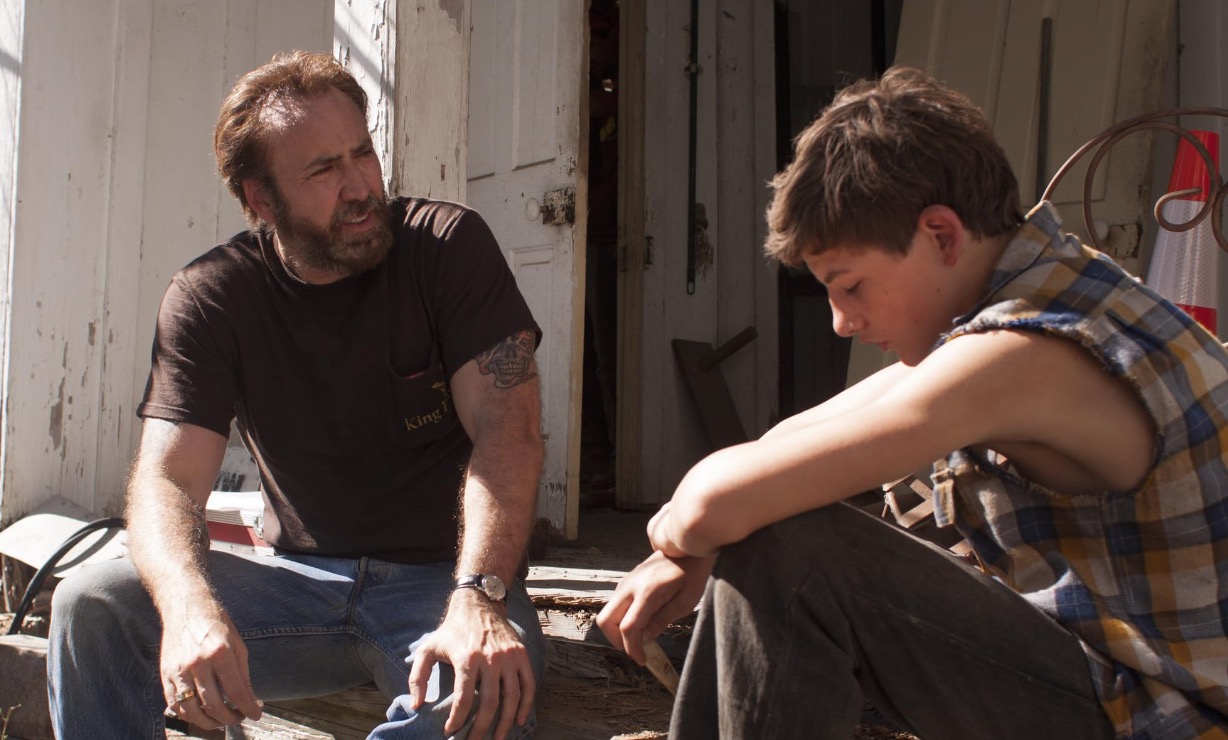
It’s a pretty beautiful, if dark, story of two “misfits” who find strength and love for each other. Based on the book Joe, Wikipedia calls it “a Southern gothic crime drama” but it’s very different from say Bad Lieutenant: Port of Call New Orleans which could be grouped into the same genre.
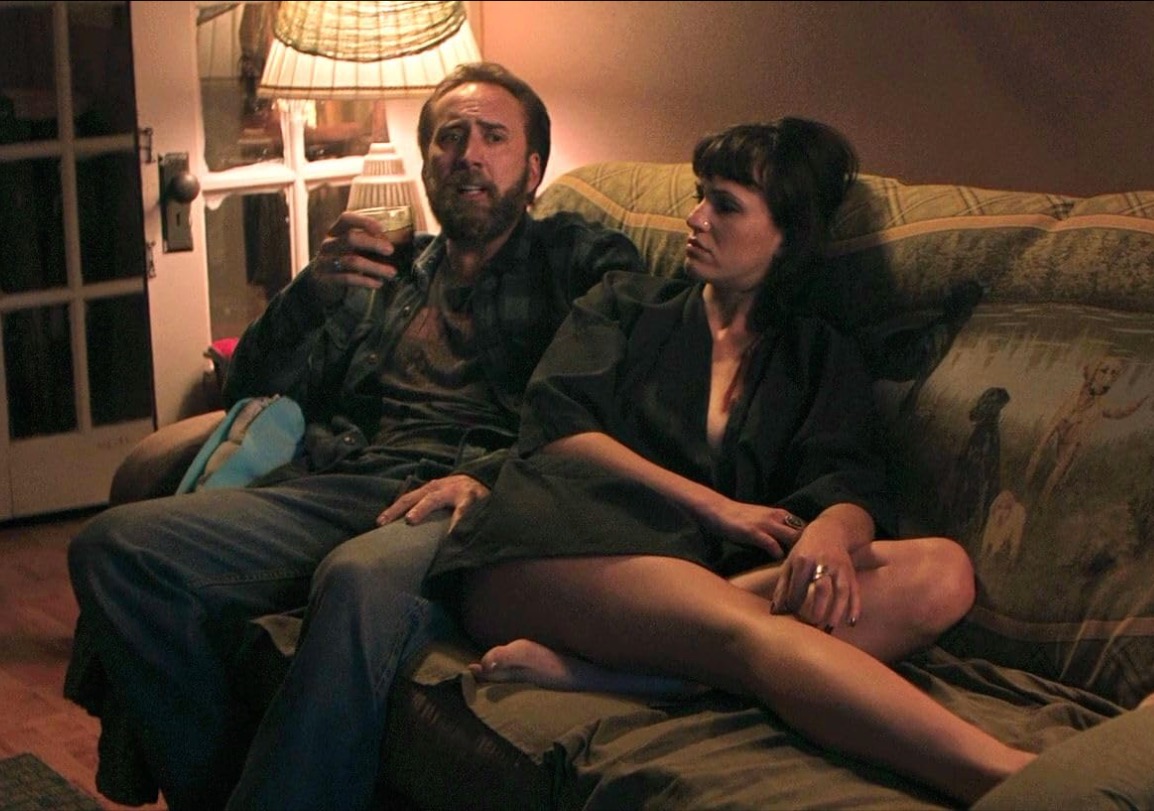
Because Joe was an atypical father figure, I thought I’d just share a few of his fatherly / masculine values with you.
Joe’s Sketchy Rules of Masculinity
- Drinking and driving are a-OK (in rural Texas anyway).
- A man does not go to the ER when shot by a guy he has some beef with.
- A man must be able to clean his own wounds and remove bullets / buckshot from his arm / chest / leg.
- Hint: Use whiskey to disinfect the wound. Use duct tape to keep the bandage on afterwards.
- A man must be able to gut and clean a deer with a hunting knife and make butterfly steaks / backstrap out of it.
- Taunting police and daring them to fistfight you, after they pull you over is acceptable in all situations
- If another man’s dog is an asshole, it’s acceptable to use your own dog to eliminate it.
- A whorehouse is a good place to blow off steam after a bar fight.
- Car insurance is a must.
- The Zippo lighter makes the man.
- Trucks, boots, beards, tattoos, guns, wife beater shirts, and metal music are all top qualities in manhood.
- Whiskey is an all day drink (it’s happy hour somewhere).
- Cigarettes always.
- TV / couch time is the perfect antidote to a hard day’s labor.

First for Nicolas Cage character as Joe
- First time appearing as a small business owner / contractor.
- Bull dog owner
- Doing payroll on a calculator
- Tattoos up and down his arms
- Fully bearded
- Sharpening a pocket knife on a whetstone
- Grabs a big snake and holds it by the neck
- Cutting a deer into steaks. (Backstrap)
- Pulls a bullet out of his own arm. (Duct tapes a bandage onto the wound)
- Shedding tears in “county lockup”
- Wearing a Pantera T-shirt
Recurrences
- Smoking (Multiple)
- Drinking and driving (Leaving Las Vegas)
- Gets shot (Multiple)
- Listening to metal music in the car (Wild at Heart)
- Questionable parenting / mentoring decisions (Matchstick Men, The Weather Man)
Quotables
“See you tomorrow if the sun comes up.”
“I fired his ass three times already.”
“We’re killing trees! Nobody wants these trees. These trees are weak.”
“I can’t promise you much. But I’ll try to be nice.”
“I don’t know who I am. But I know what keeps me alive is restraint. Keeps me out of jail. Keeps me from hurtin’ people.”
“That’s not true. I love dogs. Just not that dog. That dog is an asshole.”
“Put the gun down. Be a man about it and show me what ya got!” [To the policeman who has pulled him over.]
“If anybody messes with you, let me know. Cause I fuck em up.”
“Now get the fuck away from me fore I knock what’s left of yer fuckin’ teeth out.”
Conclusion:
Joe was not an easy film to watch, but it was tender even in its brutality. Playing the dark misfit savior Joe, Nicolas Cage shows us a softer side to the “hard man” who can’t really get out of his own way. Joe was on a path of self-destruction he couldn’t entirely avoid, but his life’s sacrifice was significant to others. Through self-sacrificial love and friendship, Joe gave Gary and his family a new hope, he pulled them from the jaws of death and destruction, and set them on a different path. Joe paid for this path forward, but I don’t believe he would say there were any regrets. Joe was the type of father that Gary never had: hard working, loyal, kind, caring, humorous, and tough.
Even though this story was also a tragic one (and Gary Poulter’s real life was a tragedy it seems), the tragedy in the film was not for nothing. In Gary, Joe will symbolically live on in a better way. Gary has heart and will break the family curse of alcoholism, violence, and destitution. At least the hope we are given as the credits roll. I’ll hope for Gary, and for many sons of abusive fathers, that the chain can be broken at last.

 yeti speak...
Leave a comment