Have you ever had a friend who tends to retell you the same story a short time after telling it the first time? It’s awkward, right? As the listener, you can make things slightly uncomfortable by reminding your friend that they just told you this story last week, or you can pretend it’s all new information and listen to it patiently again, because, “what’s the big deal, anyway? That’s what friends are for.”
If it’s not early-onset Alsheimer’s your friend is struggling with, it’s probably just a passion for story-telling or lack of awareness of their audience when telling stories.
This too-soon-re-telling phenomenon describes the exact feeling I got watching Rage (2014), #67 in the WATC(H). The film is about a guy, Paul Maguire (Nicolas Cage) with a sketchy past whose daughter gets kidnapped by *supposedly other sketchy men, which happens to be the exact same plot as Stolen (2012) which I reviewed not too long ago in WATC(H) #63.
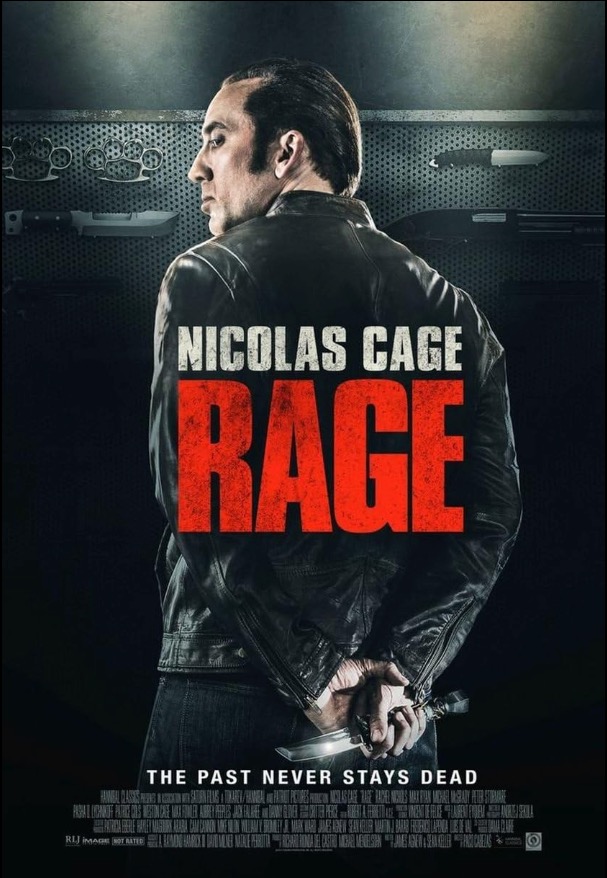
So within just a two year time period,Nicolas Cage remade *nearly the exact same movie. Was it a glitch in the Matrix? Was he so desperate for a paycheck that he didn’t even read the script for Rage? What is going on here?
These are all questions I asked. In fact, in an illustrated poster of all of Nicolas Cage movies I own that is hanging in my TV room, the poster artist didn’t even bother creating a different character to differentiate Stolen Nic Cage from Rage Nic Cage (which I find hilarious).
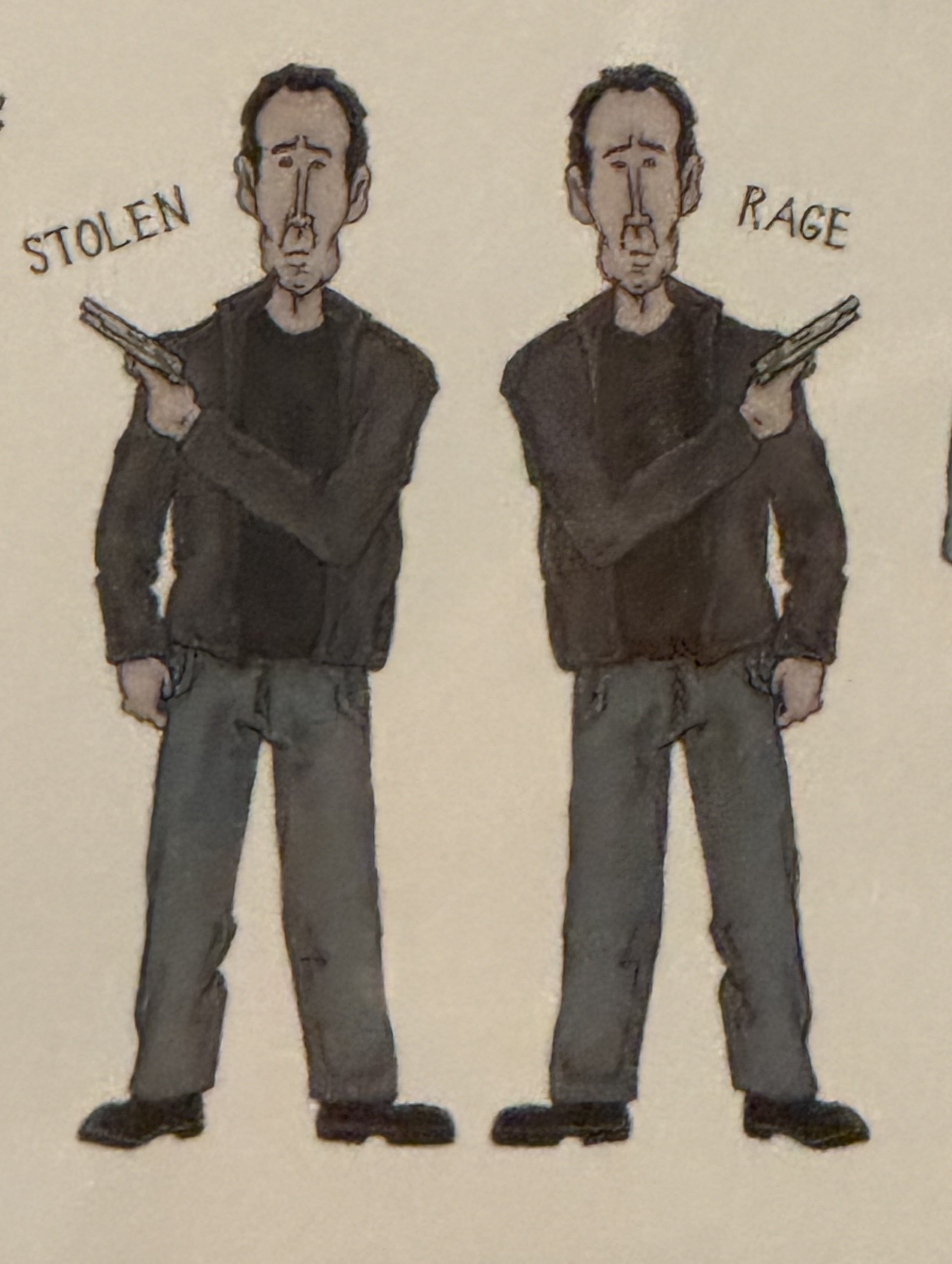
But I’m here to tell you, Rage is a slightly different film from Stolen in a few key plot points and reveals. I’ll get into that next, but be warned…
* = There will be movie spoilers that show how Rage is a different story / film from Stolen, but not by much.
The World According to Rage
In Rage, Paul Maguire is a reformed Irish gangster who has gone “legit” and has become a well-to-do businessman who owns his own construction company, is raising a teenage daughter with his new girlfriend / wife (since his first wife died of cancer some years ago.)
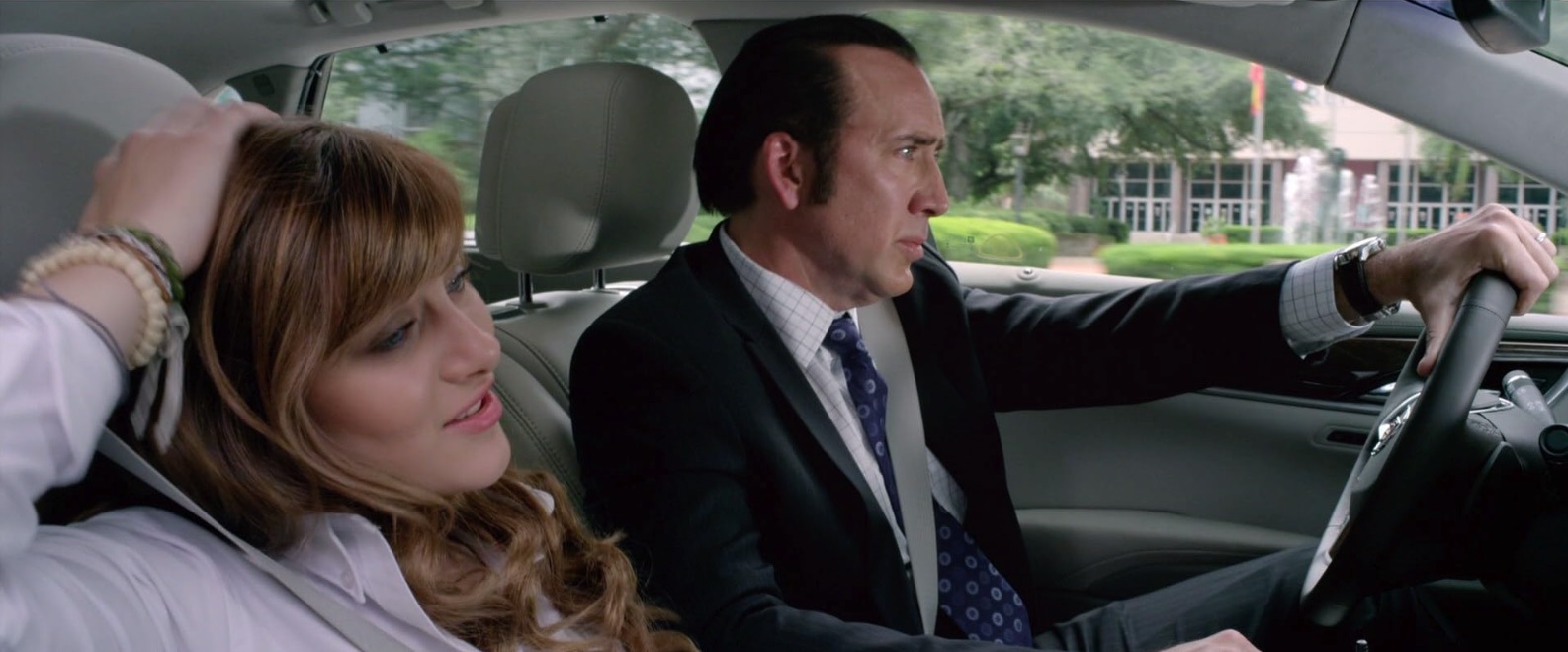
Paul still hangs out with his former gang members and two besties from his youth, who have also gone straight and gained some wisdom with age, named Kane (Max Ryan) and Danny Doherty (Michael McGrady). But one ill-fated night, Paul’s daughter, Caitlin (Aubrey Shea), is kidnapped in a home invasion, while she is hanging out with a young suitor, Mikey, and another friend from their private school.
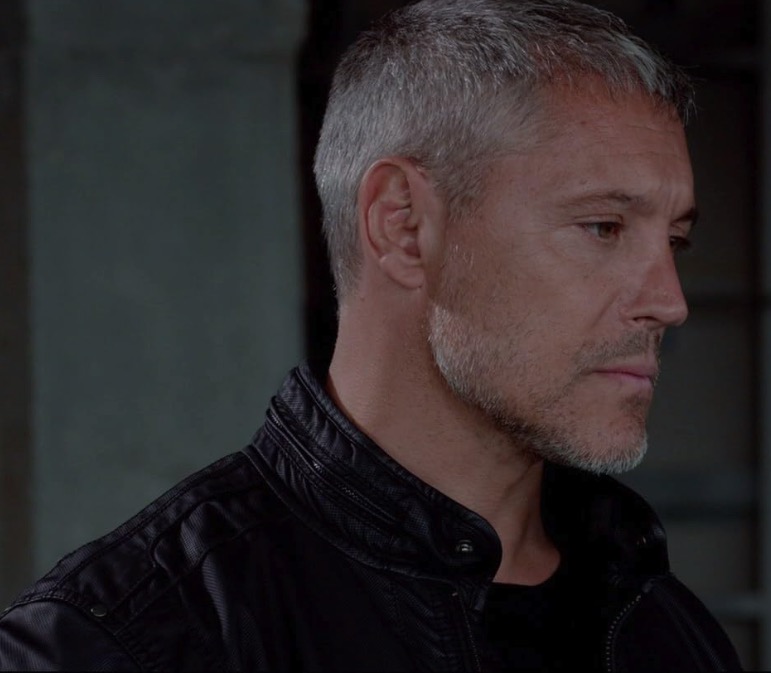
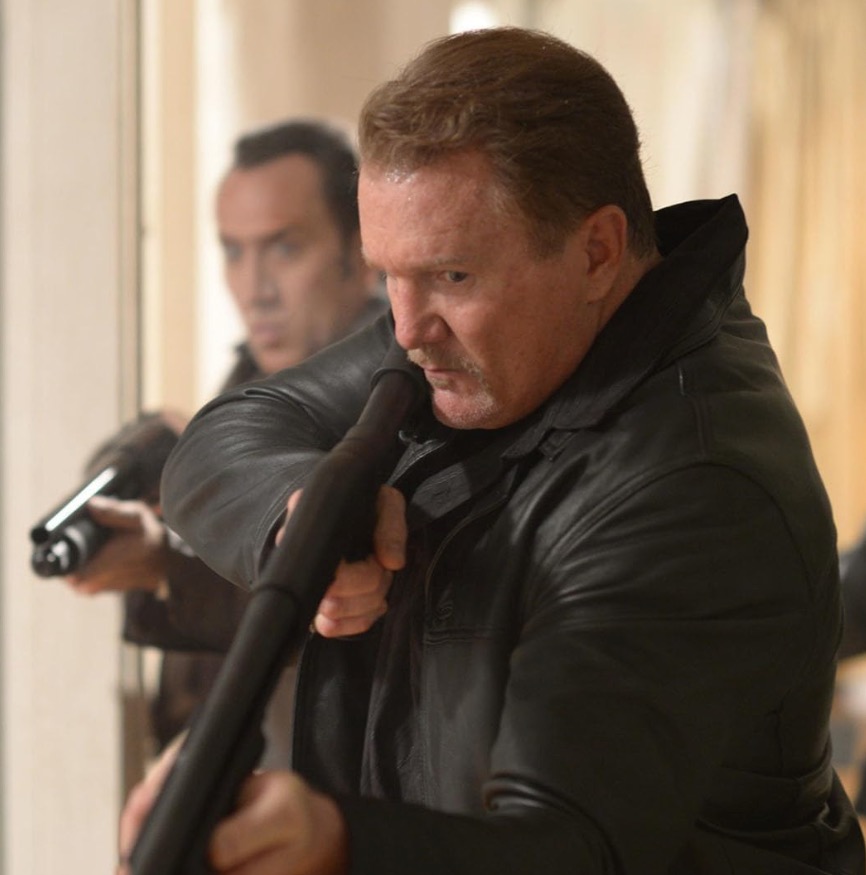
Shaken and battered, Mikey and his friend explain that the assailants broke into the home, masked and carrying weapons, and that Caitlyn fought hard but was taken, while they were left behind. Without a ransom note or kidnapper demands, Paul and the police are left to speculate on the motive for the crime. Detective Peter St. John (Danny Glover) is concerned that the kidnapping was somehow related to Paul’s criminal past and warns Paul not to get involved or risk his current good-standing by going after the kidnappers “outside of the law” and due process.
Paul, meanwhile, is not one to wait for the legal process to take its course, and enlists Kane and Danny to help him shake a few “proverbial” trees in the criminal sector for leads as to the culprits and motive for this attack on his family. Paul’s wife and Caitlin’s step-mom, Vanessa, agrees with this approach and charges Paul to “do whatever is necessary” or “whatever it takes” to find Caitlin and bring her home.
While Paul and his crew delve back into their sordid past, looking for clues to the present crime, Caitlin’s body is found in a canal / body of water and the autopsy shows she’s been killed by a Russian made gun (of older origin) called a Tokarev TT33.
At this point, Paul and his crew suspect this is revenge killing, since he, Kane, and Danny had hijacked and killed a member of the Chernov family nearly 20 years before. Although they hid the body, Paul feared that someone had discovered they were responsible for the death. Paul then goes on a violent grief-filled rampage to find and punish Chernov (Pasha Lychnikoff), his business ventures, and his crew.
While hunting down Chernov, Paul is given pretty good advice from Detective St. John about not making assumptions and looking for “the blindspot” in his plot as the detective also lost his son and although he wanted to take revenge, realized that doing so would have been a mistake.
Paul doesn’t (or can’t) listen to St. John’s advice and ends up losing both his best friends to Chernov’s counter-attack and his own paranoia / suspicions.
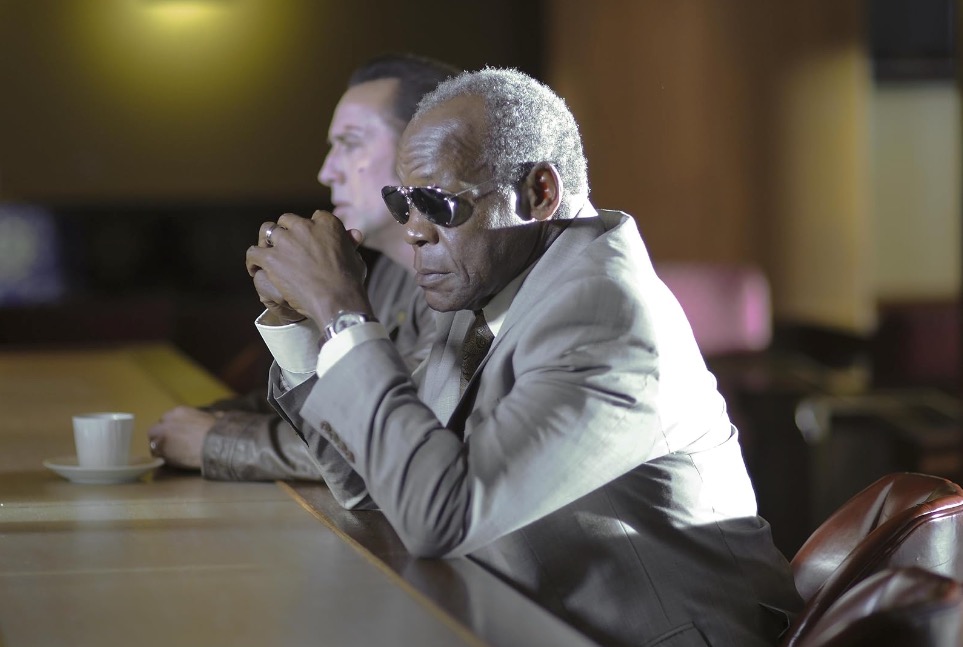
To make matters worse, Chernov and his crew didn’t kill Caitlin or even know about Paul’s execution of Chernov’s brother 20 years prior. In a film-changing plot twist, Paul realizes that the Tokarev was actually the one he and his boys had recovered when they killed Chernov’s brother and that the gun had been stored in his own closet ever since.

Paul finds the gun in his home, and realizes that the “home invasion” story was nothing but a fabrication–his blindspot. It was Mikey who had killed his daughter accidentally while the young teenagers had been drinking and playing with the weapons. In a final fit of rage, Paul tricks Mikey into meeting him in a parking lot and threatens to kill him for what he did to his Caitlin, but Mikey (much like Paul at 17) is terrified and remorseful for what has happened. After accidentally shooting and killing Caitlin, he didn’t know what to do and feared for his life, so he hid the body and made up the story to assuage Paul.
But as Caitlin said early in the film, quoting her Latin lessons, “The die has (already) been cast” for Paul when he set out on his rage-filled desire for revenge. Paul, sympathizes with Mikey, and leaves him crying in the parking lot. He returns to his home, knowing that his killers are on the way to greet him and take his life. Much like a Greek tragedy, he calls his wife from his bedroom to let her know it’s “all over” and that she can come home. As the last shot focuses on Paul’s eyes as his bedroom door is slowly opening, the audience knows as well as he does that “the dies has been cast” and that he is just waiting to die like his friends and his enemies had before.
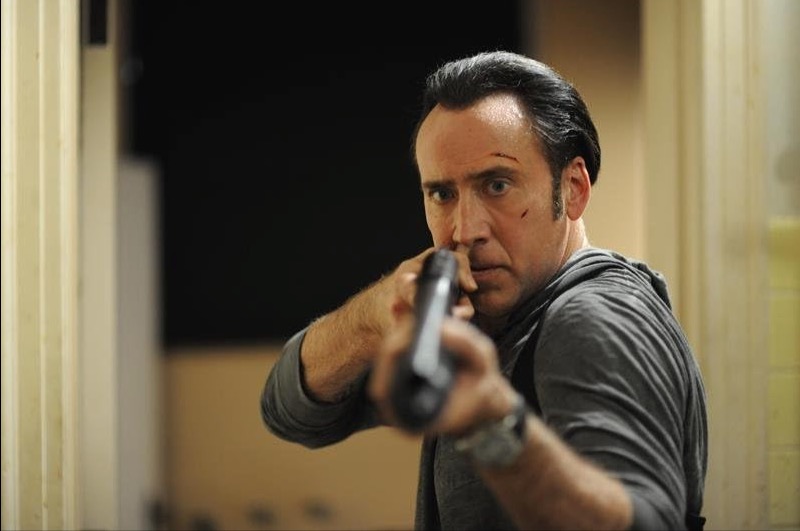
The movie ends in a bright flare of gunfire.
Stolen vs. Rage
The main difference between the two movies is that one has Cage playing the Dark Misfit Savior (Stolen) while the other has him as the Tragic character (Rage). In Stolen, even though Cage was a thief, his character had a customized moral compass, and he paid his dues for his crimes. His daughter was actually stolen from him and he was able to save her through self-sacrifice and ingenuity. He didn’t even get to benefit from the ill-gotten gains of the bank robbery (as he admitted he had to burn the money to face less jail time.)
In Rage, Paul Maguire is a truly tragic figure. His daughter wasn’t even kidnapped. Paul was a young (misguided?) villain who committed a crime as part of his “line of work” at the time. He hid the crime and never did the time for it, but then decided to go straight and “get out of the game.”
But his flawed character traits, the ones that allowed him to commit violent acts as a youth, were just lying dormant for 20 years, simmering beneath the surface of “legitimacy”. The violence and uncontrolled rage came firing back after he experienced a deeply felt (unjust) personal tragedy. His violence (while some might say was unleashed on those who “deserved” it for their moral failures) was haphazard and unmerited. He even goes so far as to murder his own friend Danny.
The weight of the guilt and lack of resolution for what he had done had eaten away his psyche and slowly unraveled him. Although he was warned many times in Rage, to “let it go” and “let the police handle the situation”, to not get involved, he couldn’t do so, and so he stirred the pot that ultimately killed his friends and him. It reminds me of Seven a bit and The Treasure of Sierra Madre.
Paul’s rage, a broken father’s rage, was his blindspot obscuring his memory and his recognition that the crime committed didn’t make logical sense given how long he had been removed from his life of crime.
Final note on the DMS vs. Tragic figure: generally, I appreciate Cage in DMS roles more than I do the Tragic figure roles, but in this case Rage is a better movie. The moral complexity of Paul Maguire and the feral pain that leads him to commit these acts is much more emotionally compelling than the flatter performance in Stolen (in my humble opinion). But having a plot twist like it does probably has a lot to do with how the tragedy is able to unfold. Whereas, with Stolen, you have a strong sense that the father WILL save his daughter in the end.
Head Scratchers
Some weird things I noticed that made this film laughable at times…
- Detective St. John knows all about Paul’s sketchy past (which we are lead to believe he never really went to jail for), but has a great degree of empathy for him. Like he is his sponsor or something. He’s constantly counseling him about his past as if they were pals or something. He even lets him walk after a high-speed chase that probably resulted in thousands of dollars of damage to property and likely loss of life. Huh?
- The scene where Paul delivers his daughter’s school report to her teacher (after her body is found). What was the point of this scene? I have no idea what it adds to the movie or emotive affect.
- Some editing gaffs where it seemed like the audio track didn’t match the video.
- Generally bad over-acting from Vanessa Maguire. She also points out multiple times things like, “even though I’m not her real mom, I still care!”
- Paul doesn’t remember this Russian gun in his closet the entire time he’s hunting down the Russian mafia? Really? Even though it obviously weighed on his conscience. “That thing we agreed to never talk about” is usually the very thing one would think about often.
- The police don’t suspect the boyfriend right away? The buy this home invasion story. C’mon. We’ve all listened to Crime Junkies. Nine times out of ten it’s the boyfriend, husband, family member.
- Paul and Vanessa are out eating at a fine dining restaurant in Mobile, Alabama after midnight. Yeah, that doesn’t jibe with reality at all.
- The first person that the Paul’s Irish mob friends go visit to find out who kidnapped Caitlin is a crackhead named “Oliver” and they basically try to hang his doped up girlfriend to get answers. The guy knows nothing, and they leave him alone, after “saving” the girl from their own trap. It seems like one of the most random acts of violence ever. Stupidly random.
The Moral of the Story
The one weird question about this film is: Is this an “all’s well that ends well” type movie? I mean, when you think about our criminal justice system, it has a lot of failings. Batman will tell you that sometimes you have to color outside of the lines–and take matters into your own hands–when corruption and loopholes reign supreme. What was the net result of all this? Well, Paul and his crew killed half the Russian mafia in the greater Mobile area while on their search for his daughter’s “kidnappers”. The Russian mafia cleaned up the Irish mafia old guard and the three guys who killed one of their own. I guess the only real “morally innocent” victim here is Caitlin and to be honest, we know she lied about things and was the one that put her own life in danger by giving these guns out to her friends. I guess when you are 17 you should get pass: that’s the other moral of the story. Mikey killed a kill and has no consequences (much like Paul before him). So killing someone when you are 17, if it’s an accident, or you just young and stupid is OK…? Is that what I’m supposed to think.
Gray lines. Really gray lines.

Firsts for Nicolas Cage character as Paul Maguire
- Film set in Mobile, Alabama
- Died-black hair
- First time he’s been called “a tease” by his woman
- Offering a teenage boy the opportunity to date his daughter
- First time appearing in a film with Danny Glover
- Kissing the head of a corpse
- Fully going John Wicks a gang of Russian mobsters playing poker
- Screaming in feral anguish (after brutally murdering a man)
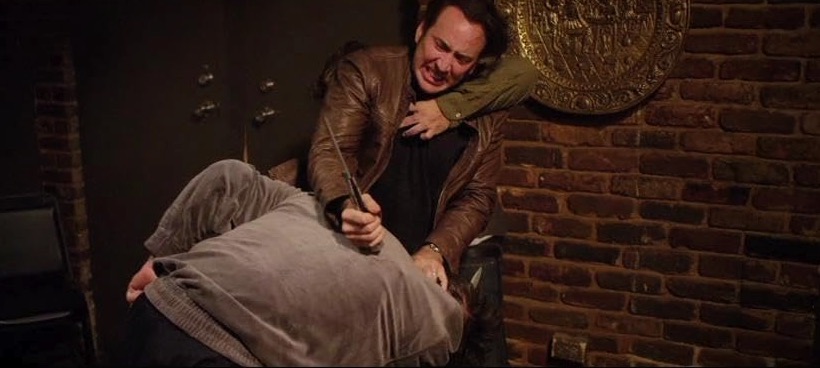
- Killing his own friend with a big knife
Recurrences
- His daughter gets “abducted” (only this time she doesn’t) (Stolen)
- Giving a loved one a “gift” in the car and saying they (i.e. SAT prep books) were the “best one(s)” (Raising Arizona)
- Appearing in a film with Michael McGrady (The Frozen Ground)
- At a graveyard / funeral (The Weather Man, Ghost Rider, Face/Off)
- Witnesses an exploding car next to a navy vessel (Lord of War)
- Inside a strip club (Deadfall, Kiss of Death, 8mm,The Frozen Ground)
- Using two guns to take out his enemies (Face/Off)
- Receives empathy from a black police officer (Joe)
- Dying at or near the end of the movie (The Cotton Club, Vampire’s Kiss, Deadfall, Leaving Las Vegas, Bangkok Dangerous, Knowing, Windtalkers,The Wicker Man, Kick Ass, Joe)
Quotables
“I want that paper done before your two little buddies come over, otherwise you’ll never get it done.”
“Swingin’ a hammer makes a whole hell of a lot more than workin’ at Denny’s.”
“Pete, I’m out of the game! You know that!”
“So I went and got a tire iron out of my car, and broke both of his legs. I’m not like that anymore.”
“How deep is hell?” [His reply when asked how “deep he wants to go” to find his daughter’s killer.]
“Danny, the shit’s about to get radical.”
“YOU TAAAALKED!”
“I killed a man when I was 17.”
Conclusion
Sometimes, it’s not about nostalgia and it’s not about repeating yourself. You just need a re-do–a mulligan. Rage wasn’t quite a re-do, but it was a very similar movie to Stolen. It was a rehashing / retelling of a story from a slightly different perspective. In some ways it was a Nicolas Cage as John Wicks type action / revenge movie with a good twist at the end. While I don’t see myself revisiting Stolen or Rage any time soon (and I sincerely hope Mr. Cage doesn’t attempt another movie with the same premise as these two) it did provide me with some interesting compare / contrast fodder, especially since each role he takes on is played in a slightly different hue–but with 110% effort.
Regardless, the die (on this one) is cast, and we are moving on to a completely different type of role for the great Nicolas Cage: The White Savior Samurai in Outcast. Yes, sensei!

 yeti speak...
Leave a comment