As a recently downsized 50 year old worker bee, I’ve been thinking about my career a lot these days. Asking these kinds of questions:
“What does it look like for me to have a meaningful career?”
“Do I really need to give my life to corporations who (I’ve now seen) will discard me in the blink of an eye?”
“When can I afford to retire and do creative ‘work’ on my own terms?”
In his book The Search: Finding Meaningful Work in a Post-Career World, Bruce Feiler, describes in some detail how the world of “work” has evolved over the years and how individuals nowadays think differently than preceding generations did about having “a career”. In interviewing a few hundred workers around the globe, Feiler discovered that our modern definition for a “job” has changed to be more broadly defined as tasks we are accountable for rather than purely the money-earning kind of work. Given this new definition, most people claim to now be managing at least three or more jobs at any given time.
The categories for jobs Feiler defined were:
- Main job: primary job that provides money to live.
- Side job: hedge bet job sometimes called the “side hustle” (e.g. freelancing, renting out your home as an Airbnb, etc.)
- Hope job: Job you do that you hope becomes something more but doesn’t necessarily have to (e.g. media / art, starting a business, giving back) *To me these are actually hobbies, but sure, whatever.
- Care job: jobs most people have that doesn’t pay monetarily, but takes up a lot of time and energy such as caring for children, pets, elderly parents, neighbors, etc.
- Ghost job: something internally one faces that feels so powerful, scary, and haunting that addressing it feels like having a job (e.g. mental health, depression, wellness, imposter syndrome, social anxiety etc.)
Reframing the discussion this way, Feiler argues that our career path is no longer linear and because we now hold a multitude of jobs (e.g. we were multiple hats) there is “a mosaic” quality to creating meaning in the current world.
BUT what does all this have to do with Nicolas Cage?
In The Dying of the Light (2014), Evan Lake (Nicolas Cage) is a long-tenured CIA agent who has all his life in one proverbial “work basket”. He has one main job that he is dedicated to. Until he stumbles upon an unwanted ghost job, which threatens to ruin his career and obliterate his mind, literally.
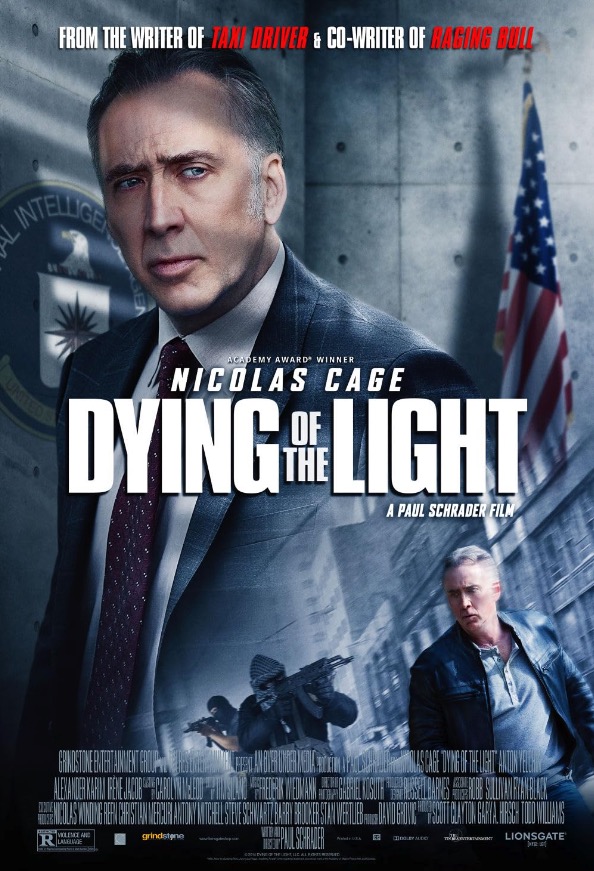
The World According to Evan Lake
The Dying of the Light is directed by Paul Schrader, known for his writing and directorial work on noted films like Taxi Driver, First Reformed, and Bringing Out the Dead. Schrader has a knack for portraying characters with unique perspectives and vocations who also happen to be tortured by some psychological issue or doubt. While The Dying of the Light is not on par with some of Schrader’s other known works; Evan Lake does follow this same Schrader pattern.
Tortured is the right word for Evan Lake because the film opens with him being physically tortured.
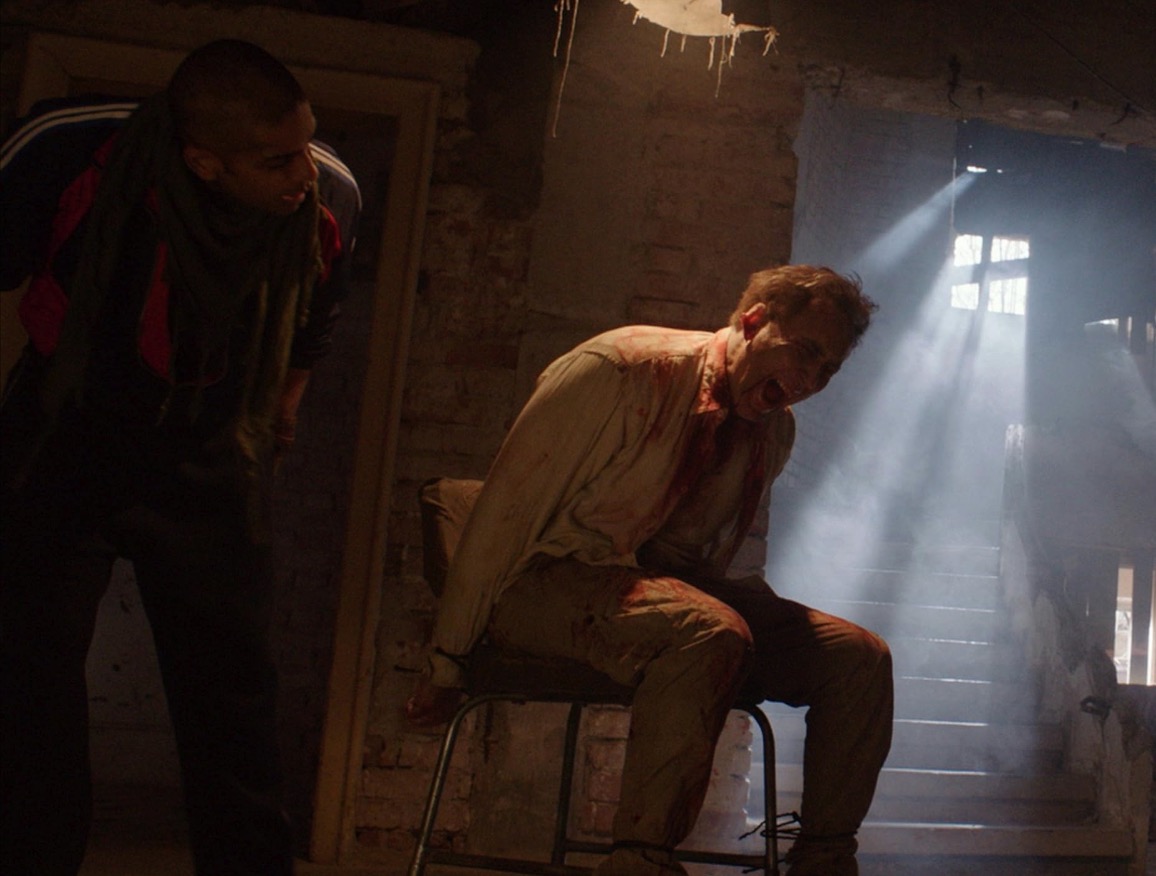
As a CIA operative, Lake has infiltrated an Islamic terrorist organization based in Africa that is lead by Muhammad Banir (Alexander Karim). Banir, who believes there is a CIA informant within his ranks, has captured Lake, and proceeds to torture him to try and get the name of the “mole”. Lake, who has been tied to a chair and beaten badly, refuses to give the name of the informant OR admit that he is even a CIA operative whose name is Evan Lake. Banir proceeds to cut a large perforation into Lake’s ear and Lake’s prospects look pretty dire before a military extraction unit blows a hole through the wall of Banir’s hideout and saves Lake from certain death. Banir somehow escapes.
Fast forward 22 years and Lake is now an old guy (gray hair and everything) pushing papers in a CIA office, but desperately still searches for Banir (whom the CIA has pronounced dead). Lake is partnered up with a young and hungry CIA operative, Milton Schultz (played by the late, but great Anton Yelchin) and the two have been following a paper trail on “likely” Banir’s whom they believe is hiding out somewhere, but who also has Thalassemia (a rare Mediterranean form of anemia) that he inherited from his father.

When a flash drive shows up in Romania on a Kenyan man who kills himself to hide the info from Interpol, Lake and Schultz find the possible clue they have been searching for. The drive lists prescription information filled by a doctor in Romania who is treating someone with Thalassemia and receiving large payments to do so.
But just as Lake is finally starting to piece together where Banir has been potentially hiding in the world all this time, Lake’s own world is just beginning to unravel. He has been diagnosed with Frontal Temporal Dementia, a brain condition that is worsening by the day leading to eradicate behavior, confusion, lack of emotional regulation, and memory loss. The crux of the movie then is Lake trying to battle through his own mental condition in order to seek some kind of justice (or revenge) on Banir before the man dies of his own disease.

Things don’t go well. Lake tries to hide his condition from the CIA, but they find out about it anyway. His bosses press for his retirement, due to his condition. Lake refuses and gets more and more belligerent. Finally, Lake gets dismissed from the CIA as his behavior gets increasingly violent and paranoid. Without his career (and without any family) Lake feels his little to live for at this point. But instead of killing himself, Lake decides to go after Banir on his own and with the help of his now rogue colleague, Schultz.
The two travel to Romania to question the doctor who was prescribing meds for Banir, and then the two head to Africa to confront Banir. But mostly, these plot points are just backdrop to the psychological tension Lake is experiencing, as his condition makes him increasingly erratic, confused, and incoherent.

Eventually, a disguised and often disoriented Lake confronts a very ill Banir in his home, and the two try to make sense of what their lives have become and what it means to believe in God and country.
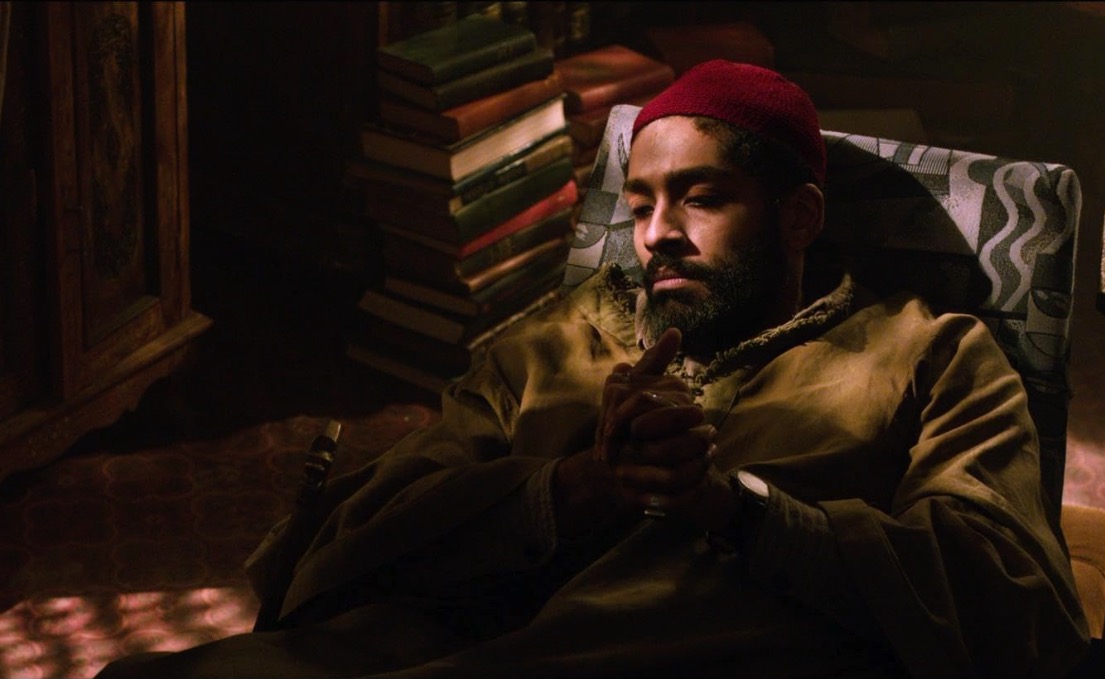
Opting at first for mercy, Lake decides not to kill Banir, but later changes his mind after Banir sends some goons to shoot at Lake, and Schultz and a bunch of random people at a resort poolside area. Lake returns and kills Banir, stabbing him in the eye with his finger?, but also suffers wounds of his own that (probably mercifully) end his suffering as well. Thus, the title of the film is realized in The Dying of the Light.

Work Life Balance
There’s not too much to take away from this film, other than the importance of maintaining good work life balance. When it comes to dementia, there’s evidence that it can be hereditary, but science also provides a number of clues as to behaviors to help prevent (or slow) the disease. I don’t think Evan Lake was doing many of these things:
- Get a good night’s sleep. Sleeping well, helps prevent dementia, but it must be difficult when you’ve experienced a lot of physical torture early in life. Bad dreams, night sweats, insomnia. I’m sure a victim of torture would suffer all these things, especially if you believed that your torturers were still out there in the world and could come for you at any time. I can’t fault Lake for this bad sleep patterns. However, his alcohol drinking probably interfered quite a bit with his sleep cycles, too. Again what came first: it’s a chicken egg argument.
- Relationships are key. Outside of work colleagues, you need family and friends around you to support you and help infuse your life with meaning. Evan Lake had none of these things. No wife, no kids, no bowling league, no bromances. The guy was the extreme workaholic. He didn’t have a “side job” or a “hope job” or a “care job”. I think relationships tend to feed the soul and “diversifying” your role portfolio keeps your mind sharp and your heart engaged in life. Otherwise, you fixate and in Evan’s case you spiral on a singular myopic focus.
- Learning new things. In addition to relationships with people, there’s some brain science evidence that using your mind to learn new skills later in life, and remapping those neural pathways helps prevent dementia. Whether it’s crossword puzzles, Sukoku, or learning a new language, challenging the brain helps prevent it from eroding. I just don’t think Evan Lake was the type of guy to take a Saturday in the park with the NYT crossword. Call me a skeptic.
The Tragic Character
In my assessment, Nicolas Cage appears here in yet another tragic character role. He’s not really saving anyone else (or even himself), and while the role could be seen as a Cage just playing a “straight up” character with dementia, I think Lake’s occupation and his blind desperation to find and bring a “villain” to justice is tragic. Especially given that both men carry a disease that is already punishing them worse than any human institution could.
It’s a nihilistic film because there’s no point to the suffering of either man, and the values / beliefs that they once held in such high regard mean very little in the face of their own impending deaths. The conversation at the end of the film sums this up perfectly. As Banir waxes so philosophical about how the “American republic ideal” is its own belief system, Lake is not even present for the conversation as his mind has transported him back to the first interrogation. Neither man has the capacity for belief in higher principles anymore in the full light of human frailty.
Firsts for Nicolas Cage as Evan Lake
- Fully gray hair
- Suffering from a degenerative disease
- Hit with a cricket bat
- Working a spreadsheet
- Day drinking at a Ruby Tuesday’s
- Twitching hand
- Escorted off the premises after being “fired”
- Drinking saki
- First visit to Bucharest, Romania
- Causing a seen because he was asked not to smoke in a restaurant
- Carrying a bullet key ring
- In a Russian fur hat
- Poking a guy in the eye to kill him
- Getting a human bite on his cheek
Recurrences
- Gets a disfigured ear in the line of duty (Windtalkers)
- Involved in bad shit going down in Africa (A Time to Die, Lords of War)
- Getting tortured (Kick Ass, Trespass)
- Wearing a disguise as tactical advantage (Wicker Man, Kick Ass, Matchstick Men, Face/Off)
- Gets shots in the pec / arm area (Joe)
Quotables
“The CIA fell from the Berlin Wall, and all the president’s men can’t put it back together again. It’s broke!”
“What in the name of Jesus Christ nailed to the cross are you doing here?”
“There are two kinds of men in this world. Men of action. And everyone else.”
“My work is my family.”
“You fucked this up just like you fucked up everything else. Fucked up Iran-contra, fucked up Ames, fucked up 9/11, fucked up WMD, Afghanistan, Iraq, Benghazi. Not you yourself of course, no. No you’re just the latest in a long line of fuck-ups who turned this agency into a cesspool of politics and special interests on behalf of the weapons makers and the surveillance industry, who get richer while we get weaker!” [Lake on a dementia-fused tirade against the CIA director.]
“You’ve got your head so far up Obama’s ass you can’t see anything but his shit anymore.”
“Nobody can hide from the reaper.”
“And I am going to do something worth remembering, with what’s left of my time.”
“Salaam alaikum, asshole.”
In Conclusion
As much as this film lacked a compelling story arc for me (or seemed especially believable at times), seeing Cage kind of “lose his mind” on and off throughout the film (in a justified manner) actually did make for a compelling story. He’s suited for anger, nonsensical speech, emotional outbursts. Some of his best performances leverage these qualities, and I just like the nouveau shamanistic style that he espouses…even in a tragic (and at times boring) film like this one was. If you’re looking for Schrader best (or better works) try Bringing Out the Dead, Taxi Driver, Raging Bull, or First Reformed. This one you can pass on, unless you’re 1) a Cage-a-holic like me, or 2) you’re really interested in seeing what FTD would look like for a CIA agent.
To bring it back around: this film was a good reminder for me not to PUT EVERYTHING into my work life basket. I need to be devoting a significant amount of hours and energy into my side jobs, hope jobs, care jobs, and even ghost jobs to ensure that I have a fairly diversified “personal portfolio” so that I live a LONG, meaningful life, and also one in which I have my wits about me–for as long as humanly possible.
A piece of advice: don’t be an Evan Lake! It’s just not worth the steep price of admission.


 yeti speak...
Leave a comment