Finally we get a film with Nicolas Cage and sharks.
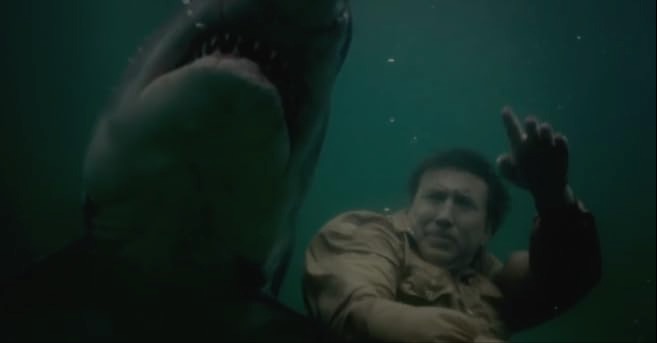
And I do mean, a LOT of sharks. If you think USS Indianapolis: Men of Courage (2016) is a World War II historical movie about the U.S. naval men who delivered the atomic bomb to the South Pacific without “backup” and in the hostile Japanese-trafficked submarine waters, you’d only be partially correct.
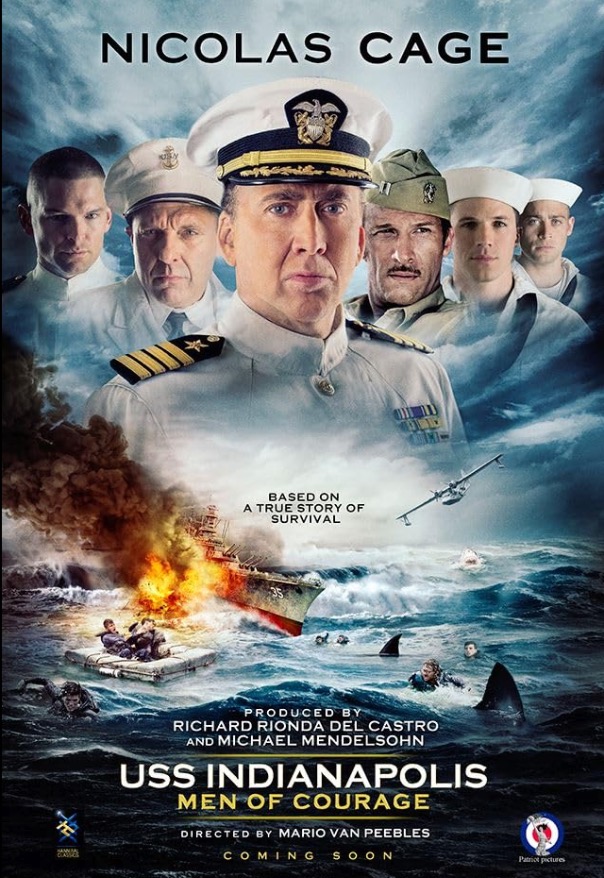
It’s mostly a film about men getting eaten by sharks. Lots of sharks. Sharks eating men day and night for what feels like cinematic hours. It’s pretty bleak, pretty horrific, but also pretty interesting–as much as such things can be. One part Oppenheimer, one part Titanic, one part Jaws, and one part A Few Good Men–U.S. Indianapolis has a little something for everyone and kind of came out of nowhere.
So set your depth charges, raise your periscope, and set course for the treacherous odyssey ahead…
The World According to Captain Charles McVay
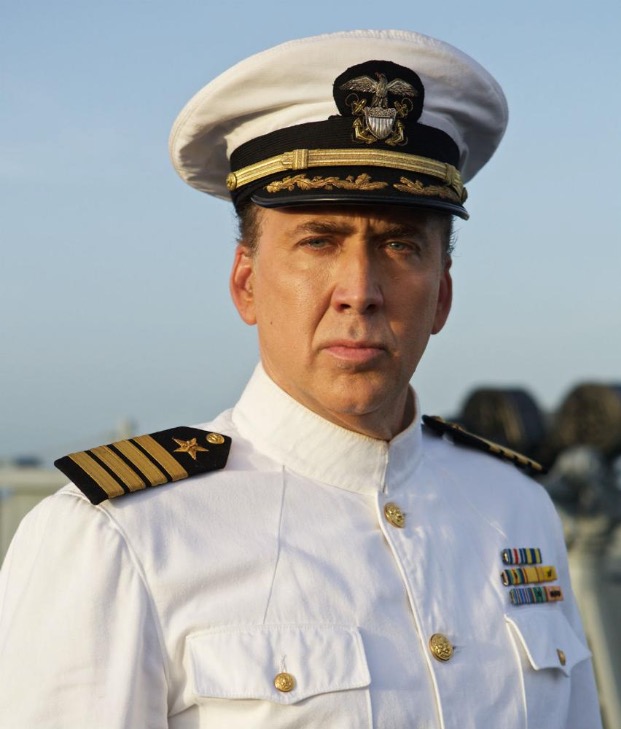
U.S.S Indianapolis: Men of Courage would make a good companion piece or pairing with Oppenheimer (2023). While Oppenheimer focuses on all the scientific work of the Manhattan project and development of the atomic weapons used on Nagasaki and Hiroshima, U.S.S. Indianapolis focuses on the weapon’s top secret delivery. Captain Charles McVay (Nicolas Cage) was the commander of the warship, the U.S.S. Indianapolis, tasked with overseeing delivery of this deadly “cargo” across the embattled waters of the South Pacific. Due to the sensitive nature of his mission, which was assigned by President Truman himself, McVay was forced to pilot his ship “without escort” deep into the heart of the enemy territory. Without escort meant McVay was unprotected by air or submarine cover which would have been the standard protocol for the type of vessel he was sailing.
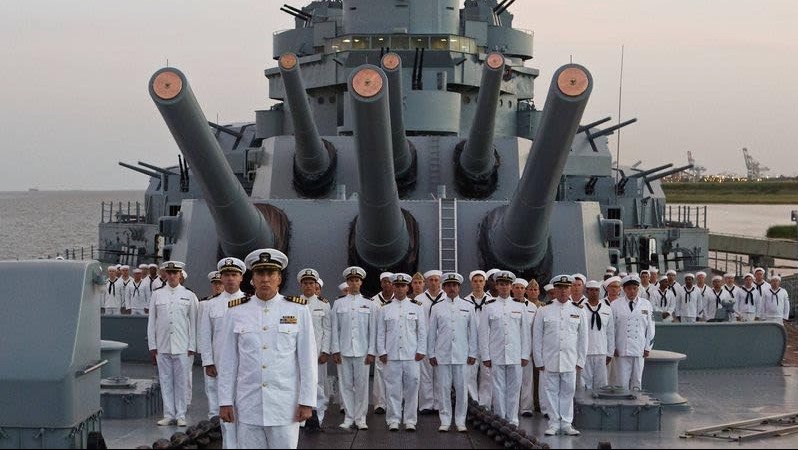
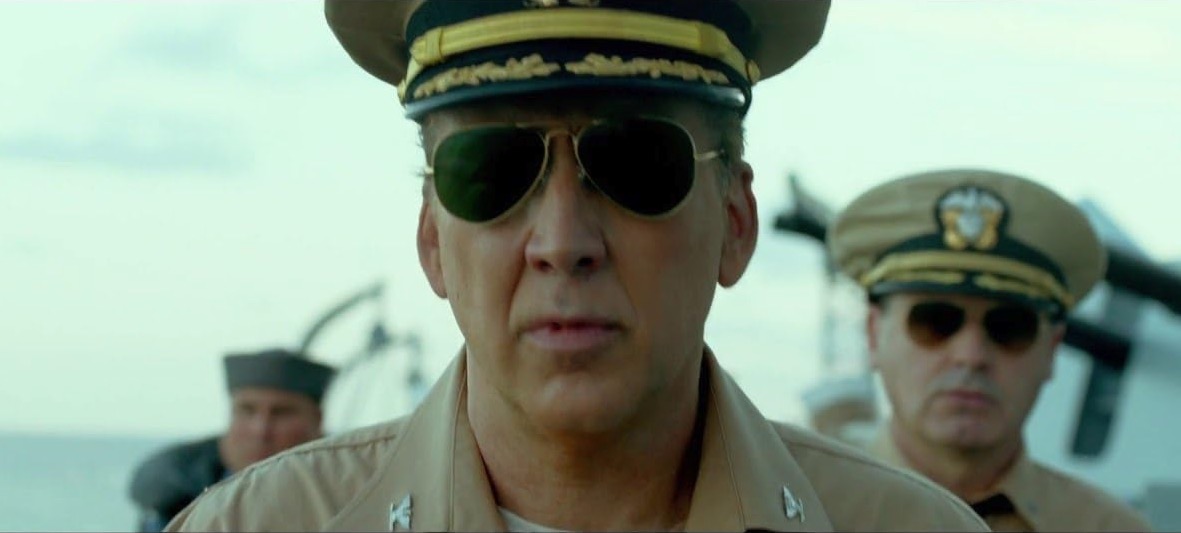
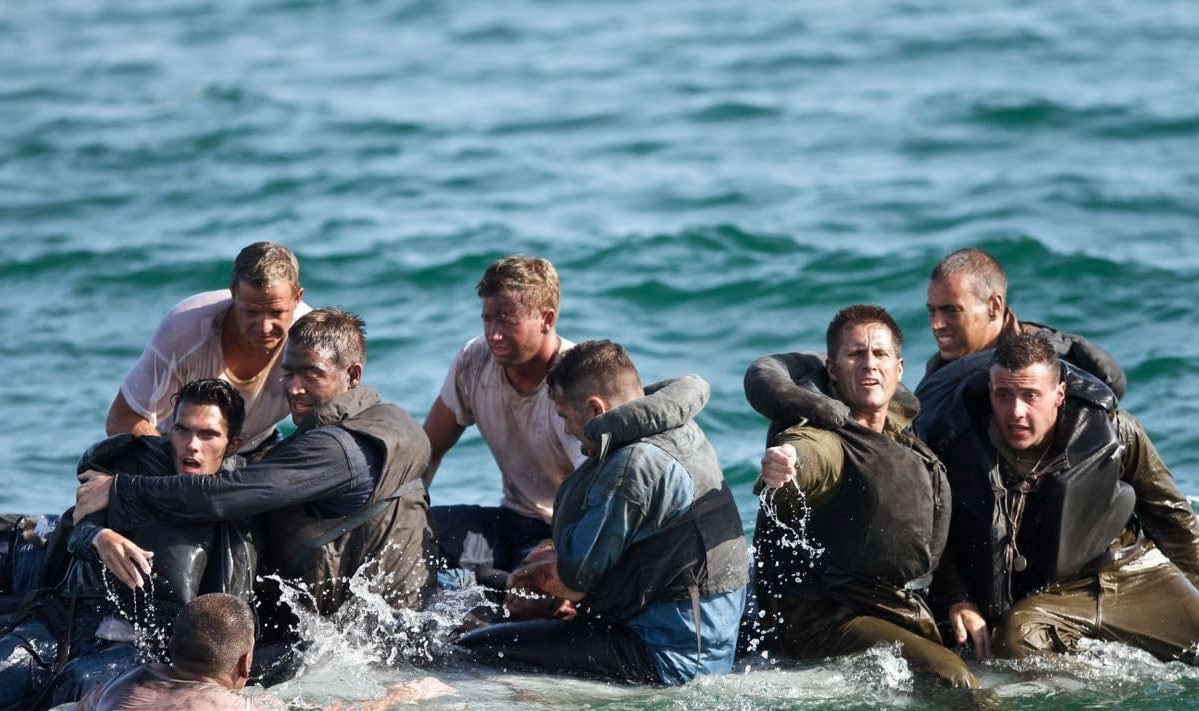
The film follows the storylines, camaraderie and conflicts of various U.S. crew members, from engineers to cooks, to gunners and officers, black, white, and foreign, across the socio-economic melting pot of American life. Each story is one of hope and courage and the expectation that a future and survival, even in war, is possible…even though it isn’t for most of them. In addition to the U.S. perspective on the conflict, the film also highlights the lives and naval decisions (and associated conscience) of the Japanese military men, intense scenes below the water where submarine officers and crew attempt to destroy the enemy Allied powers even, at times, by sacrificing their own lives.
The film has intense moments, as most of the U.S. crew members have no understanding of what their cargo contains or how the mission puts them all at risk. The weight of the mission falls heavy on the shoulders of Captain McVay and his officers as they understand the dangers posed by the Japanese submarine fleet. Once the “package” is delivered and offloaded in the south Pacific, the viewer breathes a sigh of relief, but only briefly. Since the mission is top secret, the return to the “safer waters of home” for the U.S.S. Indianapolis is not guaranteed. No cover is given, no escorting boats are planes are provided by the U.S. government or Allied forces.
Spotted by a Japanese submarine under the cover of darkness, the U.S.S. Indianapolis becomes an easy target for unmanned torpedoes and Japanese kaitens (kamikaze piloted torpedo / mini-subs). When the Japanese fire and make direct hits upon the U.S.S. Indianapolis, there is no recourse for the helpless ship and crew. Captain McVay orders the crew to abandon ship and many men die as the punctured battlecruiser plummets under the murky depths of sea.
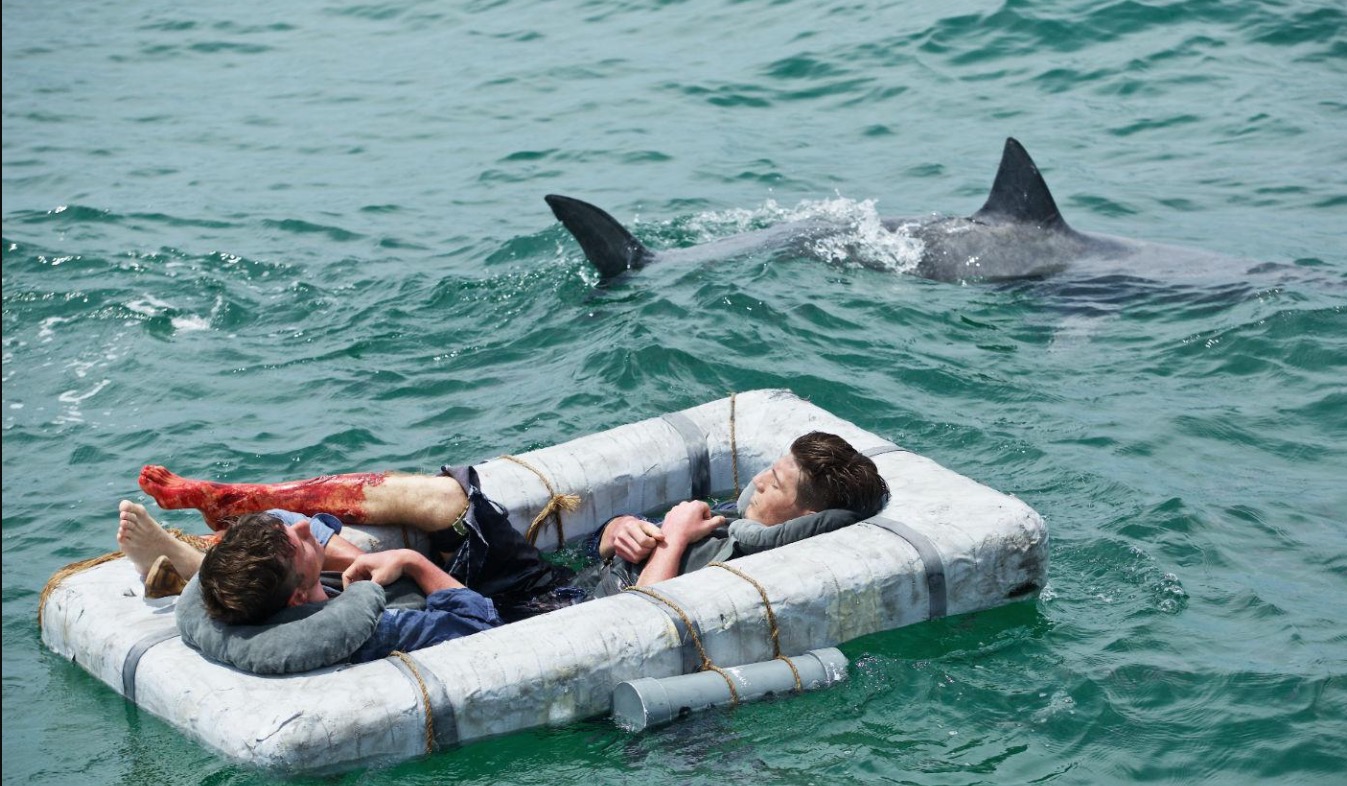
What happens next? Well, for most of the rest of the movie, an hour or more, injured and distraught U.S. naval men (those who survived the ship’s sinking) cling to life rafts while hungry sharks feed on them day and night. It’s brutal and psychologically intense to watch. Unlike with fictitious movies like Jaws, where the singular Moby Dick type beast stalks his prey in long and intense bouts of waiting followed by targeted attack, the “real life” sharks of the south Pacific just feed non-stop as their hunger or mood strike. Since the U.S. naval men and offices are stranded and have no way of petitioning for rescue, it’s just a matter of time before the men succumb to hunger, thirst, insanity, or MOSTLY shark attack. It also doesn’t help that many of the men were injured during the sinking of the ship–some missing key appendages and bleeding into the waters. To make matters worse the screams and cries of the men attract the attention of Japanese submarines who continue to patrol the waters of the south Pacific.
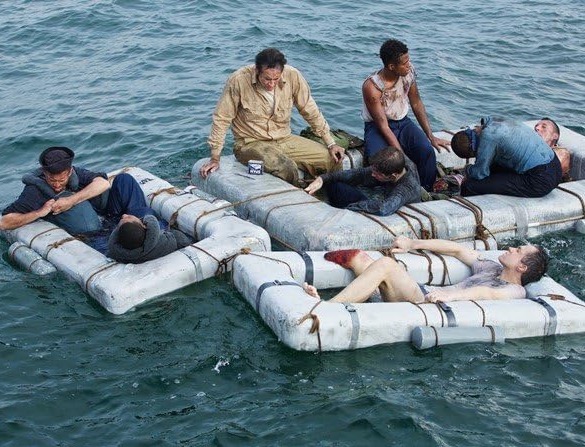
McVay is the heroic figure in the film, of course, if also a bit of a tragic one. He went down with the ship and somehow survived it. He pulled together a life raft and with a very small oar attempted to find and connect his men together even though the seas had set them adrift over a very wide area.
Unlike one of the other first officers on his crew who lacked compassion and a sense of human decency, McVay was practical as well as empathetic to the plight of his crew. He helped them band together, gain some resolve, and keep the peace while they awaited rescue. By the time an Allied plane spotted the men and initiated the rescue, only 316 of the crew were left (who survived) of the more than 890 that were set adrift after the ship went down.
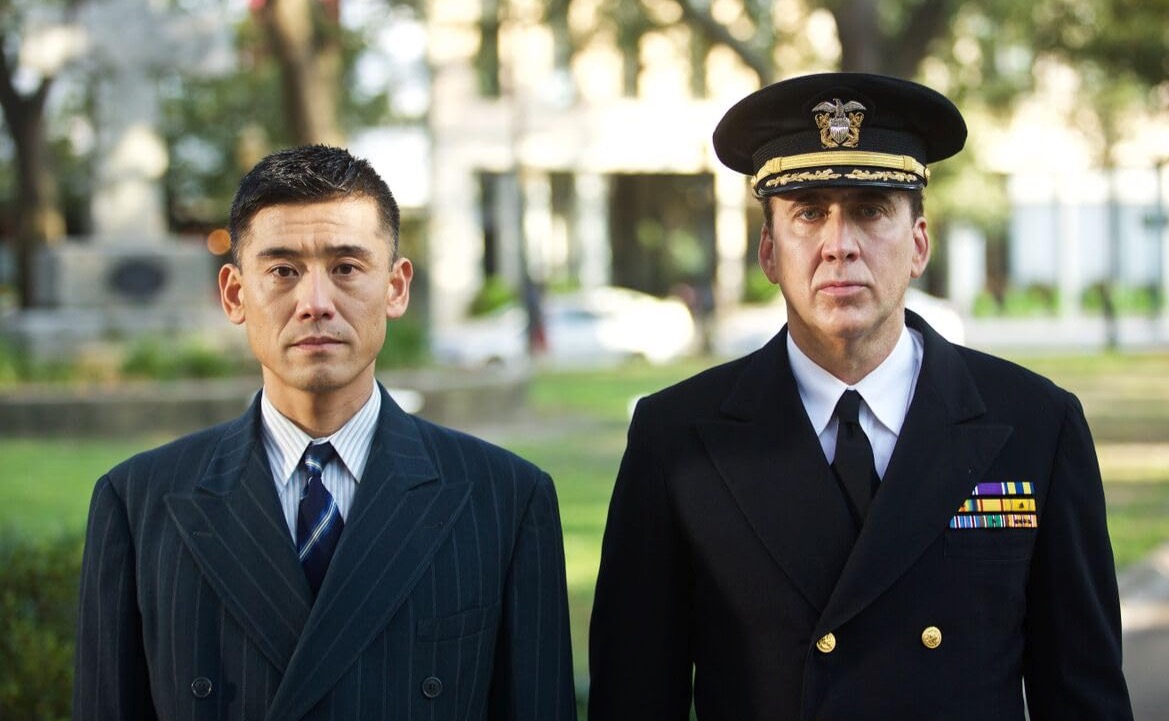
In the end, adding insult to injury, McVay had to stand trial for court-martial because the U.S. government needed a fall guy to blame for the tragic loss of life during their top secret mission. Even though the mission assignment itself was negligently dangerous (according to the movie), McVay was found guilty of “failing to order his men to abandon ship” and “hazarding the ship” by not sailing in the correct zigzag pattern that was meant to avoid torpedo attacks. One of the admirals for the Japanese navy testified that there was nothing McVay could have done differently to have avoided the torpedoes that hit the ship.

Later McVay was reinstated and retired from the armed services in 1949, but the toll that the lost lives took on him must have been psychologically intense. McVay took his own life at 70 years old. The Clinton administration would later exonerate McVay for his part in the loss of the U.S.S. Indianapolis.
Sharks, sharks, sharks
While I learned a bit about U.S. history, what I was most interested in about this film was the sharks. Sharks eating people is one of those sick fascinations I think most of us have. It’s morbid. It makes no sense. And yet, we are here to see it.
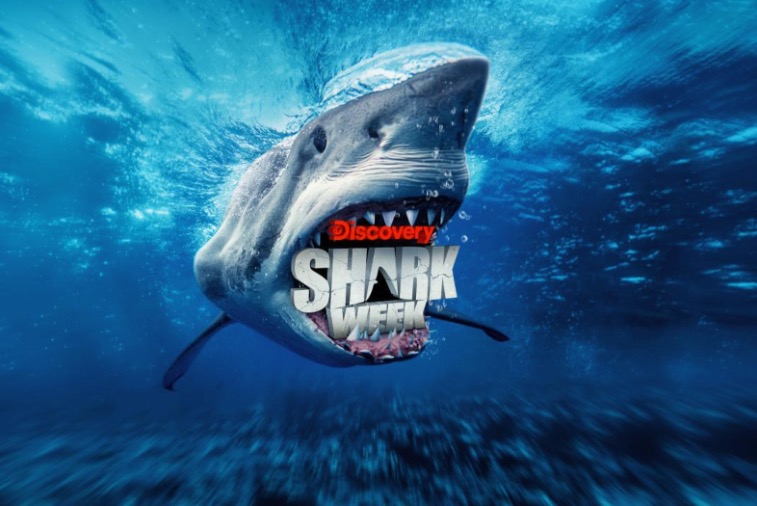
Would there be a Shark Week otherwise? Or movies like Sharknado, The Meg, etc?
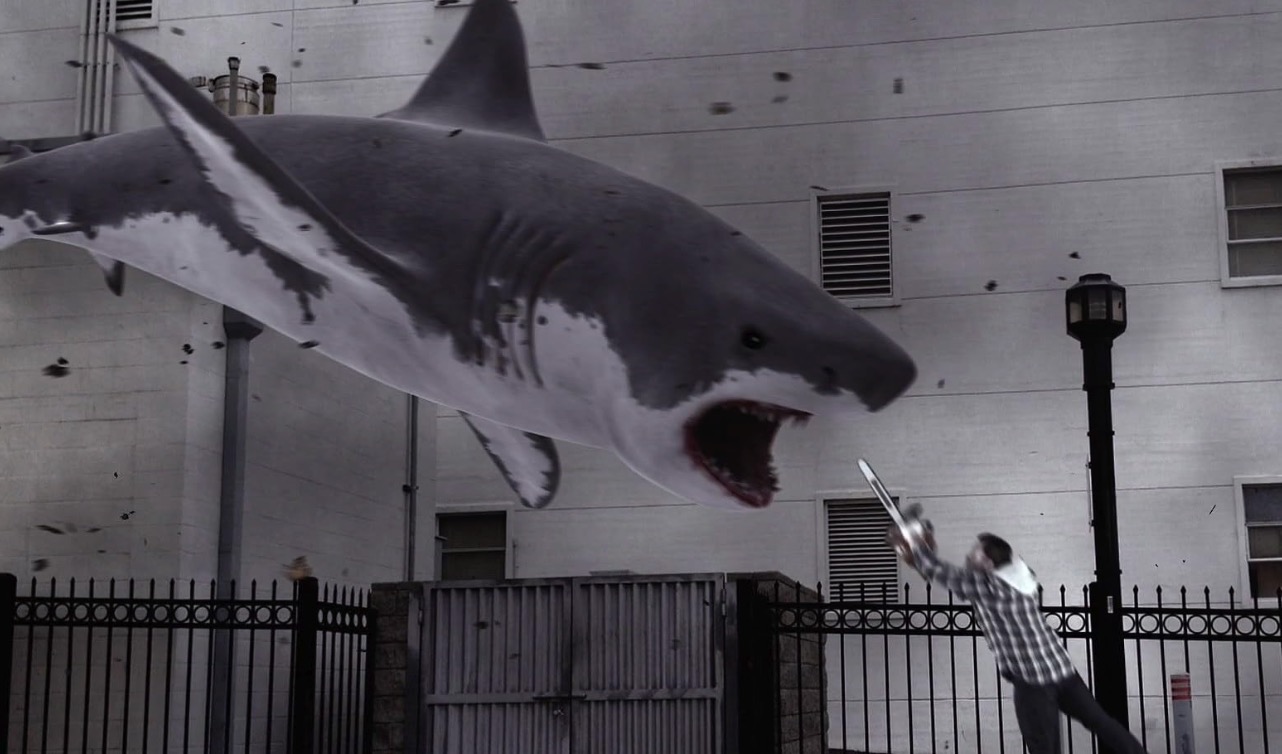
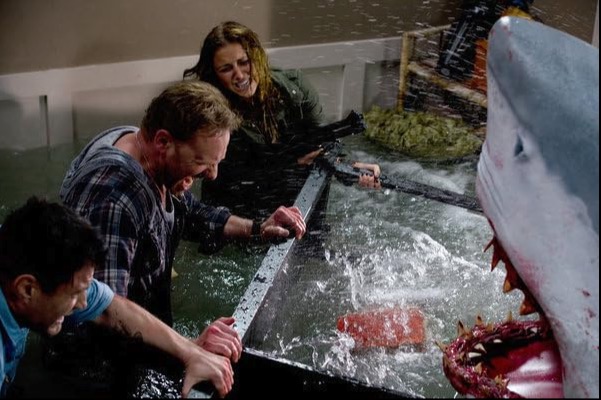
Seeing Nic in the water with a big shark right behind him–well I’ve been waiting for that for 75 films. Finally it happened. It was great!
Did he get to punch a great White right in the eye hole? No, unfortunately not. Some of the war vets (speaking at the end of the film) who survived the U.S.S Indianapolis’ sinking talked about how they did punch sharks in the eye to ward them off–that was a tactic they used. So bad ass.
People always talk about how sharks don’t mess with people unless you mess with them, how in general a shark attack is very rare. But I think when men are basting and floating in the sunny Pacific all day with bloody arms and legs drifting in the water like fresh sausages, well, I think sharks gonna be sharks. They’re gonna chomp. Just like they did in this film (and in real life.)
Would have been great to see Nicky “jump the shark” or wrestle a shark or even punch a shark right in the eye, I guess I’ll have to settle for seeing him in the water with one, bumping up against him and yet sparing his life.
Learnin’ Some History Like it Or Not
My gut reaction every time I see a war film in the WATC(H) is reticence. I think America’s obsession with the second world war is full of unjustified virtue signaling, a weird form of sadism, and a long-gone triumphilism that should have died with colonialism. HOWEVER, when I have watched his war films (this one and Windtalkers) I’ve learned some interesting factoids about our history. The complexities, the injustices, the bravery and the cowardice of war all come through in the films Nicolas Cage chooses to make about history.
I especially enjoyed the (likely fictionalized) scene at the end of the U.S.S. Indianapolis where McVay and the Japanese submarine officer get to speak face to face after his trial. Both men were honorable to each other and spoke their truths. They shared how they didn’t regret following their duty as soldiers, but that they DID regret the outcome of their decisions as men. They both felt shame for their actions. In McVay’s case, this shame ultimately was too much for him to bear–which saddens me. Especially since his guilt and grief seemed unjust. But the taking of human lives in nothing to be cavalier about. Oppenheimer does a good job of showing the ramifications of our human weapons of mass destruction. The toll it takes on us ethically and mentally is as severe at the toll it takes on physical lives. We should watch these movies because they theoretically prevent us from repeating our horrific pasts–which I think is one of the points of studying history at all.
Firsts for Nicolas Cage as Captain McVay
- Aircraft Carrier Captain
- Nearly eating a piece of pie that has been spit in
- On a life raft in the South Pacific
- Swimming with sharks
- Tying off a tourniquet
- Eating SPAM
- Burying a man at sea
- Put on trial for doing his job
Recurrences
- Involved in WWII with Allies (Windtalkers)
- In South Pacific (Windtalkers)
- Kills himself by the end (Bangkok Dangerous, Leaving Las Vegas)
Quotables
“Fire!”
“There will always be war…until we kill off our own species.”
“Does this have something to do with the Manhattan project.”
“Without me you are worthless. You are my crew.”
“Battle stations!”
“Cease zigzagging until the fog clears. Full speed ahead.”
“Sometimes it’s better to be respected than feared.”
“Spam. House specialty.”
“I’M OK! Get my men OUT of the WATER.”
“The packages we delivered worked with devastating accuracy.”
“I too did my duty. But as a man, I find no…honor…in it.”
Never Again
I’ll probably never watch this movie again (I didn’t even take up a second viewing for notes purpose), but that doesn’t mean it wasn’t good or worth my time. I did learn a side of U.S. history I was unfamiliar with.
As much as I like a good shark film, it’s hard watching sharks feast on American navy men (like sitting ducks) for an hour or longer.
Nicolas Cage plays his “real to life” character of Captain Charels McVay straight up, and I’d say he’s a heroically tragic figure. If you need to watch a WWII film for memorial day or D-day or something else, you should check this one out after you’ve already watched Saving Private Ryan, Oppenheimer, Band of Brothers et al. But if you’re wanting to see Nicolas Cage (in a shark cage) in one of his finest or weirdest roles, this isn’t the film you are looking for.
But yes, yes, I am super excited for our next one when he takes on Osama Bin Laden in Army of One (2017)!

 yeti speak...
Leave a comment