I’ll admit that in 2011, when I first heard that U.S. military special forces had found and killed Osama Bin Laden, I was suspicious. Especially given the fact that he was supposedly “buried at sea” and the public was never given a chance to view the terrorist leader’s body or provided any photos or video of the mission that killed him. It seemed both too convenient and still mysterious.
During the many years that the CIA had been trying to track down and discover the whereabouts of the orchestrater of the most horrific attack on America (on 9/11), I often suggested that OBL was probably hiding in plain sight in New York City somewhere. It seemed just as plausible that he would be here as it did the mountain caves of Pakistan. Finding the man seemed like an impossible task given his resources and the many hiding places of the world. It would be like trying to find a needle in a haystack.
But my interest stopped there, a mild curiosity bordering on conspiracy theory posturing. I didn’t really believe my own suspicions, but the official story we were told seemed full of some gaps.
For another man, a real life American Ninja named Gary Brooks Faulkner, Osama’s capture was much more than a curiosity. It was an obsession. In Army of One (2016) Gary’s absurd and “holy mission” to find and capture Osama Bin Laden in Pakistan is channeled via the absurd and “holy” comedic arts of the supreme expressionista, Nicolas Cage. The movie is art reflecting life reflecting art in the sense that it’s not entirely clear where the absurdity begins or ends–who does it better–and which seems the more ridiculous: Gary, as the true-story Quixote samurai or Cage doing his over-the-top impression of him. Either way, you’ll find entertainment here. Much more than watching men get eaten by sharks for an hour.
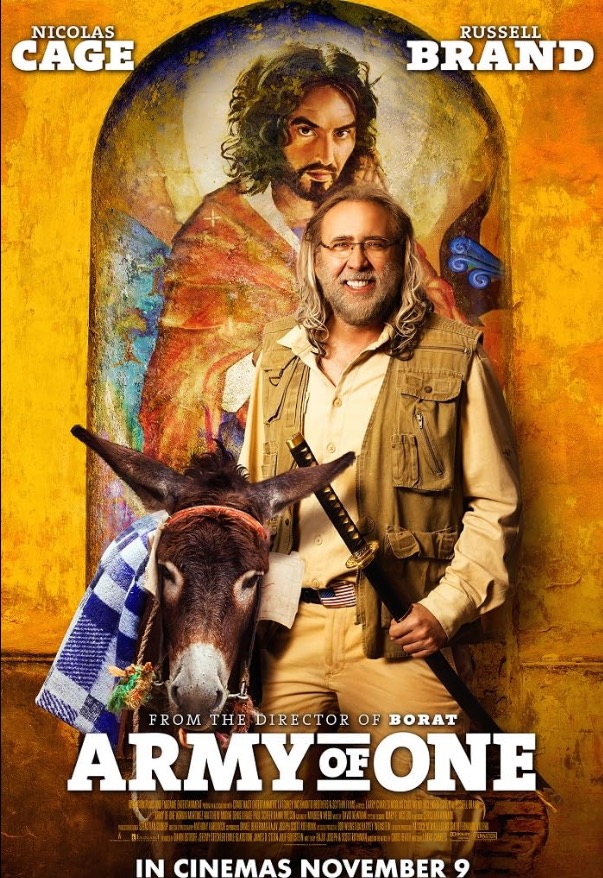
The World According to Gary Brooks Faulkner, the Donkey King
This film is really all about Gary and let me tell you Gary is an oddball. Gary is a part time handyman / construction worker, an ex-con (on mostly minor charges), a patriotic American who believes God speaks to him and has an important mission for him to complete.
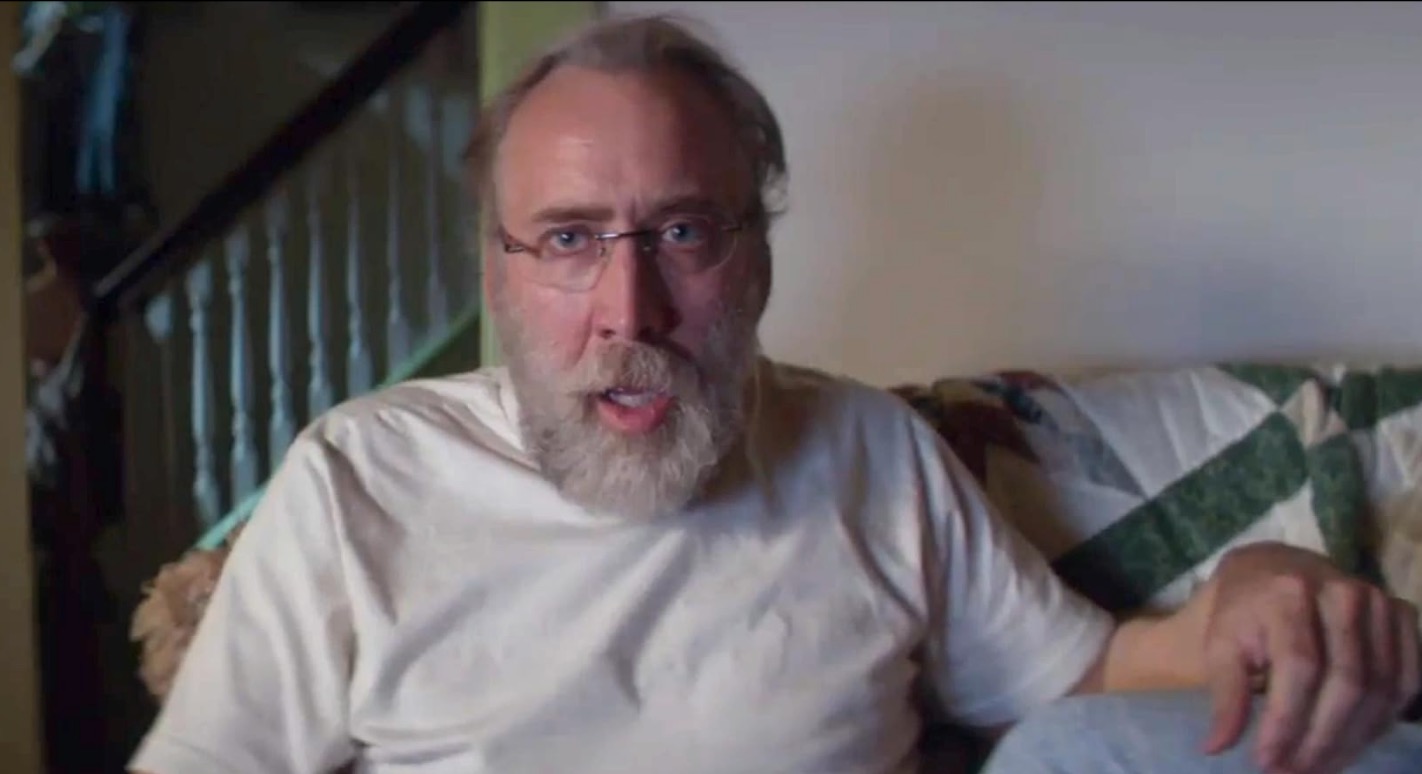
Gary has friends, and speaks to them a thousand miles a minute in a high-pitched Steve Urkel reminiscent twang that (to me) sounds like fingernails on a chalkboard. But to be clear, this effect is mostly a Cage embellishment of the actual person as far as I can tell (when compared to RL Gary Faulkner’s interviews that run during the credits). According to Cage, Gary is schlumpy (translation: fat and out of shape) has long gray hair and beard and is an extreme and “sad” character.
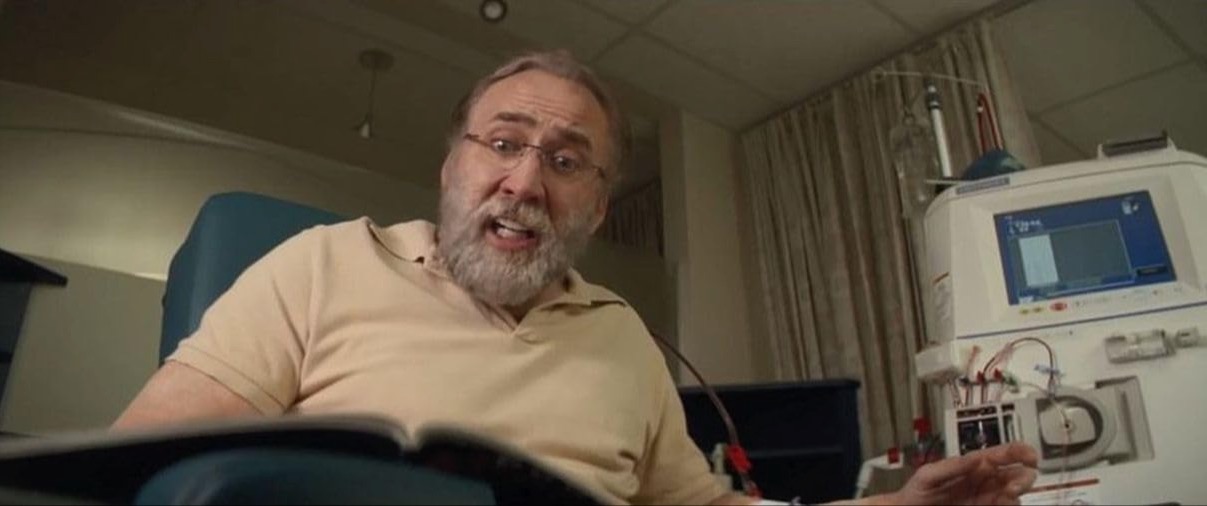
But, oddly, Cage plays him very comedically.
Gary likes his American beer, his American flag clothes and gear, and his American-made products. He’s not opposed to smoking weed when it suits him, likes some spicy chicken wings, and due to his kidney failure spends a good amount of his week on a dialysis machine. All of this is true. Or so we are led to believe.

While Gary is extremely frustrated with the fact that Osama Bin Laden has evaded the U.S. military and intelligence community for many years post 9/11, it’s not until he hears from God that his real mission takes place. Gary is asked, by the Most High, to find and capture Osama Bin Laden because that’s what God wants him to do, and to Gary “it’s the right thing to do.”
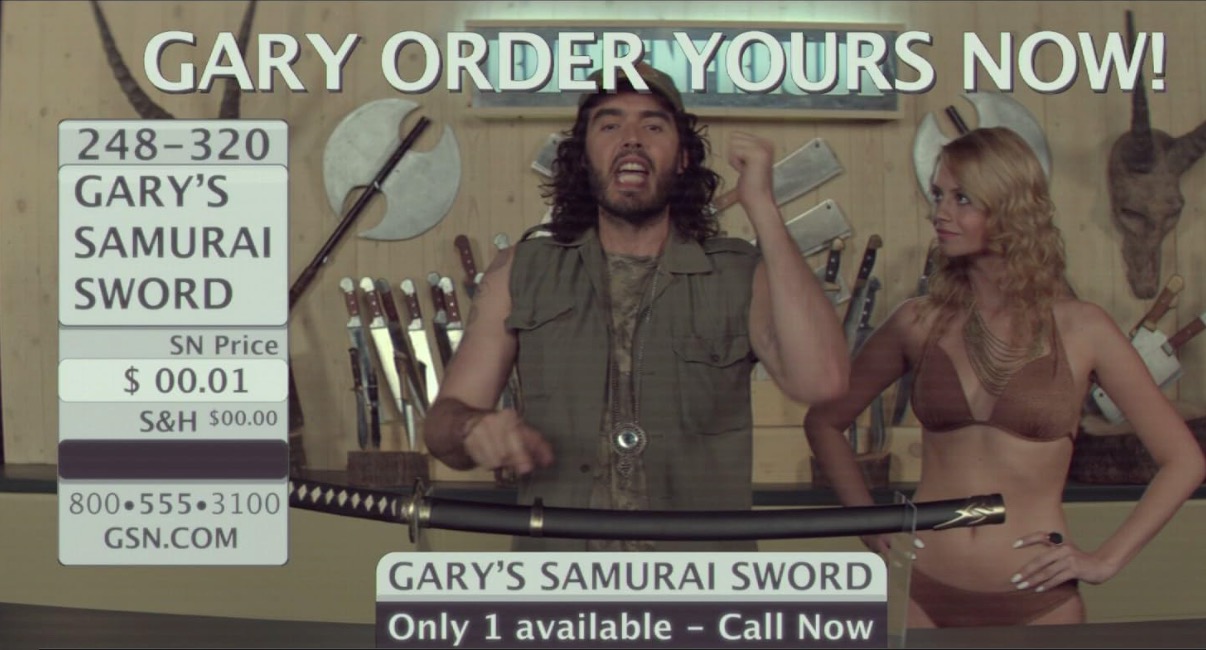
This Quixotic quest pushes Gary to extreme action and his antics just spin out of control from there on out: he buys a yacht and attempts to sail from San Diego to Pakistan, he buys a samurai sword off a shopping channel advertisement for one penny, and he buys a U.S. flag designed hang glider in attempt to float from Israel to Pakistan (with a boom box playing inspirational music). I’m not sure how much of this we are supposed to believe, but enough of the facts are verifiable that the movie doesn’t seem to be as extreme as you might guess. Gary is a weirdo and attempts many of the accounts the movie portrays to the audience.
From a plot perspective, Gary’s crazy is counter balanced against his love for his high school sweetheart Marci Mitchell (Wendi McLendon-Covey) and her disabled and mute child, Lizzie. On one hand, Marci encourages Gary in his mission to capture OBL, but on the other hand, she’s saner than he is and would prefer a boyfriend / husband who would just stay home and help provide a life for her family. Gary feels this tension and struggles with it as the task at hand gets more and more difficult.

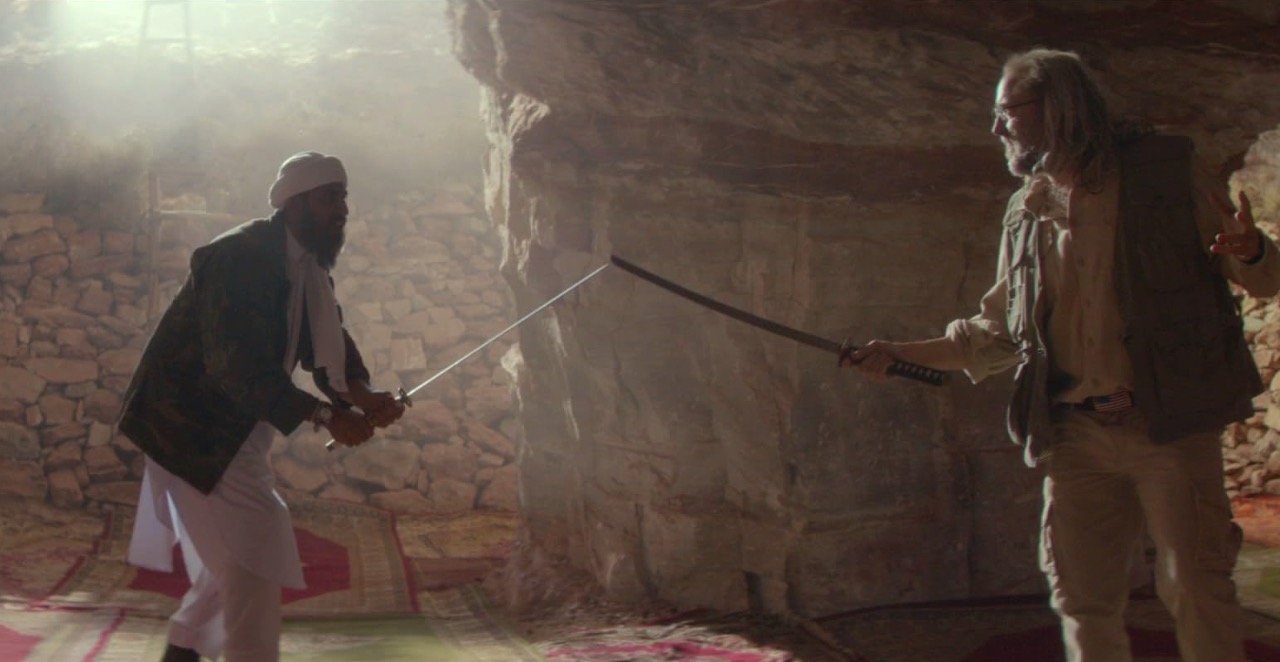
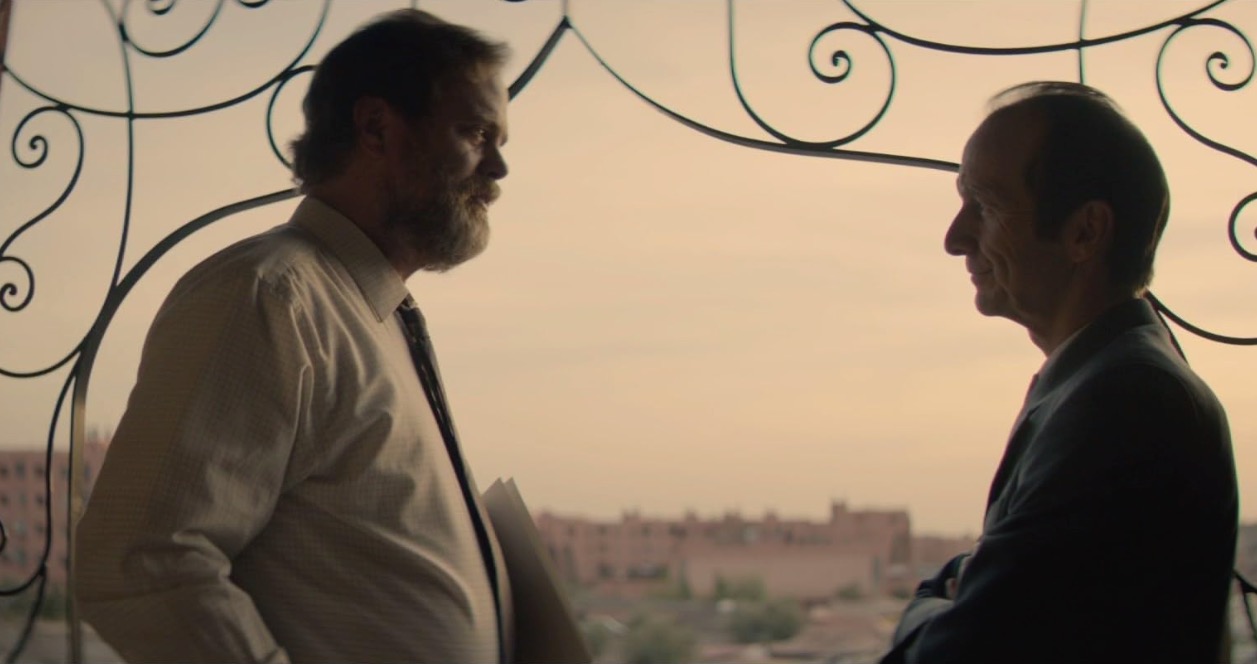
Eventually Gray does make it to Pakistan and while off of his needed dialysis regimen begins to hallucinate more and more. Many altercations with the local populace occur while his is holed up in a Pakistani hotel room and he gets the attention of the CIA operatives “on the ground” looking for Osama. One of the agents, Agent Simon (Rainn Wilson), has some similar delusions of grandeur (if more grounded in reality) and fancies himself a “Dutch James Bond.” He tries to convince his commanding officer to “turn” Gary and use him as one of their own to find OBL. In the end, after a humorous and delusional sword fight between OBL and Gary, the CIA must arrest and send Gary back to the states. By the end of the film, Gary’s losses and physical harms has added up: he injures an arm, breaks a leg, is shipwrecked by a hurricane, and ends up hospitalized (most likely due to his kidney condition not being treated in Pakistan.)
But the hardest thing for Gary is coping with the reality that Osama Bin Laden was found and killed in 2011 by the Obama administration. Watching the newcast with Marci and Lizzie, Cage captures the “loss of Gary’s mission” in visible tears and heartfelt denial and argumentation, which really sums up the tragic nature of this comedic knight errand. In the film Gary chooses family life over conspiracy (Osama’s not really dead!) but one wonders how true to the real life Gary this account truly is. (I notice via Google search that the RL Gary returns to jail for being in possession of a firearm later in the mid-aughts, but I’m not sure if this happened before or after the release of the film in 2016).
We’re On a Mission From God
“Hearing” from God and “being on a mission” from God is part of my story. This came up in my review of Bringing Out the Dead. When I hear those words, “mission from God” I hear them in a distinctly Chicagoan accent (i.e. The Blues Brothers). But Gary’s fixation with finding and capturing Osama really puts this concept into sharp and harsh perspective.
In the film, we’re lead to believe that Gary is non-violent, even though he trained in the martial arts, called himself the American Ninja, and bought a samurai sword to take on his mission. The RL Gary was captured in Pakistan with swords, knives, and guns (I believe) so I’m not sure how much I believe in the peace-loving nature of movie Gary. There’s a fine line between having some kind of faith in a higher power, believing in God as a “loving and accepting deity” and thinking you can communicate directly with God and get your orders from him. Especially when the “call to action” is justice (bordering on revenge). I’ve seen too many movies about religious war (jihad, terrorism, the Crusades) and religious cults to have much confidence in man’s ability to distinguish and “get a message” or a mission directly from God.
And I literally was a missionary for a while. So you can understand that I may have a bit more empathy / connection to these concepts than most. The more I look back on it though, the more out of touch with reality it seems to me.
As to Gary, well he definitely seems bat-shit crazy, and the film actually plays upon this fact.

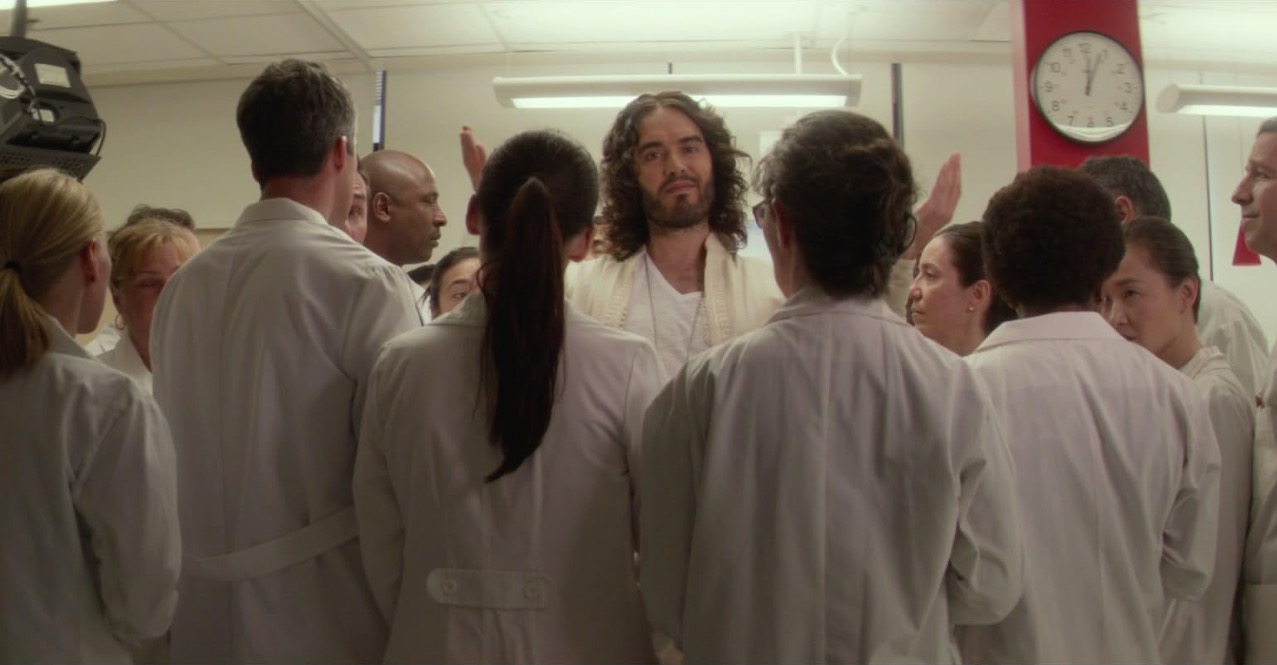
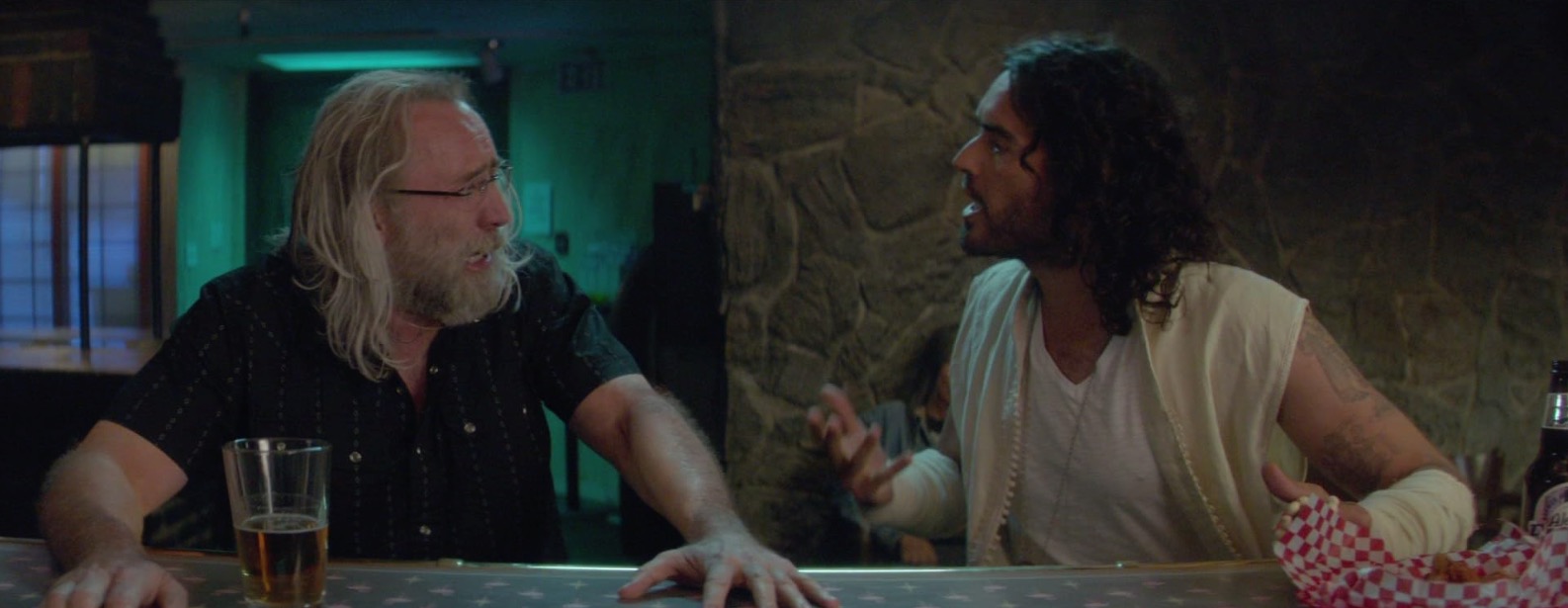
God, played by Russell Brand, is also hilarious in this film. He’s overly busy, impatient, self-referential, and swears a lot. He gives Gary his task and expects him to complete it without much assistance or interference. In their first encounter in the dialysis clinic, God basically tells Gary this is the last time he will probably see him, but God has to keep showing up in Gary’s life to redirect and spur him on to greater results. The one-liner philosophical nods to the theology of it all is also pretty funny–i.e. the struggles of being omniscient and ever-present are real.
Eventually Gary is so distraught by God’s expectations of him and his lack of progress in his mission, he responds with genuflecting, blubbering like a baby, and begging for God to help him out any time God makes an appearance. Cage pulls this off pretty well as his weakness and emotions just tend to infuriate God all the more.
In the end, the tragedy of Gary is that his mission didn’t add up to much of anything. I think he realizes this in the film as he watches Barack Obama announce Osama’s assassination. Gary is horrified, as opposed to being grateful or relieved, by Osama’s death because suddenly the life purpose he has gained from hunting from him has evaporated instantly. I’m not sure how RL Gary felt about this announcement–whether like me he was suspicious of its veracity or if he wondered “now what” when looking at his own situation. In the film, there is definitely a sad sense of loss and a nihilistic absurdity (Quixote again) that persists even as the storytellers attempt to make the film about “coming home to family” or appreciating the life he has with Marci and Lizzie.
Cross Cultural Insights
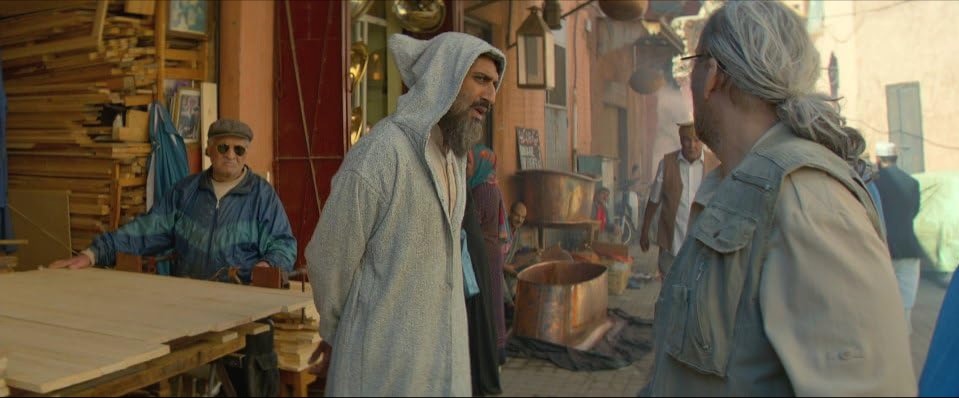
One thing I appreciated about this film was getting to see Cage (as Gary) interacting cross-culturally with the people of Pakistan. In some ways Gary is the archetype of the American buffoon living abroad. He is often too true stereotype of the obnoxious and loud America who is tone deaf to all customs beyond his borders.
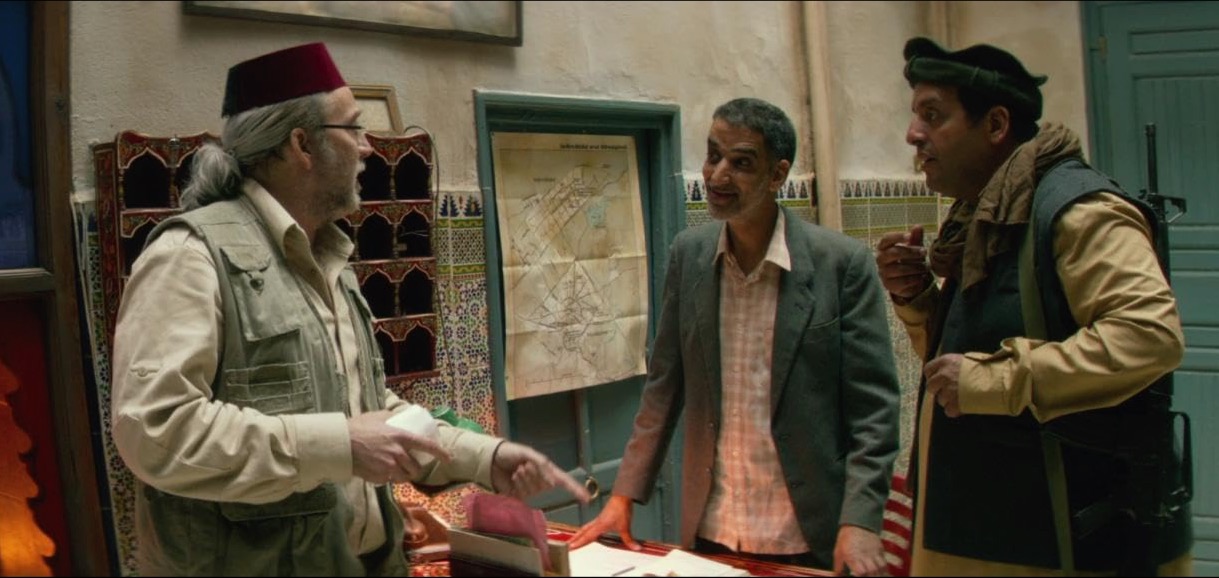
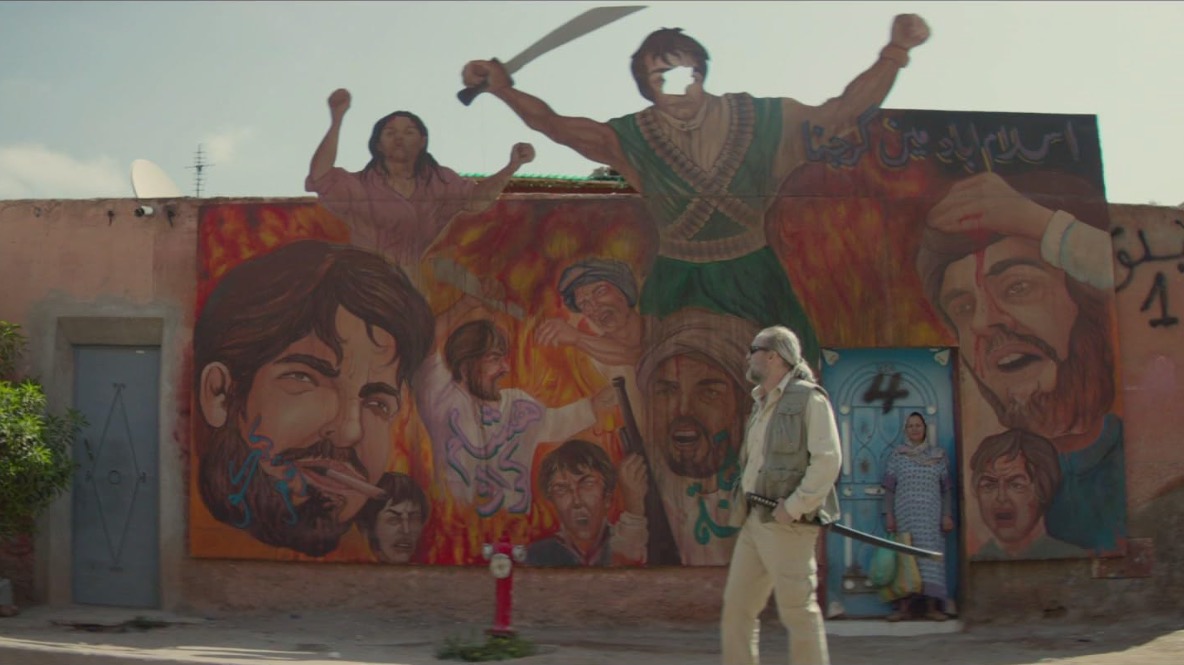
He is more focused on American exceptionalism and how Pakistan compares to America than he is learning from this ancient culture he is immersed in. The Islamic call to prayer disrupts his sleep every morning. He spews his (likely) very warm Coca Cola out of his mouth in surprise at a local cafe. He touches a local woman on the cheek to her and every bystander’s horror and outcry. He doesn’t know the language. He doesn’t care that he’s ignorant. He’s completely oblivious to the cultural faux pas that he commits every second he is there.
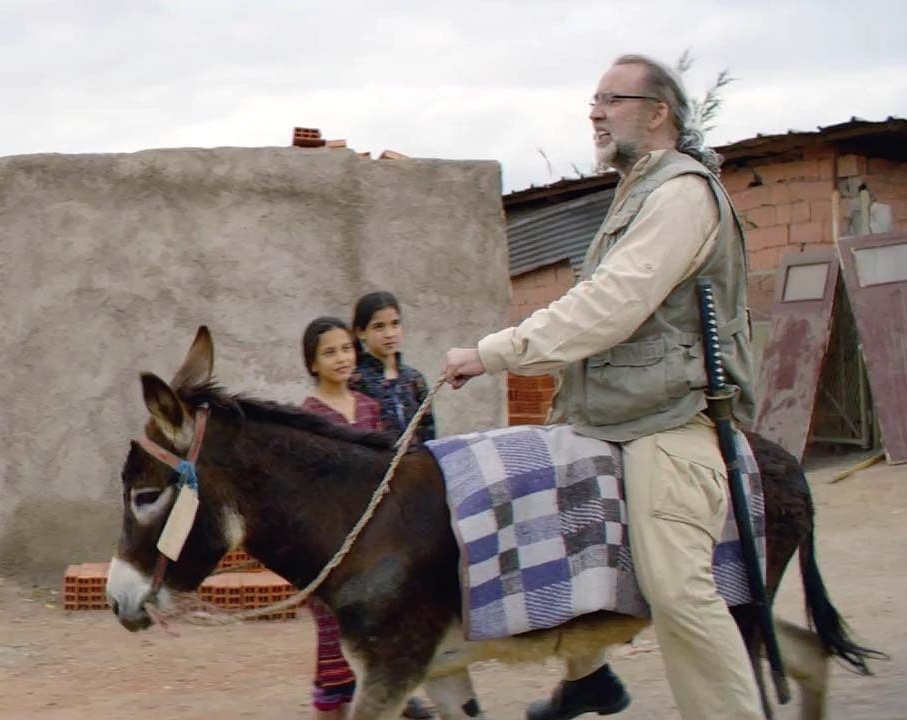
And yet he is also finds connection with the taxi driver, the hotel concierge and security guard. He entertains children and teaches a local food vendor a better way to cook the meet (“You’ve got to talk to it…”) As out of place as Gary is, he’s also an entertainer (somewhat unintentionally) and a spectacle to be enjoyed.
There is growth in Gary even though it may be somewhat limited by his own myopic view of life and his mission. I liked that because I believe any time you step foot outside of your own neighborhood and country, you are going to learn something about the world and about yourself.
Lots of Laughs
This film, although not perfect by any means, had some great humor baked in. Directed by Larry Charles, a writer for Seinfeld who also directed Bruno and The Dictator I definitely laughed out loud a few times and appreciated some of the witty one-liners and understated bits that were interspersed with the more slapstick physical humor. I liked the conversation between Gary and the store clerk when he was buying the hang glider for his mission. Gary asks the clerk if he was to hang a boombox from the glider what music should he choose for his inspiration. The clerk stops him and tells him he wouldn’t do that because it would disrupt the balance of the glider (completely deadpans it). When forced by Gary to make a recommendation, he says, “Tom Petty?” And Gary is disgusted, “That is the worst idea ever?!?” as if his plan to sail a hang glider into Pakistan to capture Osama Bin Laden wouldn’t be ranked at the very top of that list of bad ideas.

Ha! So great.
Everything about Gary seems misguided, based on a terrible assumption or just bad judgment. In some ways he’s a slightly less angry MAGA reincarnation of Lloyd from Dumb and Dumber. “So you’re saying there’s a chance!”
While this is definitely not Cage’s greatest work of comedic acting (Raising Arizona will always have that title) this is very good entry into the discussion for #2 even though it was a “straight to video” production that was likely never seen by most audiences.
Firsts for Nicolas Cage as Gary Faulkner
- Hang gliding in a U.S. flag designed glider and outfit while waving a samurai sword
- First time in Pakistan
- Using an Erkel like accent
- Talking to God and receiving a sword and mission from God
- Getting dialysis for bad kidneys
- Challenging a Marine to knife throwing content
- Long ponytail and white beard
- Rebuilds a wheelchair accessible ramp
- Smoking weed (unconfirmed, but I think this is the most obvious example)
- Buys a samurai sword for 1 cent and plays fruit ninja (RL version)
- Riding a camel
- Riding a donkey
- Self-referencing “Nic Cage in Con Air”
Recurrences
- Considers himself a wizard (The Ant Bully)
- Appearing in a film with Matthew Modine (Birdy)
- In Las Vegas casino (Honeymoon in Vegas, Leaving Las Vegas, Con Air, Knowing, The Trust)
- Doing God’s work (Season of the Witch, Left Behind)
- Arguing with airlines clerk (Honeymoon in Vegas)
- Visiting a sketchy dentist in foreign country (A Time to Kill)
- Inside his terrorist enemies lair fighting for his life with a blade (Dying of the Light)
Quotables [So many, I could have done 20 more…]
“I’d be willing to bet the right ball on a broke dick dog, that no one makes better chicken wings than here.” [Reference the U.S. of course]
“Also, I’m pretty sure, more people kick ass here [in the U.S.] than in any other country.”
“Some people say you can’t quantify kick-assed ness, but those are usually people whose asses have been recently kicked!”
“Olive Garden! That’s a great restaurant.”
“They don’t call me the psychic wizard for nothing.”
“My dad used to call me a jackass when I was a kid. First I thought it was an insult and then I realized it was a compliment because jackasses are true, hardworking, and loyal.”
“When we’re finished, you’re going to have a brand new ramp and it’s going to be the envy of every crippled kid in the neighborhood.”
“This is God’s house. Like a church. We can’t lose.” [Inside a casino to help fund the mission. He lost it all.]
“The good Lord protects his sacred warriors!”
“I am the donkey king!”
“Crazy is my last name.”
“God kicked the ever lovin’ shit out of me. So here I am. Back on mission!”
“Do you know where I can find the Bearded One?”
“Do you have Denny’s in Pakistan? Does the bearded one go to Denny’s?”
“Not Fucknah man, Faulkner, man!”
“Step aside, motherfuckers!”
Conclusion:
A couple random notes and pics to conclude. Some things I found interesting that don’t really fit into the sections above.
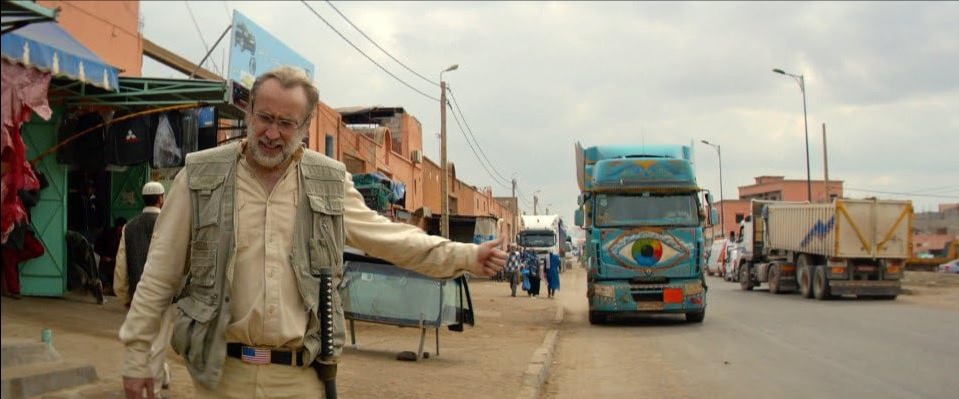
- There’s a symbol of a giant eyeball peppered throughout the film. Not sure if this is meant to represent the all watching eye of God or something else, but I noticed it on the truck that God is driving and it was in the taxicab that Gary takes. It also shows up as a video image in the airports. It’s like Gary is being watched very carefully wherever he goes.
- Fun to see Matthew Modine in this film playing Gary’s kidney doctor. He lends him money to buy the boat that he sails from San Diego. We haven’t seen Cage and Modine together on screen since they were both very young pups (1984) in Birdy. More than thirty years have passed in their acting careers.
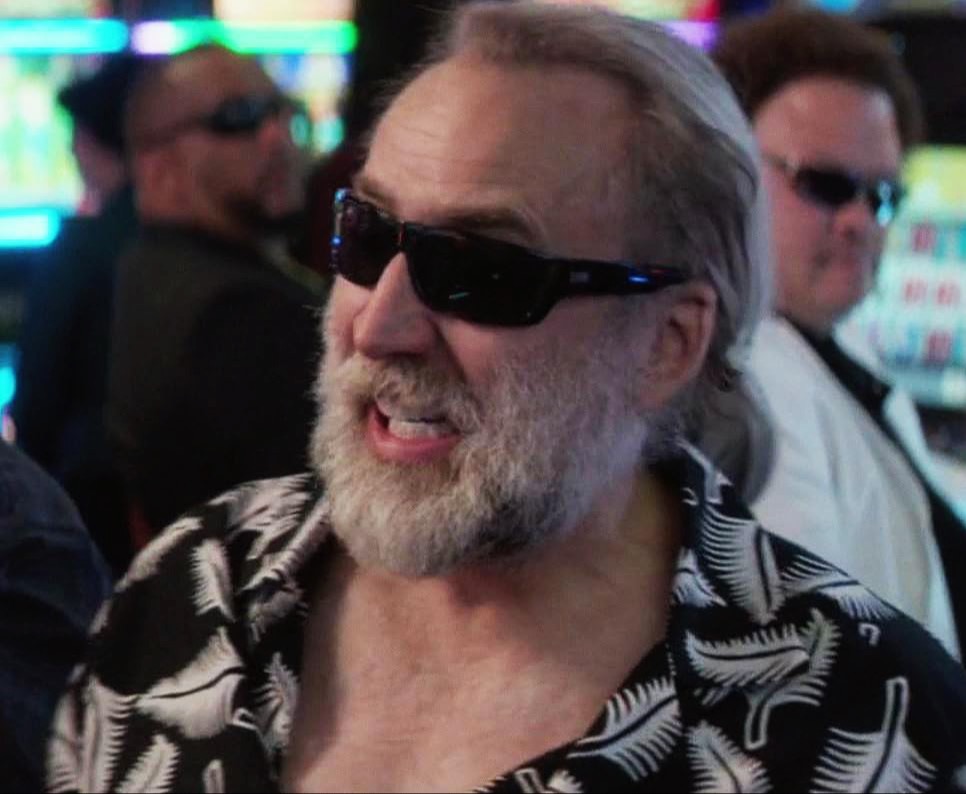
- In addition to his Urkel like whiney voice, Nicky also has this strange cross-bite thing going on with his teeth when he laughs. It also is kinda reminiscent of something Jim Carrey will do with his jaw (especially in Fire Marshall Bill character.) I’m not sure if the RL Gary did this with his jaw / bite, but I found it super weird and funny at the same time. Cage being Cage.


 yeti speak...
Leave a comment