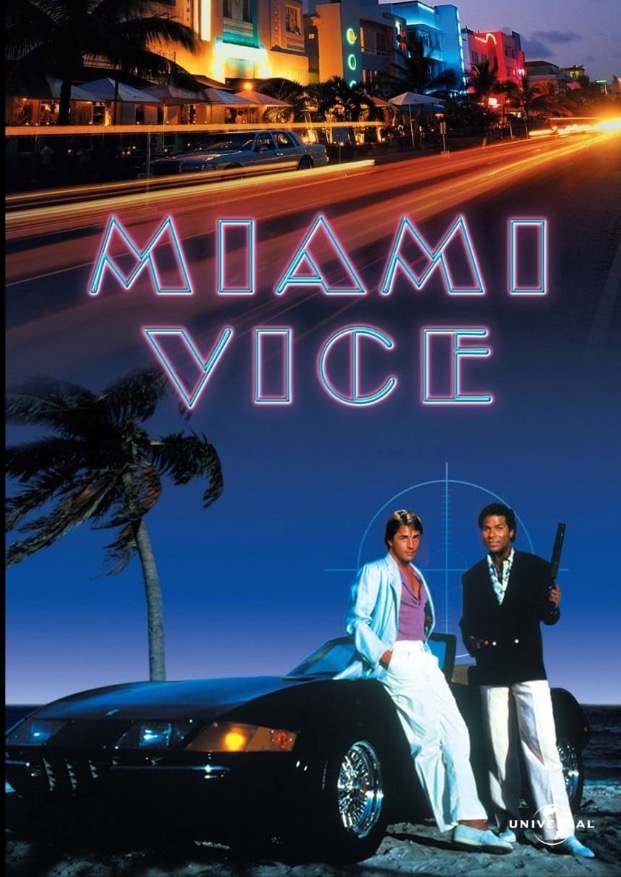
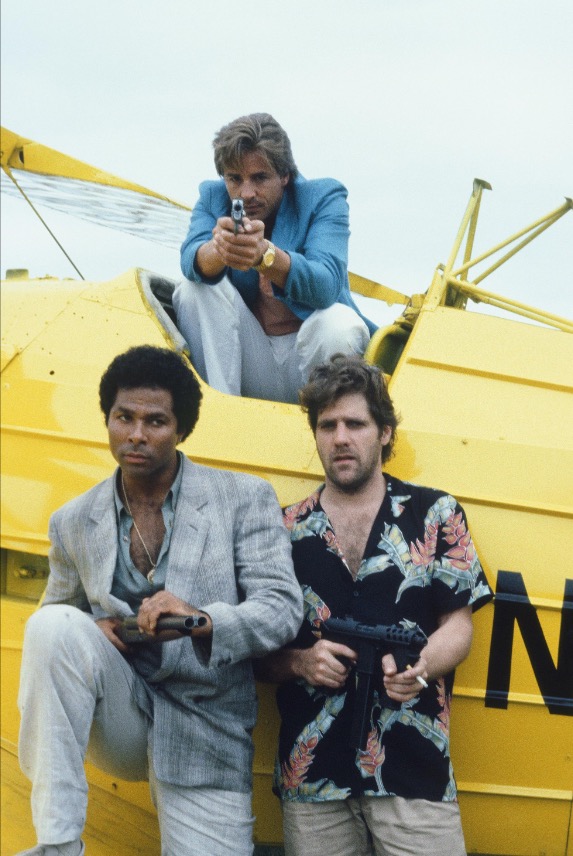
When I was a kid the show Miami Vice was pretty popular. I am not sure that I sat through very many episodes (or if my parents would even allow us to watch it) but I remember being very aware of detectives Crockett (Don Johnson) and Tubbs (Philip Michael Thomas) with their cool pastel colored suits, gelled hair, fancy sports cars, and pistols at the ready. What I was much less clear about at the time was what the “war on drugs” really was about and why Miami needed a “vice unit” to begin with. All I remember was the drug campains, “Say No to Drugs!”
It would be many years after the show was canceled before I ever experimented with “illegal drugs” and controlled substances, or understood how trafficking them across borders worked and lead to crime, violence, addiction, etc.
What would have been helpful for understanding the process behind how recreational drugs end up on the streets / nightclubs of Miami or Vancouver, B.C. is the plot of the latest movie on the WATC(H) #92 Running with the Devil (2019).

Obviously, there have been many other (and better?) films on drug-running, but this film is unique in the way that it actually tracks the end-to-end process for how cocaine is grown in South America, gets farmed, harvested, and processed; and then finally finds its way across borders coming north from Mexico all the way to Canada. The film is also a bit of an unintentional study in the illegal import / export business and how distribution costs ultimately get passed on to the customer. We’ll get there; don’t worry.
The World According to The Cook
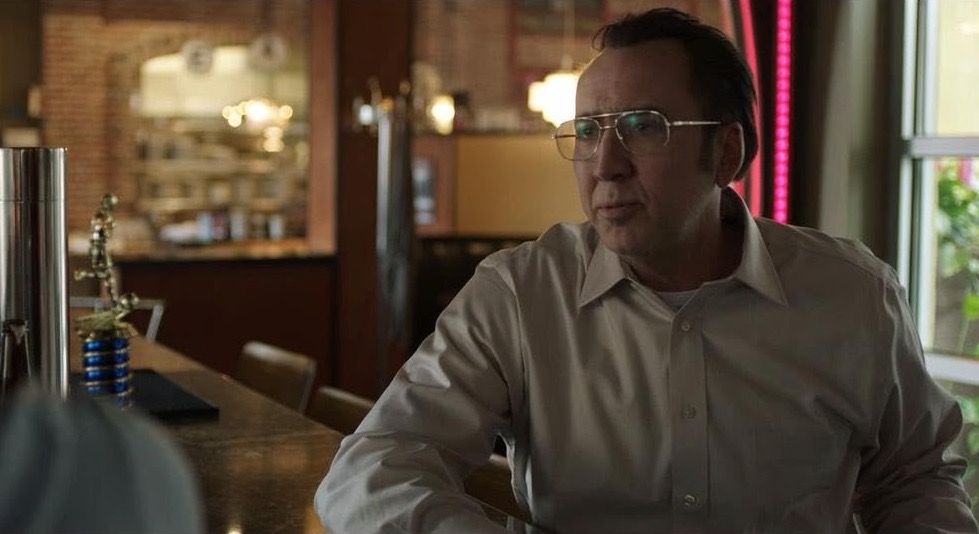
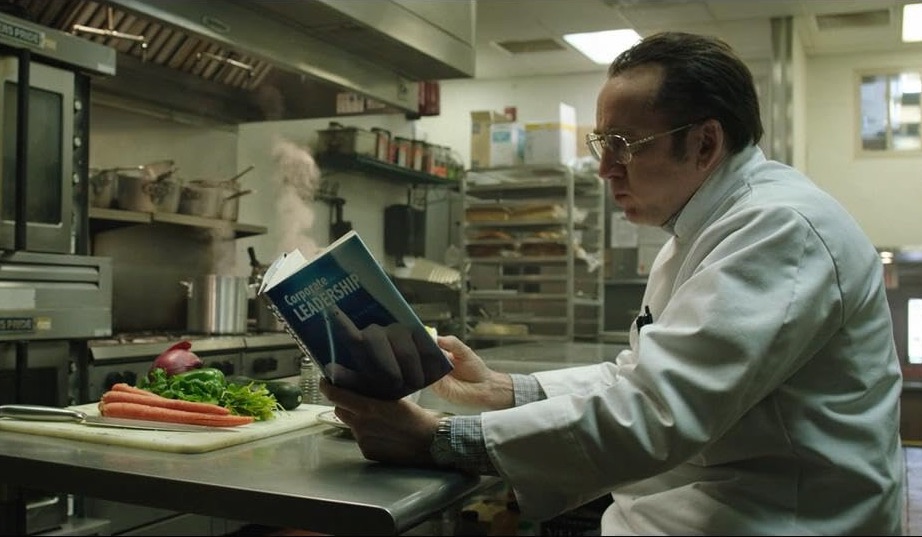
Each of the characters in Running With The Devil have a descriptor. Nicolas Cage’s character is called The Cook. He has this title because of his occupational role in the “drug running” operation he is a part of. His title is a little bit misleading because he is not the cook (like cooking meth) in the sense that he makes the drugs because he does not. Instead, he is the Cook because he owns a restaurant in Seattle and he also is operationally responsible for the success of the “meal” (or getting the drugs from the earth to the hands of the consumer). To be honest he’s all about quality control and execution, but let’s not ahead of ourselves.
The others characters that either had a part to play in running the drugs OR an adversarial role in trying to stop them from entering the hands of consumers are as follows: The Boss (Barry Pepper) is the boss of the North American distribution operation, working in close partnership with the Mexican cartel. The Boss tells The Cook what to do and oversees his work. He’s based in Vancouver.

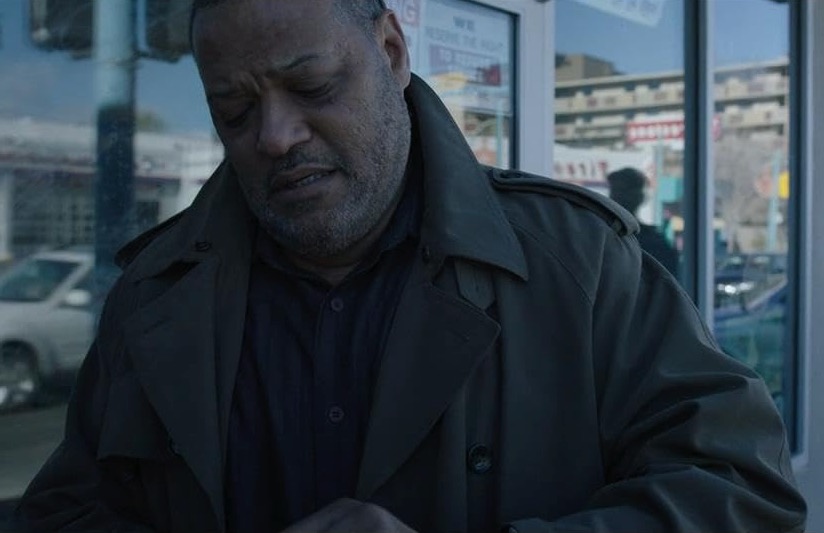
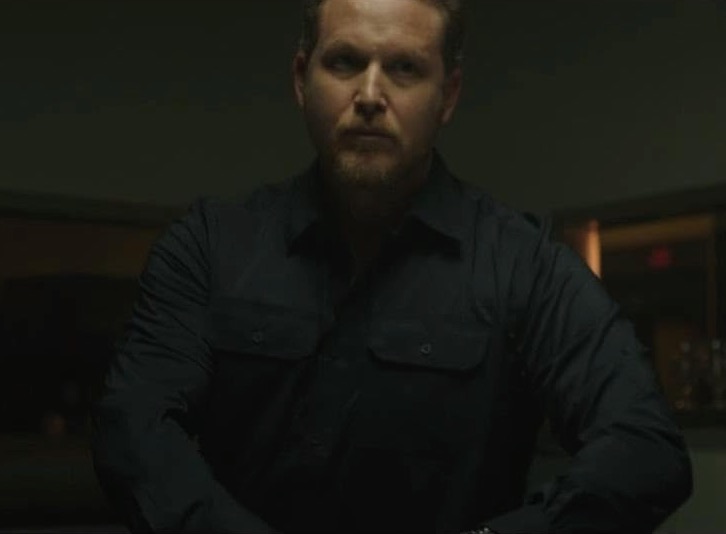
There’s The Man (Laurence Fishburne), again not a great name for what he does, but he is responsible for distribution of the product at the “street level”. He’s slightly below the Cook in the command chain. The Executioner (Cole Hauser) is the guy who works with The Cook as an equal to ensure that no parties skim / steal from the Cartel. He also dishes out punishment for infractions where needed and uses force to protect the supply chains.

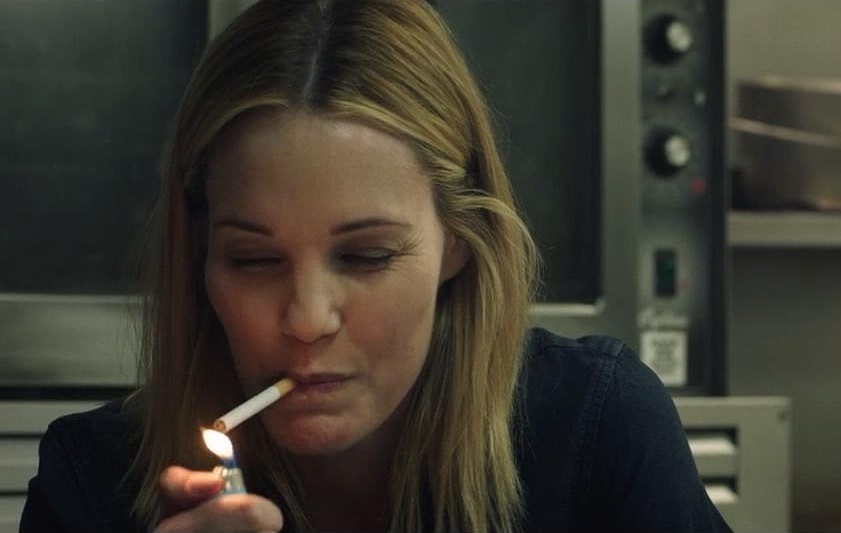
There’s the Agent in Charge (Leslie Bibb) a U.S. DEA agent who is committed to stopping the influx of illegal drugs into the country. She does surveillance work and then apprehends, and puts pressure on The Snitch (Adam Goldberg) who reports to The Man, in an effort to find and incriminate him and his superiors who are responsible for shipping cocaine into the U.S. and Canada.
There’s also a cast of named and unnamed characters like The Farmer, The Trucker, The Captain, The Pilot, and The Mule, The Parachuter who are responsible for all the steps and functional roles needed to grow and process and transport the cocaine so that it can travel by land, sea, and air across continents and borders. It’s a real farm to table operation, but not necessarily in a good way.
The Problems
The movie is really focused on two problems. The first problem is that there have been breakdowns in the supply chain. Product has been regularly hijacked somewhere along the way between Colombia and Canada. The loads are coming in “light” and with “impurities”. This is upsetting to Boss. When The Boss is unhappy who does he take it out on? The next person reporting to him. The Cook. So when The Cook gets the call that he needs to fix the problem, where does he go for answers? All the way down the chain which he must follow from its origins to each milestone along its destination: quality control 101.
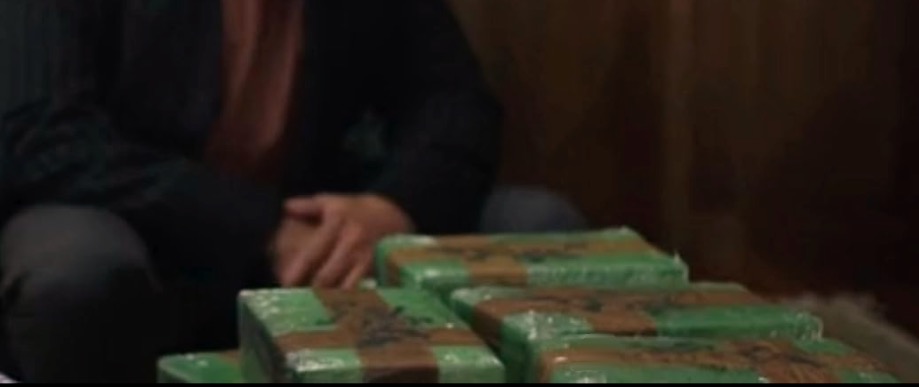
The second problem is that the product itself is starting to be dangerous (i.e. lethal) to the U.S. customers which raised the visibility of the issue to the drug enforcement agency. The Agent in Charge loses someone close to her from a drug overdose (her sister) and this has an unintended ripple effect. She becomes obsessed with unearthing and apprehending the criminals bringing it into the country. The cocaine that killed AiC’s sister had traces of fentanyl because The Man who was supplying it at street level was trying to dilute it so he could make more money off it it and feed his own addictions (get out from under his debt). Again, ripple effective, rippled effect.

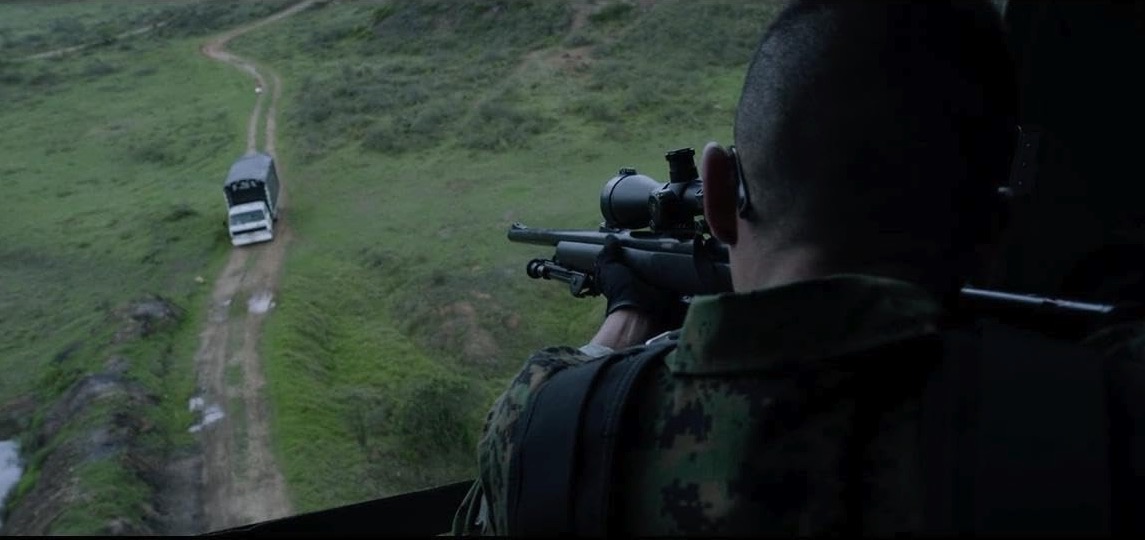
Probably the most interesting part of the film was watching how this drug supply chain thing works from the simple farmer (just trying to make money for his family) to the various carriers, to the corrupt policeman and border patrol who often are paid to turn a blind eye, to the military and policeman trying to stop the practice or profit it from it; to the two-bit low-life criminals who beg, barter, and steal it.
The Cook tends to stay above the fray for the most part, leaving these tasks to his worker bees, but in this film he has to get his hands dirty and follow the drugs as they move from point A to point B to point C.
Living By The Swords Means Dying By the Sword (Spoilers)
The film plot kind of takes three tracks. On one track, we follow the cocaine and see how the price of it increases with each step it takes in the trafficking process. We see this from the perspective of the various couriers and players involved.
- At the farm (where it’s grown, mixed, bundled) = $1600 / kilo
- At the first plant in Cartagena, Columbia (after getting hiked and delivered to a processing plant where it is powderized and boxed up. = $4K/ kilo
- At the Port of Veracruz (where it is loaded on a ship via bribes) = $8K / kilo
- At a Mexican city where it has been trucked = $10K / kilo
- At Tecate where it has been driven and bussed with mules = $14K / kilo
- In Death Valley where it has been parachuted in from a small plane = $20K / kilo
- Delivered to The Boss (where it has been hiked over the snowy Canadian border) = $34K / kilo
The second track, is the one that The Cook and The Executioner take to try and identify where the supply chain is breaking down. They follow up the first track from its start to its different stopping points and discover that some of the supply is being stolen by untrustworthy mules (stealing for personal use), some is nearly hijacked by bandits pretending to be policeman / military, and ultimately the supply is being diluted by unscrupulous employees (The Man) who are trying to make a little money on the side by cutting the cocaine with other substances.
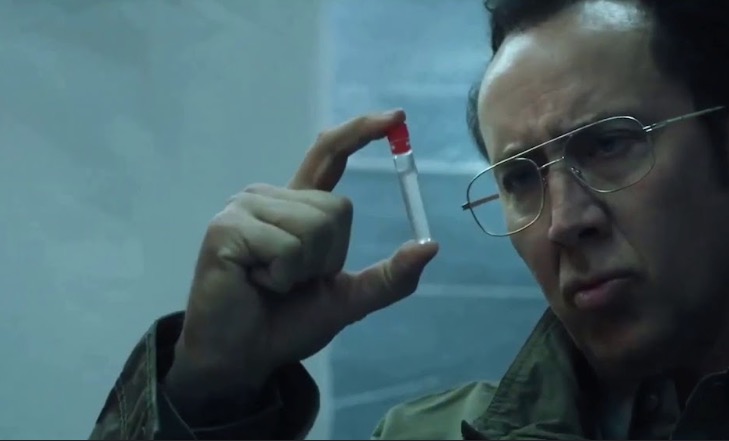
The punishment for all of these minor and major crimes against The Boss of course is death. They don’t call him the Executioner for nothing. The Cook is actually the one who tests the purity of the cocaine at each stop along the way to ensure that it hasn’t been contaminated with.
The third and final track is the backwards one. The Agent in Charge is tracing the supply chain backwards from the event, (her sister’s OD) to the product responsible (the bad coke), to the drug dealers who supplied it (The Man), to the mules and the cartel (The Boss). By discovering The Snitch, she makes the connection she needs and then learns about The Man and tries to set up The Cook as he is ushering the product up from the south. But The Cook (Nicky himself!) figures out what is happening and has to eliminate The Snitch and ultimately The Man for their parts in endangering the supply chain.
In the end, however, The Cook too finds himself at the short end of the stick. The Agent in Charge traces him back to his restaurant where she finds him alone in a kitchen. They have a conversation about how hard it is to stop the cartel and its activity since she lacks the proof she needs to convict him AND since its a systemic problem that won’t go away by cutting off the head of one or a few snakes.
Feeling confident that he is safe from justice, The Cook is surprised when the The Agent in Charge unceremoniously shoots him dead on the spot.
Live by the sword, die by the sword, I suppose. Down in Colombia, the Farmer and his family continue to grow their crops, signifying that the cycle continues on forever.
All Business
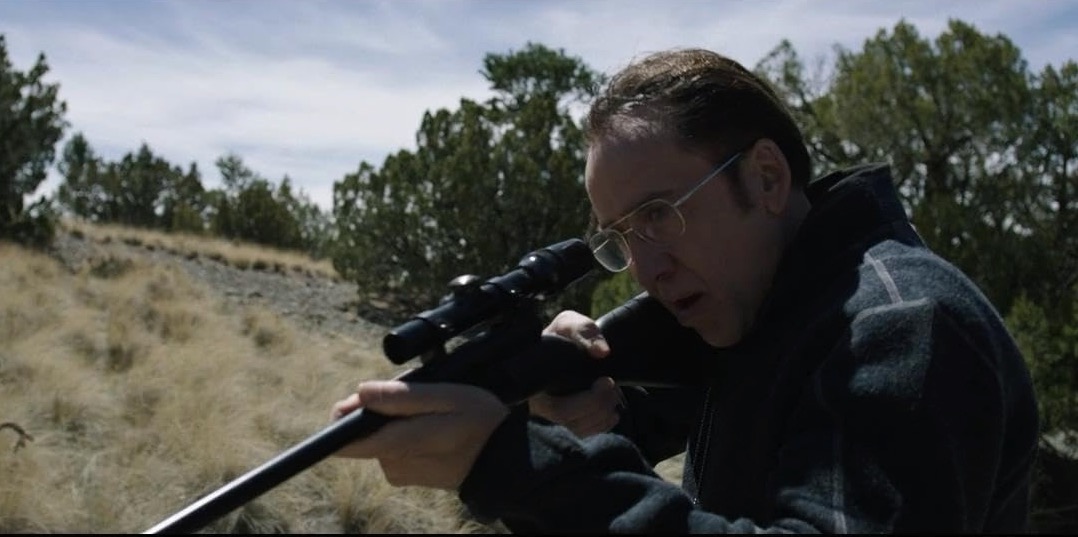
The Cook is another somewhat “straight up” character for Nicolas Cage as opposed to a Misfit Messiah or a Tragic Figure. He’s a flawed man who is propagating a destructive trade but he’s not a villain such as Eddie King (Arsenal), nor is he an unprincipled man like The Man who is not concerned with who he kills or betrays. The Cook lives by his moral code as ethically questionable and bankrupt as that code may be, but he also does so through blue collar values (trying to do his job well, trying to be accountable to the process, taking care of his wife and the community back home) which is contradictory in that his entire activity (and associated violence) is illegal and immoral. But he does try to live by his own moral code and when he is nearly killed by The Man (throwing him off a cliff) you find yourself rooting for his survival (sorta).
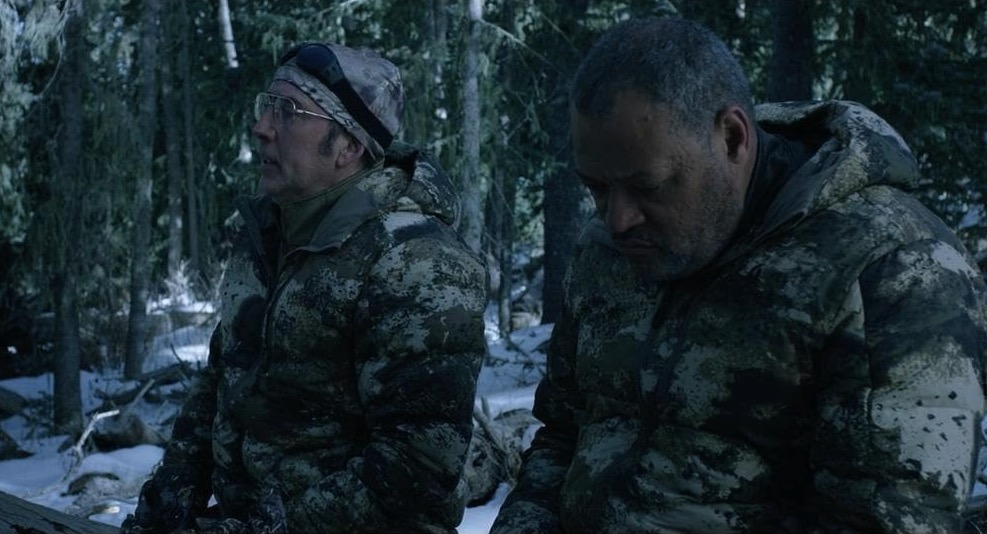
The film does a good job of showing the nihilistic destruction inherent in this drug trafficking cycle and stripping even the “upstanding” good-guy characters (like Agent in Charge) of their alleged moral high ground (i.e. she tortures The Snitch for information and ultimately kills The Cook as judge, jury, and executioner).
This seems to be the blurry lined business of drug trafficking and enforcement. The Cook’s words echo throughout, “Where does it end?” And the unvoiced answer is, “It really doesnt.”
First for Nicolas Cage as The Cook
- Working as a chef / cook
- Tossing the dough and preparing a pizza
- Working also as a chief operating officer or quality control technician for a drug cartel
- Dealing with burner phones
- Snowmobiling
- Falling off a cliff (as karma for throwing someone off a cliff, Vengeance: Love Story)
- On crutches
Recurrences
- In a film with Laurence Fishburne (The Cotton Club)
- Watching a human be burned alive (another: Mandy; himself: Between Worlds, The Wicker Man)
- Getting shot and killed at the end of a film (Multiple)
- Wearing a necklace (Between Worlds)
- Cleaning a fresh kill, i.e. rabbits, for food (Joe)
- Shaving (Multiple)
Quotable
“You guys know pizza parties are more fun than anything!”
“It’s a start.”
“It me. We got a problem.”
“Stay ahead of the energy curb.”
“Are you re-cutting and running a side business with my coke?”
“Where are you getting the fentanyl and the heroin?”
“Did you talk to the Feds?”
“You show up short and we’re both dead.”
“Where does it stop?”
“You have gambled. You have lost.”
“Please don’t smoke in my kitchen.”
“What’s that for? You gonna arrest me.”
Conclusion
The devil referenced in the title for Running with the Devil was the red stamp label on every kilo of cocaine that The Boss was running for the Mexican cartel. It was a calling card and a warning. Don’t mess with the devil’s product.
The title was also the acknowledgement that drug running is a non-stop cyclical death cycle that plays out again and again like bad karma or a straight-up hell. Right before the DEA agent shoots The Cook in his own kitchen, she describes the cycle this way, “It’s like one giant never ending self licking ice cream cone.” And she’s not wrong. Even though we all love a good ice cream, eating it over and over and over again–forever and ever in increasing quantities will kill ya in the end, just like all this cocaine on the streets is killing all the users, the runners, and those chasing them.
Where does it end?

 yeti speak...
Leave a comment