Well, as mentioned in the last post, this will be the second in Cage’s mini-streak of American Western films. I don’t know what inspired his interest in acting in Westerns all of sudden, after four decades and 100+ films in his career of not doing so, but it’s nice to see him in a completely different genre and setting.
The Old Way (2023) had more of the classical Wild West elements than Butcher’s Crossing. Such as high noon standoffs and gun slinging; U.S. Marshall’s chasing nefarious outlaws; even a little touch of the Little House on the Prairie family-friendly pioneering days, all of these familiar tropes set the stage for a slightly different story of revenge, violence and familial love.
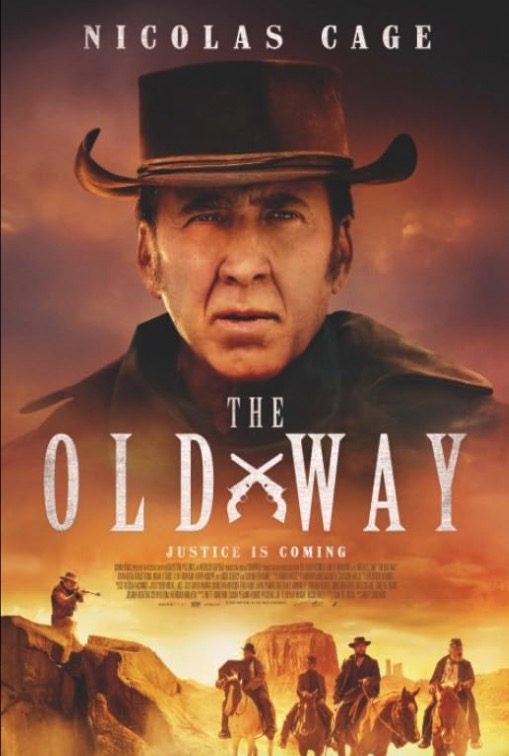
What made the film slightly interesting was that it posed the odd question:
Were the ruthless outlaws of the old West perhaps undiagnosed neuro-divergents, who had merely failed to learn the social skill of empathy?
Hmmm. Let’s consider.
The World According to Colton Briggs
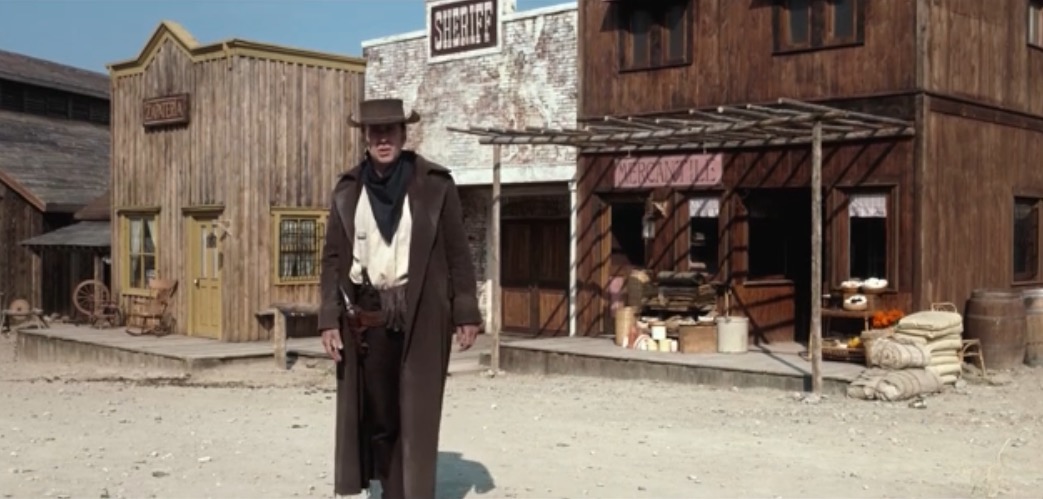
The setting (like I said) is the Old West and Colton Briggs (Nicolas Cage) is a tough gun-for-hire who witnesses a hanging in the town center at the Clark Mercantile and Trade. Briggs is there to witness and enforce the hanging of Robert McCallister. He’s meant to discourage any retaliation of interference from the McCallister brothers. Robert’s young son Jimmy watches the horrible events of the pronouncement of crime and hanging in tears as it unfolds, but before his father can be officially hanged a group of men start firing and killing those who were trying to hang him.
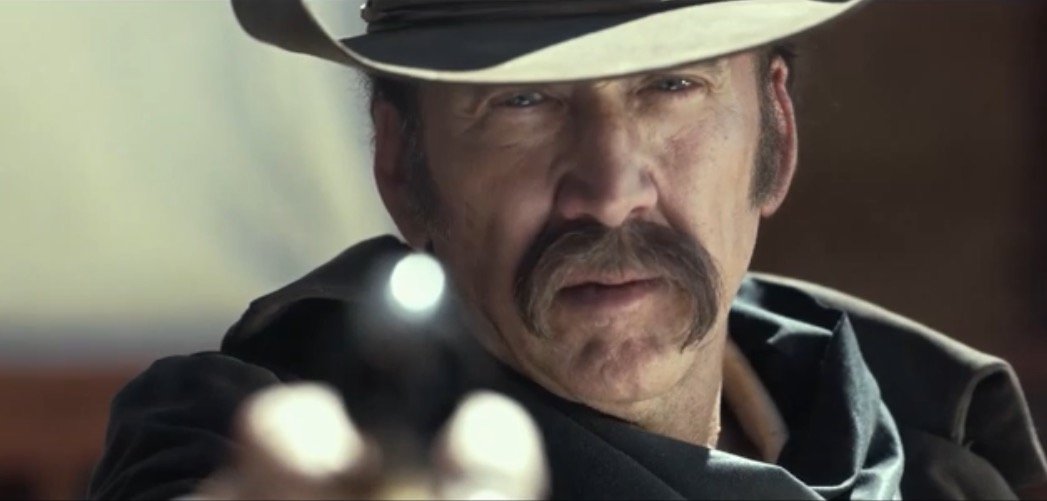
Briggs watches on nonplussed, as the gunfight wipes out most of the onlookers, until he himself becomes threatened. Then he kills the men who started the violence one by one with his pistol. Robert gets cut down from the gallows. When the owner of the mercantile, who sponsored the hanging and hired Briggs, dies of gunshot wounds, Briggs takes the money from mercantile owner’s suit coat and tells him that he “owes him more”. Briggs heads into the Mercantile and retrieves more of the cash for his payment (even though he hasn’t technically stopped the incursion or enforced the hanging).
When Briggs attempts to leave the scene, a vengeful Robert McCallister pulls a shotgun on Briggs when his back is turned. He is angry that Briggs killed his brother in the melee. Briggs quickly turns and shoots Robert down DEAD as Jimmy looks on in horror. Briggs then points his gun at the boy but decides to spare his life (which ends up being a merciful, but very bad move.)
Fast forward 20 years and Briggs is a reformed and clean-shaven man. He lives with his wife Ruth Briggs (Kerry Knuppe), whom he loves dearly, and his 12 year old daughter, Brooke Briggs (Ryan Kiera Armstrong), whom he tolerates. Briggs runs a mercantile business of his own in the small Western town. Briggs is a very stoic man and seems uncomfortable in his role as a father, but seems entirely smitten by his wife. He begrudgingly agrees to walk his daughter Brooke to school at the request of Ruth, who stays home to tend the house and hang the laundry out to dry.
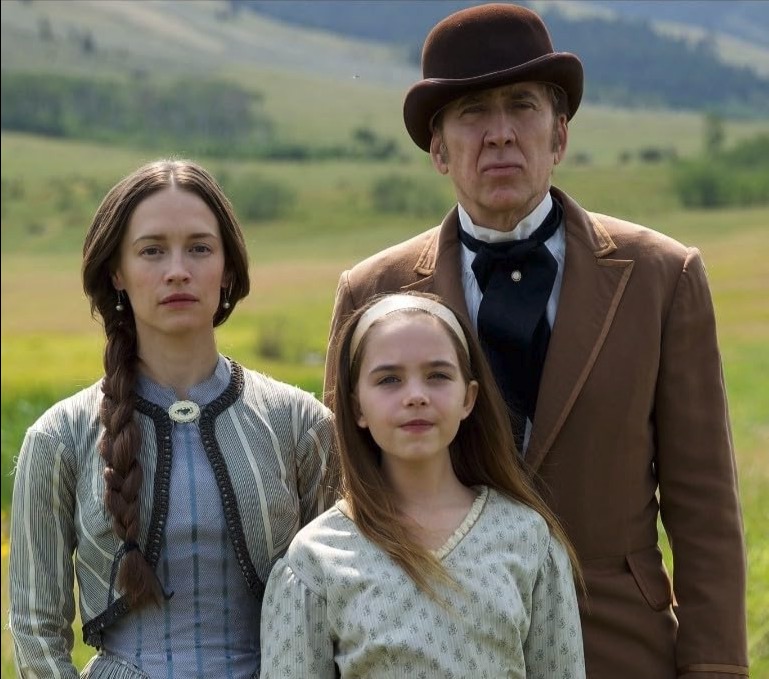
When Brooke and Colton arrive at the schoolhouse they find that class has been canceled for the day, but instead of walking Brooke back to their home, Colton makes her join him at the mercantile store which he insists (OCD much) needs to open on time.
Back at his home, Ruth is confronted by an uninvited guest, James McAllister (Noah Le Gros) (uh-oh it’s Jimmy all growed up) and his sketchy band of outlaws Boots (Shiloh Fernandez), Big Mike (Abraham Benrubi), and Eustace (Clint Howard).
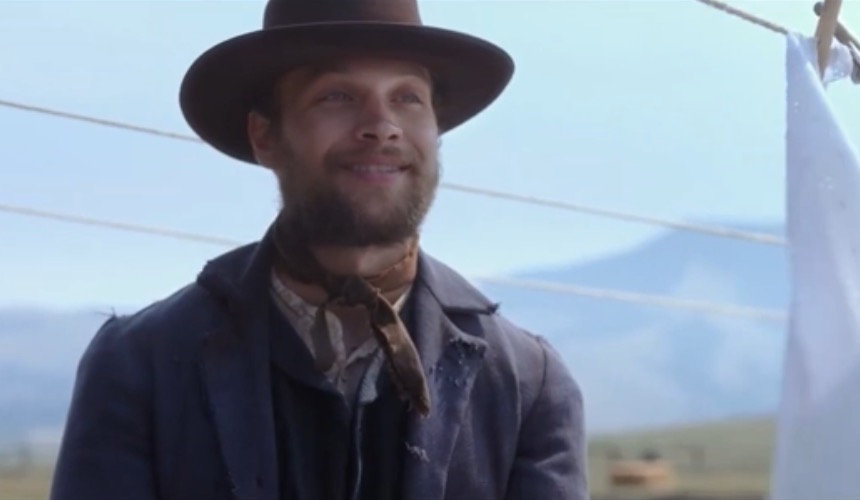
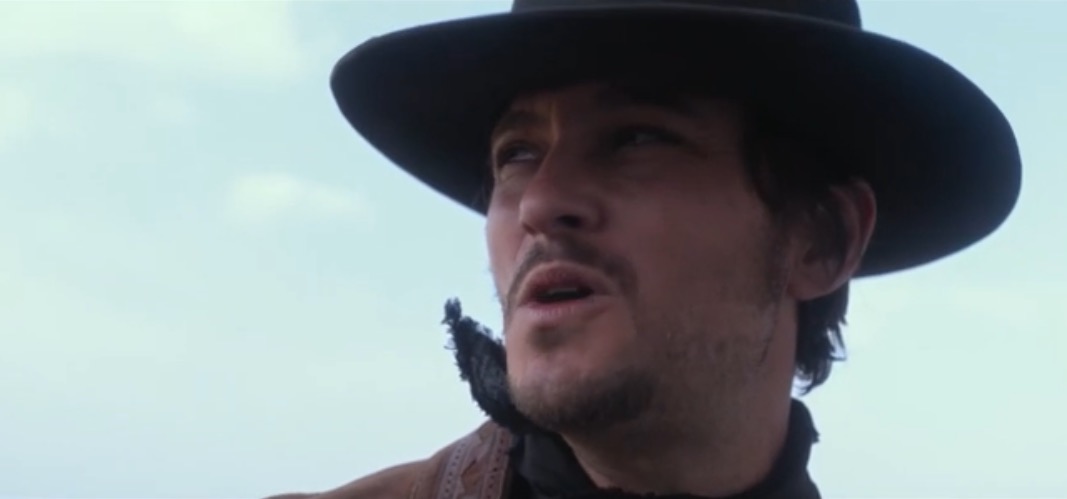
The outlaws claim to be looking for the closest town, but are much more interested in the whereabouts of Ruth’s husband. Ruth, wise to their suspicious behavior, tries to escape the gang on horseback, but James shoots the horse beneath her, injuring her, and bringing her back into the barn where they ask again about Colton.
When Colton and Brooke return home in the evening, they find a group of U.S. Marshalls lead by Marshal Franklin Jarrett (Nick Searcy) eating dinner and occupying their home. Apologetic, Marshal Jarrett explains to Colton that they thought the place was deserted, and they have some bad news about Colton’s wife.
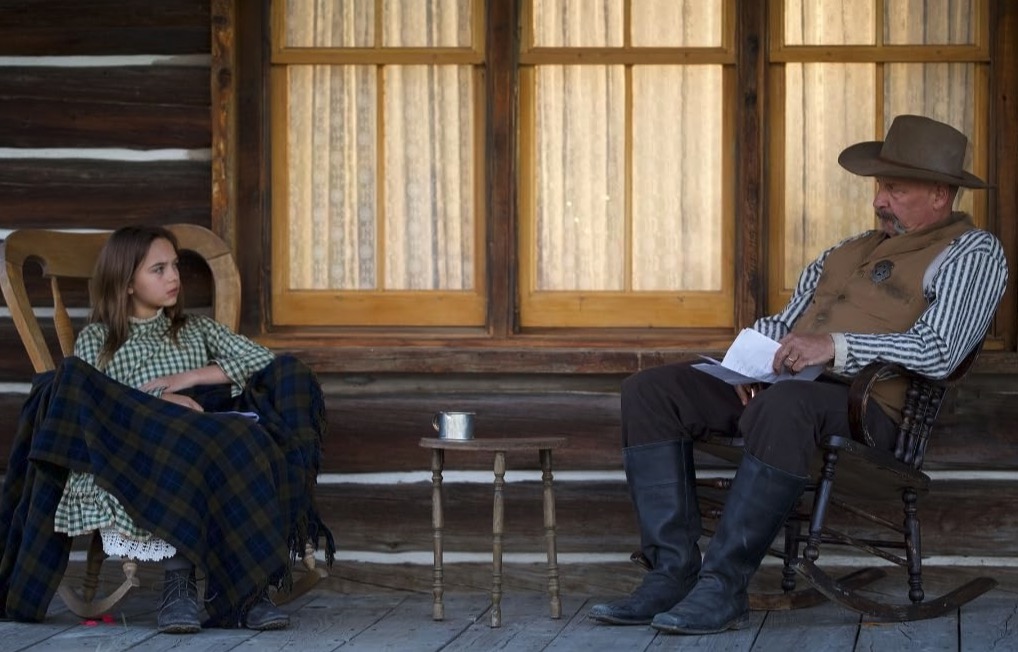
Devastated when he discover his wife has been murdered, Colton spends some hours digging a grave for his wife. Jarrett tries to console Brooke about her mother’s passing. Brooke seems somewhat unaffected by the loss, but is pretty curious about her father, and how Jarrett seems to know of him. Jarrett explains that Colton was once a very bad, dangerous man, but that Brooke’s mother had made him a good man–that she had changed him. This confuses Brooke. Will he be a good man or a bad man now?
Jarrett persuades Colton to forego seeking revenge on McCallister and his men, but to instead let the U.S. Marshalls do their job and bring the men to justice. Jarrett reminds Colton that he has a daughter and that “as long as she is alive, there’s no room for vengeance” in his life. Jarrett tells Briggs it’s his job to leave the past in the past and provide a life and take care of his daughter. Colton seems unwilling to assent to this especially after he sees her bloodstained palm markings on his horse’s saddle and a bloody message “I OWE YOU MORE” on the wall of his barn
He recovers his hidden, long unused guns. Uh-oh.

Colton seems incapable of having empathy for his daughter and thinks about killing her in her sleep so that he can go after his wife’s murderer without having the burden of a daughter to take care of–but she wakes and he decides instead to bring her with him. They leave then and there and Colton burns down his house on the way out of town. He begins to track McCallister and hopes to ride him down after a few days.
Over the course of a few scenes Briggs chases after the men as do the Jarrett’s crew. Jarrett starts to wonder why Brooke was so dispassionate about her mother’s passing and simultaneously Colton discovers that Brooke doesn’t feel or express (or interpret emotions) the same way as other people. Neurodivergent? He has no language for this behavior, but he tells her that she needs to try to emulate others’ emotions if she is interested in making it in the world (since he has some experience with this himself).
The big reveal or hint here (which I’ve already spoiled) is that Brooke is most likely neurodivergent and living life somewhere on the autism spectrum as is Colton which is why he seems so stoic and detached.
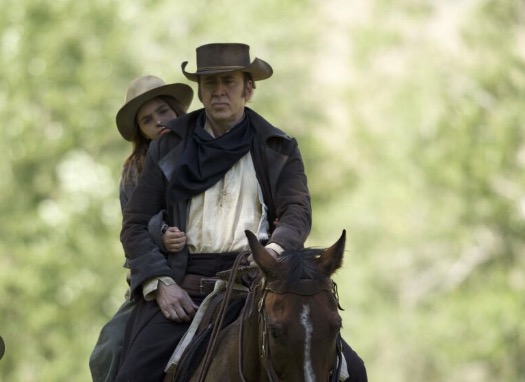
There’s a bunch of shoot-outs where the marshalls run into the outlaws and then run into Briggs. Briggs pressures Jarrett to reveal where the outlaws are headed through threat of torture (and he also helps remove some of the bullets they took in a previous gunfight.) It’s the “stick” as bluff, before giving a carrot.
And eventually Colton chases McCallister and his gang to a town on the Mexican border called Santa Rosa. He sends Brooke into the town first to scout it out, but she gets caught by Jimmy and questioned. Jimmy reveals to her why he has been hunting her father all this time, and tells her that he is also Colton’s “son” in a sense–in that he was orphaned by Colton and is owed a debt for all that he lost when Colton killed his father.
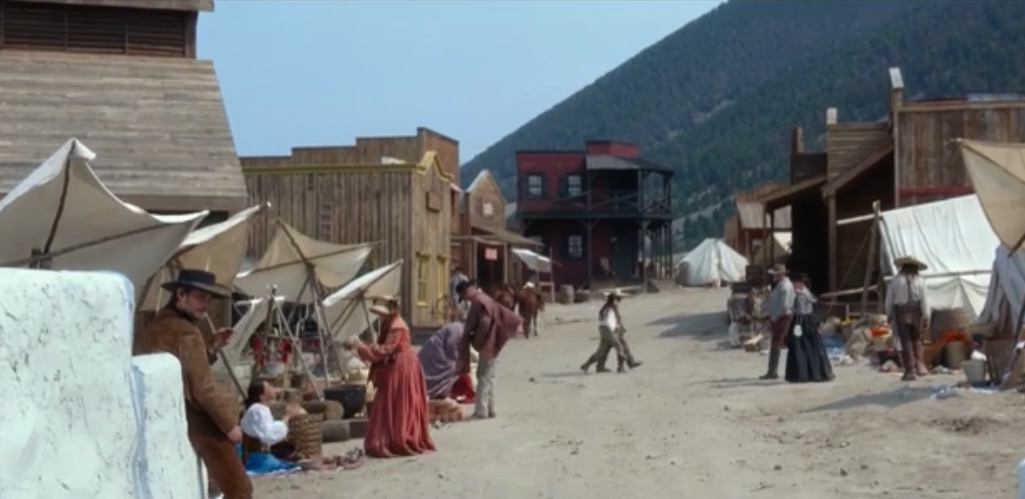
He tells her that in some bizarre sense they both are the “fruits of their father’s labors”. Jimmy thinks that Colton left a tiny little piece of himself inside of him when he killed his father. It’s weird, warped stuff that I guess happens in the formative years.
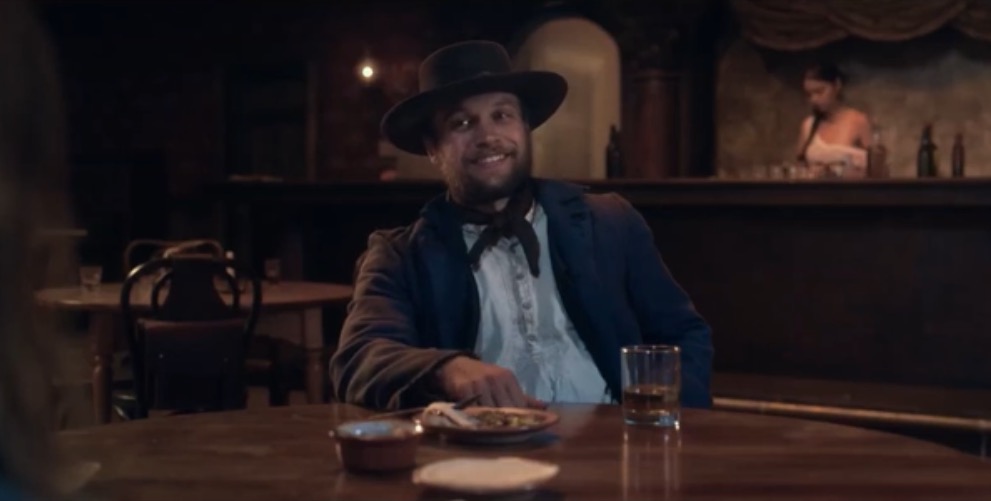
Eventually Colton, suspecting something has gone awry when Brooke doesn’t return, rides into town and starts shooting up the joint. Eventually he has a showdown with McCallister and he is presented with a tough choice. Brooke is held at gunpoint by Eustace. Jimmy says either Briggs can watch his daughter die and kill him, OR Jimmy will kill Colton in front of his daughter as Colton did with his father. Everything comes full circle in this choice. Colton chooses a different route and kills Eustace instead of Jimmy, but gets shot by Jimmy in front of his daughter. So he kind of took the middle path, but still gets shot in front of his daughter.
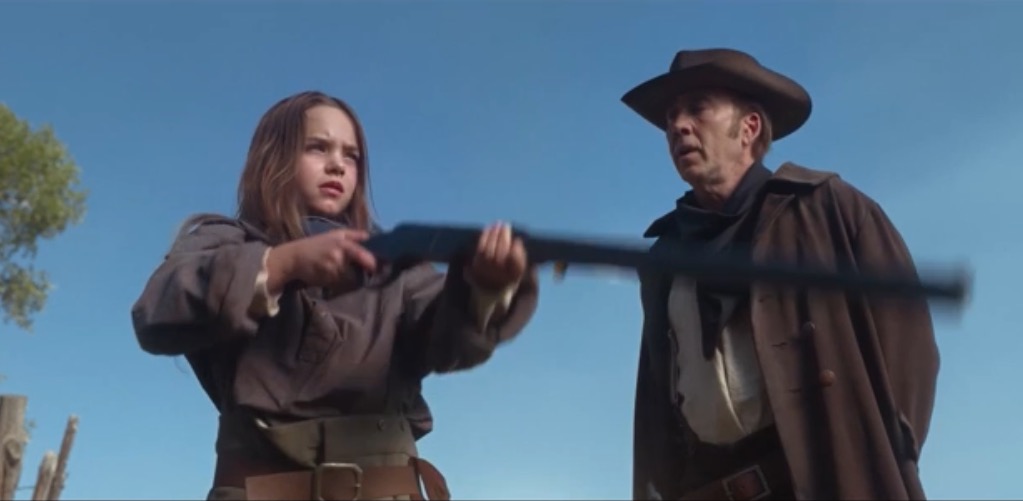
What Jimmy was not expecting was that Brooke knew how to operate a firearm (because of lessons from Colton). Brooke guns down Jimmy and rushes to her father’s side. Brooke finally cries real tears as Colton says his final words to her and dies from his gunshot wounds. Brooke is let go by Jarrett to return to her town and her father’s mercantile, and she leaves town with the pile of cash that she saw McCallister hide from the rest of his gang.
Neurodivergence
I don’t know a lot about neurodivergence, really just a little bit about the autism spectrum, but there were clues all along that Brooke (as a proxy of Colton) interprets and relates to the world quite differently. Here’s some of the things I noticed.
- Brooke sorts all the jellybeans by color at the Mercantile. They originally are in one big container and she doesn’t like this so she sorts them all methodically into individual containers by color.
- Brooke sorts these jellybeans after a man with dirty hands tosses some back into the mixed bin. She wears gloves and carefully spills them out and cleans each one with a cloth.
- Colton seems pretty stoic throughout and seems like he gets quickly angry over minor annoyances. I don’t know if this emotional regulation is part of neurodivergence, but it seemed to play into how he treated his daughter.
- Brooke seems pretty stoic / robotic, she doesn’t know how to cry. In a somewhat funny scene she tries to pretend to cry and she is not good at it at all.
- Colton is very compulsive about keeping time (not being late) and following his patterns.
- Rule followers – Brooke doesn’t want to walk home alone and catches Mr.Jeffers stealing jellybeans.
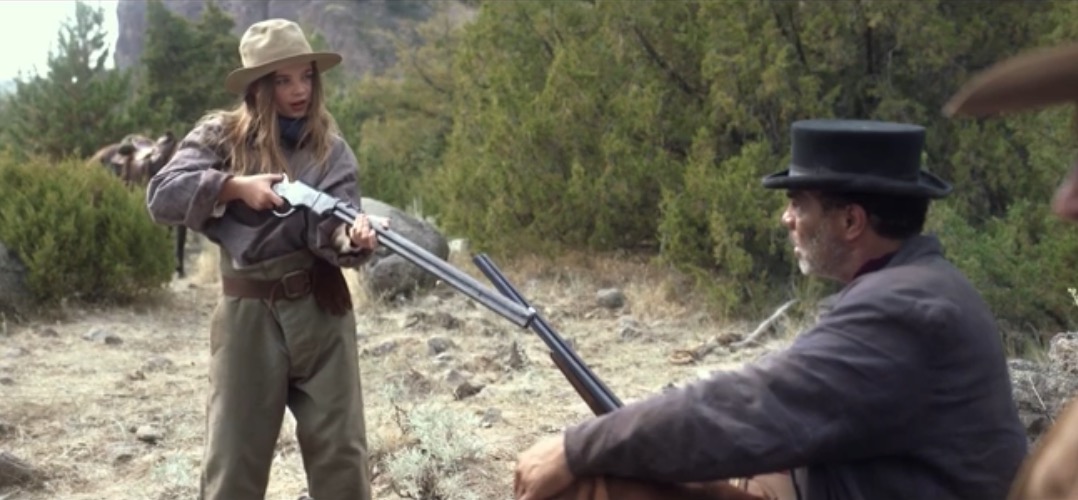
- Brooke is impervious to fear and other people pain as evidence in how she “man-handled” one of the tough marshalls who wouldn’t stand down when she had him in her sights.
- Colton didn’t face much fear in his early life and could look danger in the eye. He said that the first time he felt fear was when he saw his wife. And it was fear of losing her or being rejected by her which opened his heart as love.
A Few Other Random Notes
- Franklin Jarrett is the unsung hero of this film. He’s a good dude and tries to do right for Brooke and Colton.
- Nicolas Cage is a good actor. This role was not the spastic, fit-throwing, angry, unhinged character that we all know and love. If anything, he was similar to the mute Janitor in Willy’s Wonderland. But he also was not the same kind of neurodivergent as the OCD con man in Matchstick Men. The guy’s got mad range and know how to fit the character he is portraying.
- This is the second film co-starring Noah Le Gros (A Score to Settle). Contrary to Cage, Le Gros (IMHO) is a bad actor. He just feels flat to me and not all that compelling.
- Unlike some revenge Westerns, The Old Way had some nice bits of deadpan and unexpected humor peppered throughout this film. The line where Brooke says, “Cries pretty good. I’m gonna do it like him next time.” That made me chuckle.
Firsts for Nicolas Cage as Colton Briggs
- Sporting a handlebar mustache
- Wearing a kravat
- Labeled “the meanest son of a bitch I ever met” by a lawman
- Filling up his canteen in a creek
- Cauterizing a wound
- Using a gravestone marker for firewood
Recurrences
- In a classic American Western style film (Butcher’s Crossing)
- Setting fire to a wooden Old West home (Butcher’s Crossing)
- Appearing in a film with Noah Le Gros (A Score to Settle)
- Getting shot to death at the end of the film (Multiple)
- Digging a grave for a loved one (Time to Kill)
- Appearing in a film where he is avenging the loss of a loved one (Multiple, so, so many)
- Teaching a young person how to shoot / use weapons (Outcast, The Sorcerer’s Apprentice, Bangkok Dangerous, Kick Ass, Jiu Jitsu)
Quotables
“You owe me more.”
“Paid in full.”
“I reckon I’d enjoy watching you do other things. Not just things for me.”
“Sit there and finish your studies.”
“I said plenty of words, none of ‘em helped.”
“BECAUSE WE’RE NOT GOING BACK!”
“I heard gunshots coming from across the canyon.”
“Gunshots may have a way of speeding some folks up, but they have a nasty habit of slowing others down.”
“WAAAH. WAAAH. My baby, my baby.”
“I will kill you before you even see me. Do you understand?”
“I’ll leave your horse tied up in Santa Rosa. I’m no horse thief.”
“Nothing belongs to the dead, because the dead don’t need anything.”
“The dead have already been tended to.”
“My entire life. Even as a boy I knew. I knew I was different.”
“My mother always said I didn’t cry as a baby. I didn’t laugh.”
“It was as if I’d been born…dead inside.”
Conclusion
When you are finally coming into the home stretch on 110 films, it’s difficult to think of what to say next that you haven’t already said. I don’t have too much to say about The Old Way.
I’d probably watch it before I’d watch Butcher’s Crossing again, so it’s the better of the two Westerns. Is it in my top 20? Probably not? Is it in my bottom 20? Definitely not. So I guess it’s pretty upper-middle in the rankings.
The story was pretty standard fare for an American Western cowboy and Indian flick, other than the neurodivergent angle,(the possibly autistic) dark hero (and heroine) of the film. I like Cowboy Cage. If he keeps making westerns I’m probably going to watch them. But for now, it looks like we’ve got some more horror / comedies in our immediate future.

 yeti speak...
Leave a comment