The devil is in the details they say.
Sometimes the devil is in the details that are freely given, and other times he is in the details that are purposely left out. These are the sins of commission and omission.
In Sympathy for the Devil (2023) Nicolas Cage’s character leads us along a tense path of identity. He paints himself in a certain light, and makes us believe a set of assumptions about the story and its character. Then he pulls the rug on us and makes us believe something else entirely. Protagonist, antagonist, what we’re talking about here is the Prince of Darkness and Author of Deceit.

Who can you trust?
Read the summary (or skip the spoilers and move on to the next section)
The World According to the Passenger
The film begins with a man named David (Joel Kinnaman) who is heading to the hospital for the birth of his second child.
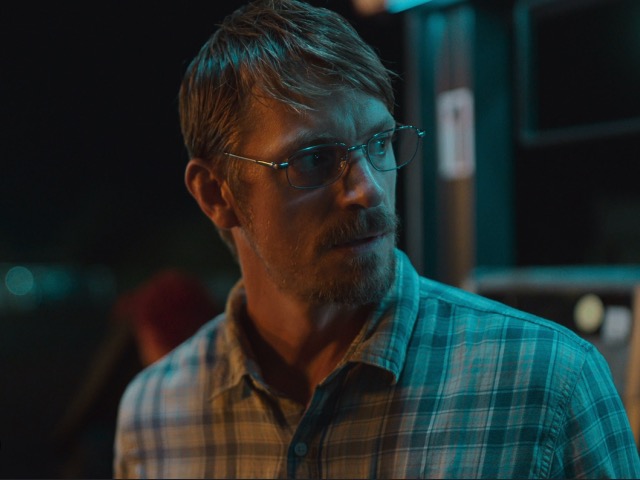
(Incidentally, aside: my favorite Joel Kinnaman series was season 1 of Altered Carbon. Great futuristic sci-fi and he was almost unrecognizable in this film because he isn’t ripped.)
Paul is a bit anxious about childbirth, because his wife lost a baby once due to complications. David drops his older son off with his mother-in-law and then heads to the hospital. He speaks with his wife on the phone while en route as her contractions are increasing and intensifying.
When David finally arrives at the hospital, before he can enter, he is carjacked at gunpoint in the hospital parking lot. (Ruh-roh.) The carjacker is an unnamed and erratic man with spiky, red, dyed hair. Since we don’t know his name just yet, we’ll call him the Passenger (Nicolas Cage) for now. He is decked out in a gaudy sequined suit and demands that David just drive. Terrified, David bargains with the Passent and tells him that he is not an Uber. In a thick Boston accent, the Passenger demands that David drive him out of the garage and towards the Vegas strip.
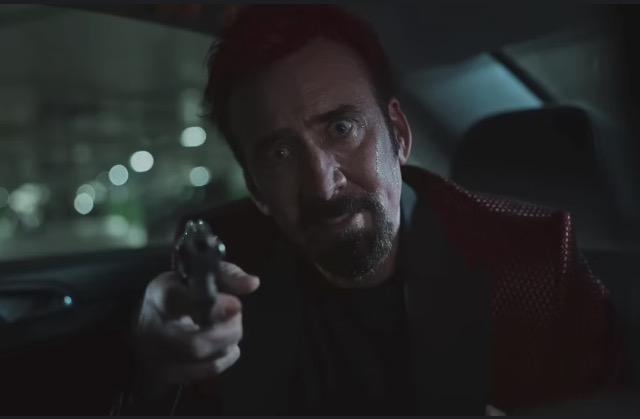
David pleads with the Passenger to let him go and tries to persuade him that he is a family man, but the Passenger isn’t sympathetic to his situation and tells him to pull over at a gas station so they can gas up for a longer trip. The Passenger warns him about his speeding and doing anything to try and “get away” from. He warns him that to cross him will endanger his family.
Back on the road the Passenger quizzes David about where he is from and asks him if he’s ever been to Boston. David says he has been there one time, a long time ago. The Passenger tells David that he reminds him of a guy he used to know in Boston who would drink a bottle of Glenlivet every night before going to bed. David tells him, “I don’t drink,” and that he hasn’t had a drink in years.
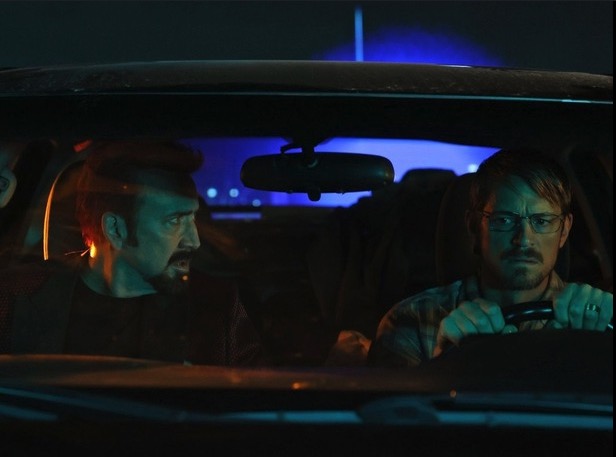
The Passenger doesn’t seem to believe that David has been to Boston only once nor that he stopped drinking 15 years before (as he claims). The Passenger says it’s funny that David would make “an error like that, this early in the evening, that’s really not like you,” in a knowing way. The Passenger tells David the trip won’t take more than an hour and that they are going to Boulder City to the hospital there so that he can visit his dying mother.
David purposefully gets the attention of a cop by speeding and this irritates the Passenger when the policeman pulls them over. The Passenger ends up getting hostile with the policeman and shoots him multiple times killing him. Horrified, David argues how this could have likely destroyed the policeman’s family which especially triggers the Passenger. David refuses to keep driving until the Passenger fires another round in the car which deafens David temporarily.
David asks the Passenger why he is doing this to him. The Passenger says it’s too early to tell him now, that it will ruin the surprise. The Passenger asks him to pull over at the next exit because he is “famished”. Instead David decides to bail out of the speeding car, injuring his arm and the Passenger’s nose.
David hides in a ditch but the Passenger answers David’s phone and pretends that he is a worker in the pharmacy at the hospital. He speaks with David’s wife and asks what room number she is in and then says a bunch of crazy things to her. David crawls out of the ditch and then the Passenger punches him in the face. He tells him never to do it again.
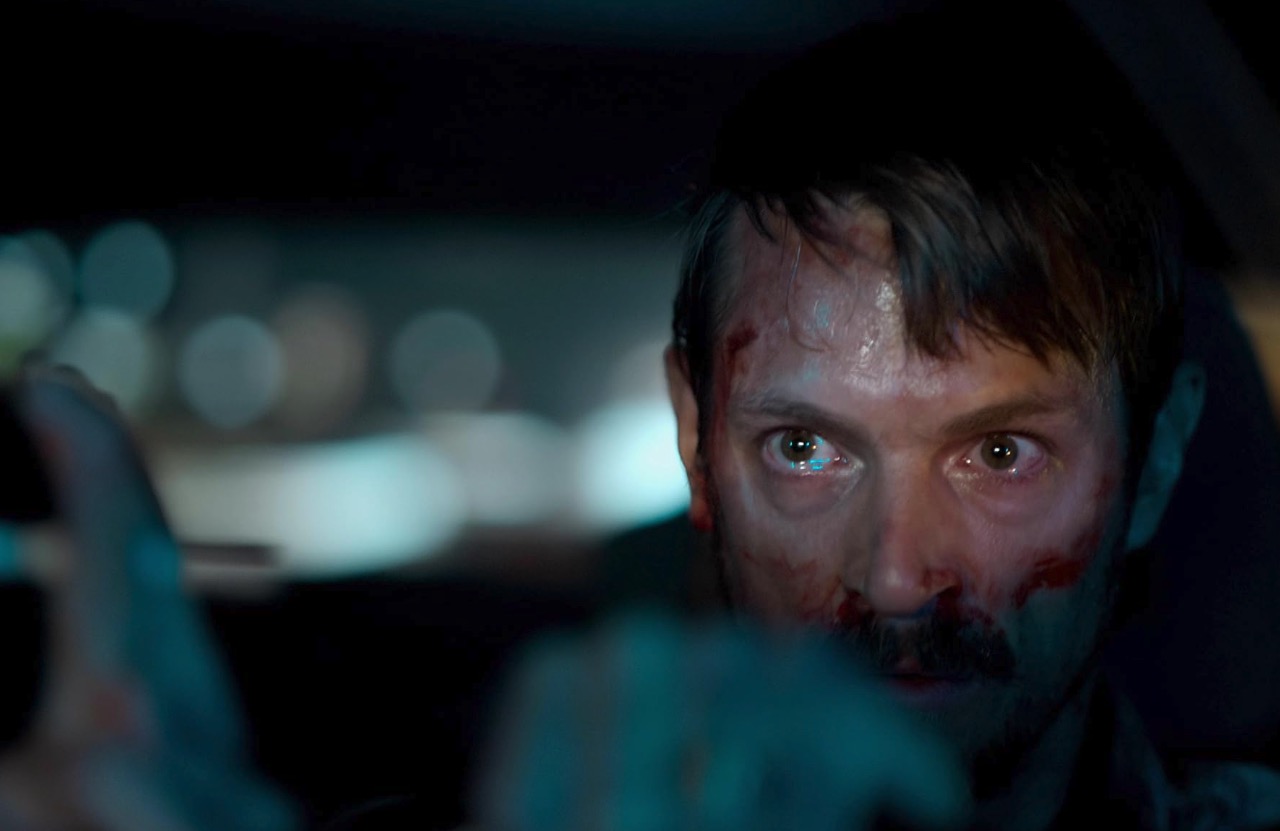
They eventually stop at Road House diner and all night greasy spoon.
At the restaurant, the Passenger explains to David that the real reason he is here is because there is a certain man, a very important man awaiting their arrival. His associates did research on David and wanted to get him to Boston. The plan was to drive him out, but this “Mick” decided to fly a plane to Boulder City and the Passenger is bringing David to this man.
Then he goes on to tell him a story of a bookkeeper from Brooklyn living in south Boston. The bookkeeper was working for a hard-drinking “Mick Catholic named Jacob Sullivan”. So the bookkeeper meets a nice Bostonian gal, falls in love, gets married, has a baby girl. The bookkeeper is doing the books for one of Sullivan’s associates. But one of his associates gets too smart and starts skimming money on the side. When Jacob finds out he tells the bookkeeper to invite the associate over since the two of them were good friends. So the bookkeeper and the associate get together and have some drinks (while the daughter and bookkeeper’s wife are visiting her mother) and the associate gets a bit sloshed. Then Jacob’s men show up and shoot the associate in the back of the head. Then the Passenger says the same thing will happen to David when they reach Boulder City.
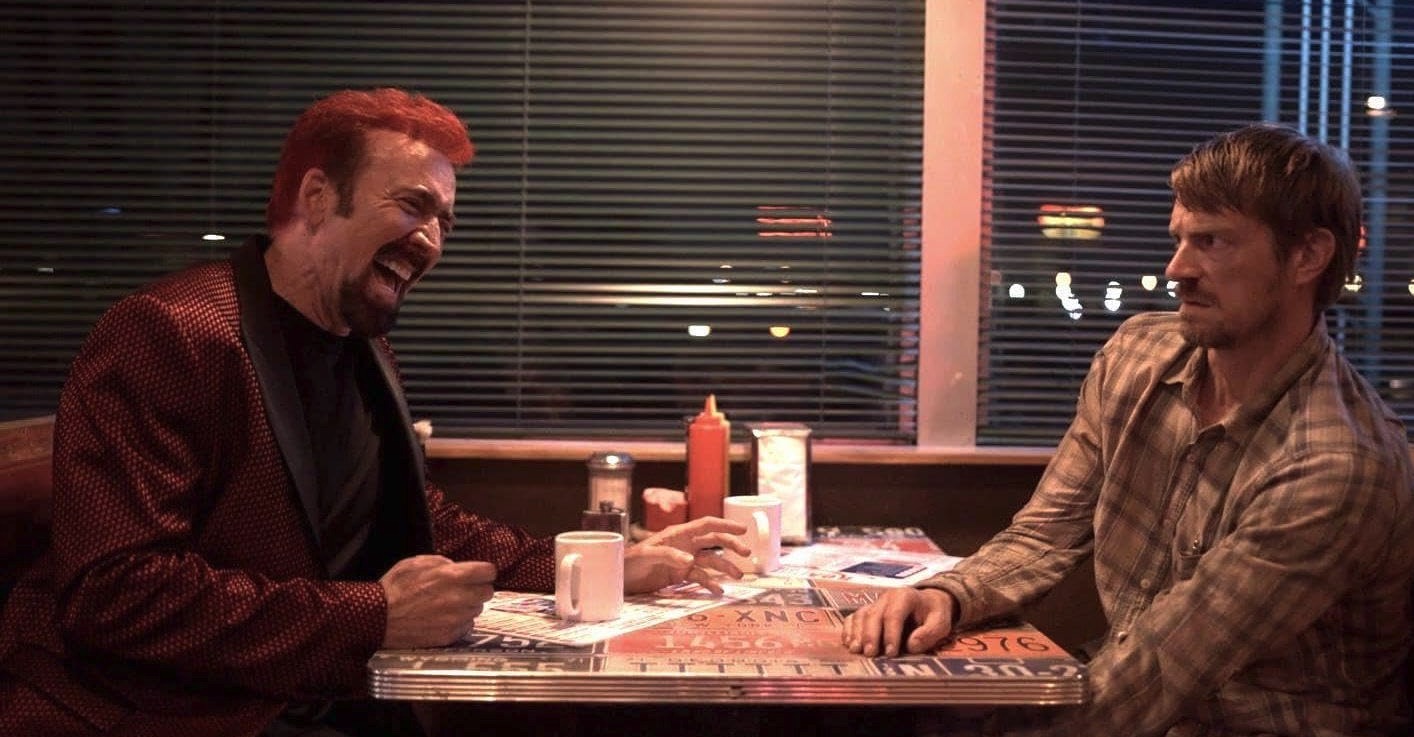
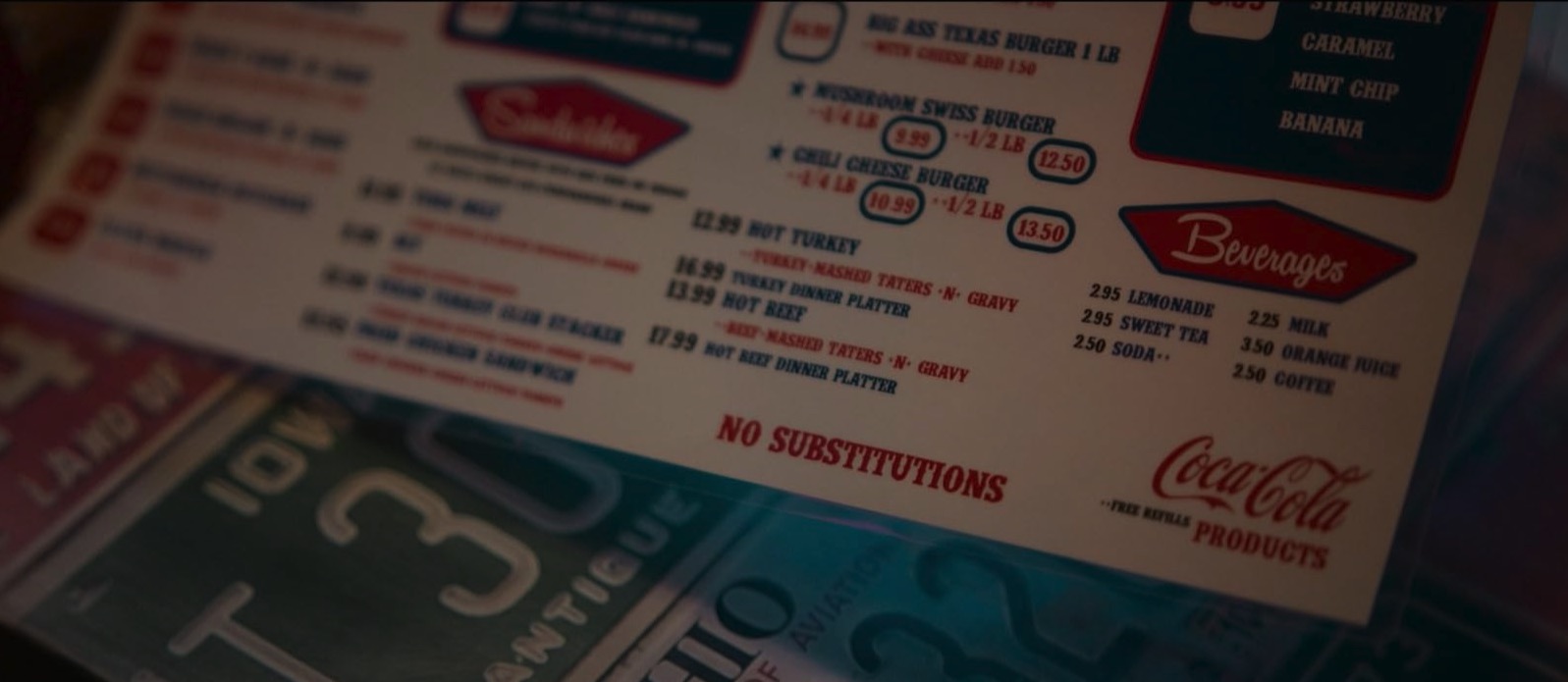
He makes a big deal about how the restaurant doesn’t have substitutions and he throws a fit because David doesn’t want to order anything, so he forces him, too. The Waitress (Alexis Zollicoffer) thinks this is all very weird, but must be used to strange characters coming into the diner.
The Passenger seems incredibly angry that David has a happy family. He loses his mind (and spazzes out in an incredible fashion). He slams David’s head into the table, then handcuffs him to it. He pulls a gun and warns a patron not to do anything stupid, then he goes back into the kitchen and asks for the cell phones from the waitress and chef. He throws the cell phones into the deep fryer and demands his Open Faced Tuna be done in five minutes. He demands the waitress come and wait behind the counter.
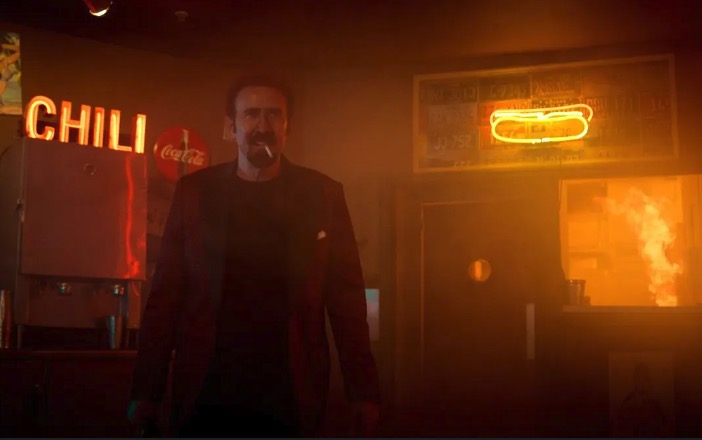
As David tries to get the handcuffs off, The Passenger plays a song on the Jukebox, I Love the Nightlife (Disco ‘Round) by Alicia Bridges and does a little dance to the terrorized cafe. He then tells David he wants to play a little game of “telling the truth”. If David doesn’t tell the truth, the Passenger says he will kill the waitress, the truck driver and anyone else that enters the diner. David doesn’t know what “truth” he wants and keeps asserting that he’s not the person the Passenger thinks he is.
David head butts the Passenger and deflects his shooting arm so that he isn’t able to immediately kill people in the restaurant with his gun. But the Passenger kills the truck driver anyway before he can escape. He then threatens to shoot a woman and her child.
David finally relents and says, “OK, OK! I’m exactly who you think I am.” Then the Passenger punches David repeatedly in the face saying “It’s you! It’s you! It’s you!” Then the Passenger calls him James. He then goes into the back of the kitchen and shoots the chef in the parking lot.
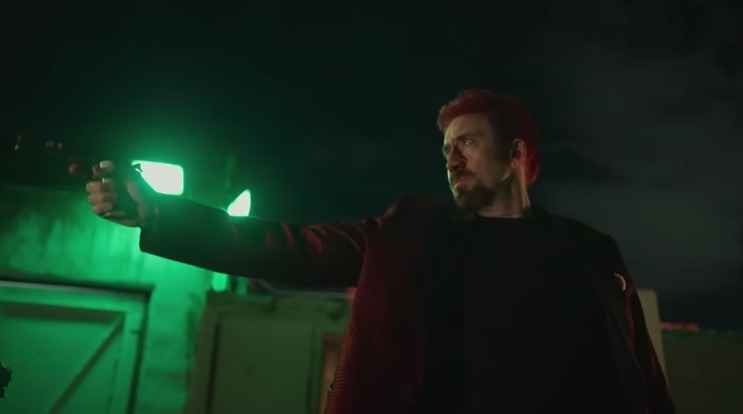
While he is outside, David / James pulls the table to try to remove the handcuffs. The Passenger finds the waitress crying in the bathroom and confronts her for being “rude to him” but he can’t kill her. David / James is able to retrieve his phone and call 911. The Passenger turns the gas on in the kitchen and then sets the stove on fire. David breaks the table and removes the cuffs and flees from the burning restaurant. The Passenger shoots him in the leg as he is leaving. James ties off his leg to stop the bleeding while hiding behind a vehicle. The Passenger keeps pursuing James across the parking lot. He throws Molotov cocktails and tries to flush him out of hiding.
He continues telling the bookkeeper’s story. After Sullivan’s guys kill the associate there is one minor hitch. The bookkeeper’s wife steps into the doorway and witnesses the execution. One problem leads to this new problem. The bookkeeper’s wife begins to unravel–she starts drinking and taking pills and telling the story to anyone who will listen. The Passenger admits that it is his wife–that he’s the Bookkeeper from the story. His wife became a liability to the mobsters, and so he got a call from James Levine.
Amongst the smoke and the fire, David / James has been hiding and waiting for an opportunity then he jumps the Passenger and starts beating the crap out of him, but the Passenger still has his gun and points it at James and reminds him that he knows exactly where his wife and child are in the hospital. The Passenger tells him he has to get back in the car and if he does he will stay away from James’ family. The Passenger gives his word and the two return to the car–-both are bloodied and bruised from the fight.
They continue driving. Both sitting in the front of the vehicle. James asks what happened to the bookkeeper’s wife. The Passenger gets a call from James Levine–a person who “fixes” things. He tells him what he already knows about his wife and that the bookkeeper needs to get control of his wife. The Bookkeeper tells Levine he will, but he knows his only choice is to get his family out of Boston for good. He leaves his house to get some supplies but when he comes back he finds that his entire house is up in flames (with his wife and daughter inside) and their pet rabbits screaming. At this point James is crying because he knows this story (OR he suspects that it doesn’t matter what he says is true). He reminds the bookkeeper of the promise that he made to his family. Then he claims again that his name is David Chamberlain which infuriates the Passenger.
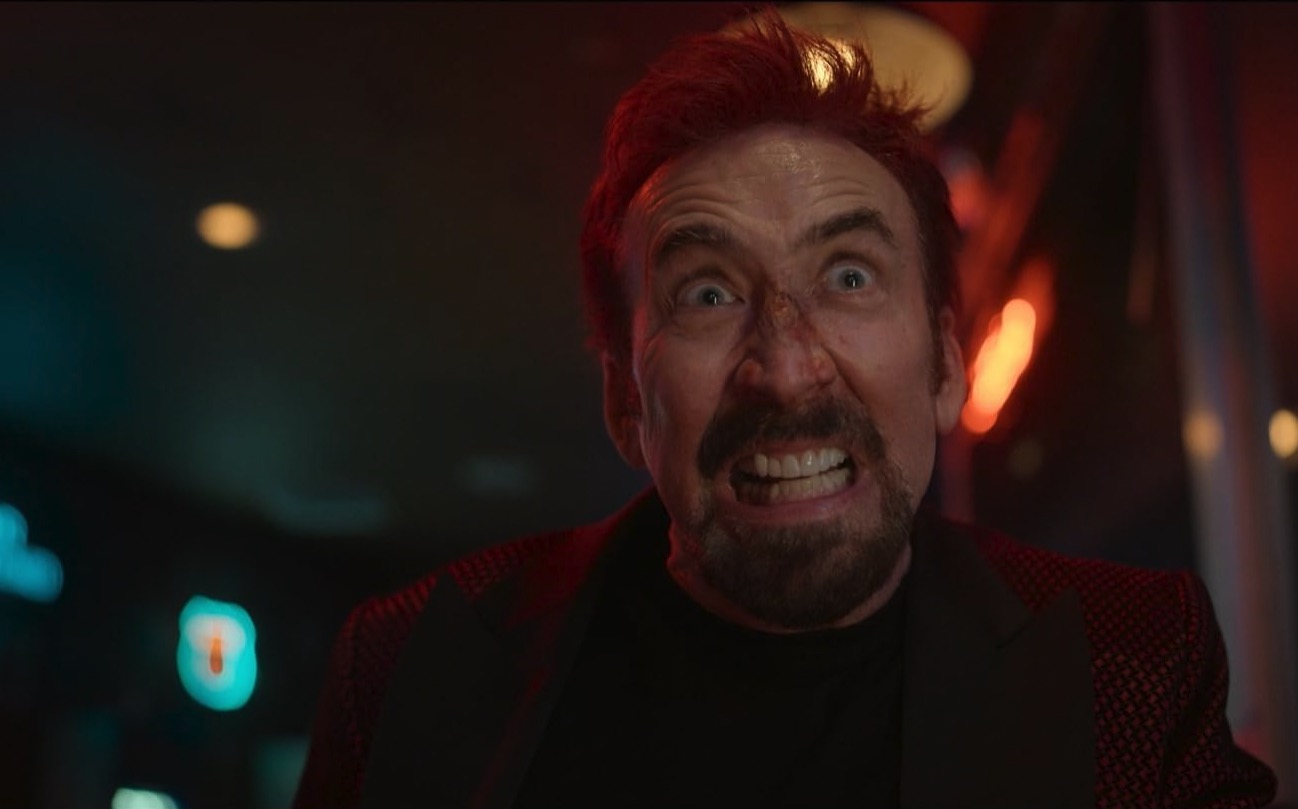
James points out what he has surmised from the story, that the Passenger has lung cancer, and that he was planning on dying (not just his mother). The Passenger puts a gun to his head, but as he does so, David / James asks him, “Why didn’t you just kill me the moment you stepped into my car? Why let me breathe another second?” The Passenger says he wanted to hear him say the words, he wanted to see his face, his true face, his lizard face. James asks him what words, and tells him he’ll say them. Then he tells him that Sullivan told him. He ordered the hit on the Passenger’s wife. Then James intentionally wrecks the flipping it.
Two policemen had been chasing the car, and as they approached the wrecked vehicle the Passenger watched from the wreckage, wounded and dying. As the policemen near the car, two shots are heard and the policemen drop to the ground dead. Standing above the Passenger is James holding the weapon he has just used to kill the policeman. A slightly deranged looking David / James stares down at the Passenger and then puts his boot on his throat choking the life from him. He lets up and tells the Passenger, “I never meant to kill your little girl.”
James explains that when the Bookkeeper’s wife saw him she went crazy and started clawing his face off and that he pulled the trigger three times–accidentally killing the little girl. This traumatic event stayed with him. He confesses that he felt God was evening the score with him when his firstborn child died, but he’d still seen their faces–the bookkeeper’s wife and daughter. When God gave him his son, James said, God was giving him back the daughter’s life that he wrongly took. Meanwhile the Passenger is choking and listening to James the entire time.
James finally tells him, “I think you gave me closure tonight. I wish I could have done the same for you.” The Passenger chokes up a bunch of blood. James leans close and chokes the rest of his life away. He cleans his prints off of the gun (used to shoot the policeman and cafe employee) and places it in the palm of the Passenger’s hand.
James then finds his cell phone and listens to his voicemail message from his wife announcing that he is now the father of a little girl. His wife is “praying that God will help him find his way back” to her. He says his new mantra in response. “I’m David Chamberlain”, over and over again.
The Devil (Still Some Spoilers To Follow)
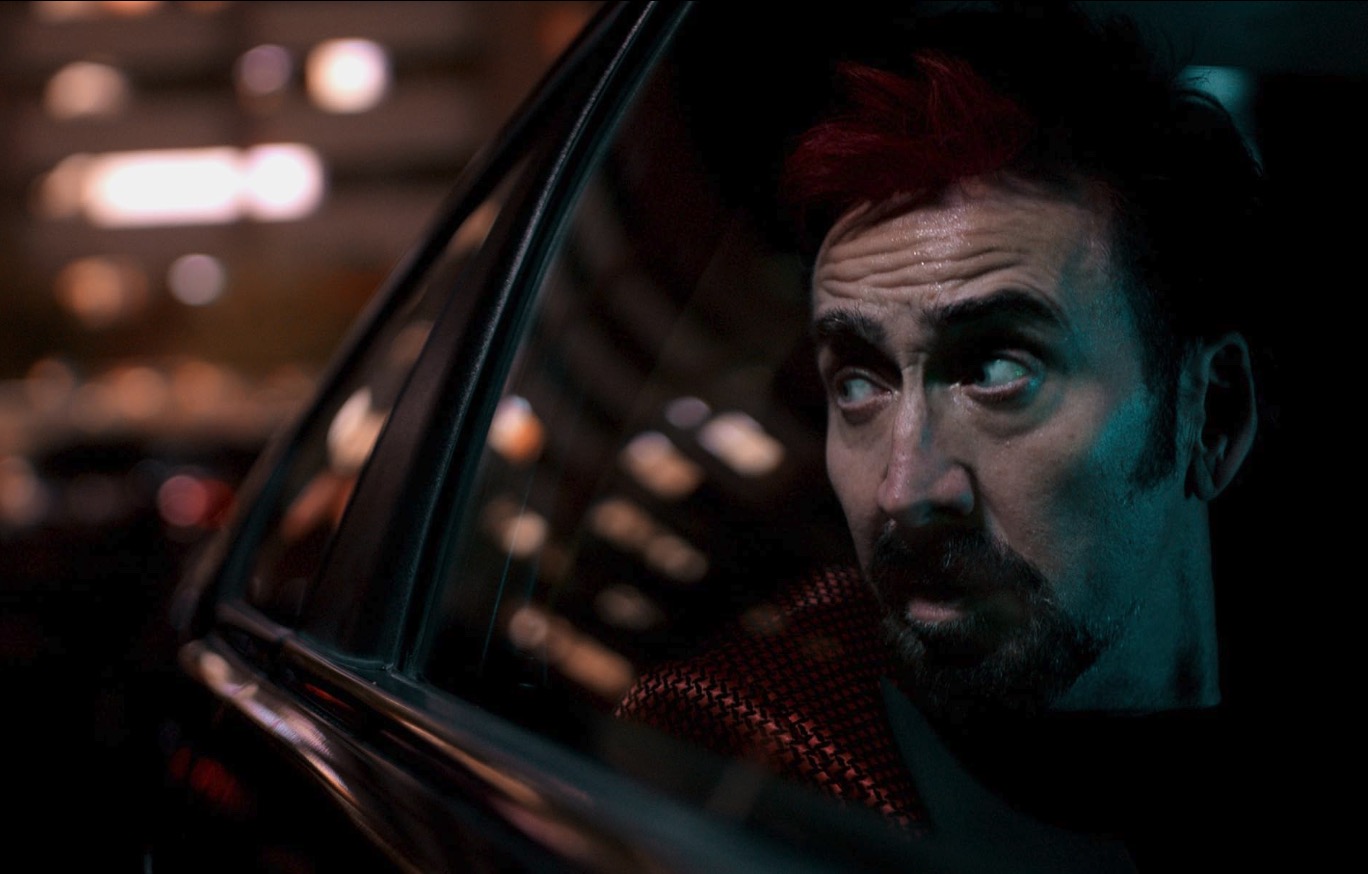
If you read through that long blow-by-blow you already know the truth, but let’s take a step back. The way this film is marketed (from the trailers and such) and the way in which The Passenger is dressed and speaks throughout, the assumption we are supposed to make is that Nicolas Cage is playing the literal Devil. He’s got the fiery hair, the pointy goatee, the Las Vegas sequined suit–everything screams Mephistopheles, Satan, and Lucifer all rolled up into one.
I was expecting that this film (with this title) had some otherworldly element. Some Fallen Angel quality. Why wouldn’t I jump to this assumption especially given some of Nicolas Cage’s other dark roles (e.g. Ghost Rider). There is a wealth of foreshadowing and hints that, not only does The Passenger have inside knowledge about the man that he is stalking / hijacking, but he also may not have a moral compass at all. He hijacks a guy at a hospital, he performs magic card tricks, he has no qualms shooting innocent people (policemen, truckers, cooks), he hates authority and arbitrary rules (i.e. no menu substitutions), and uses innocent children as pawns in his game.
We are supposed to believe that the Passenger is the embodiment of evil.
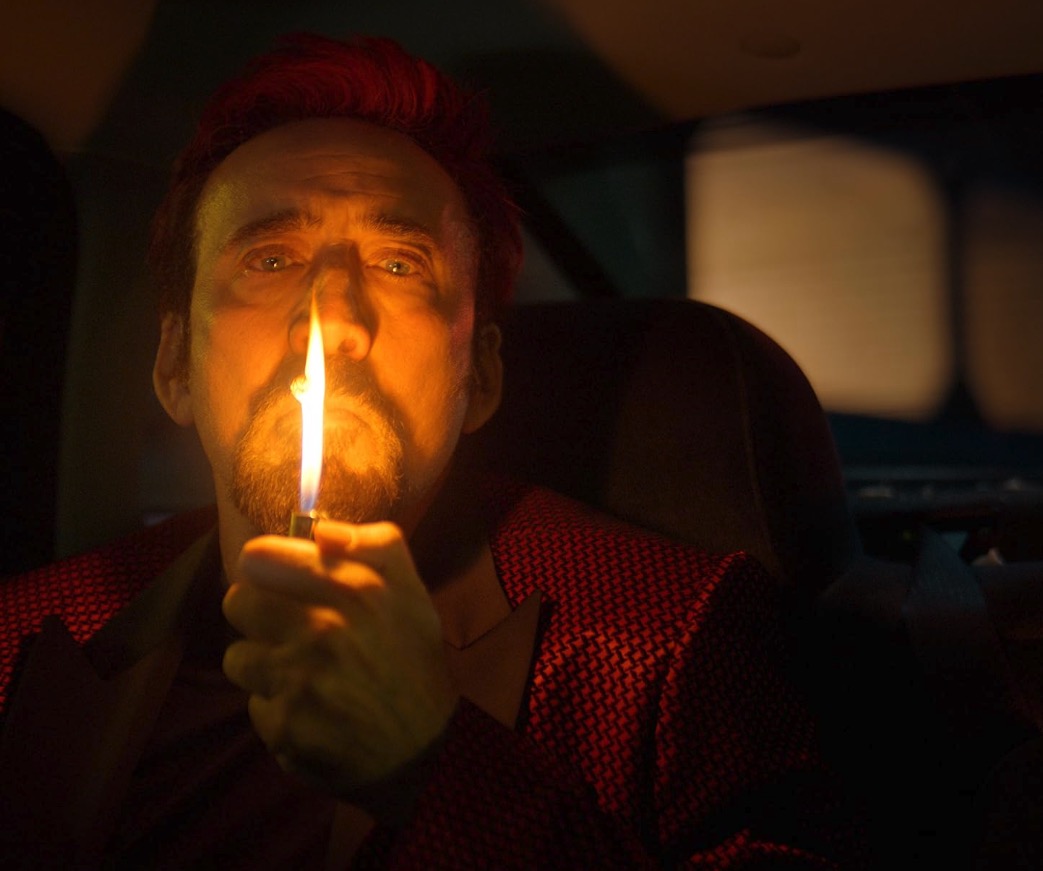
But in fact, he isn’t entirely evil–and he’s definitely not the embodiment of evil. What’s closer to the truth is that this is yet another Nicolas Cage character who is out to avenge a murdered loved one (A Score to Settle, Vengeance: A Love Story, Mandy).
It’s a pretty good twist and the film does a good job of making you question your loyalties (and the truth of the situation throughout) but unfortunately for me anway, I was a little disappointed by it. I wasn’t upset that the story took an unforeseen turn–I like plot twists.
I was disappointed that Nicolas Cage wasn’t the literal devil I had hoped. Seeing him play the devil after watching him play a hundred different types of characters would have been cool. So I felt a little ripped off that Cage was just a sad Bostonian, with nothing left to live for, who was bent on getting revenge.
My expectations were not satisfied in that regard.
The Sympathy
Even though this film wasn’t what I expected it to be, it was still a good twisty thriller. The tension is built pretty tautly and the Passenger is that loose cannon we all fear will show up when we are nonchalantly going to the mall, the movies, or a local restaurant. He’s a live wire, mostly insane, and unafraid to shoot first and ask questions later.
But “the devil” who is worthy of our sympathy SHIFTS back and forth in this film. For most of the film, we believe that David deserves our sympathy because he is the “innocent one” who has been stripped of his life and taken on this scary odyssey. He’s the “family man” and the guy who has a moral compass. Until we discover later that David is actually James–a reformed killer who murdered the Bookkeeper’s wife and child. How changed is he really? Does his regret absolve him from his sins? Is the Passenger actually justified in seeking some recompense for the wrong that was done to him?
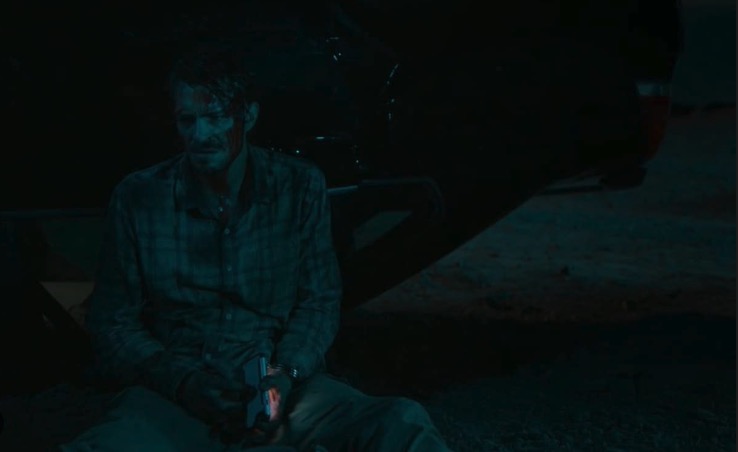
Our sympathy–as strange as it sounds–does still hold with James / David because we want to believe that he has changed and “paid for his crimes” but this is still a tough one to believe or fully by into. In this sense our “sympathy” is for “the devil” and we want him to do right moving forward. But we also have a gained a real sympathy for “the devil” in the Passenger who had nothing left to live for and wanted to see David suffer as he himself had suffered.
If Nicolas Cage wasn’t the actual devil and this fact let me down a bit, I think this plot twist was probably the next best thing that could have happened. Even after watching it once, I couldn’t quite remember if David actually ever confessed to the act (as there was a lot of doubting and subterfuge for a while), but when I watched it again, it became apparent that he did it alright–he had murdered the Bookkeeper’s family, as his confession in the last scene makes clear.
Did justice prevail in this situation? Probably not; and somehow that ending also gives some hope.
Firsts for Nicolas Cage as The Passenger
- Appearing in a film with fiery pinkish red dyed hair
- Scraping something off of the bottom of his fancy shoes
- Moaning to mock the cries of a pregnant woman
- Ordering an open faced tuna melt (with cheddar)
- Tearing into and putting three Sweet N’ Lows and liquor in his coffee using only one hand
- Making and hurling Molotov cocktail at some parked cars
Recurrences
- In a film with scenes set in Las Vegas (Honeymoon in Vegas, Leaving Las Vegas, Con Air, Next, The Trust)
- Involved in a carjacking / car theft (Birdy, Stolen, Gone in 60 Seconds, Ghost Rider: Spirit of Vengeance)
- In a film that centers on getting vengeance (Multiple)
- Shoots and kills an officer of the law (Face/Off, Dog Eat Dog)
- Handling a lucky rabbit’s foot (The Humanity Bureau)
- Killed at the end of the film (Multiple)
Quotables (too many not to quote)
“Pick a card.”
“I’m your family emergency now!”
“Well isn’t that a bit of a cliche?”
“We’ve still got a few miles to go before we sleep.”
“S’up!”
“Kind of impersonal, talking to the back of your skull.”
“Somebody say SEXY!”
“Can you look at the road please, when you’re drivin’?”
“Why would you assume you’ll ever go home again?”
“That plea for sympathy is beneath you.”
“For the devil may start to envy those who suffer too deeply and throw them out into heaven.”
“I will shoot you so fast in the back of your goddamn skull, cranial matter will splatter all over this cop’s pressed uniform, and it will be disgustin’ “
“Twouble. PWEESE, Mistew Bwig Powiceman, anything but Twouble.”
“Get behind me, Satan!”
“He was an authoritarian little prick!”
“Shut up and drive!”
“I DESTROYED A FAMILY! I DID?!?”
“I think you BROKE MY BEAUTIFUL NOSE, FUCKER!”
“It was golden shower explosion cascading all over the doctor’s face.”
“I wanted to be 100% sexy tonight, but you cut that in half.”
“C’mon, Sugah!”
“Objectively speakin’ would you say you and your wife have a happy marriage?”
“I’ve never been happy. You know why? Sinuses.”
“Order something you STUPID FUCK!”
“SIT. THE FUCK. BACK. DOWN!”
“Magic Rabbit Foot says go!”
“Sometimes the worst is exactly what you should assume.”
“OOOOOHHHHH SHIT, It’s gettin’ good.”
“Better to reign in hell, wouldn’t you agree?”
“You know the Japanese say the more violent the death, the more higher to heaven you go.”
Conclusion
It’s a pretty good soundtrack, but I was surprised that the Rolling Stones song (or one of its many covers) didn’t play into this film at all–unless I missed it in the rolling credits? I guess I’ll have to wait for Nicolas Cage to take on the role of the “actual devil” but I won’t have to wait too long because Longlegs is coming soon. While he isn’t a dark angel in that one, he’s about as close as he can get to it–this side of heaven / hell.
If you haven’t seen this two man show yet, and/or if I haven’t completely spoiled it here, you should definitely check out Sympathy for the Devil. Pretty good plot twists, even if you are in the know.
Wink-wink. Nudge-nudge.


 yeti speak...
Leave a comment