Nicolas Cage is a meme, and he’s not too happy about.
More than any other actor in the modern era, I think Nicolas Cage has risen to cult celebrity status thanks in some part to the viral nature of his face plastered across a meme. If you don’t believe me, just do a quick Google search of Nicolas Cage memes and see how many show up and in how many varieties. Have you seen all those films? Can you name them?
Now try gifs.
Well, you and I know that Cage is so much more than all that viral meme fodder. His “truth” shows up on the big screen, for better and worse, and whether you love him or hate him, you have to respect the scope and depth of his portfolio.
As we enter the last few entries of the WATC(H) we are embarking upon some of Cage’s most memorable and entertaining films and roles. This latest film in particular, is almost self-referential to the man, Nicolas Cage, in the way that it depicts a character who lives within the collective consciousness, in a very literal (if figurative) and all-consuming way. In Dream Scenario (2023) we learn about the power of mass hysteria–the meme gone viral, and the fickle ebb and flow of “cancel culture” in defining, lionizing, and then excommunicating the individual from the typical social constructs and mobility.
But before we dive into those thing, let’s do some summary. (Spoilers ahead)
The World According to Paul Matthews
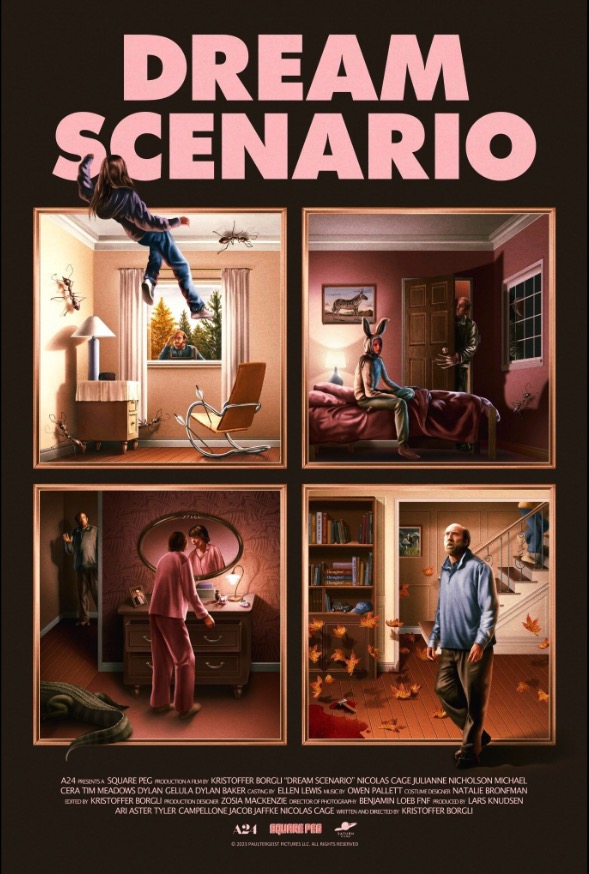
Paul Matthews (Nicolas Cage) is a nerdy professor and family man with a wife and two daughters. In the opening scene, Paul is raking up leaves in the yard while his youngest daughter Sophie (Lily Bird) sits on the patio.
A set of keys falls from the heavens, startling Sophie when it smashes a glass table. Paul barely slows from raking seemingly nonplussed. Sophie looks up into the sky and then sees a shoe, followed by another large object plummet, and splash into the pool behind them. Sophie looks for comfort from her dad, but Paul just tells her “it’s ok sweetie,” as he continues his chore. Sophie mysteriously is sucked up into the sky as she cries for help, but her father watches on.

This was Sophie’s dream and when she tells him about it IRL, Paul is surprised that he didn’t do anything to help her in the dream (as this is the third time she has had it.)
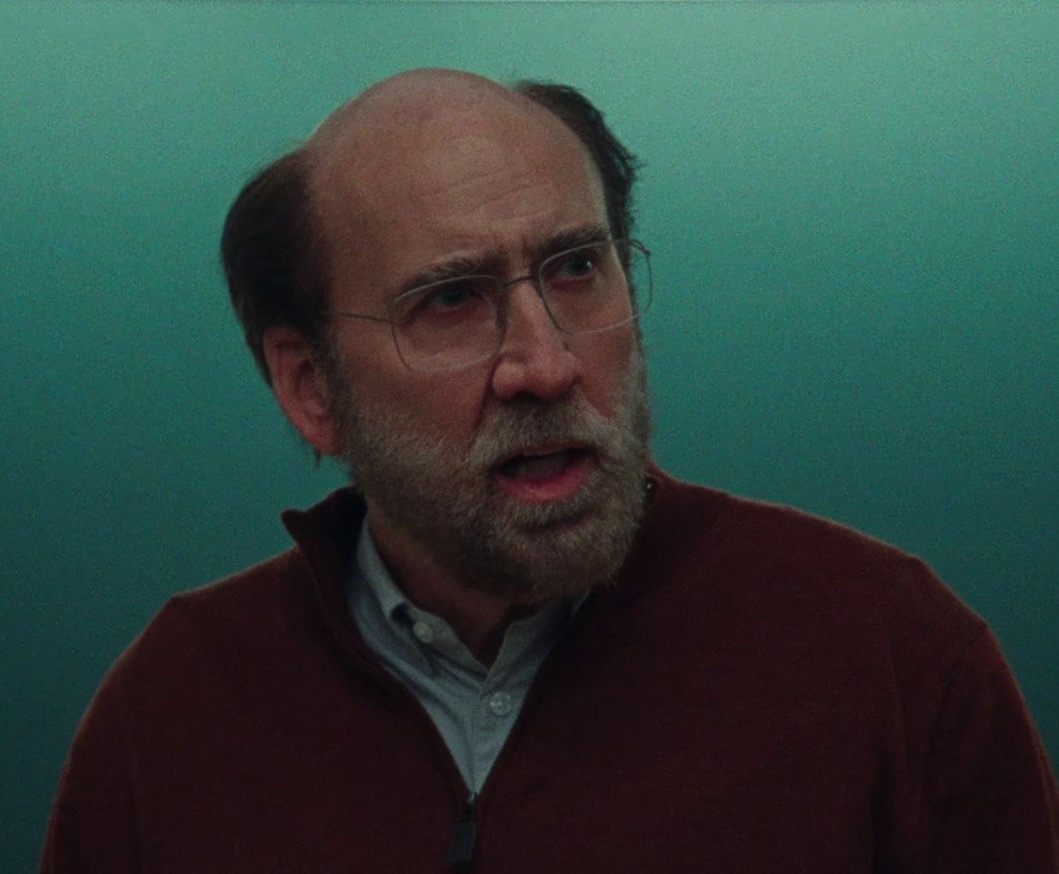
Paul has his doctorate in science and teaches evolutionary biology at a school called Osler University. But Paul is also kind of boring and has trouble attracting interest from his students or children. Balding and bespectacled and entering the midlife crises stage, Paul’s passivity and timidity have led to inertia and a lack of ambition that leads to professional opportunity for advancement. Much like the zebras he mentions from his class, he’s always blended in with the herd of humanity (and has remained relatively safe and innocuous), but as the story begins people seem to recognize Paul more often. They think that they “know him” from somewhere.
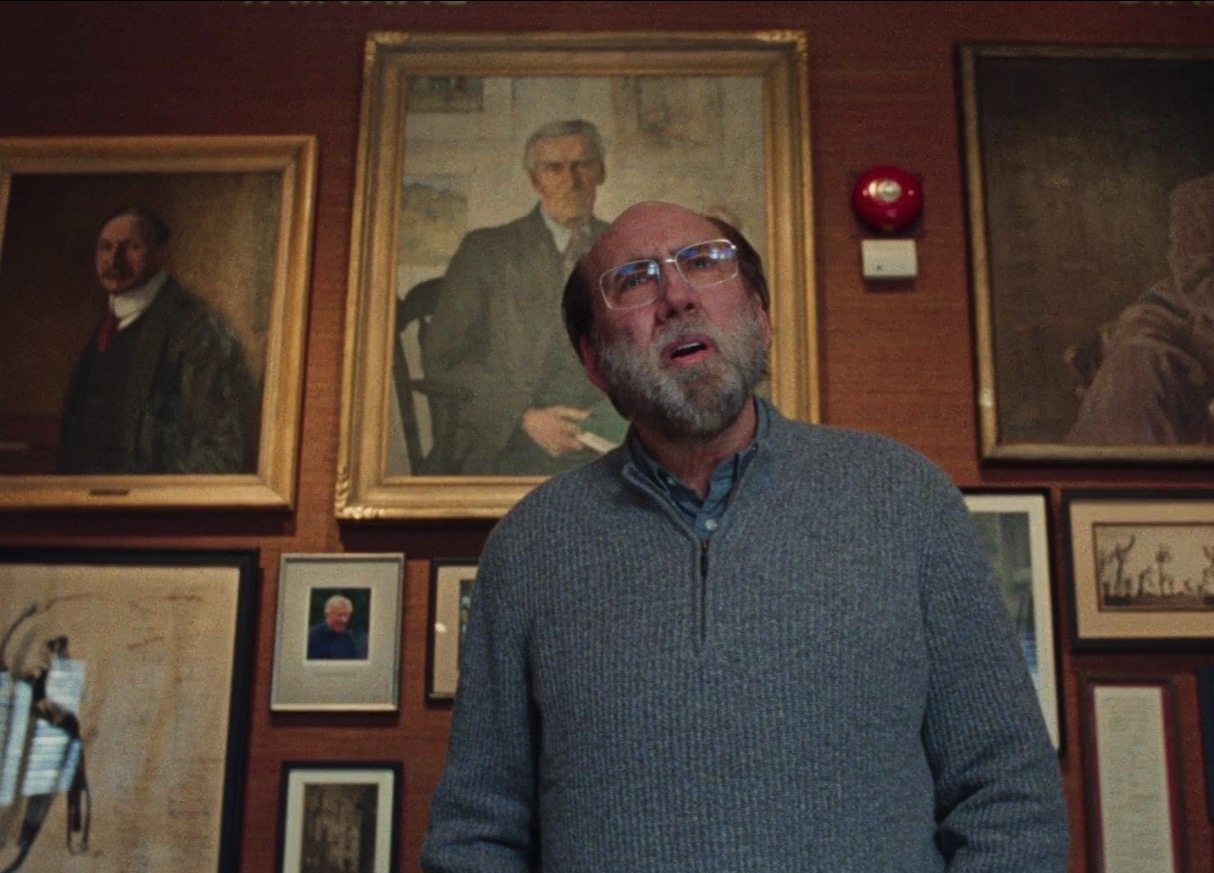
Paul meets up with a former colleague, Sheila, in hopes of getting an apology or acknowledgement from her because he believes she has stolen some of his ideas (about ant colony algorithms and swarm intelligence) which she is about to have published. But Sheila claims her ideas were own, and that she has an actual book to prove it. Paul doesn’t have much ground to stand on because the book he has been wanting to write (for many years now) remains unwritten.

Smarting from this unfruitful dinner with Sheila, Paul and his wife Janet spend a night at the theater. Afterwards they run into an old flame of Paul’s, Claire (Marnie McPhail) who tells him that she has had Paul on her mind a lot lately because he “keeps popping up in her dreams”. Sheila tells Paul that he doesn’t do anything in her dream, but he’s just there.
In one dream, she is going through a traumatic situation where a friend is dying from an accident and then Paul just strolls into the dream and waves, saying nothing. To her this chance encounter, after the dreams, feels serendipitous and meaningful. She asks Paul if she can meet with him to talk about what this might mean and he agrees to it, which makes Janet nervous and jealous.
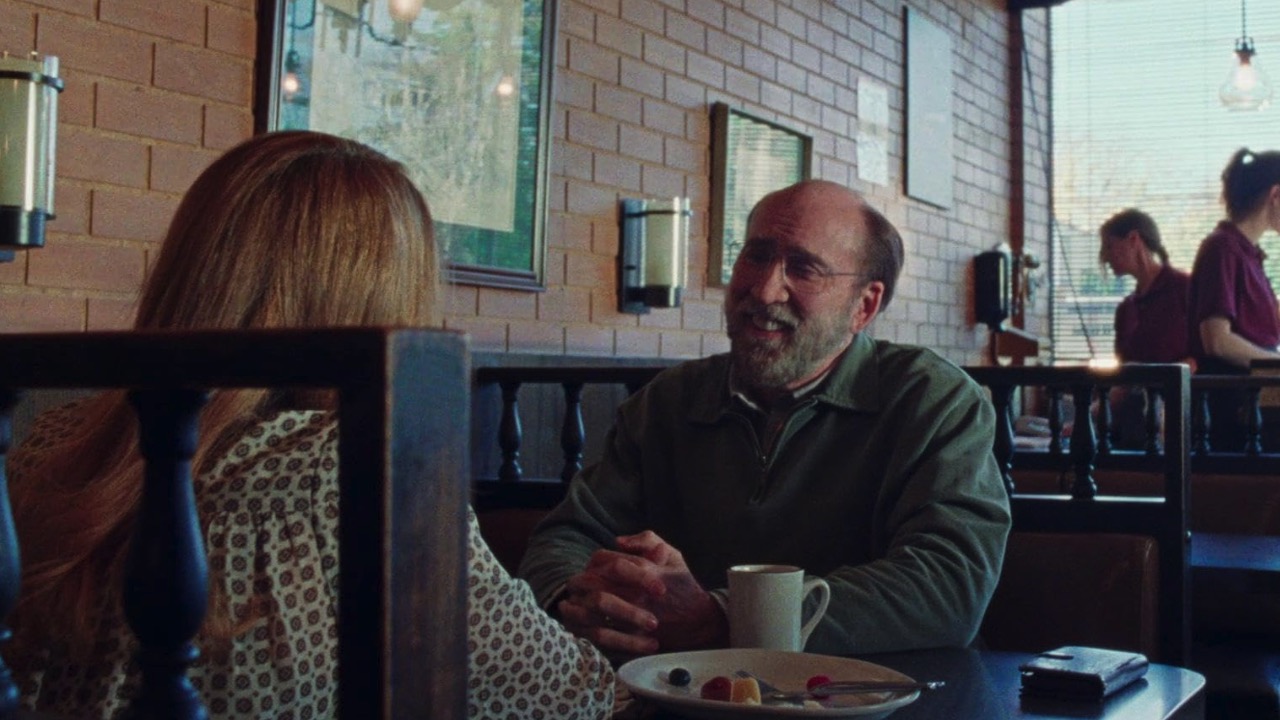
When Claire and Paul meet she asks him if it would be OK if she wrote about the dreams and their encounter at the theater on her psychology blog.
Paul is starting to get suspicious about the prevalence of these dreams when a friend calls him one evening on the phone and tells him that someone at a dinner party had also spotted Paul in her dream (even though she doesn’t know him personally). In each situation, Paul is a non-participant who just happens to be in the dream like a bystander.

When Paul hears this news over the phone, he passes out in shock.
After Claire’s article comes out, Paul’s Facebook inbox gets flooded with messages from hundreds of random people who are wondering why he is showing up in their dreams. Paul is shocked, but also fascinated and excited by this unexpected celebrity, especially when he discovers that someone would like to interview him.
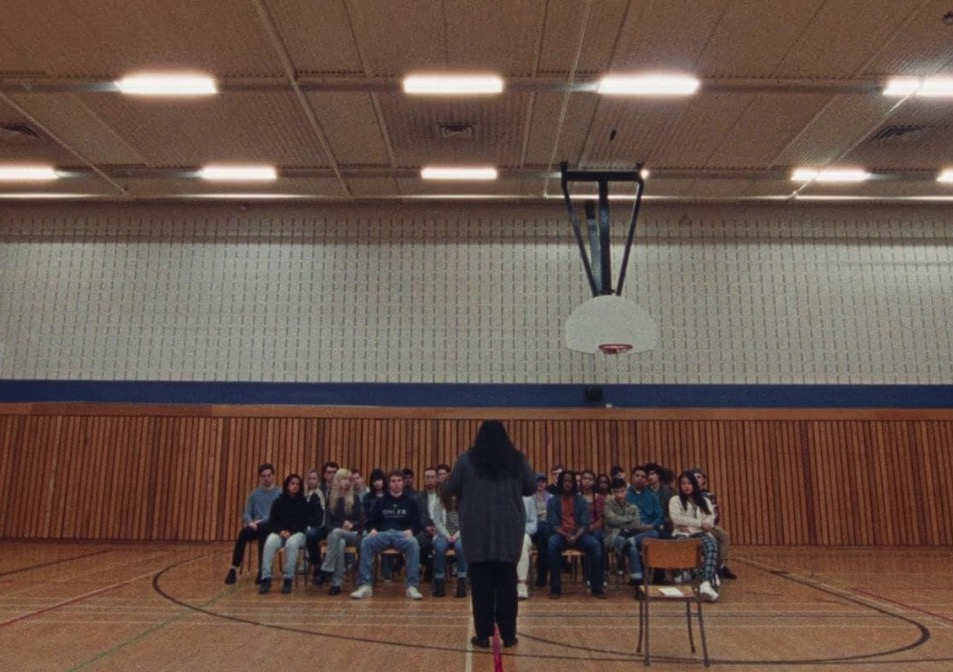
Once he goes on the news the phenomenon goes fully viral. At Osler, his entire class cheers for him when he shows up for lecture. Instead of lecturing, Paul decides to poll the class and learn the details of everyone’s dream about him. It turns out that most dreams are traumatic or dangerous, but that Paul is a non-participant observer who doesn’t help the situation or the dreamer at all, even when help is requested.

Paul does nothing but watch. This somewhat disturbs Paul, but he is still intrigued by his celebrity status and basks in it.
Paul is also proud to learn that his daughters are taking to the celebrity phenomenon as well and Janet has gotten opportunities at work simply for being married to the new celebrity, Paul.

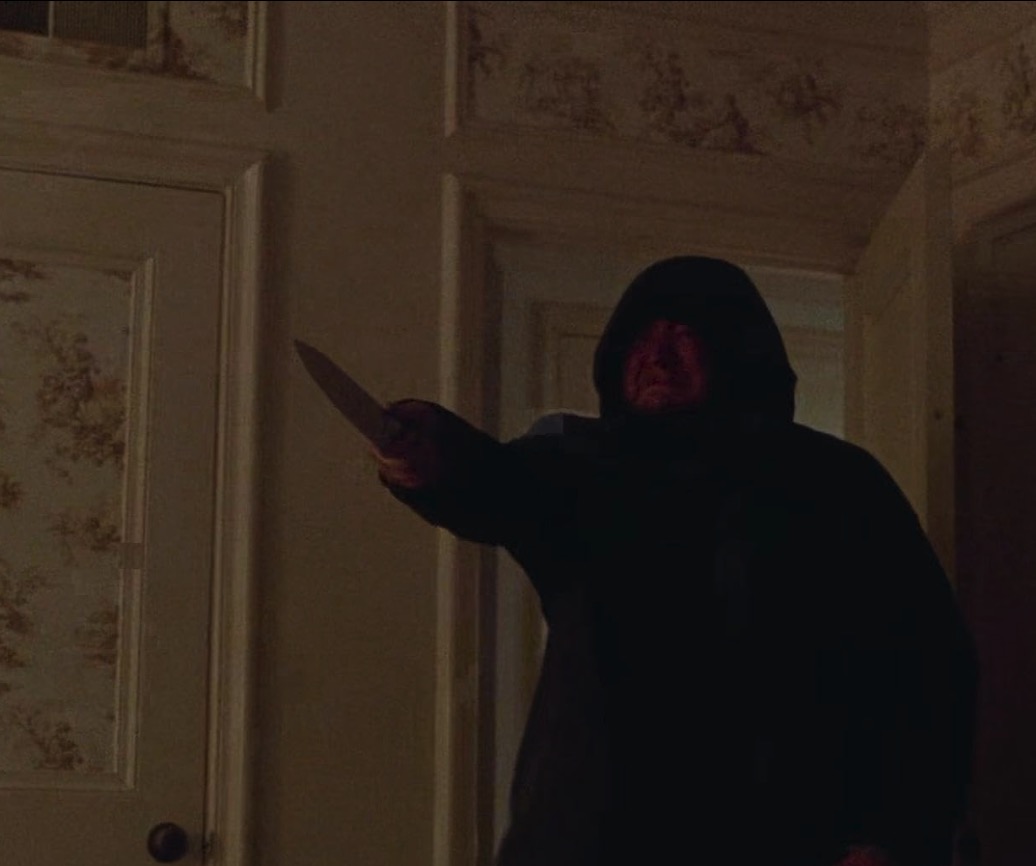
Everything is going just fine for Paul, until one night a crazy guy shows up at his home. The man breaks in, steals a butcher knife and sneaks into Paul and Janet’s room, and tells him that he “has to kill him”. This freaks out the entire Matthews family, especially Janet. Once the police arrive they tell Paul and Janet that the man went off his meds and will be held for psychiatric evaluation. The policeman warns Paul and family that fame comes with unexpected consequences and that they should think about securing their home better.
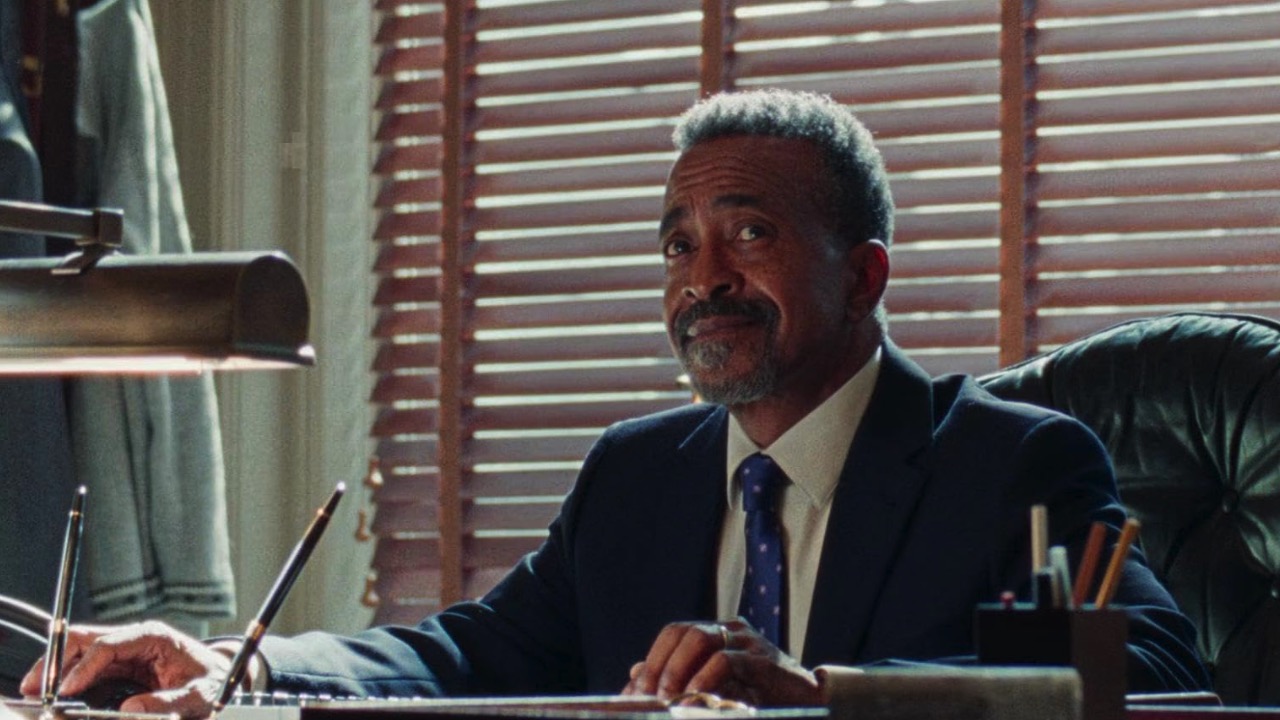
Janet and Brett (Tim Meadows), Paul’s dean at the university, advise him to trial and dial back his celebrity because he might be playing with fire, but Paul doesn’t feel as if he has done anything wrong. Paul is convinced that if he can use this situation of celebrity he can “get his foot in the door” for his scholastic book publication.

Paul then agrees to meet with an app designed to help influencers with their brand image called Thoughts? It is run by Trent (Michael Cera) with a group of young and savvy marketers who want to leverage Paul’s notoriety for their company’s benefit. One of the interns, Molly (Dylan Gelula), is especially interested in Paul because of the fetishist dreams she has had of him. The meeting doesn’t go well as Paul is interested only in promoting his book, but Trent and company want to monetize Paul’s fame with companies like Sprite. Paul negotiates a deal where Trent essentially promises to connect him with a book publisher (for his scientific research) so that they can keep him as a client.


Molly convinces Paul to go out for drinks with her. While there she explains that she has been having vivid sex dreams about Paul. She’s the first person he’s talked to about the dreams where he isn’t a passive participant. After a few too many drinks Molly convinces Paul to go back to her apartment with her to re-enact the dream. Paul, who naively believes he is not being unfaithful to wife at this point, does as Molly wishes. As the sensuality between the two start to amp up, Paul ends up ejaculating prematurely while the two are sitting on the couch.
Whatever this “real world” act represents from a Jungian dream perspective, this action sets off a completely new series of events in the dream world. Where once Paul was a bystander now he starts to terrorize people in their dreams.
The interaction with Molly infuriates Paul. After he returns home he realizes that Sheila has published her article and she did steal his coined term “antillegence” even though she said she did not. Whatever is happening in Paul’s emotional life seems to have a negative consequence in the dream states / scenarios.
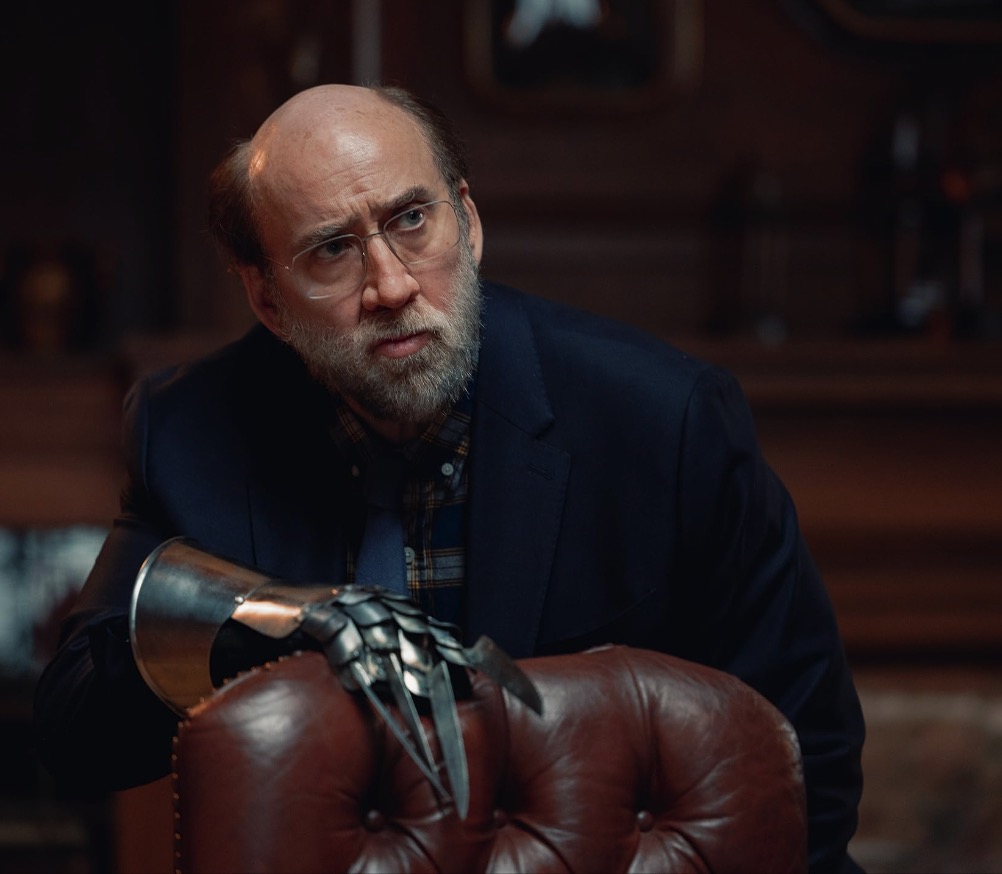
Paul is now the dream predator. From his students to his own children, Paul becomes a Freddy Kreuger style murderer in the dreams, and inflicts trauma on anyone unfortunate enough to dream of him. This causes problems at the school as no one wants to attend his classes and at home where his kids (once semi-famous) are now being bullied and feared by their classmates.

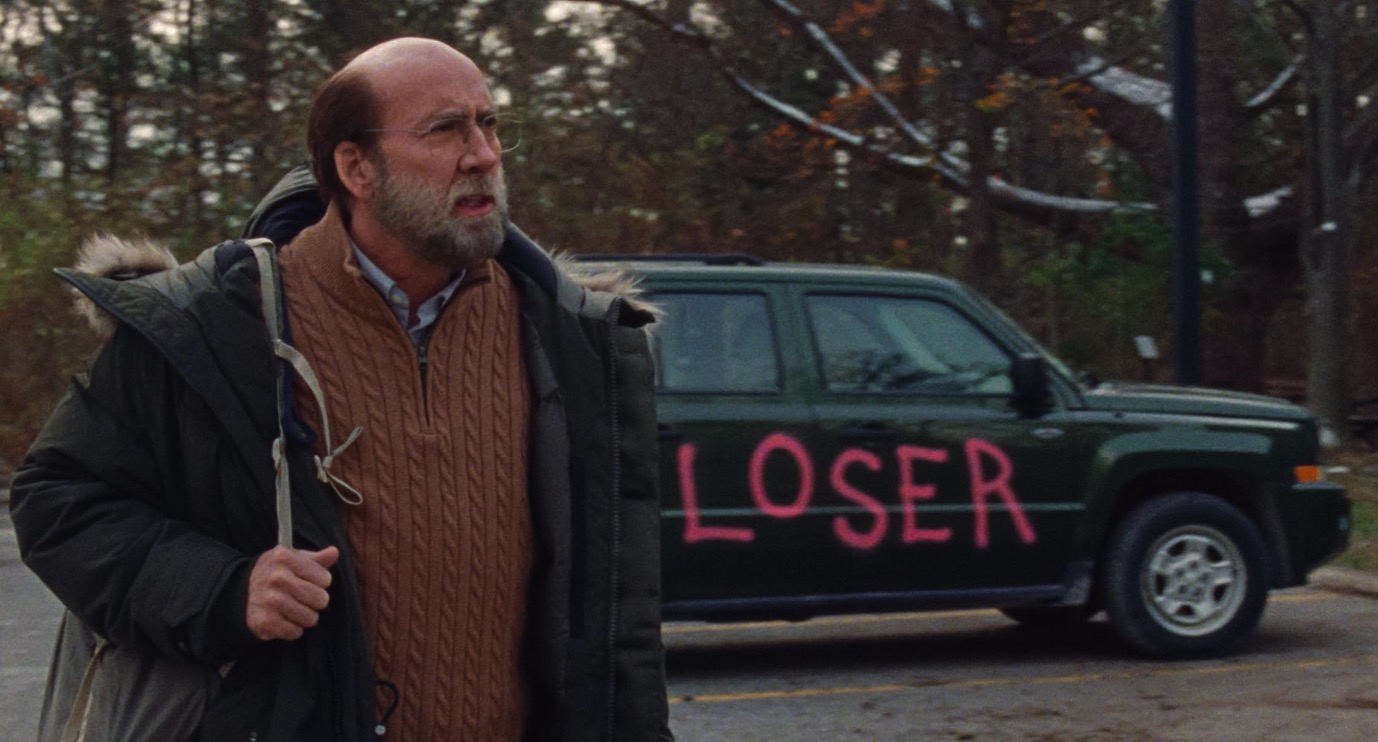
Osler HR tries to do a cognitive therapy intervention with Paul’s students to acclimate them to Paul’s presence gradually because of the dreams, but it ultimately doesn’t work and his students turn on him in the parking lot as someone has painted LOSER on his vehicle. The more hate Paul is given by the outside world the more defensive he becomes.
This puts more strain on Paul’s relationship with Janet who is protective of the children and wants Paul to just give them all some space. Since Paul is asked to take a vacation from work, he decides he wants to go “all in” with his book, but Janet is skeptical. Trying to negotiate his book deal, Trent and Thoughts? try to warn Paul that he is no longer the sensation he was and that most of the brand opportunities now involve the cancel culture set (Seth Rogen, Tucker Carlson, and culture wars podcasters) and a strange new following from people in France.
When Paul refuses to leave a restaurant because the patrons were uncomfortable he gets in a fight with someone and gets beat up pretty bad. Rather than expressing sympathy, Janet expresses to Paul that maybe he should make a public statement and apologize for what others are experiencing.
Of course, Paul is not happy about this. But when Paul has a dream where someone hunts him down and shoots him full of arrows, and realizes that it is another Paul, he does decide to apologize and submits this video to social media. This, too, backfires as Janet, his kids, and the public at large think he is either lying to gain public sympathy or not taking real accountability for his (dream) actions.
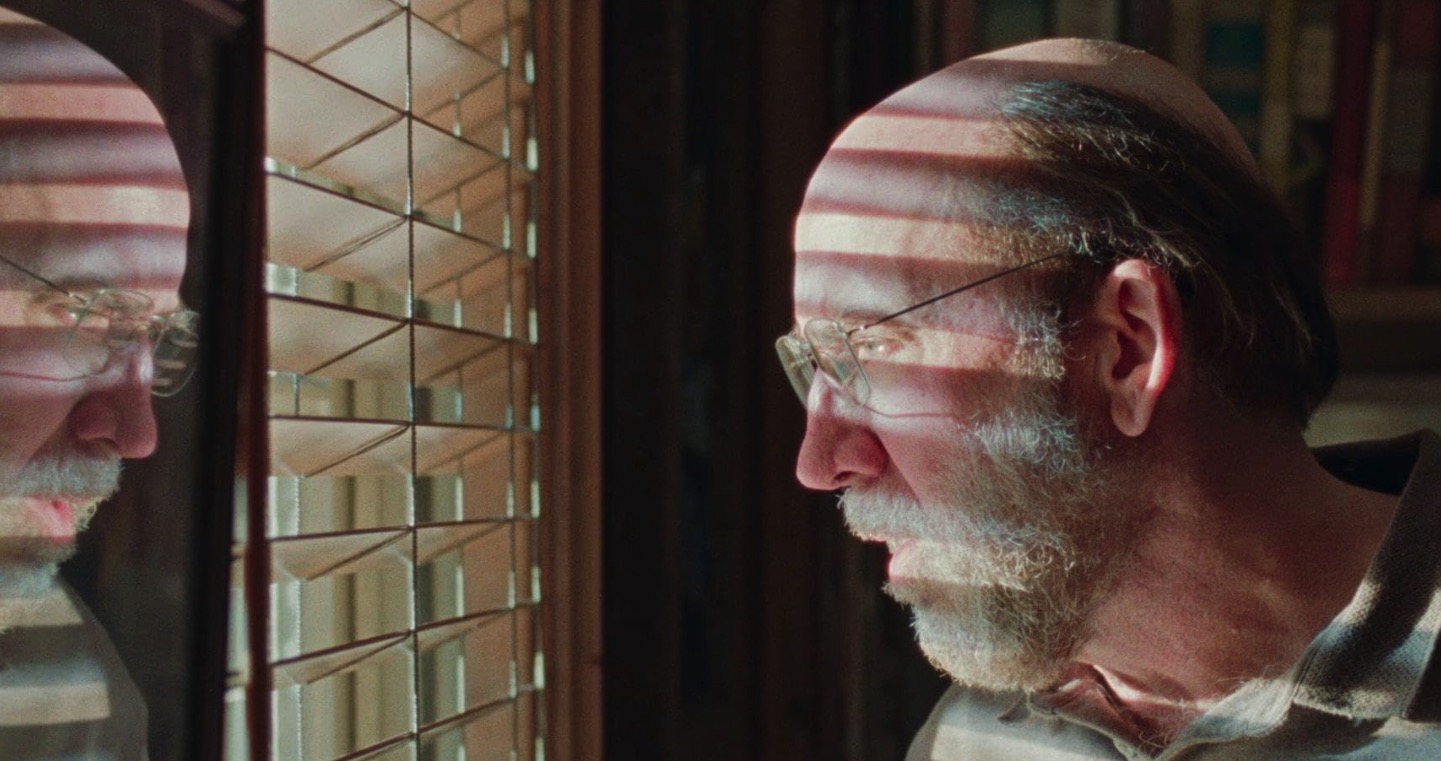

When Paul tries to force his way into his daughter’s play which he was asked not to attend, he accidentally injures the teacher, unfortunately validating everyone’s fears about him–that he is violent and evil person. The bloodied teacher appeals to the crowd and the mob surrounds Paul.
Time passes. The dreams stop, but Paul’s social life is essentially over. He fades from public life. There is now new technology–called Norio–that allows people to dream travel, i.e. enter other people’s dreams. This technology was discovered thanks to the phenomenon of Paul visiting people’s dreams–but people are quick to distance themselves from this association, and it is mostly just used for advertisers.
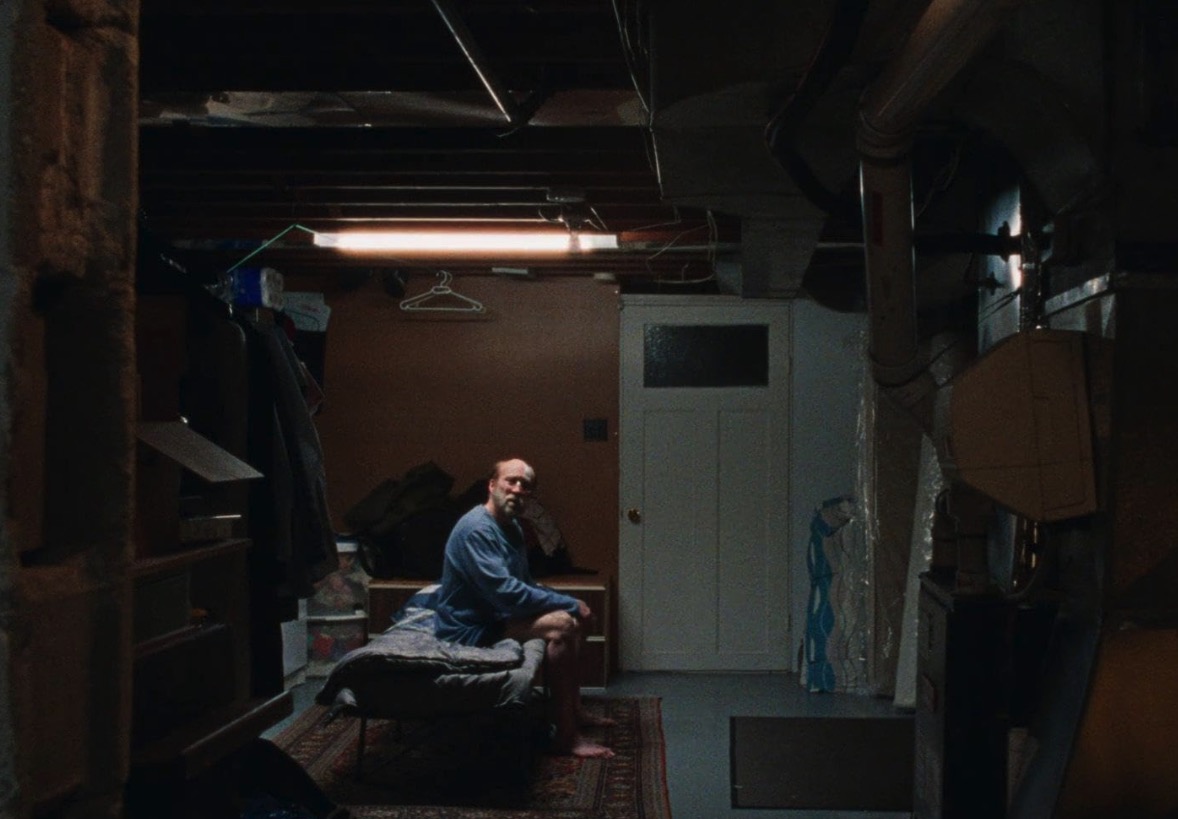
Now Paul is completely isolated and alone, separated from his wife, and renting an unimpressive apartment. He is receiving a settlement from Osler and money for his book deal. He tells his wife he’s OK, but we all know that he is not. Janet may, or may not, have already started to have a relationship with her co-worker.
Paul goes to France accompanied by Trent to do some work for Thoughts? to support his brand and do a book signing. While there for a photo shoot, he has to dress up like Freddy Kreuger to appease the French photographers, and his book signing takes place in a dank basement room of a bookstore.
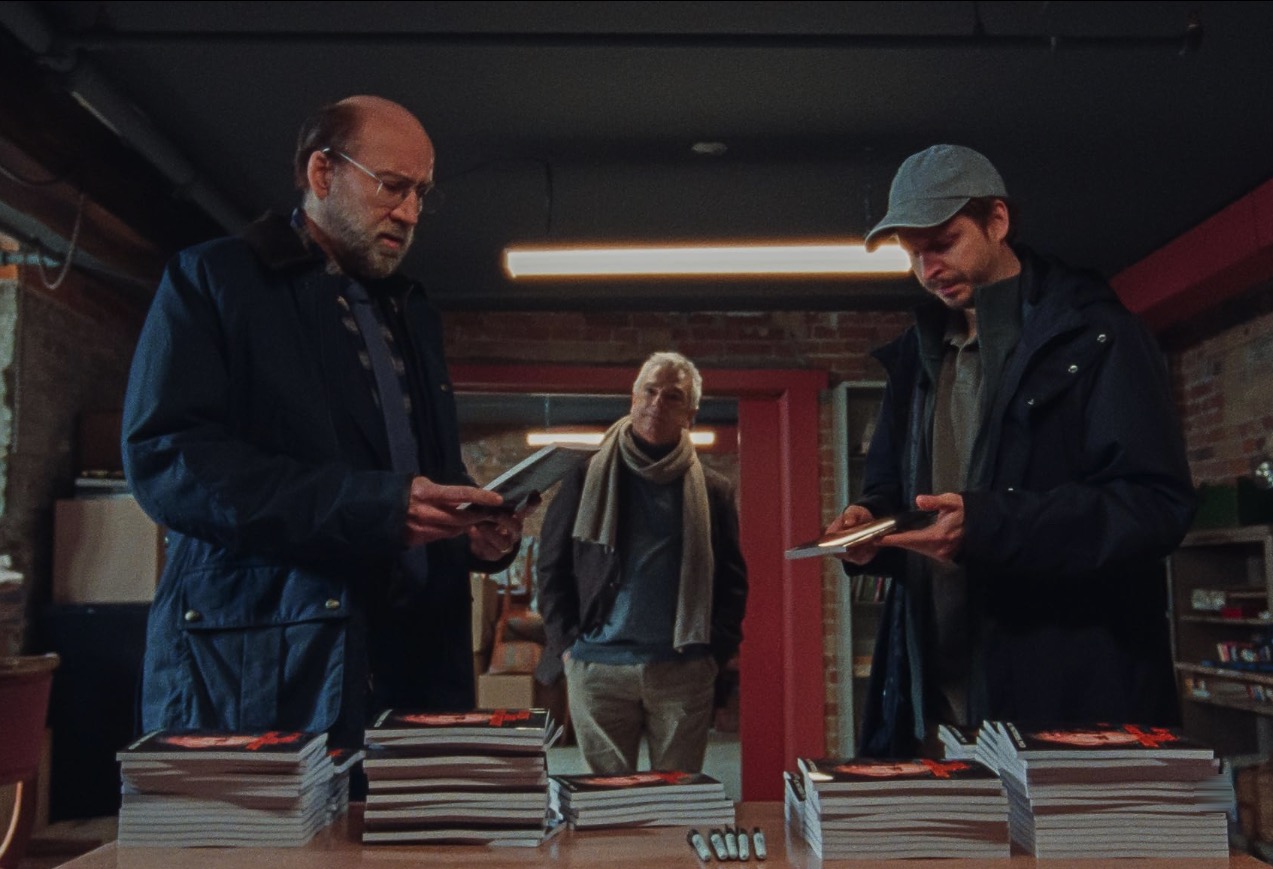
The book that was published is not about evolutionary biology, but seems to be about Paul (life rights) as a nightmare figure and is titled I Am Your Nightmare. It’s hard to verify this since the book has been published in French. A ceiling light comes loose and whacks Paul in the head causing a big cut to his head.
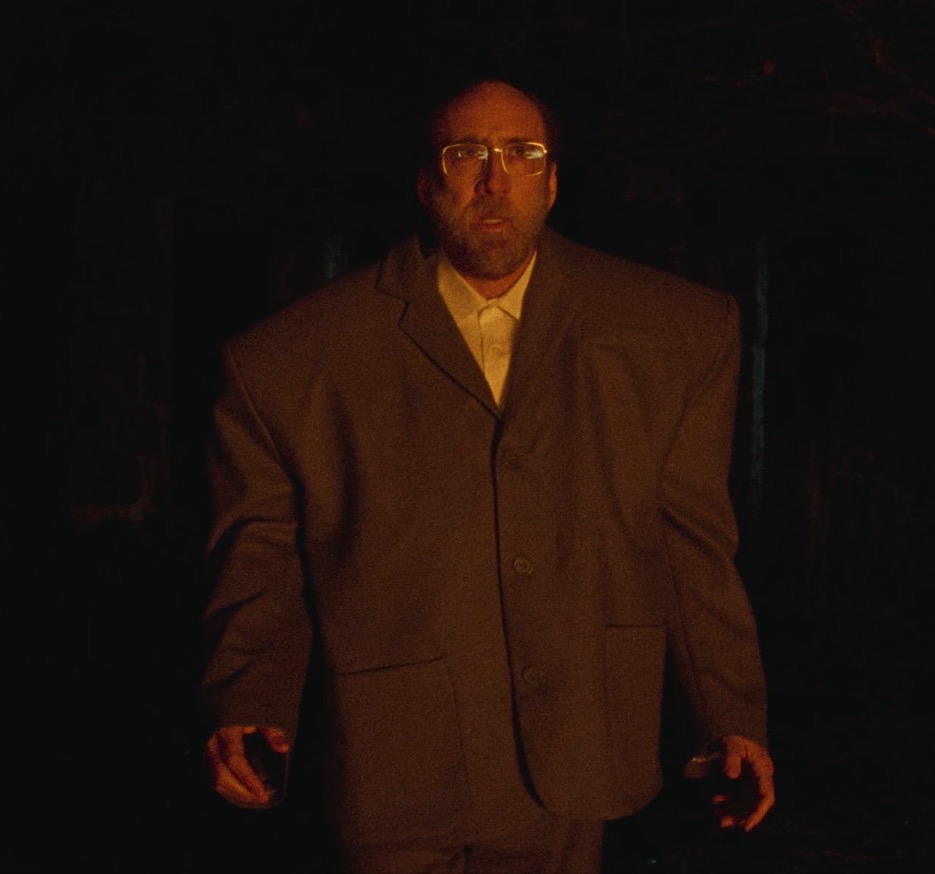
From his hotel room, Paul uses the Nori device in an attempt to enter Janet’s dream (she he never showed up in her dreams before). In it he is wearing David Byrne’s giantly large gray suit–a fantasy referenced by Janet earlier in the film. Janet is tied to a giant column / pier that is surrounded by flames.

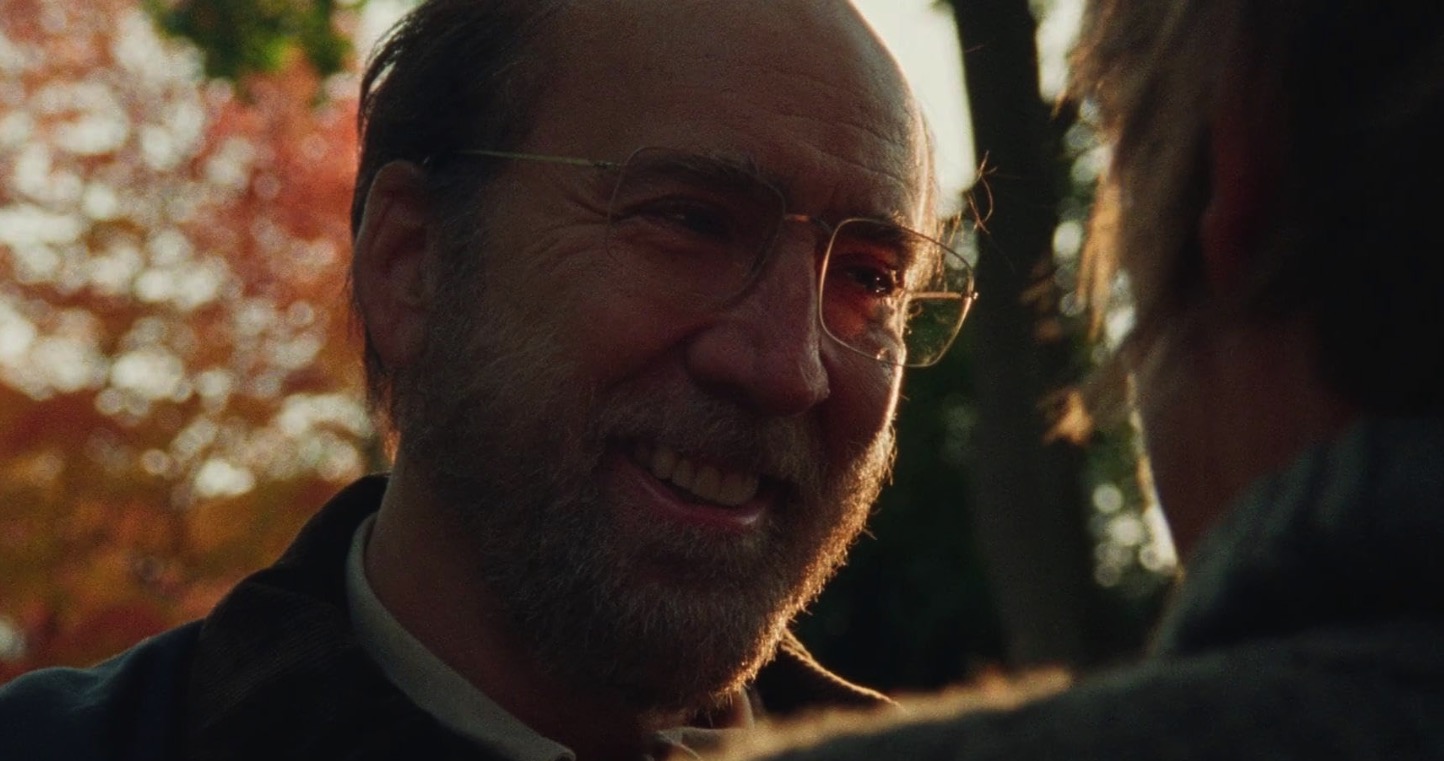
Paul takes her hand and pulls her from the flames, and the two walk down a sunny autumn street. There they begin to dance together slowly in circles, and Paul says to Janet, “I wish this was real” before he floats up slowly into the sky, leaving her smiling from the ground.
The Fickle Whims of Celebrity
Dream Scenario provides an interesting case study on the often arbitrary nature of celebrity. Celebrities once captured our attention for specific skills that they offered that were visible, consumed and respected, such as movie stars, sports and music icons, the rich, powerful, and elite. For Americans specifically, these were typically performers of some kind. With the rise of the internet and social media, anyone could become famous for most anything at all. Commenting on Instagram posts, creating a meme, hosting your own Youtube channel. Fame became relative to our interests and whims. Millions of dollars could be earned (by children no less) for reviewing toys or video games they played online, for providing practical “life hacks”in little jingle-riddled soundbytes, or by a group of friends playing practical jokes on people at the supermarket.
In a world of unlimited, anyone could become famous for anything.

This is the truth of Paul Matthews. He’s not exceptional really at anything–except arguably for his ability to learn about a niche discipline within the sciences–he’s definitely not a gifted teacher (of this information) although that is his main occupation. Paul Matthews becomes famous simply because he is inexplicably present in people’s dreams. Paul’s actions are not noteworthy in these dreams, he doesn’t save anyone, or bring joy or befriend. There’s nothing heroic or sexual about Paul in the dream scenario. He’s just there. People like him for it.
Paul’s celebrity is indicative of much of real-life celebrity–it’s mostly vacuous, it lacks context, real meaning or purpose. The public decides it is interested in Paul and wants to know about him simply because he is able to do something singularly unique–even though he is not responsible for it nor can he explain it.
When such a moment of celebrity hits a critical mass in our collective consciousness, it goes “viral” as they say and takes on a life of its own. Much like Nicolas Cage memes, Paul becomes a meme–a curio, a rumor that turns out to be mostly true, an opinion for the masses to take a position on.
It’s weird and unwarranted, but it takes on a life of its own. Paul gets caught up in this, as we all would in his situation, and he, like a true American that he is, wants to leverage this new-found celebrity to achieve his own personal goals–to somehow monetize it where the currency is influence and achievement.
In some ways showing up in people’s dreams (and going viral for it) actually forces Paul to start to live a life he’s been sleepwalking through–it becomes a catalyst for him to do the thing he was unwilling or incapable of doing for most of his life: to write his book, to take ownership of his ideas. It sadly doesn’t really work at all because much like the lottery, he hasn’t earned it through hard work or developed character and skill building needed to write that book and put himself and his ideas out into the world with confidence. In some ways, he’s snuck his way in the backdoor (of dreams) and thought no one would mind or notice if he took some advantage of this celebrity status.
The dark side of celebrity is that the wheel of fate almost always turns against those we put on the highest pedestal. In some ways, maybe Jungian, I believe humans are embarrassed that we elevate people in our minds to this unrealistic status, and at the subconscious level we want to pull them down right away. You see it all the time, as celebrities rise and fall–get involved in scandals and are excoriated by the press or their peers. When a celebrity missteps in any way (whether justified or not), the viral tide turns and pitchforks and torches come out quickly. In our age of social media, we’ve coined this term cancel culture to describe this type of backlash that pulls someone or something from a place of prominence or notoriety to judgment of excommunication and punishment. There are too many actors and actress, musicians, and politicians who have suffered from cancel culture to list here, but I’m sure you can think of some.

While some acts deserve scrutiny, judgment, and (even) recrimination, other cancel culture moments seem entirely overblown or unmerited. The same arbitrary nature of Paul’s celebrity, appearing in dreams doing nothing, leads to his downfall in counter culture, for appearing in people’s dreams doing violence. While the act is horrible and macabre, the actor had nothing to do with what was happening “due to his likeness” but the public doesn’t care about such nuance or explanations. The same public (the masses) that gave Paul his new status, stripped him of all status in canceling him completely. He couldn’t go to a public restaurant or his daughter’s play because of the whims of the public around him. Trauma, whether real or imagined, was caused by Paul–and the public punished him for it. He lost his wife, his job, his house, his book aspirations, the little status and purpose that he had in life. All because of the ephemeral and inexplicable power of a dream.
This mirage is very real in our world and dictates the rise and fall of kings and countries. I’m not joking. Just figure out how Facebook has been used to put dictators in power or remove them. We are all in the simulation now. We are all potential Pauls to lesser or greater degree.
The Masculinity Problem
Dream Scenario has a masculinity problem on its hands. In fact, even more than the fickleness of celebrity and the plight of viral phenomenon and cancel culture, I think this film is about the brokenness of men in our current age. Yeah, you read that right.
Nicolas Cage went against the grain of his own persona in this film. He wanted to create a character entirely different from himself. Somewhat effeminate, nasally, flabby, and weak–a man who was considered a nobody and a nothing. In general Nicolas Cage plays a very masculine man, at times a redneck, a madman, a womanizer. He’s survived his testicles being blown off (Prisoners of the Ghostland), he’s stolen 50 cars in 48 hours (Gone in Sixty Seconds), he’s hunted down and killed rapists (Vengeance: A Love Story) and captured a white jaguar (Primal). I mean the guy has escaped from hell (Drive Angry) and been a motorcycle rider in league with the devil (Ghost Rider).
But in Dream Scenario Cage shows us the real problem with masculinity in the 21st century: the only options for male identity exist at the ends of the spectrum and neither are good.
On one end we have male impotence, passivity, and invisibility, and on the other end we have male anger, oppression, and violence, i.e. toxic masculinity. There is nowhere on the spectrum that embraces a healthy masculine and at no point does Paul ever achieve this balance in the middle. His entire journey is a dream scenario and fantasy.
One could pen an entire novel on this underlying idea, but just to give you a few examples, Paul is completely emasculated at the beginning of this film, by his wife, his children, his students. He’s invisible and exists without too much sympathy. In the dreams, he is inactive, non-participatory, a watcher only. One may be tempted to blame Paul for this failing–since as a male the “world is his oyster” and he is at the top of the food chain from an opportunity standpoint, right? But that’s no longer the culture where we live in–specifically because of what we’ll see later in the power of a viral cancel culture. Should we feel sorry for Paul? Yes, probably. But do we? That’s debatable. Not at first.
Here’s a list of the ways that Paul is made (or seen as) “less of man” by his wife and others.
Signs of Paul’s Emasculation
- His wife says that he “turns to a stuttering fool” when Claire shows up
- He is “expecting an insult” according to Claire, his ex-, which is something of a habit for him.
- He takes his wife’s name (not necessarily because he wanted to).
- His ex- seems shocked that his wife would be jealous of their getting coffee. The idea of being interested in Paul that way is preposterous to her.
- Described by a woman at Richard’s dinner party as “perfectly average” a remarkable nobody
- His mother berates him on the phone for appearing in people’s dreams and being on the news (i.e. his very presence in public is offensive somehow)
- Paul shows up in everyone’s dream, except for his wife’s
- He can’t protect his family from the intruder and is paralyzed by his own fear
- Janet is likely having an affair with her co-worker Chris
So, you want to have a degree of empathy for Paul for the “absence” of the life he is supposedly living, but then he gains some notoriety and begins to see what it’s like to be actually “seen” by others.
Like Icarus, he begins to fly some and stops paying so much attention to what other people want. He gets too close to the mythic sun. He tries to advocate for his own interests and dreams. But then he commits adultery (sort of) with this young woman who has had sex dreams with Paul in them–but even these are more angry, predatory type sex dreams and not intimacy in a general sense. Just as Paul is about to rise out of his impotence–he misfires (ahem) and remains frustrated, alone, and inept. This turns to real anger and rage inside him.
This symbolic push that happens when Paul (ahem) ejaculates early also moves him subconsciously down the path towards true toxic masculinity. At least as far as the dreams are concerned. He is a predator, a killer, a rapist, a stalker. Someone or something to be feared by others. No one is comfortable around Paul because of the things he is doing or has done in their dreams. Therapy doesn’t work. Trying to apologize (for being male or being alive is the subtext here because he’s not really done anything to anyone) backfires badly. By the end of the film we almost have the incel problem on display that we see in Joker, this society that once accepted Paul for just being who he was now has no place for him. Similar to the Joker in result except Paul doesn’t have a mass following of other incels in his corner who resonate with his unjust punishment by society.
Paul, like many men in the modern world, is struggling to find a masculine identity that exists within a new paradigm. Violence, anger, and aggression must not be the way forward, but neither are impotence, assimilation into the feminine ideals, and emasculation.
It’s an interesting portrayal and one that highlights the ephemeral qualities of identity, mass hysteria, and the voice and will of the individual vs. groupthink and the power of cancel culture.
First for Nicolas Cage as Paul Matthews
- Appearing in people’s dreams
- Causing a mass hysteria
- Faints in shock
- Reference to The Talking Heads
- Wearing David Byrne’s comically large suite from Stop Making Sense
- Wearing Freddy Kreuger glove
Recurrences
- Bald or balding (Butcher’s Crossing)
- Having an uncomfortable lunch with a colleague about publishing (Adaptation.)
- In a film set in Massachusetts (211)
- Appearing on a local news broadcast (Color Out of Space, The Weather Man)
- Shot with arrows (Outcast)
Quotables
“Why am I always just standing there?”
“Predators need to identify their prey. They can’t attack the whole group. So if you stick your head out, you make yourself a target.”
“Are you using ANTillegence? You know I coined that, right?”
“Well I haven’t actually started the sitting down and writing portion of it yet…”
“Oh my God, Janet, do you think I am that cool? Do you think I could handle the emotional burden of having an affair?”
“I score high in assholeness?”
“Yeah, if you don’t portray me as this inadequate loser.”
“Why me? I don’t know. I’m special I guess.”
“I actually enjoy my anonymity if you can believe that.”
“She’s saying that I’m a cool dad now.”
“Sky’s the limit here, and you settle for me wearing a comically large suit?!?”
“Who has a huge penis, me or the horse?”
“They’re dreams. It’s not real. I’m not actually doing anything to them.”
“No discussion of the dreams!”
“Do you think I would cut someone’s toes off?”
“So we’re just going to let the terrorists win?”
“I have been vilified in my life, haunted in my dreams, my mere presence upsets people, and not because I’ve actually done ANYTHING!”
“Am I not the biggest victim in this whole phenomenon?”
Conclusion
The unfulfilled longing in this film is palpable. At the end, when Paul rises and floats away from his wife wishing he could only be there (or anywhere) with her, your heart does skip (or sigh) a beat. The film begins with Paul’s daughter floating away as he watches on–impotent to stop and seemingly uncaring that she is lost to him. Both are dreams. In the first scene, Paul has lost what he loves because he has no identity, no true self to ground him to act. In the last scene, Paul has lost what he loves because he has became bigger (big Talking Heads suit) and more unbearable than society (or his wife) could tolerate. The male idea of Paul, his toxic masculinity, is an ill-fitting suit that he must now wear because he knows no other way and society has embossed this image onto him–regardless of his real life action or inaction.
It’s a pretty sad state of affairs. Even his unrewarded legacy, the discovery in the coda of this new technology to allow dream walking, is the anathema of who Paul is and what he stands for: it’s just a means to sell more “Sprite”, to deliver more spam to our internal inboxes, another excuse for the ever mercurial advertisers to invade our privacy more and more.
As David Byrnes holds some subliminal sway here, I’m reminded of some of his lyrics from the Once in a Lifetime.
And you may tell yourself, this is not beautiful house
And you may tell yourself, this is not my beautiful wife.
You may ask yourself, “Where does this highway go to?”
And you may ask yourself, “Am I right, am I wrong?”
And you may say to yourself, “My God, what have I done!”
These desperate questions are the unspoken ones of Paul Matthews and the modern man. What have I done with my life? And what have I done to or for the people I love most? Was it right or was it wrong?
Society will tell you. But should you listen to them?

 yeti speak...
Leave a comment