“You can’t stop a wave. It’s pure energy. Born in a storm way out to sea. Brewing and churning for days, weeks months, sometimes even years. It’s all building to this breaking point. Short, sharp shock of violence on the shore. And you either surf it. Or you get wiped out.”
The Surfer
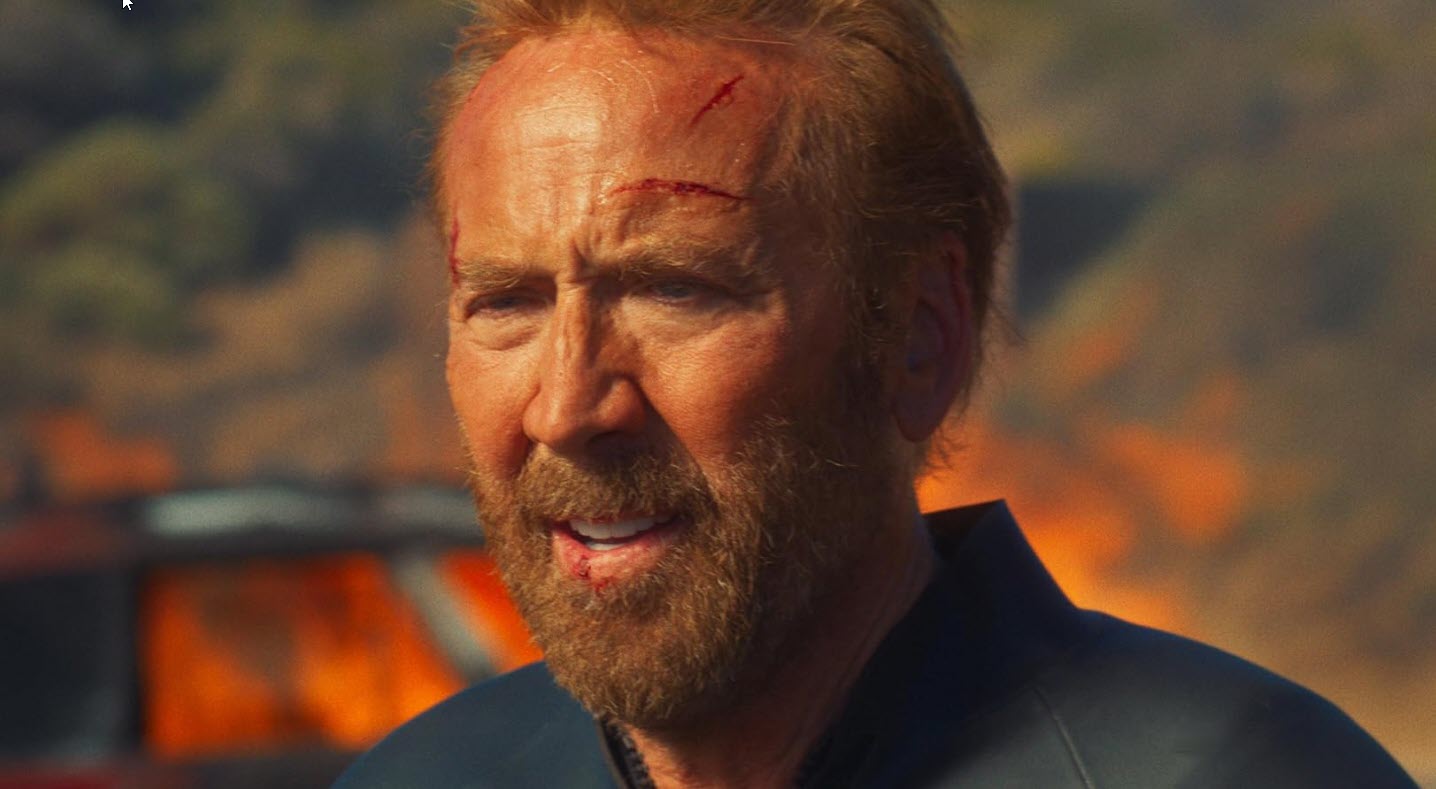
When I was growing up in south Florida, I dreamed of being a surfer. Unfortunately, for me, I lived on the Gulf coast where surfable waves only arose when hurricanes approached. So I settled for skimboarding—throwing a flat board across the shallowest breaks, launching oneself from beach to board and floating across the thinnest skin of water.
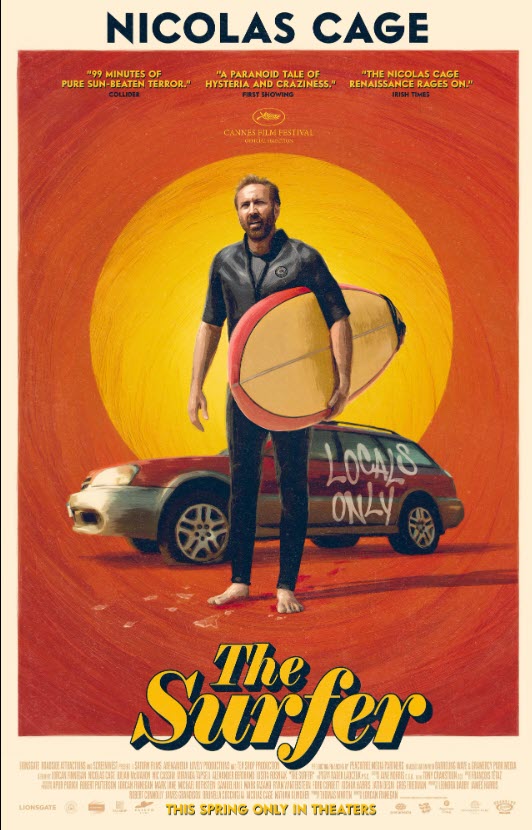
I loved skimboarding, but it was a far cry from real surfing. I am nostalgic now for an activity that was then nothing more than a mirage, which is one way to describe Nicolas Cage’s 2023 film The Surfer.
But The Surfer was only one-part nostalgic mirage. It was equally a surrealistic and confusing descent into madness, suicide, localism, and toxic masculinity.
And it’s the perfect movie to continue our journey started many years ago now: W.A.T.C.H. #111, The Surfer.
Why the Long Wait
This Australian film was released in May 2024, but I don’t believe it came to American theaters right away. I did watch it at a theater sometime in 2024. So why has it taken me over two years to review it. I think because I wanted to watch it a second time, and then a third to gain some clarity. Once it came to streaming services I watched it again. Then, I waited another six months and finally watched it again. With each viewing, I kept expecting to formulate a cohesive theory about the substance of the film, but my hopes were confounded each time. So here we are a bunch of random thoughts that don’t quite add to a whole—which oddly enough reflects the film itself.
What Happened At Face Value
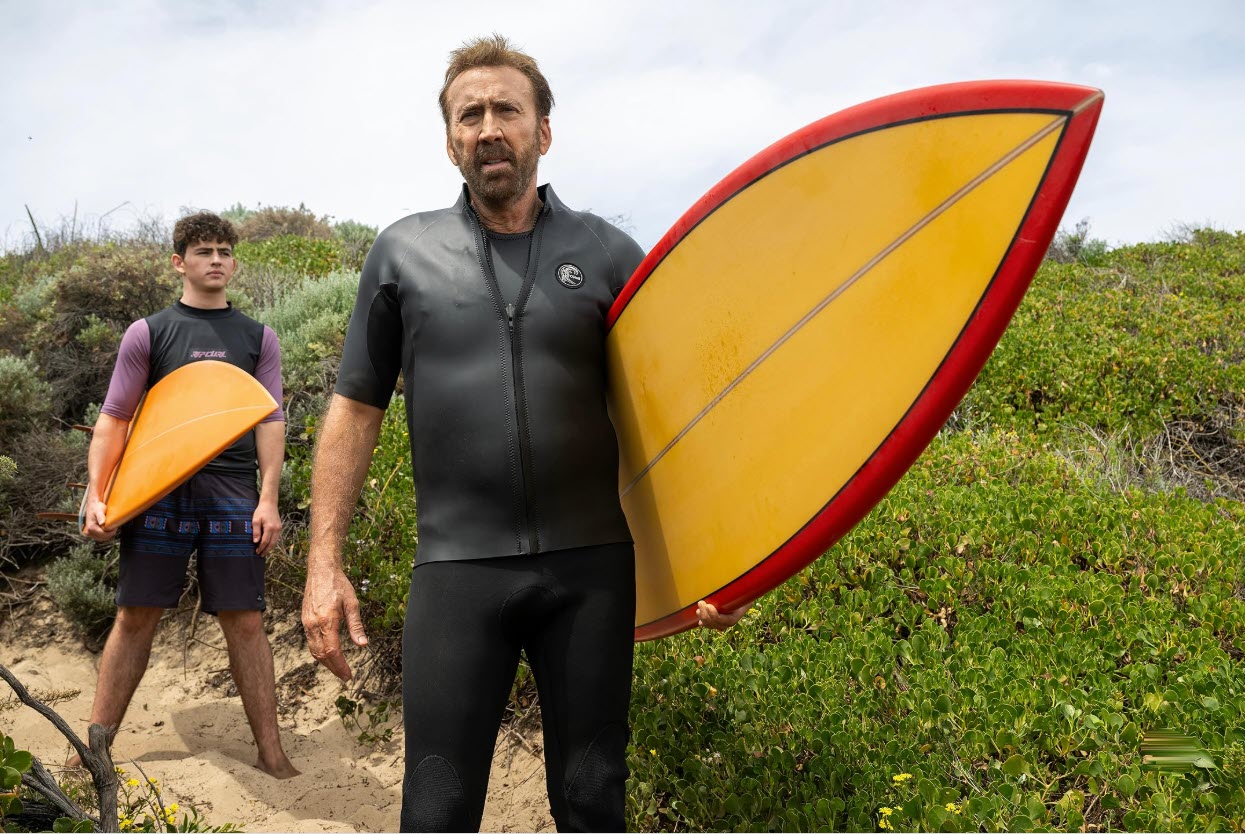
Our hero, Nicolas Cage plays an unnamed man, we’ll call him The Surfer, who is harkening back to his nostalgic youth spent surfing Luna Bay, an idyllic Australian beach. Wanting to return to this lost past and build new a bond with his (estranged) teenage son, The Surfer starts out in a desperate attempt to re-purchase his expensive family home which overlooks the pristine surf of Luna Bay. But it becomes apparent quickly that the Surfer’s goals of purchasing the pricey home, re-kindling the love and admiration of his son and ex-wife, and even getting to surf the big waves again, are going to be insurmountable obstacles for him to overcome.
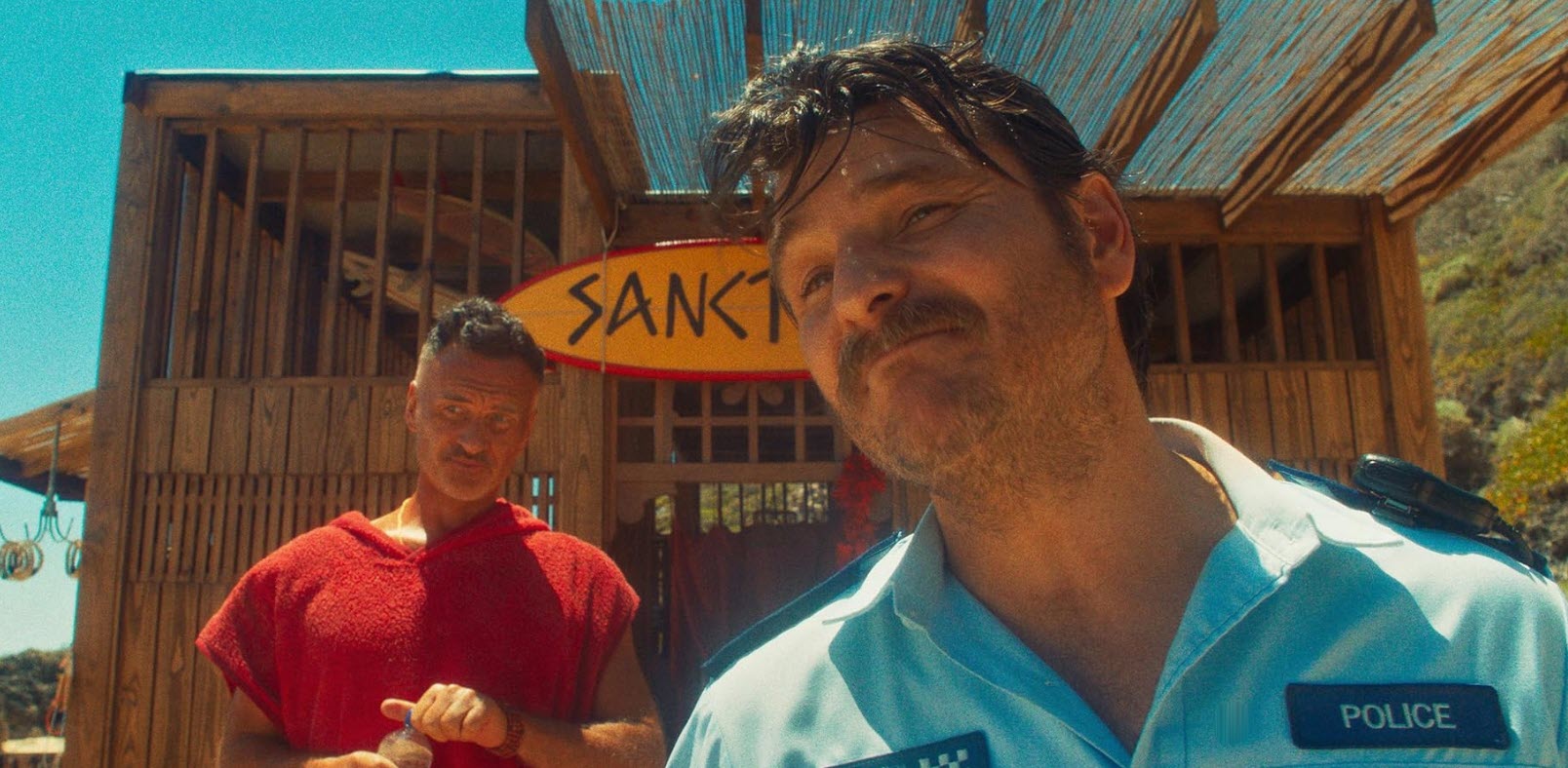
When he arrives at the beach, the Surfer and his son are confronted by a gang of local surf punks, The Bay Boys, who bully and badger the Surfer, telling him, that if he “don’t live heah, can’t surf heah,” in their thick Australian accents. The fact that the Surfer grew up in the area as a young boy, and is planning to buy the home on the cliff, doesn’t matter to Bay Boys who become violent when the Surfer advocates for his right to surf at this public beach.
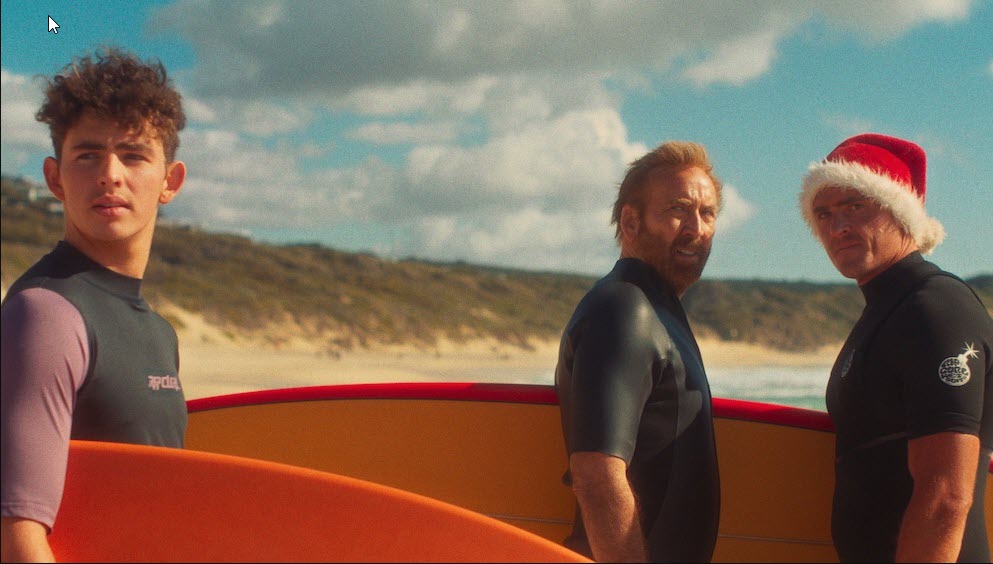
The Bay Boys are lead by a corporate guru, Scott Callahan or “Scally” (Julian McMahon) who indoctrinates each of them in his own toxic form of masculinity that attempts to strip away the soft-skills ego many of them have picked up from the sterilized boardrooms of the world, in order to touch the deeper more primal and violent side that Scally believes masculine men must display to earn their right “to surf” or experience the pleasures of real life. In other words, Scally thinks men need to learn to suffer before they can become supermen.
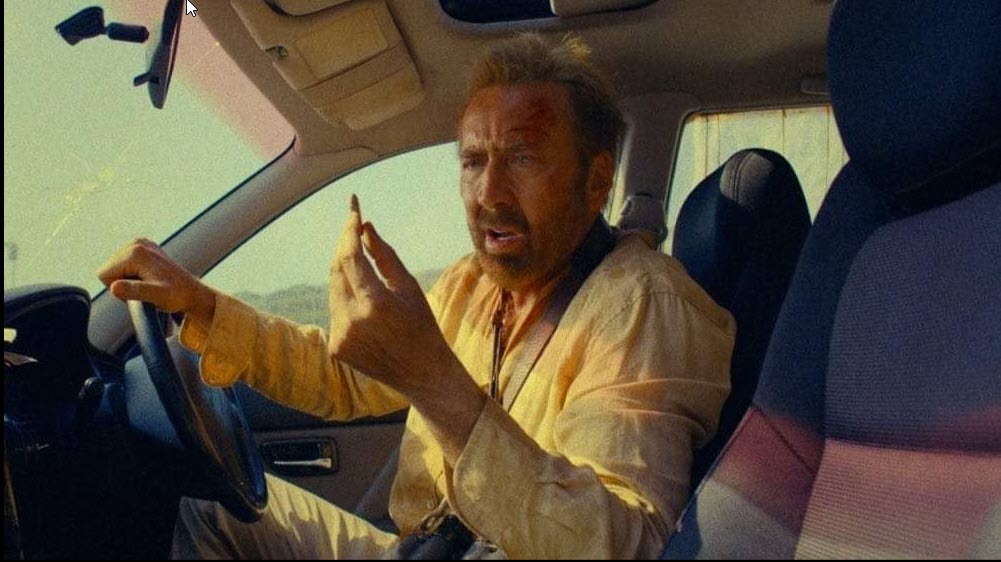
The entirety of the film is set in the parking lot of Luna Beach where the Surfer attempts to re-enter this lost paradise through phone calls to his real estate agent, financial planner, and his workplace. While trying to secure the home, the Surfer makes a temporary home in the parking lot. He sleeps in his car, and as his attempts to purchase the home flounder, he is slowly stripped of all his material possessions—starting with his surfboard (stolen in the night), his shoes and socks, his cell phone and watch, food / water and eventually his shelter (gets towed away in the night). Meanwhile, his sanity is also starting to slip as he is mistreated and gaslit by the locals in direct correlation to his loss of material possessions. It becomes apparent that the localism of the beach extends beyond just the Bay Boys to the local law enforcement, other beach-goers, and the barista at the coffee stand. None want him at Luna Bay, and all make claims that conflict with his reality.
Against, all reason, the Surfer will not leave the beach, where he is not welcome, and he becomes very reminiscent of another character, The Bum, that is also camped out at the beach, a transient (arguably mentally unwell) man who wants revenge on Scally. The Bum believes Scally is responsible for the death of his son and his dog and tries to recruit passerby to his cause. Unhinged, the Bum hides a pistol in the public restroom. As the Surfer spends multiple nights at the sweltering beach parking lot, he begins to lose himself in the process. Sleep, food-, and water-deprived, he sees visions and finally explodes in violence on the Bay Boys, who have been tormenting and bullying him for days. After nearly killing one the Boys on the beach (and shoving a dead rat down his throat), the Surfer is finally allowed into the fold by Scally and his gang. He has suffered and now he can surf.
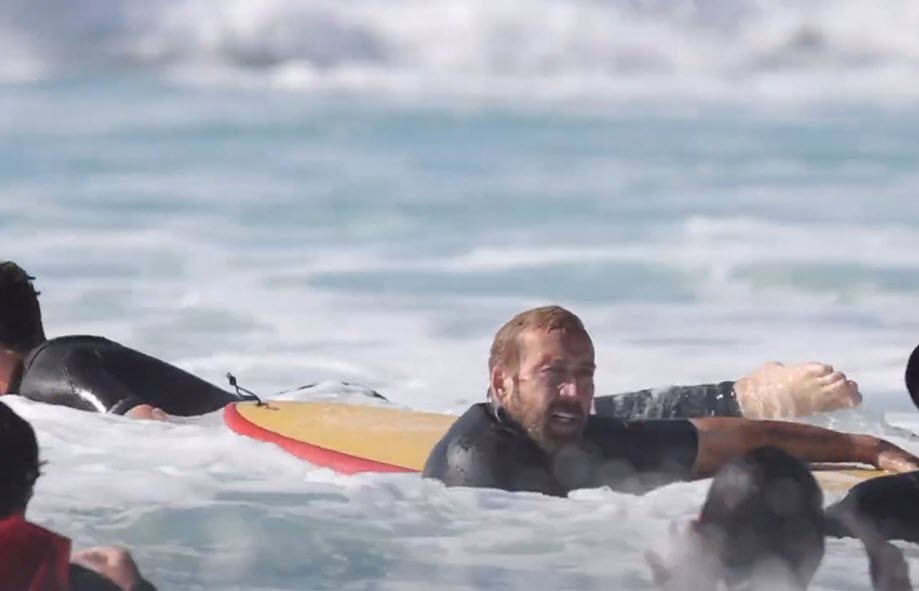
The Surfer receives the “branding” that all the Bay boys get and is told he can join them (and can even purchase the home on the cliff) if he will take one final step and set fire to the Bum’s vehicle as proof that he is now “one of them.” The Surfer is reluctant to destroy the Bum’s current “home” and tries to refuse, but ultimately is forced into it by the Bay Boys. When the Bum shows up to his car set ablaze, he has his gun with him, and things go south quickly. The Bum marches Scally, the Surfer and the Surfer’s son, and some of the Bay Boys down to the beach to punish them for his son’s death. In the end, the Surfer convinces the Bum to just let him and his son go and surf. To convince him, the Surfer returns the Bum’s one treasure, a shark’s tooth necklace his son won in a big surf contest before Scally had him killed. The Bum, happy to retrieve his single treasure, lets Surfer and Son swim off into the waves where they finally get to surf. The Bum shoots Scally and himself on the shore, but the Surfer never looks back to see this, he has been taken by the waves.
What I Wanted to Happen
After watching it three times, I really wanted this film to be more than it was. I wanted it to have a deeper meaning, a clearer symbolism or vision.
The first time I watched it in the theater, I thought perhaps The Surfer was his own father. We know that the Surfer had to leave Luna Beach and his family home because his father committed suicide. This backstory was hinted at and the Surfer has visions throughout the film that are either flashbacks or future shocks.
A man in a suit on the beach facing the waves.
A man in a suit lying in the water.
Scally at one point says to the Surfer, “I remember what you’re old man did. Terrible thing.”
But what if the Surfer was actually the father and he was driven to insanity (in the way we saw things play out). What if had died on the beach at the end and the story we’re seeing was actually the Son’s memory of what happened in some kind of weird loop. This theory doesn’t hold up very well, but there a lot of patterns between the Surfer, the Son, and The Bum and the Son.
So, the second time, I was convinced that The Surfer was actually becoming The Bum. This is a situation where the narrator’s perspective cannot be trusted. He’s an unreliable narrator or witness to the events.
This theory made a lot of sense to me. The Surfer starts living in his car in the parking lot of Luna Bay Beach. The Bum lives in his car in the parking lot of Luna Bay beach. The Surfer is antagonized by the locals (kids, servers, policeman, the Bay Boys) and so is the Bum. The Surfer has a father who was killed tragically. The Bum has a son who was killed tragically. There are scenes where it looks like the Surfer is in the restroom looking in the metallic mirror and actually sees the Bum. Both men handle the gun that is used in the murders we see at the end of the film. Both the Surfer and the Bum revere the Shark’s Tooth surf content, which the Bum’s son actually won. Both men sleep in the Bum’s car.
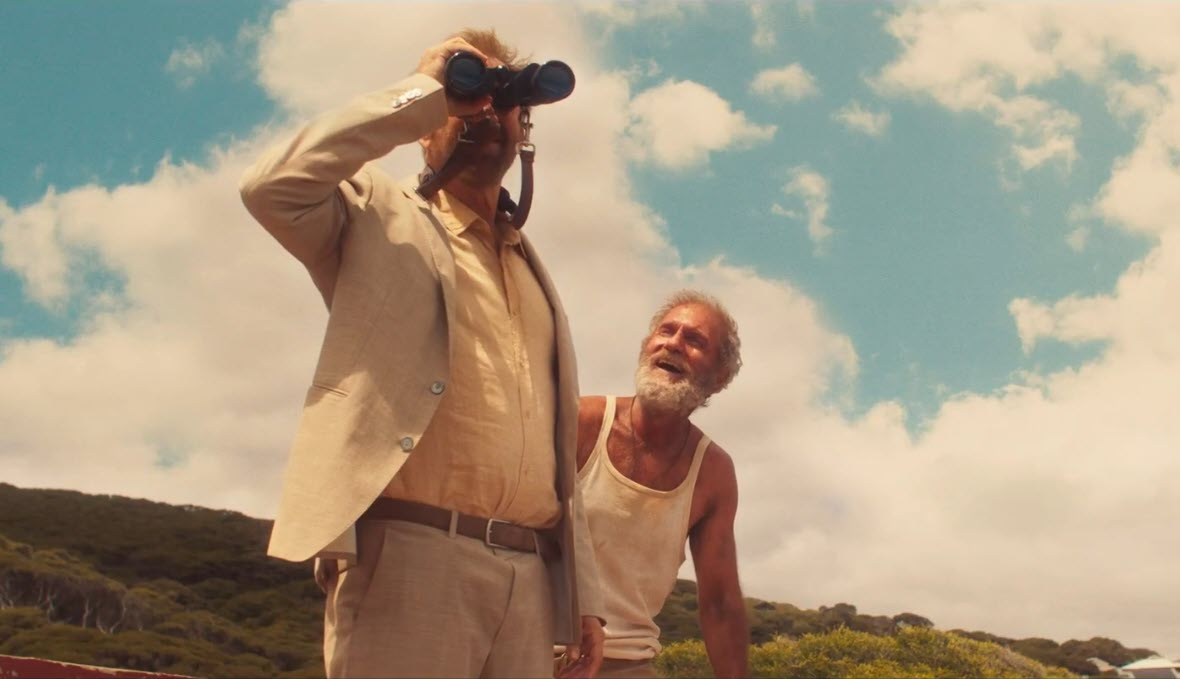
There are also scenes where the Surfer is being “gaslit” or told that something he believes to be valid, is not true. For example, his surfboard that is stolen ends up mounted above Scally’s beach house. Scally claims it has been up there for 20-some years. If the Surfer is the Bum and the Bum has now lost his mind, is it possible the surfboard did belong to his son who has been dead for some years now?
But the third time, I watched the film I had to accept the fact that the Surfer and the Bum while similar were unique and separate characters. The Surfer makes one friend in the parking lot of Luna Bay—a photographer who helps him out by giving him water, jumping his car, and also taking his picture. When the Surfer begins to question his own reality, he finds this photographer again and asks to see the picture she took of him. He sees it, and we (the audience) see it as well. So there is direct proof that The Surfer exists and his car is different from the Bum. The filmmakers wanted to show this specific reality. They didn’t have to.
At one point, the Surfer finds a photo in the Bum’s car of Jay (the Bum’s son who was killed) with a man who I thought was the Bum, but his face was scratched out. I felt like this was another proof that the Surfer was also the Bum, but after further thought it makes more sense that the man in the picture whose face was obliterated was more likely Scally and the Bum didn’t want to see his son arm in arm with his enemy.
So I’m left with the conclusion that this film does not have a deeper meaning or Sixth Sense-like aha moment that ties things together neatly.
I think The Surfer wanted to walk the line between the film The Game and Fight Club. It kind of tried to be both, but it did neither very well in its murkiness. It was like The Game in that all the bullying, the abuse, the neglect, and suffering inflicted upon the Surfer by the Bay Boys was contrived for his benefit, it was meant as an ultimately harmless rite of passage. “Suffer, surfer, suffer, surfer” as the chant the Bay Boys let out once the Surfer proved himself worthy of their brotherhood. They were trying to release the “fucking animal inside of him” and they did. He proved himself worthy of their value system. But rather than stop there, with a boy’s club welcome, the film turned on a dime with its execution-style justice of an ending.
And that’s where Fight Club comes in. This film could have had its Tyler Durden moment where we realized that The Surfer was the Bum all along. Rather than having a clean resolution where The Surfer gets all of his desires and enters the kingdom, we could have this amazing “backfire moment” where the mental state of the person being hazed actually couldn’t bear the weight of this form of masculinity toxic therapy. In that scenario, releasing the “animal within” actually comes at an extreme cost.
Instead, we have the Surfer pushed out of the equation all together. The toxic masculinity and tribalism is unleashed on those who deserve it (The Bay Boys) but at the cost of the man who doesn’t (the mentally anguished grieving father, the Bum).
In the end, everything was exactly what it seemed to be, and that’s what bugged me about it. The Surfer finally did get to surf with his son, with dead bodies in their wake. Surfing is what he was trying to do from scene one, but nothing else seems very well resolved or accomplished or explained in the end.
Other Weird Religious Stuff and Animals
So I guess you can say I “liked-not-loved” the film. It was thought provoking and ambiguous—which lends itself to multiple interpretations.
Another angle I found interesting was some of the religious imagery I noticed in the film. I wouldn’t say the Surfer has direct correlation to Christian theology, but there were definitely some “life of Jesus” type tropes. Scally’s followers get baptized in the water when they are converted to his tribe. There’s the suffering angle. Scally comes to the Surfer much like Satan does to Jesus when he was tempting him in the desert. He tempts him with food (a hamburger) and beer. He tries to get him to give up his dream of entering in (much like Satan does with Jesus) and tells him to eat, drink, and leave it all behind. He is wearing a red parka as opposed to the Surfer’s blue one that he receives later. Scally tells the Surfer, “before you can have everything, you must have nothing.”
The other interesting stylistic choice in the Surfer was all the wild Australian animals used throughout. I’m not entirely clear what their significance was other than to mirror the “violent” and “untamed” nature of the natural world as counter-point to what were seeing in the inner world of these warring men. I kept track of all the animals shown throughout the film: ants, lizards, kangaroos, dogs, kookaburra bird, snake, tarantula, rats, cicadas, porcupine, and parrots.
Is It Worth Watching?
If you appreciate Nicolas Cage (and you should) it’s worth watching! If for no other reason, you should watch it so you can form your own opinion about what it’s really about. I have some other ideas about the themes and meanings behind it, but these are the main ones worth mentioning. Is it in my top ten? Probably not, but it’s still a very well-acted and weird kinda movie.
Hopefully, we’ll have another great Cage film to watch and review sooner than later. I’ll leave you with a few of the typical categories I like to capture here.
Firsts for a Nicolas Cage character as The Surfer
- In a film set in Australia (?)
- Negotiating to buy a house
- Being told to “fuck off” by a stranger (a surfer)
- Surfing
- Being called a “seppo” (derogative term for American)
- At a coffee stand
- Fights over a surfboard
- Swaps his sunglasses for binoculars
- Steps barefoot on broken glass
- Getting his car jump started
- Using tap to pay
- Bit by rat, pummeling a rat, making a man eat a rat
- Shit on by a bird
- Eating a raw egg from the nest
- Drinking from a puddle
- Gets branded
- Setting a car on fire
Recurrences
- Trying to be a good father (Multiple)
- Arguably losing his mind (Dying of the Light, Army of One)
- Separated from his wife (Multiple)
- Ordering a pizza (Amos and Andrew)
- Using the “f” bomb (Multiple)
- Was a writer once (Adaptation.)
- Has a drink thrown at him (The Weather Man)
- Attacked by dog on leash (Raising Arizona)
- On a hardcore psychedelic (Mandy)
Quotables
“That was my best surfing as a metaphor for life speech. I was hoping for a little more enthusiasm.”
“Sometimes a man’s gotta get away from it all.”
“Get outta my personal space.”
“I hope it’s anchovy.”
“Dude, that’s my board. And I want it back.”
“Do I look homeless to you?”
“I’m a bird watcher.”
“There’s quite a bit of localism down there. It’s hostile.”
“Eat the rat. Eat it. You eat it!”
“We’ll ride some waves and go home together.”


 yeti speak...
Leave a comment